
Reviewed · MUSEUMS
Boston: Boston Tea Party Ships and Museum Interactive Tour
The best part of the Boston Tea Party Ships and Museum is that you do not simply look at a display about the Revolution. You are handed a colonist’s role, given a Mohawk disguise, marched to Griffin’s Wharf, and asked to throw a crate of tea into the water. The actors stay in character, which gives the hour a clear sense of theater without losing the basic historical story.
I like the way the tour joins hands-on action with solid teaching, and I like the mix of live performance, replica ships, holograms, and film. The main drawback is time: one hour moves quickly, and a large group may not leave you enough time to study every artifact in the museum.
Key points at a glance
- You get a role in the story: A handbill and character assignment make you part of the meeting before the march to Griffin’s Wharf.
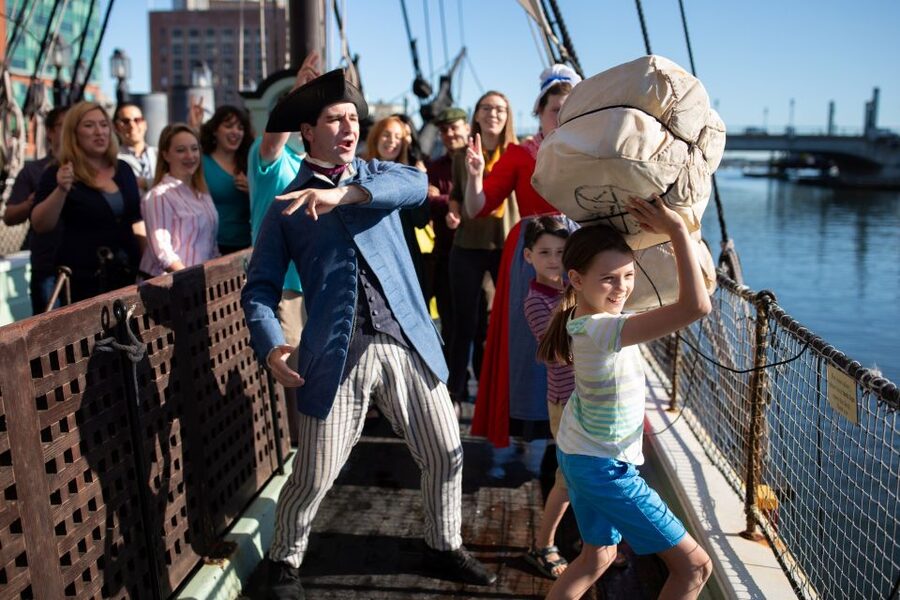
- The tea toss is real participation: You throw a covered crate overboard, not loose tea bags, from one of two carefully recreated ships.
- The performers carry the tour: Guides such as Mrs. Grant, Chase, and Ebenezer McIntosh have been singled out for strong character work, though casts can change.
- The museum uses more than labels: Holographic figures, visual displays, and a wraparound theater explain the fight between Britain and the colonies.
- It suits families and adults: Children can act, shout, and toss tea, while adults get a useful account of the political conflict.
- Plan ahead: The $35 ticket covers a timed, one-hour visit, and popular weekend departures can sell out.
Why the Boston Tea Party still matters
The Boston Tea Party was not a random act of colonial mischief. It grew from anger over British taxation, political control, and the East India Company’s special position in the tea trade. The event became a powerful symbol of resistance and helped push British America toward open conflict.
This attraction focuses on that turning point through the eyes of the people involved. You learn about the arguments, the public mood, and the decision to destroy the tea rather than accept a tax imposed without colonial representation.
The presentation is clearly built for a broad audience. It does not assume that you already know the difference between a patriot, a loyalist, and a British official. That makes it useful near the beginning of a Boston visit, especially if you plan to walk the Freedom Trail afterward or have just completed it and want a more active account of the same period.
The tone is energetic rather than academic. You will hear old-fashioned speech, watch characters argue, and be encouraged to respond. If you want a quiet museum with long reading panels, this is not that kind of place. If you learn best by seeing and doing, the format works well.
Other museums and galleries in Boston:
- Boston Tea Party Ships and Museum Admission
★ 4.5 · 2,512 reviews - NYC: 9/11 Memorial & Museum Timed-Entry Ticket
★ 4.8 · 31,428 reviews - NYC: Empire State Building Tickets – Observatory & Museum
★ 4.7 · 25,757 reviews
Meeting the colonists before the march
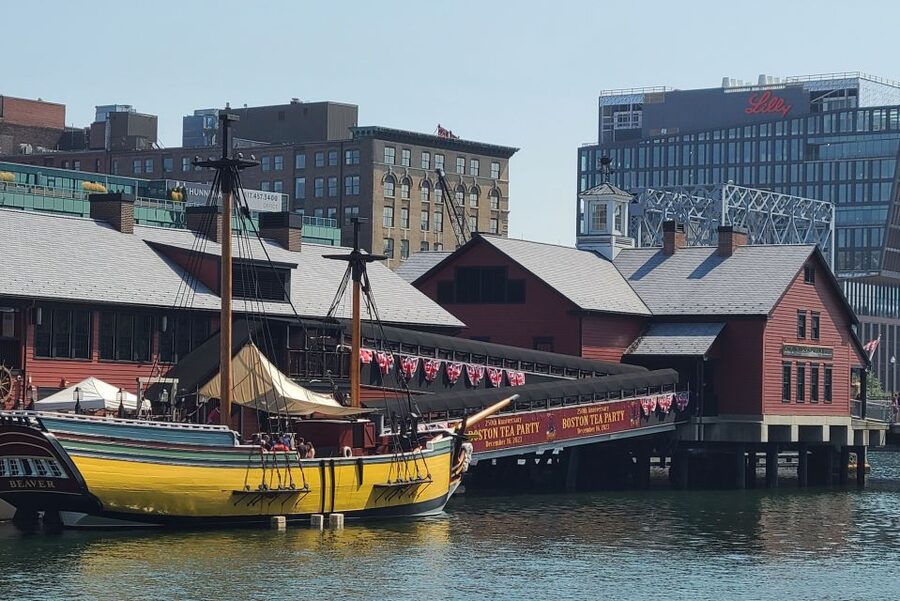
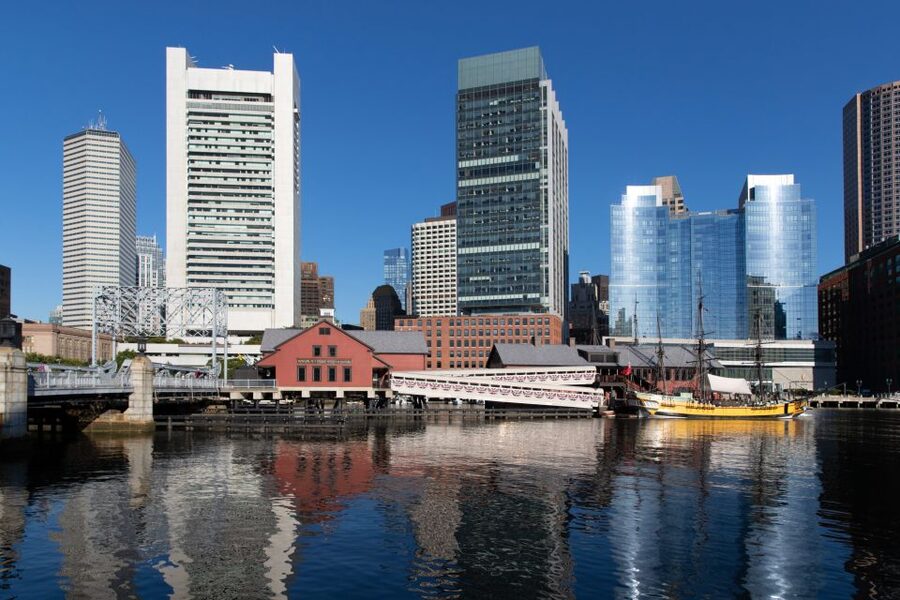
Your visit begins at the Boston Tea Party Ships and Museum on the Congress Street Bridge. You present your timed ticket, then join the group for the guided portion.
The first useful touch is the handbill. Instead of entering as a silent observer, you receive a part to play. You may be connected to the wider colonial resistance, and you are given enough direction to understand what your character represents.
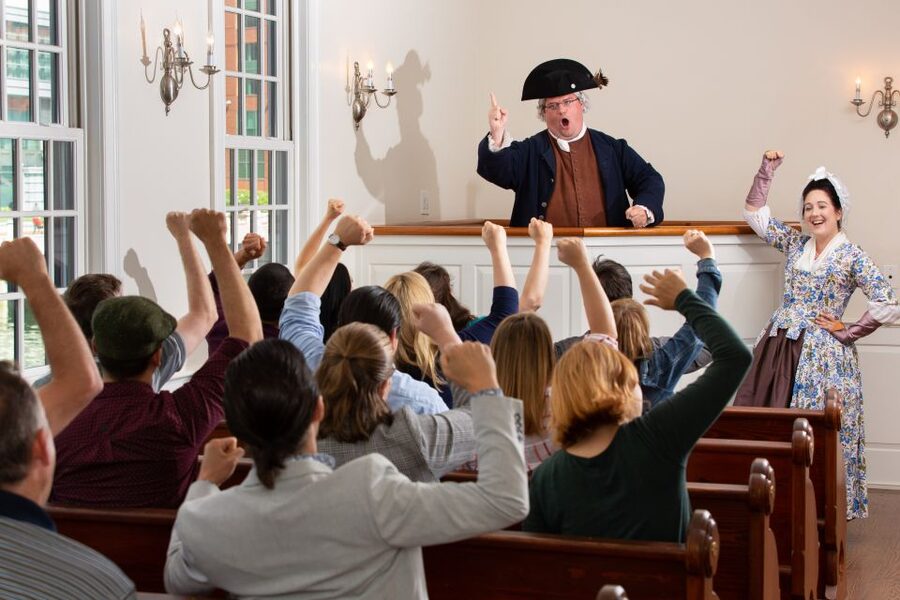
The meeting house scene sets the evening of December 16, 1773. A live character explains the tension and the choice facing the crowd. You also receive a Mohawk disguise before the march begins. It is a playful detail, but it helps younger children understand that the protestors wanted to hide their identities.
The actors are central to the experience. Their job is not just to recite facts. They move the group through the story, invite responses, and keep the pace lively. Performers have included Mrs. Grant, Chase, and Ebenezer McIntosh, with individual guides bringing different energy to the role.
You should expect some audience participation. The tour works best if you are willing to raise your voice, follow instructions, and play along. You can remain more reserved if you prefer, but the format is designed to make the group part of the scene.
Marching to Griffin’s Wharf

The walk from the meeting house toward Griffin’s Wharf gives the story a simple physical shape. You are not just told that the protestors went to the ships. You move toward the place where the tea was held and prepare to carry out the central act.
This section helps explain why the event is remembered so vividly. The protest was public, organized, and deliberate. The tea was destroyed as a political statement, not taken for personal use.
The tour does not ask you to reconstruct every detail of colonial Boston. Instead, it gives you the key setting and the emotional pressure of the night. Live dialogue carries the story forward, while the guide keeps the group focused.
That approach is especially useful for families. Children may not remember every political term, but they are likely to remember receiving a disguise, marching as part of the crowd, and being told what happened to the tea.
Throwing tea from a recreated ship
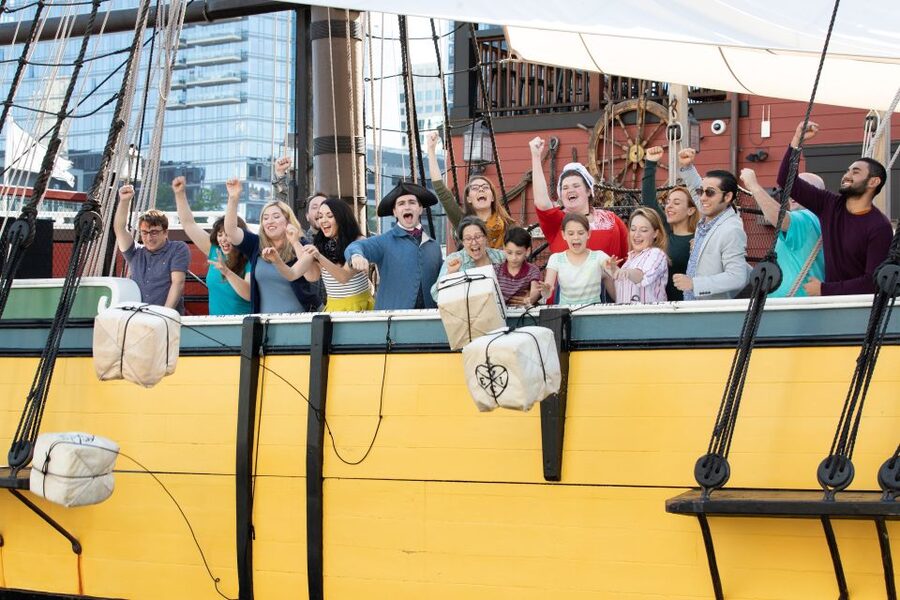
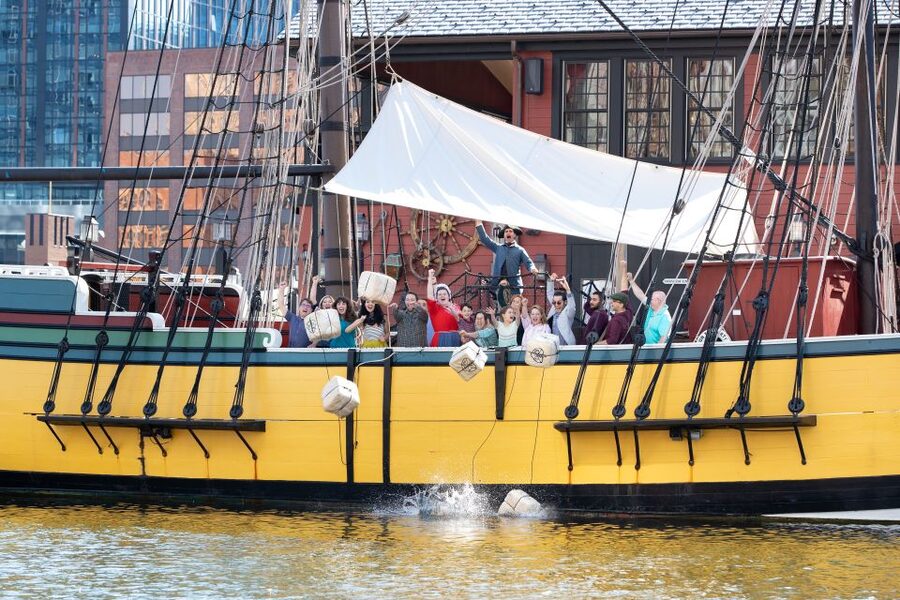
The highlight for most people is the tea toss. You are given the chance to throw a covered tea crate overboard from one of the replica ships.
A small point matters here: you are not tossing individual tea bags into Boston Harbor. The crate represents the type of container used to carry the tea, so the action feels more physical and true to the event. It also keeps the activity controlled and easy for a full group to take part in.
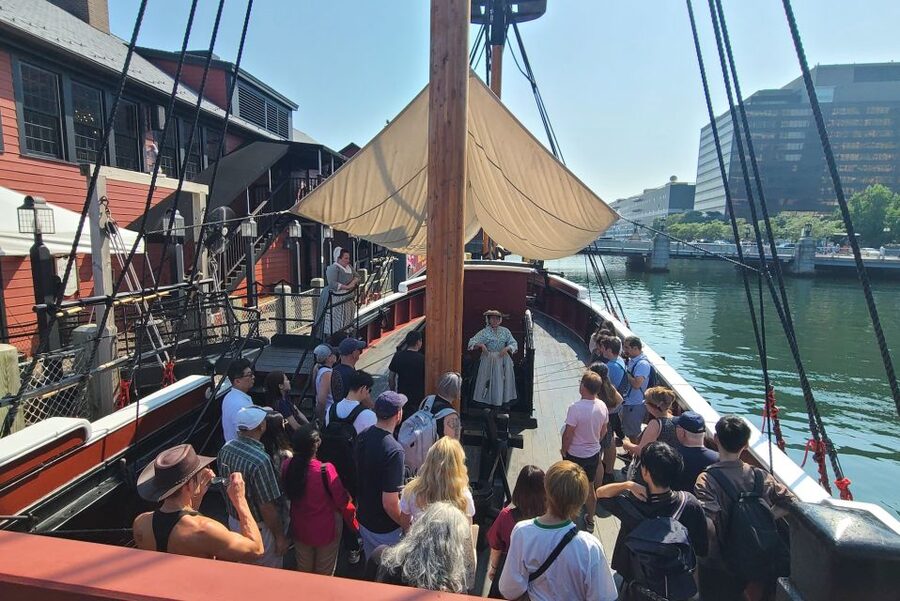
The replica ships are among the attraction’s strongest features. Two vessels have been recreated to represent the original eighteenth-century ships connected with the protest. You can explore the decks and get a better sense of the confined working space where the tea was stored.
Do not expect a full naval museum visit. The ships are part of a guided story, and the time on board is limited. Still, they give you something a wall display cannot: scale. The wooden decks, cargo area, and position beside the water make the tea destruction easier to picture.
The tea toss is also where the attraction earns much of its family appeal. A child who might lose interest during a long explanation gets a clear role. Adults often enjoy it too, because the action is simple, funny, and tied directly to the historical event.
Same base, a different kind of day out:
- Boston Duck Boat Sightseeing City Tour with Cruise Along Charles River
★ 4.5 · 9,378 reviews - Boston: Freedom Trail History Small Group Walking Tour
★ 5.0 · 6,450 reviews - Boston Hop-On Hop-Off Trolley Tour with 13 Stops
★ 4.5 · 5,576 reviews - Boston: City Cruises Whale Watching Cruise
★ 4.5 · 4,710 reviews
Holograms, arguments, and the museum galleries
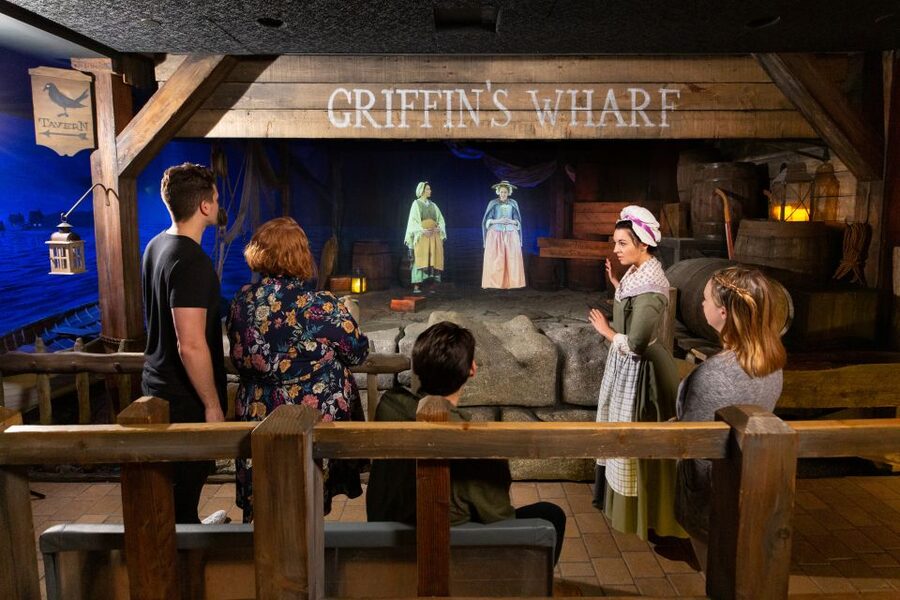
After the ship portion, you enter the museum for a more traditional look at the story. The technology here is not just decoration. Three-dimensional holographic characters appear and argue in front of you, showing the conflict between British soldiers and colonial patriots.
The holograms help present more than one side of the dispute. The Boston Tea Party is often taught as a neat patriotic episode, but the political arguments were messy. Some colonists supported resistance, while others remained loyal to Britain or feared the consequences of rebellion.
This part gives the tour needed balance. The live characters create excitement, while the museum explains the wider causes and effects. The result is a history lesson that keeps moving instead of asking you to stand still and read every panel.
There are artifacts and displays to examine, including material connected with the tea shipment and the protest. If you are interested in objects more than performance, you may wish the schedule allowed longer in the gallery. Large groups can move through at a steady pace, and the hour is carefully timed.
That time limit is the clearest weakness of the attraction. The guided story comes first, so you may not have enough time to absorb every label or explore every corner. If you want to inspect the displays closely, ask at the beginning how much free viewing time is available.
The wraparound film at the end
The final visual section uses a large wraparound theater to show the battle and the events that followed. It gives the experience a broader ending, moving beyond the tea crates and connecting the protest with the American Revolution.
This film is useful because the Boston Tea Party was only one step in a much larger chain of events. The theater helps place it in the wider conflict between Britain and the colonies.
The film also gives the hour a change of pace. After the live scenes and ship visit, you can sit back and watch the story unfold through a large-scale presentation. It is a straightforward way to reinforce the main points for children and anyone who does not know the sequence of events.
Do not expect a long documentary. The visit is designed as a one-hour experience, so the film works as a concluding lesson rather than a complete course in Revolutionary history.
How the actors shape the experience
The strongest feature throughout is the cast. The guides are expected to remain in character, speak in period style, and keep a large group involved. That is not easy in a busy attraction, but it gives the visit a clear rhythm.
The performances have included Mrs. Grant, Chase, and Ebenezer McIntosh. Individual casts change, so you should not book solely to see a particular performer. Still, these names show the kind of role-driven presentation you can expect.
The actors also make the history easier to remember. You may forget a date or political term, but you will likely recall a character arguing in the meeting house, a march toward the wharf, or the final group shout of Huzzah.
The style is deliberately theatrical. That can feel a little much if you prefer quiet interpretation, especially when the group is encouraged to respond aloud. For most families, school-age children, and first-time Boston visitors, the energy is part of the value.
Who will enjoy it most
I would recommend this attraction to families with school-age children, adults who like historical storytelling, and anyone looking for a change from Boston’s standard walking tours.
It works particularly well for children around the age when the American Revolution is being taught. The character card, Mohawk disguise, ship visit, and tea toss turn abstract ideas into actions they can remember.
Adults without children should not dismiss it as a kids-only stop. The political background, holographic debates, replica ships, and wraparound film provide enough substance for a grown-up visit, especially if you enjoy living-history attractions.
The tour is also a good companion to the Freedom Trail. The walking route gives you streets, churches, meeting houses, and other places tied to the Revolution. This attraction gives you a focused account of one dramatic night and lets you act out the central event.
It may be less satisfying if you want an unhurried museum visit. You might also find the performance style too lively if you prefer to study original objects in silence.
Is $35 a fair price?
At $35 per person, this is not Boston’s cheapest historical stop. The ticket covers timed admission, the live interactive tour, both recreated ships, the museum displays, the hologram scenes, and the wraparound theater.
I think the price is reasonable if you plan to use the full hour and take part in the guided story. You are paying for several forms of presentation rather than one room of exhibits. The live cast is the main cost-and-value factor, since the actors keep the group moving and explain the event while you participate.
The value is better for families because children get an activity they can physically join. It is also useful for a group with mixed interests, since one person can enjoy the performance, another the ships, and another the historical displays.
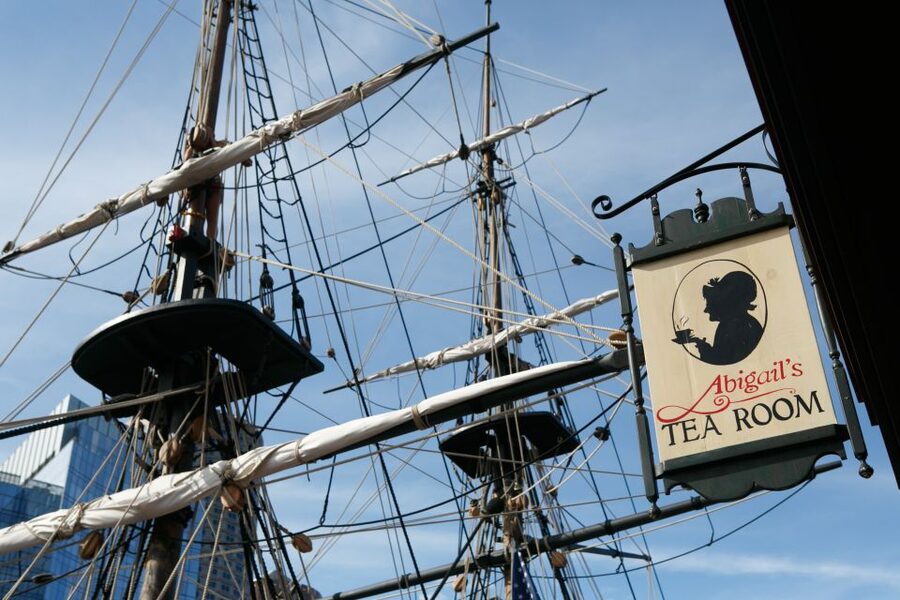
There are a few extra costs to remember. Food and drinks are not included, though Abigail’s Tea Room is available on site. Tea connected with the event can also be sampled for an additional charge. The gift shop offers souvenirs, but those are separate from admission.
Planning your visit
Book in advance, especially for weekend visits. Tickets can sell out, and the timed entry means you should arrive ready for the scheduled start.
The meeting point is the Boston Tea Party Ships and Museum on the Congress Street Bridge. English is the language used by the host and performers. Printed museum guides are available in 14 foreign languages, and you can request one at the museum or print it before arrival using the link provided with your voucher.
The experience lasts one hour, so leave room in your Boston schedule if you want time for the tea room, gift shop, or closer study of the exhibits. A large group may move quickly, and several people have found that they wanted more time with the artifacts.
Wheelchair users should note that this activity is not suitable for them. If mobility access is essential to your plans, choose another Boston history attraction.
You can cancel up to 24 hours before the visit for a full refund, and the reserve-now, pay-later option can help if your schedule is still changing.
Should you book the Boston Tea Party Ships and Museum?
Book it if you want history delivered through action, character, and visual storytelling. The tea toss is memorable, the ships give the event physical scale, and the actors make the political conflict easy to follow.
I would especially choose it for a first Boston visit, a family itinerary, or a day built around the Freedom Trail. Give yourself time to enjoy the museum displays, but understand that the guided story controls the pace.
Skip it if you want a quiet, self-guided museum or a long look at artifacts. For most people who enjoy participating, though, the $35 ticket buys a lively hour with real historical context and a rare chance to reenact one of the Revolution’s most famous acts.
FAQ
Where does the Boston Tea Party Ships and Museum tour begin?
The experience begins at the Boston Tea Party Ships and Museum on the Congress Street Bridge. You present your timed ticket when you arrive.
How long does the tour last?
The experience lasts one hour. Starting times vary, so check availability when you book.
Is the tour offered in languages other than English?
The host and live experience are in English. Printed museum guides are available in 14 foreign languages, either by request at the museum or for printing before arrival.
Can I throw tea into the harbor?
You can throw a covered tea crate overboard from a replica ship during the interactive tour. The activity uses a crate rather than loose tea bags.
Is food included with admission?
No. Food and drinks are not included. Abigail’s Tea Room is available separately, and tea connected with the event can be sampled for an additional cost.
Is the experience wheelchair accessible?
The activity is listed as unsuitable for wheelchair users.
Just added in Boston
- Boston’s Freedom Trail: A Revolutionary Walking Tour★ 5.0 · 1,343 reviews
- Delicious Donuts of Boston: A Sweet History Walking Tour★ 5.0 · 1,038 reviews
- Freedom Trail Walking Tour 250★ 4.5 · 1,118 reviews
- Sunset Sailing Cruise on a Tall Ship in Boston Harbor★ 4.5 · 414 reviews
- Boston North End Food Tour of 6+ Tastings, Cannoli, Lobster Roll★ 5.0 · 1,404 reviews
- Boston’s North End Food and History Walking Tour★ 5.0 · 459 reviews
- Narrated Sunset Cruise of Boston Harbor★ 4.0 · 532 reviews
- City Cruises Salem High Speed Ferry to/from Boston★ 4.5 · 727 reviews
Museums, compared.


Empire State Building Tickets – Observatory & Museum
Read our review →


9/11 Memorial, Ground Zero Tour with Optional 9/11 Museum Ticket
Read our review →

All-Access 9/11: Ground Zero Tour, Memorial and Museum, One World Observatory
Read our review →
Browse the lists this tour appears in