
Reviewed · WALKING TOURS
Boston: Freedom Trail History Small Group Walking Tour
Boston’s Freedom Trail is easy to follow on your own, but the hard part is knowing what you’re looking at. This small-group walking tour connects the red-brick path, old churches, graveyards, meetinghouses, and street corners into one clear story about the years leading to the American Revolution.
I like two things right away. You see all 16 official landmarks, not just the famous few, and the group is capped at 16 people, so you can ask questions without shouting across a crowd. The guides, including Jon, Maura, Mark, Alejandro, and Maz, are praised for strong storytelling and careful answers. The tradeoff is simple: you walk and stand for about two and a half hours, and you do not go inside the museums or churches.
Key points at a glance
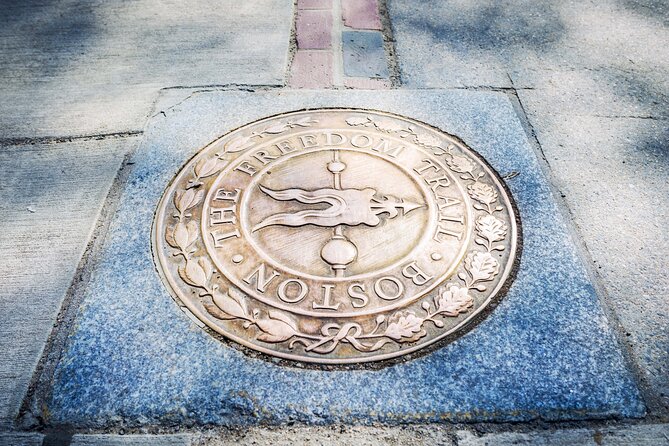
- All 16 Freedom Trail landmarks: Follow the route from Boston Common through the historic center and North End.
- A focused Revolutionary-era story: The main period is 1760 to 1775, when tension with Britain moved toward open conflict.
- Small groups of 16 or fewer: A useful size for questions, clear guide commentary, and easier movement through crowded streets.
- Strong guide-led storytelling: Guides such as Jon, Maura, Mark, Alejandro, and Maz are praised for history, quotes, humor, and enthusiasm.
- A practical 2.5-hour route: Start at the Boston Foundation Monument and finish at Copp’s Hill Terrace, near Hanover Street restaurants.
- Outdoor and accessible: The route is wheelchair and stroller accessible, and service animals are allowed, but extended standing requires moderate fitness.
Why this Freedom Trail walk works so well
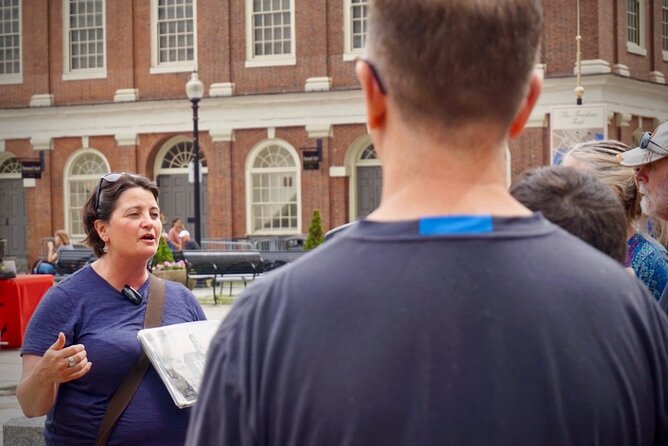
The Freedom Trail is not one sight. It is a chain of places spread across central Boston and the North End. Without context, you may see a church, a graveyard, or a stone marker and move on. With a guide, each place helps explain how Boston’s citizens argued, organized, protested, and finally faced British troops.
This tour focuses on the years from 1760 through 1775. That is a smart choice. You get the pressure building before the Revolution rather than a loose collection of famous names and dates. The guide can show how taxation, public meetings, military occupation, printed arguments, and neighborhood politics all fed the crisis.
I also like the route’s shape. You begin in Boston Common, move through the old civic center, then enter the North End. The setting changes as you walk. Broad public space gives way to narrow historic streets, old burying grounds, market buildings, and the homes and churches tied to the Midnight Ride.
At $35.10 per person, the value rests mainly in the guide. The landmarks themselves are viewed from public streets and squares, and indoor admissions are not included. If you want a structured history lesson, a clear route, and the chance to ask questions, the price is fair. If you prefer to enter every church and museum, you will need to budget extra time and admission fees after the tour.
Other history to see in Boston:
- Tour of Historic Fenway Park, America’s Most Beloved Ballpark
★ 4.5 · 3,013 reviews - Boston Food & History: Pizza, North End & Freedom Trail
★ 5.0 · 1,772 reviews - Boston: City Cruises Historical Sightseeing Cruise
★ 4.6 · 1,771 reviews
Boston Common and the first view of colonial Boston
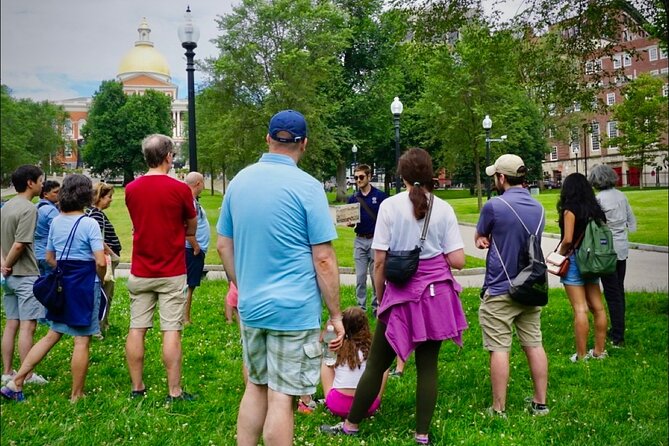
Meet inside Boston Common at the Boston Foundation Monument, near the northern edge of the park and opposite 50 Beacon Street. The monument recalls the arrival of the Puritans in 1630, giving the tour an early starting point before the guide turns to the Revolutionary period.
Boston Common is the oldest public land in the Americas, and it began as a communal grazing pasture in 1634. That fact helps you see the park as more than green space. It was a shared civic ground, tied to the daily life and government of the growing town.
You spend about 20 minutes here, which gives the guide time to explain the park and set up the political story. You may also see the Massachusetts State House, whose position above the Common helps explain the phrase Hub of the Solar System, an old nickname for Boston.
This opening is useful for first-time visitors because it gives you a sense of direction. The tour starts in a broad, open area, but much of the route later moves along sidewalks and through tighter spaces. Take note of the State House and the Common now, since you may want to return for a slower look after the tour.
Granary Burying Ground and Boston’s public memory
Granary Burying Ground is one of the most important stops on the walk. Founded in 1660, it is Boston’s third-oldest burying ground and the final resting place of many major figures from the Revolutionary era.
The guide’s job here is not only to name graves. It is to show how the cemetery reflects the city’s power structure and political memory. You will hear about people connected to the Revolution and the town’s institutions, while the old stones give you a direct sense of Boston’s age.
The tour also passes King’s Chapel, the first Church of England in Puritan Boston, and the city’s oldest burying ground, dating from 1630. These sites show that Boston was not politically or religiously uniform. Different congregations, traditions, and loyalties existed side by side, often uneasily.
You should expect to view these places from the outside. The tour does not include admission inside churches or museums. That keeps the walk moving, but it means you may want to return later if an interior catches your attention.
Franklin, Boston Latin School, and the civic center
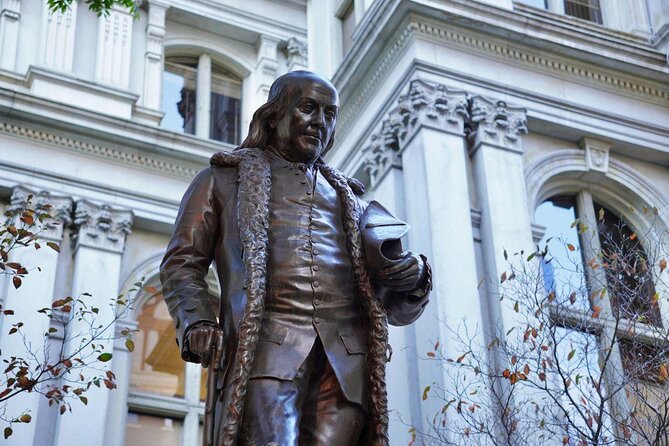
Near the statue of Benjamin Franklin, the guide explains the site of Boston Latin School, founded in 1635 and recognized as the oldest public school in the Americas. Franklin attended the school, though he did not graduate. The stop connects education, public life, and the rise of influential colonial figures.
The route then passes several civic landmarks, including the Old State House area and the center of Boston politics for more than a century. You also see the former publishing house associated with Ticknor & Fields, a reminder that this district continued to matter long after the Revolution.
This part of the walk can feel dense with facts, so a good guide matters. Jon is praised for arranging the story in chronological order, while Maura and Maz are noted for bringing energy and clear storytelling. Guides such as these help turn a string of dates into a sequence you can follow.
The small group helps here. With 16 people or fewer, you can ask why a particular building mattered or clarify the order of events. That is more useful than simply hearing a prepared speech and moving on.
Other walks around Boston:
- Cambridge: Harvard University Student-Guided Walking Tour
★ 4.6 · 3,931 reviews - Harvard University Campus Guided Walking Tour
★ 4.5 · 3,632 reviews - Boston Freedom Trail Walking Tour with Costumed Guide
★ 4.5 · 2,531 reviews - The Full Revolutionary Story Epic Small Group Boston Walking Tour
★ 5.0 · 2,356 reviews
Old South Meeting House and the Boston Massacre Site
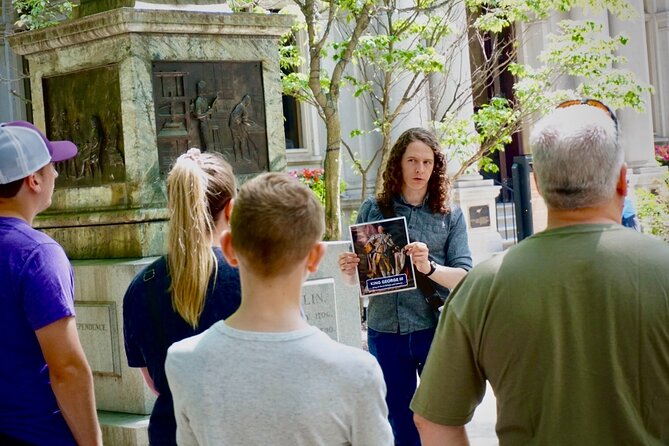
Old South Meeting House is tied to the Boston Tea Party. In 1773, it served as a meeting place for colonists deciding what to do about the tea shipment. The building also helps you picture the scale of public debate in Boston. Political decisions were made in meetinghouses, not only in government offices.
The route continues to the Old State House and the Boston Massacre Site. In 1770, British soldiers killed five Bostonians here. The event became a powerful piece of anti-British political messaging, especially after Paul Revere produced an influential engraving of the shooting.
The guide can explain the difference between what happened on the street and how the event was presented to the public. That distinction is one of the best reasons to take a history tour. You learn not only the event, but also how people used speeches, images, and public gatherings to shape opinion.
Allow about 20 minutes at the Boston Massacre Site. The location is in the middle of the modern city, so you will be surrounded by traffic, offices, and pedestrians. That contrast is part of the experience. The Revolution happened in a working town, not on a museum set.
Faneuil Hall and the Cradle of Liberty
Faneuil Hall was built in 1742 and hosted Boston town meetings. It is often called the Cradle of Liberty because of its role in public debate. The building and marketplace remain active parts of the city, so you can see how an old civic site has continued to serve public and commercial life.
The stop lasts about 10 minutes. That is enough for a focused explanation, but not enough for a long indoor visit. The tour also passes the building associated with America’s oldest restaurant, founded in 1826, and another historic building dating to 1704.
This stretch gives you a welcome change from graveyards and monuments. You are walking through a real commercial district, with food, shops, and plenty of street activity. The route is historic, but it is not isolated from modern Boston.
If you want lunch or a snack, remember that the tour continues into the North End. It may be more convenient to wait until the end, when you are close to Hanover Street restaurants, pastry shops, and pizza places.
North Square and Paul Revere’s neighborhood
North Square Park marks the transition into Boston’s North End. The square dates to 1634 and remains one of the area’s key public spaces. The streets feel more intimate here, and the walk begins to focus on the people and buildings connected to the Midnight Ride.
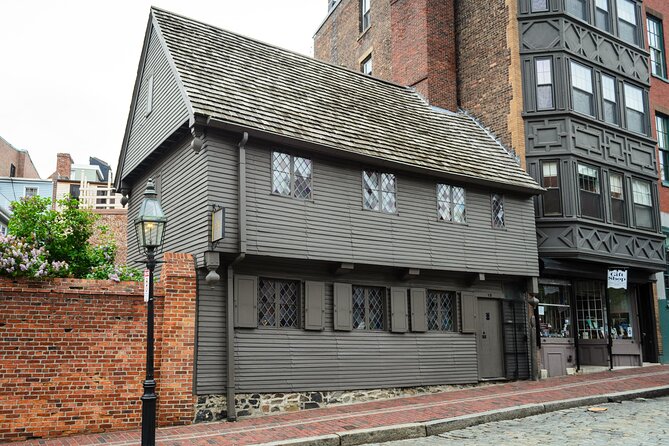
The Paul Revere House is the oldest structure in downtown Boston and was Revere’s home. You see the exterior as part of the walking route, but admission inside is not included. The guide can place Revere in the wider political network rather than treating him as a lone hero.
That context matters. Paul Revere was a craftsman, messenger, political organizer, and member of Boston’s Sons of Liberty. The story becomes more useful when you understand the communication network behind the famous ride.
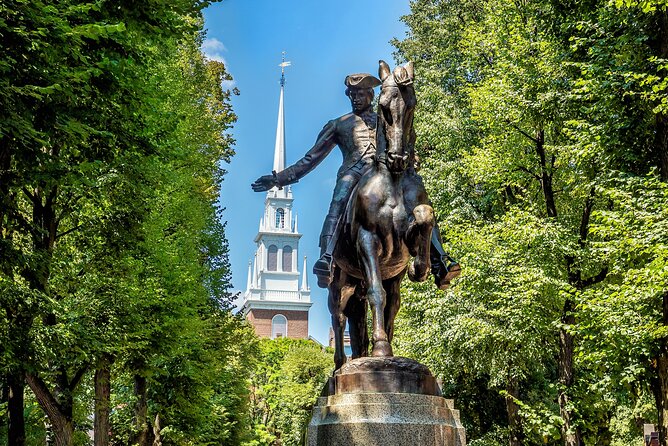
The Paul Revere Statue occupies a pedestrian space designed to honor the 1775 ride. The setting gives the guide room to explain the popular version of the story and the less familiar details that often get skipped in a basic city walk.
This is also where families may find the tour most engaging. A guide can connect a famous name to a home, a street, and a real sequence of actions. The route is still a history lesson, but the story becomes easier to picture.
Old North Church, burying grounds, and the final view
Old North Church is associated with the signal lanterns used during the Midnight Ride. The tour also passes the city’s second-oldest burying ground, adding another layer to the North End’s long record of public life, worship, and death.
Again, the walking tour does not include indoor church admission. If Old North Church interests you, plan to return on your own. The same applies to Old South Meeting House and King’s Chapel. Discounted admission may be available at Old South Meeting House and Old North Church with a Hub Town Tours ticket, and King’s Chapel is expected to offer that discount soon. Check current conditions when booking or arriving.
The route ends at Copp’s Hill Terrace after about 20 minutes in the final area. From here, you can look across the Charles River toward the USS Constitution and Bunker Hill Monument. These landmarks are not included in the walking route because Charlestown is not part of the tour, but the view provides a fitting closing scene.
Finishing in the North End is practical. You are close to Hanover Street and its Italian restaurants, pastry shops, and pizza spots. You can eat, continue exploring, or use public transportation from the area.
Timing, walking comfort, and winter conditions
The tour lasts about two hours and 30 minutes. You should be prepared for regular walking and extended periods of standing. The route is listed as wheelchair and stroller accessible, and service animals are allowed, but the physical demands still matter. If standing for long periods is difficult, this may not be the right format.
Boston weather can change the feel of the experience. Several winter tours have taken place in freezing and windy conditions. Guides such as Alejandro and Jon have used indoor or covered spaces for warm-up breaks when possible, but you should still dress for an outdoor walk. A warm coat, hat, gloves, and comfortable shoes are sensible in cold months.
The cold can also affect how much you absorb. If you are shivering, even a great explanation becomes hard to follow. On a winter morning, arrive dressed for the forecast rather than relying on a heated stop.
In mild weather, the route is easier to enjoy, but summer crowds may slow movement around the most popular sites. The small group helps, though it cannot remove street traffic or busy sidewalks.
Who should book this tour
I would choose this tour for a first visit to Boston, especially if you want the Freedom Trail explained in historical order. It suits adults, families with older children, and anyone who enjoys public history, old buildings, political arguments, and stories tied to real places.
The tour can also work well on your first day. It gives you a useful map of central Boston and the North End, while the final stop leaves you near restaurants and additional historic sights. One family completed the route with children aged 11 and 14, but younger children may find two and a half hours of history and walking demanding.
History-focused visitors should appreciate the guide quality. Jon, Mark, Maura, Alejandro, Maz, Nick, Cal, Kiera, Amelia, Will, Miles, and other guides are described as enthusiastic educators with different strengths. Some rely on chronological structure, some on vivid storytelling, and some on humor and questions. The exact guide varies, so you cannot book around a particular person unless the operator confirms it.
I would skip this tour if you mainly want indoor sightseeing, a short orientation, or a quick photo walk. You will not enter the major buildings during the standard route, and the pace leaves little time for independent browsing.
Booking value and cancellation terms
At $35.10, the tour is reasonably priced for a 16-person maximum and a full 2.5-hour route. You are paying for organization, historical explanation, and access to a guide who can answer questions while you move through the city.
The free cancellation policy gives you flexibility up to 24 hours before the start time. Cancellations within 24 hours are not refunded, and late changes are not accepted. The tour also depends on suitable weather and a minimum number of participants. If the operator cancels for either reason, you are offered another date or experience, or a full refund.
Should you book the Freedom Trail History Small Group Walking Tour?
Book it if you want Boston’s famous path to make sense as one connected story. The route covers every official Freedom Trail landmark, the group stays small, and the strongest part of the experience is the guide’s ability to explain why each site mattered.
Go in with realistic expectations. This is an outdoor history walk, not a series of museum visits. Wear good shoes, allow for standing, dress for the weather, and save time afterward for any interiors you want to explore. For a first-time Boston visit, $35.10 buys a useful introduction to the city’s political heart and a clear way to get your bearings on foot.
FAQ
How long does the Freedom Trail walking tour last?
The tour lasts approximately two hours and 30 minutes.
How many people can join the tour?
The group has a maximum of 16 travelers.
What landmarks are included?
The route includes all 16 official Freedom Trail landmarks, from Boston Common to Copp’s Hill Terrace.
Where does the tour begin?
The meeting point is the Boston Foundation Monument inside Boston Common, near 49 Beacon Street in Boston.
Where does the tour end?
The tour ends at Copp’s Hill Terrace at 520 Commercial Street in Boston’s North End.
Does the tour include admission inside churches or museums?
No. Admission inside museums and historic buildings is not included.
Is the route wheelchair and stroller accessible?
Yes. The experience is listed as wheelchair and stroller accessible, and service animals are allowed.
What happens if the tour is canceled because of weather?
You are offered a different date or experience, or a full refund. You can also cancel for a full refund if you do so at least 24 hours before the start time.
Just added in Boston
- Boston’s Freedom Trail: A Revolutionary Walking Tour★ 5.0 · 1,343 reviews
- Delicious Donuts of Boston: A Sweet History Walking Tour★ 5.0 · 1,038 reviews
- Sunset Sailing Cruise on a Tall Ship in Boston Harbor★ 4.5 · 414 reviews
- Boston North End Food Tour of 6+ Tastings, Cannoli, Lobster Roll★ 5.0 · 1,404 reviews
- Freedom Trail Walking Tour 250★ 4.5 · 1,118 reviews
- Boston’s North End Food and History Walking Tour★ 5.0 · 459 reviews
- Narrated Sunset Cruise of Boston Harbor★ 4.0 · 532 reviews
- City Cruises Salem High Speed Ferry to/from Boston★ 4.5 · 727 reviews
Walking Tours, compared.
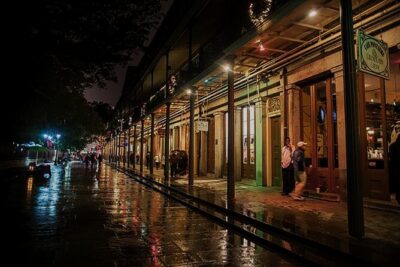
New Orleans Premier Ghost, Voodoo and Vampire Walking Tour
Read our review →
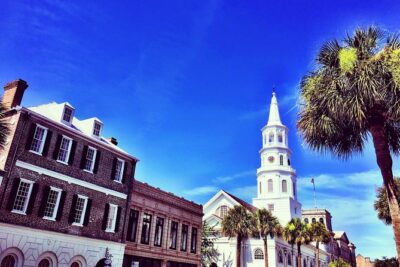
Historic Charleston Guided Sightseeing Walking Tour
Read our review →
New Orleans Food Walking Tour of the French Quarter with Small-Group Option
Read our review →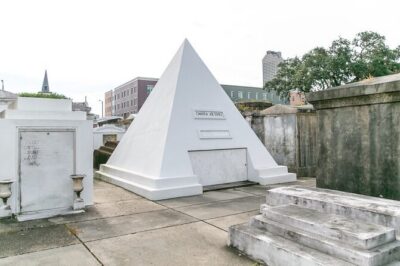
St. Louis Cemetery No. 1 Official Walking Tour
Read our review →
Harvard University Student-Guided Walking Tour
Read our review →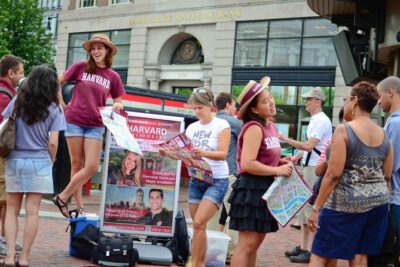
Harvard University Campus Guided Walking Tour
Read our review →
Savannah History and Haunts Candlelit Ghost Walking Tour
Read our review →Browse the lists this tour appears in