
Reviewed · MUSEUMS
Boston Tea Party Ships and Museum Admission
Boston’s most famous protest becomes much easier to understand when you are holding a crate of tea and preparing to toss it into the harbor. This guided visit moves from the political disputes of the 1760s to the night of December 16, 1773, using costumed performers, replica ships, film, and audience participation.
I especially like the chance to board the Eleanor and Beaver, rather than only view artifacts behind glass. I also like the surviving Robinson Tea Chest, a small but genuine link to that night. The main drawback is that the experience is theatrical and geared partly toward families, so visitors seeking a quiet museum visit may find the acting and crowd participation a little much.
Key points to know before you go
- Throw tea from a ship: You take part in the famous protest instead of only hearing about it.
- See a real tea chest: The Robinson Tea Chest is one of only two known surviving chests from the Boston Tea Party.
- Follow the story in order: The tour connects the 1765 tax disputes to the Boston Tea Party and the opening battles of the Revolution.
- Expect costumed guides: The performers use humor, audience participation, and period roles to keep the story moving.
- Plan for outdoor time: Parts of the visit take place outside, so dress for Boston weather.
- Arrive 15 minutes early: Late arrivals may lose their seats, and the museum can close for holidays, maintenance, or private events.
Why this Boston history experience works
The Boston Tea Party Ships and Museum is not a traditional walk-through museum. It is a guided performance with museum exhibits built around it. That distinction matters.
You do not simply read a plaque about the tea protest. You meet characters connected to colonial Boston, hear the arguments that led to the protest, board replica sailing ships, and take part in the action. The format gives younger visitors something to do, while adults get a clear explanation of how a dispute over taxation turned into open rebellion.
The story is presented in the order it happened. That helps if your knowledge of the American Revolution is a little rusty. The experience begins with the political pressure building in the colonies, moves toward the destruction of the tea, then points ahead to the fighting at Lexington and Concord.
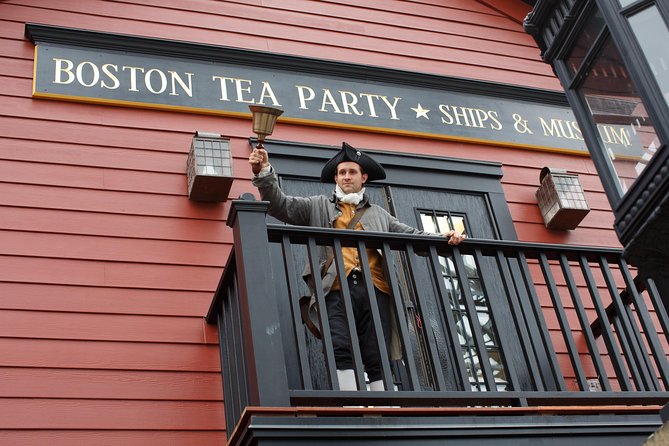
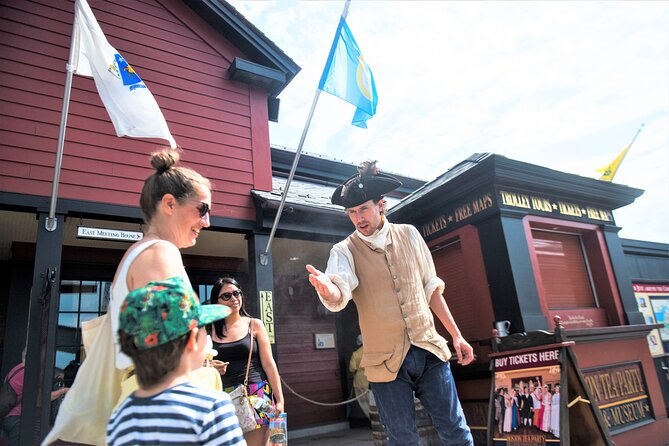
The tone is lively, sometimes deliberately silly. Guides stay in character, use jokes, and invite people into the story. Oliver and Steve are among the performers who have drawn particular praise for their energy and presentation. The acting is a major part of the value here, so you should expect more than a standard museum docent talk.
Other tickets worth buying ahead in Boston:
- Boston: View Boston Observation Deck Entry Ticket
★ 4.7 · 1,451 reviews - New England Aquarium Admission Ticket in Boston
★ 4.0 · 446 reviews - Boston: Franklin Park Zoo Entry Ticket
★ 4.3 · 430 reviews
Starting with colonial Boston and the Sons and Daughters of Liberty
The visit begins at 306 Congress Street, where you join the Sons and Daughters of Liberty for a guided account of the events that pushed Boston toward revolt. The setting introduces the people, taxes, and political arguments behind the famous protest.
This is useful context. Many quick accounts of the Boston Tea Party reduce it to a simple act of anger over tea prices. The experience gives you a broader picture, including the long argument over Britain’s right to tax the colonies and the tension between colonial merchants, British officials, and ordinary residents.
Audience participation begins early. You may be asked to take on a role or respond to questions from a character. That can feel slightly awkward if you prefer to remain unnoticed, but it is also what keeps the presentation from becoming a lecture.
The staff use humor to make the material easier to remember. One example shared from the experience involves a rope maker’s apprentice asking where people are from and responding to modern answers in character. These small exchanges help bridge the gap between an 18th-century story and a modern audience.
The Meeting House and the night of December 16, 1773
At the Meeting House, the focus shifts to the night when colonists decided to stop the tea from being unloaded and sold. You hear the story of the gathering, the political stakes, and the decision to board the ships.
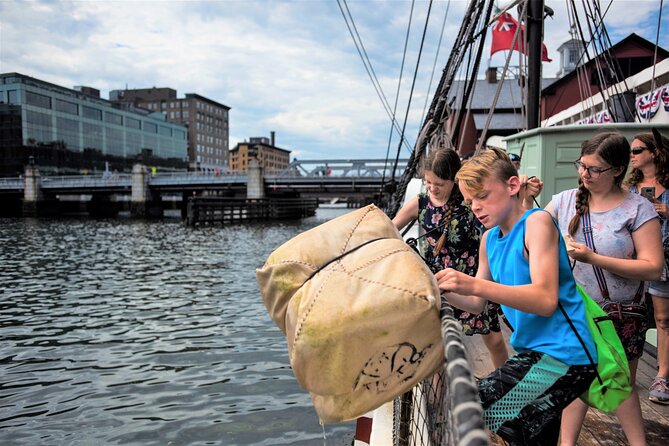
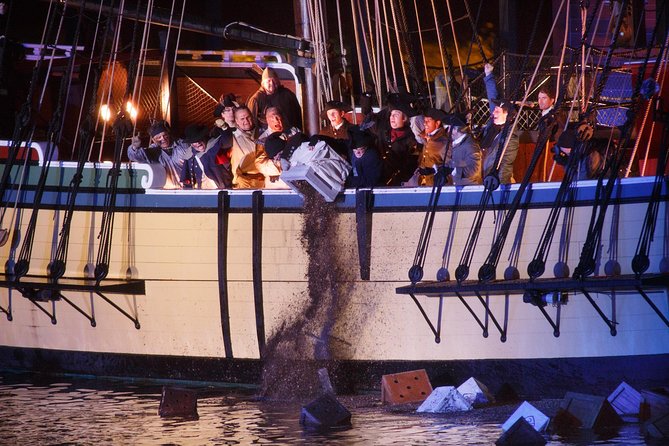
This is the point where the tour asks you to move from observer to participant. You are prepared to join the patriots and throw tea into the harbor. It is a simple action, but it gives the event a physical quality that a textbook cannot provide.
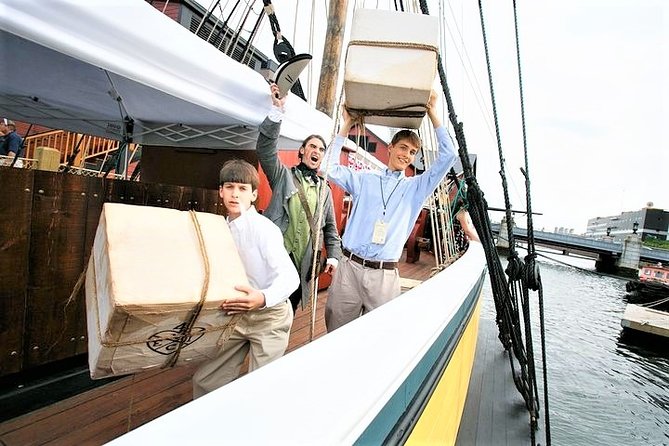
The activity is especially effective with children because the central action is clear. They can see the tea, carry it, and take part in the protest. Adults may appreciate the way the performance explains that the event was organized and purposeful, not just a random outburst.
The presentation also corrects some familiar shortcuts in the popular story. Paul Revere, for example, is often associated with shouting that the British were coming. The more careful account presented here explains that colonists still considered themselves British, and that the riders were warning people about British regular troops. The experience also gives attention to William Dawes and Samuel Prescott, who helped spread the warning but receive less attention in popular retellings.
Boarding the Eleanor and Beaver
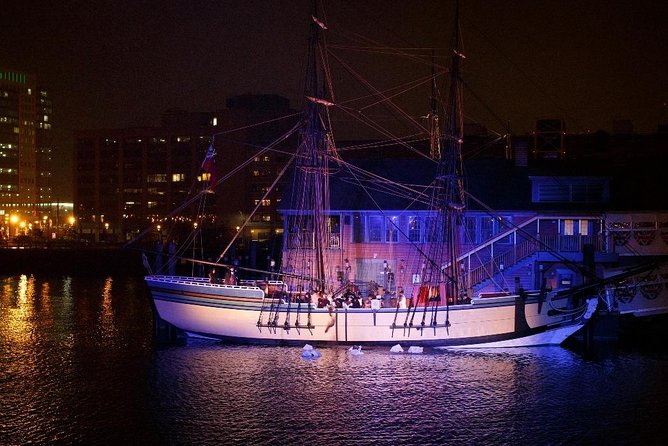
The centerpiece is the chance to board two authentically restored replica tea ships, the Eleanor and the Beaver. These are not the original vessels, but they give you a much better sense of the cramped working setting than a picture or model could.
You can look at the decks and imagine the confusion of loading, unloading, and moving cargo in a crowded harbor. The ships are also where the tea-tossing activity takes place. The result is theatrical, but it is grounded in a real place and action.
You should keep your expectations in check. This is a guided experience with a set story and a scheduled pace, not an open-ended ship inspection. You will be led through the areas as part of the larger presentation.
There are also stairs. One account specifically warns that older visitors should be prepared for them, even though the attraction is described as wheelchair and stroller accessible. If mobility is a concern, contact the museum before booking so you can confirm how the current route works.
The ships are partly outdoors, which affects comfort more than you might expect. Boston can be cold, windy, wet, or hot depending on the season. Bring suitable layers and shoes that are comfortable on ship decks. This is not the place for an outfit that only works indoors.
Other museums and galleries in Boston:
- Boston: Boston Tea Party Ships and Museum Interactive Tour
★ 4.8 · 1,926 reviews - NYC: 9/11 Memorial & Museum Timed-Entry Ticket
★ 4.8 · 31,428 reviews - NYC: Empire State Building Tickets – Observatory & Museum
★ 4.7 · 25,757 reviews - New York City: American Museum of Natural History Ticket
★ 4.5 · 15,447 reviews
Throwing tea into Boston Harbor
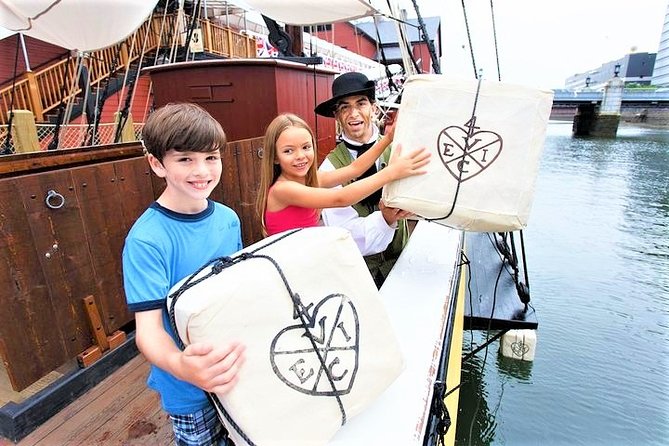
The tea toss is the moment most people remember. You receive tea and get to throw it from the ship, recreating the act that made the Boston Tea Party famous.
It is playful, but it also makes the political story stick. You understand the basic physical fact of the protest: crates had to be opened, tea had to be removed, and the cargo had to be destroyed without turning the event into a general looting spree.
The guides keep this section moving and help with photographs. They may also invite different people to participate, so you can expect some interaction rather than a silent turn at the rail.
This is one reason the experience works well for families. Children get a memorable action, and adults get enough explanation to place it in the larger conflict. If you dislike being called on in public, the format may feel a little forced at times. The performers are clearly trying to keep the group involved, not to create a quiet historical reconstruction.
The Robinson Tea Chest and the museum exhibits
Inside the museum, you see the Robinson Tea Chest, one of only two known surviving chests connected to the Boston Tea Party. It is easy to imagine a large shipping chest, so prepare for the actual object to look smaller than expected.
The surviving chest is a half chest, about 10 inches high, 13 inches wide, and 12 inches deep. Full tea chests were larger and could hold substantial amounts of tea, but this compact object is the surviving physical link to the protest. Its size does not make it less important. In fact, the contrast between its modest appearance and its historical importance is part of the interest.
The museum also uses traditional exhibits and multimedia displays to explain the people and consequences of the event. You are not asked to rely only on the performance. The exhibits add dates, background, and visual context.
The multi-sensory film Let It Begin Here carries the story toward the American Revolution. It includes Paul Revere’s ride and the battle where the famous shot was fired. The film adds drama and helps connect the tea protest to the fighting at Lexington and Concord in April 1775.
Some adults may find the film and staging a little dated compared with newer museum technology. Even so, the combination of actors, physical spaces, and video gives the visit more variety than a single presentation would.
Abigail’s Tea Room and the end of the visit
The experience ends back at the museum, with a stop at Abigail’s Tea Room. Tea and scones are available there, giving you a calm finish after the performance. Food and drinks are not included in the admission price, so treat this as an optional stop rather than part of the ticket.
The tea room is also a useful place to slow down and talk through what you have just seen. The attraction has a gift shop as well, with history-themed items and souvenirs.
The advertised visit lasts about one hour, though you may spend extra time in the tea room or shop. The tour itself follows a fixed route and ends where it begins, so it is easy to fit into a day of sightseeing around Boston.
Is the $35 price fair?
Admission costs $35 per person. That is more than you would pay for a basic historical exhibit, but the ticket covers a guided performance, access to the museum, the replica ships, the film, and the tea-tossing activity.
I think the value depends on what you want. If you are interested in the Revolution and enjoy live interpretation, the price is reasonable because the ticket combines several formats. You are not paying only to look at one artifact. You receive a structured hour of storytelling with actors, a ship visit, audience participation, and museum displays.
If you prefer to move at your own speed, read long exhibit labels, or avoid staged entertainment, the price may feel high. One critical assessment described the experience as dated and disjointed, while another found it primarily suited to children. Those concerns are fair. The attraction is polished and popular, but it is not a scholarly archive or a quiet gallery.
The consistently strong rating, 4.7 from 2,512 ratings, reflects how well the format works for many families, couples, solo visitors, and history fans. The attraction is recommended by 94 percent of visitors. I would still judge the price by your interest in interactive storytelling rather than by the size of the museum alone.
Who will enjoy it most
I would choose this experience for families with school-age children, first-time visitors to Boston, and anyone who wants a clear introduction to the early stages of the American Revolution. The tea toss gives children a reason to pay attention, while the actors add enough humor to keep the hour moving.
It also suits adults who enjoy living-history performances. The cast stays in character and handles questions and audience reactions with energy. If you like learning through people and places rather than long written displays, this is a good fit.
History specialists may want more detail about the wider political and economic story. The attraction gives useful context, but its first duty is to entertain and involve the audience. You may want to pair it with other Boston sites if you are building a detailed study of the Revolution.
The experience is offered in English. Most people can participate, and service animals are allowed. It is described as wheelchair and stroller accessible, but the presence of stairs and outdoor sections means you should confirm the route if you need step-free access.
Practical timing and booking advice
The experience is often booked about 26 days ahead, so reserve early if your Boston dates are fixed. The museum asks everyone to check in on site 15 minutes before the scheduled time. If you arrive later, your seat may be given away.
The museum is closed on Thanksgiving and Christmas Day. It is also scheduled to close for maintenance from January 27 through February 5, and private events can cause other closures.
The attraction requires good weather. If poor weather forces a cancellation, you are offered another date or a full refund. Otherwise, you can cancel for a full refund up to 24 hours before the start time. Changes or cancellations inside that 24-hour window are not accepted.
Should you book the Boston Tea Party Ships and Museum?
Book it if you want history with movement, humor, and audience participation. The replica ships, tea toss, surviving chest, and clear timeline give you more than a quick photo stop. It is particularly useful early in a Boston visit because it explains the tensions that shaped the city’s Revolutionary story.
Skip it if you want a quiet, self-guided museum or a highly academic treatment. The performance can feel touristy, and the stairs, outdoor portions, and family-focused tone may not suit everyone.
For most first-time visitors, especially families, I think the hour is well spent. Arrive early, dress for the weather, expect some acting, and go in ready to take part. You may leave with a better grasp of how a load of tea helped push a protest toward war.
FAQ
How long does the Boston Tea Party Ships and Museum experience last?
The guided experience lasts approximately one hour. You may spend additional time afterward in Abigail’s Tea Room or the gift shop.
How much does admission cost?
Admission costs $35 per person.
Where does the tour begin and end?
The experience begins at 306 Congress Street, Boston, Massachusetts. It ends back at the same meeting point.
Is the tea toss included?
Yes. The guided experience includes the chance to throw tea from one of the replica ships as part of the presentation.
Can I see an original tea chest?
Yes. You can see the Robinson Tea Chest, one of only two known surviving tea chests from the Boston Tea Party.
Is the museum wheelchair and stroller accessible?
The experience is listed as wheelchair and stroller accessible. Some information also notes that there are lots of stairs and outdoor sections, so contact the museum ahead of time if you need specific access arrangements.
What language is the experience offered in?
The experience is offered in English.
What is the cancellation policy?
You can cancel at least 24 hours before the start time for a full refund. Cancellations or changes made less than 24 hours before the start time are not accepted. If poor weather causes the museum to cancel, you are offered another date or a full refund.
Just added in Boston
- Boston’s Freedom Trail: A Revolutionary Walking Tour★ 5.0 · 1,343 reviews
- Delicious Donuts of Boston: A Sweet History Walking Tour★ 5.0 · 1,038 reviews
- Freedom Trail Walking Tour 250★ 4.5 · 1,118 reviews
- Sunset Sailing Cruise on a Tall Ship in Boston Harbor★ 4.5 · 414 reviews
- Boston North End Food Tour of 6+ Tastings, Cannoli, Lobster Roll★ 5.0 · 1,404 reviews
- Boston’s North End Food and History Walking Tour★ 5.0 · 459 reviews
- Narrated Sunset Cruise of Boston Harbor★ 4.0 · 532 reviews
- City Cruises Salem High Speed Ferry to/from Boston★ 4.5 · 727 reviews
Museums, compared.


Empire State Building Tickets – Observatory & Museum
Read our review →


9/11 Memorial, Ground Zero Tour with Optional 9/11 Museum Ticket
Read our review →

All-Access 9/11: Ground Zero Tour, Memorial and Museum, One World Observatory
Read our review →
Browse the lists this tour appears in