
Reviewed · HISTORICAL TOURS
New York City: American Museum of Natural History Ticket
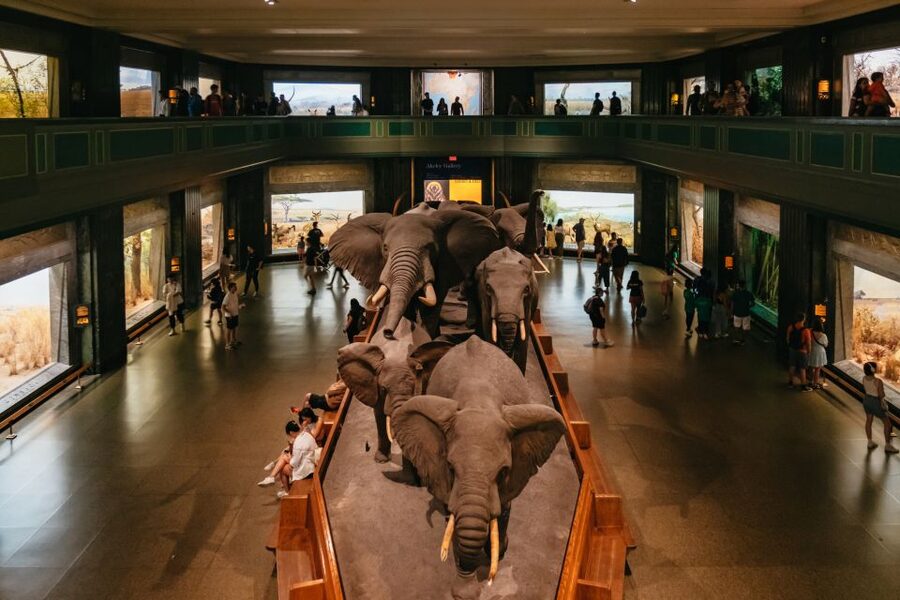
The American Museum of Natural History is not just a dinosaur museum. It is a full day of giant fossils, ocean life, human cultures, outer space, and hands-on science, spread across more than 40 halls. I like the enormous range of subjects and the way the new Gilder Center gives the museum a fresh, modern edge.
I also like the free Explorer App, which helps you find your way through the maze of rooms and offers self-guided tours. The main catch is simple: general admission does not cover every special exhibition, so check your ticket choice carefully before booking.
Key points at a glance
- More than 40 permanent halls: See dinosaurs, diamonds, ocean animals, mammals, human cultures, and much more.
- A full-day museum visit: Four to five hours is a sensible minimum, but you still may not see everything.
- The new Gilder Center: Expect modern science displays, immersive rooms, and family-friendly learning.
- Choose your extras carefully: Some planetarium shows, films, the butterfly vivarium, and special exhibitions require an upgraded ticket.
- Useful digital help: Free Wi-Fi and the Explorer App provide maps, directions, quizzes, and exhibit stories.
- A strong rainy-day choice: The museum works especially well for families when New York weather turns cold or wet.
Why this museum deserves a full day
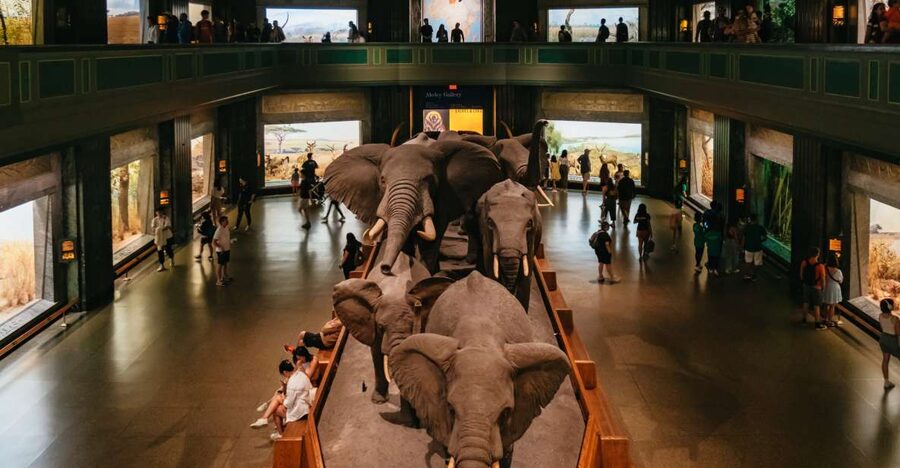
I would not treat this as a quick stop between Central Park and another Midtown sight. The museum holds more than 30 million objects, and the public galleries cover subjects ranging from the origin of the universe to the cultures of the Pacific.
That size is both the pleasure and the problem. You can spend an hour with dinosaur skeletons and then realize you have barely touched the rest of the building. Many families plan on four or five hours, but even that may leave whole floors unseen.
The museum sits directly across from Central Park, so it fits naturally into a day on the Upper West Side. Still, I would give it its own main block of time rather than trying to squeeze it between tightly scheduled activities.
Other museums and galleries in New York City:
- NYC: 9/11 Memorial & Museum Timed-Entry Ticket
★ 4.8 · 31,428 reviews - NYC: Empire State Building Tickets – Observatory & Museum
★ 4.7 · 25,757 reviews - NYC: Museum of Modern Art (MoMA) Entry Ticket
★ 4.6 · 12,540 reviews
Start with the permanent halls
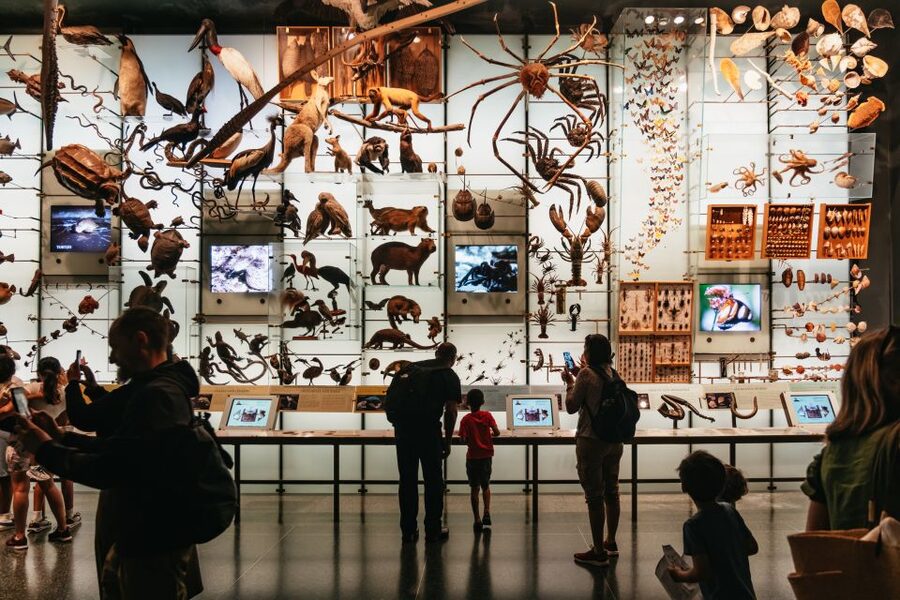
Your general admission includes more than 40 permanent exhibition halls, the Rose Center for Earth and Space, and the Richard Gilder Center. This gives you a substantial visit even without any ticketed extras.
The halls are arranged around major themes. You can move from dinosaurs and fossils to minerals, mammals, ocean life, biodiversity, and the cultures of communities from around the world. The museum’s famous dioramas are especially worth your time. They turn scientific subjects into carefully staged scenes, making the displays easy to understand even when you are visiting with children.
The museum is big enough that a little planning helps. Download the free Explorer App after connecting to the museum Wi-Fi. It provides turn-by-turn directions, exhibit stories, quizzes, and self-guided routes through popular collections.
I would use the app to choose a few priorities rather than trying to follow every suggested stop. A paper map is also available, although the layout can take a little time to understand. If you are on a tight schedule, one useful approach is to begin on the fourth floor and work downward, a tip that can help you cover more ground efficiently.
The dinosaur halls and Night at the Museum connections
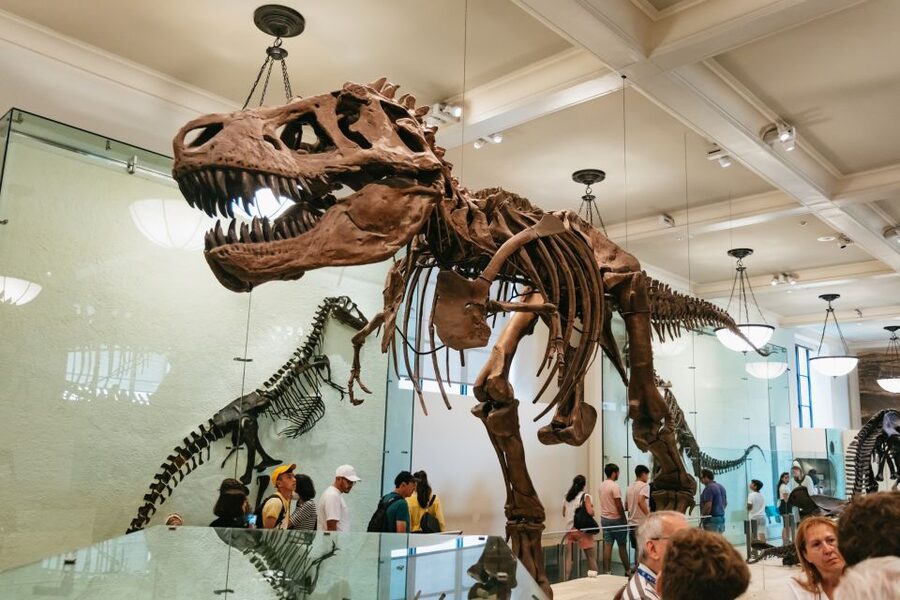
Dinosaurs are the museum’s biggest crowd-pleaser, and the collection is described as the world’s largest. The fossil halls give you the chance to see enormous skeletons and compare creatures from different periods.
The Tyrannosaurus Rex skeleton is an obvious stop. So is the Easter Island head, which helped inspire locations and characters in the film Night at the Museum. Those movie links can make the visit more fun for children, but you do not need to know the film to appreciate the displays.
I would allow extra time here if your family is visiting mainly for fossils. The dinosaur halls can become crowded, particularly during school holidays and busy winter weeks. That does not ruin the experience, but it can make it harder to pause in front of the most popular skeletons.
The Rose Center and the mysteries of space
The Rose Center for Earth and Space shifts the focus from fossils beneath your feet to the universe above you. Its displays explain astronomy and the forces that shape Earth and the wider cosmos.
The Hayden Planetarium Space Show is available only with the appropriate ticket option. The current Space Show, Encounters in the Milky Way, is narrated by Pedro Pascal and follows the chance encounters and cosmic movements that have shaped our part of the galaxy.
This is a good choice if you want a seated, visual break from walking through galleries. Check the available show times when choosing your ticket, since a special exhibition or planetarium entry may be timed rather than open-ended.
The Rose Center is also one of the museum’s strongest areas for explaining large scientific ideas in a way that does not require specialist knowledge. You can think about galaxies, planetary motion, and Earth science without reading every label in the building.
Other history to see in New York City:
- NYC: Starship Landmark 90 Minute Sightseeing Cruise
★ 4.6 · 3,666 reviews - Starship Landmark 90 Minute Sightseeing Cruise
★ 4.5 · 2,073 reviews - American Museum of Natural History Admission Ticket
★ 4.0 · 1,931 reviews - NYC: Speakeasy Drinks and Prohibition History Tour
★ 4.7 · 474 reviews
What makes the Gilder Center different
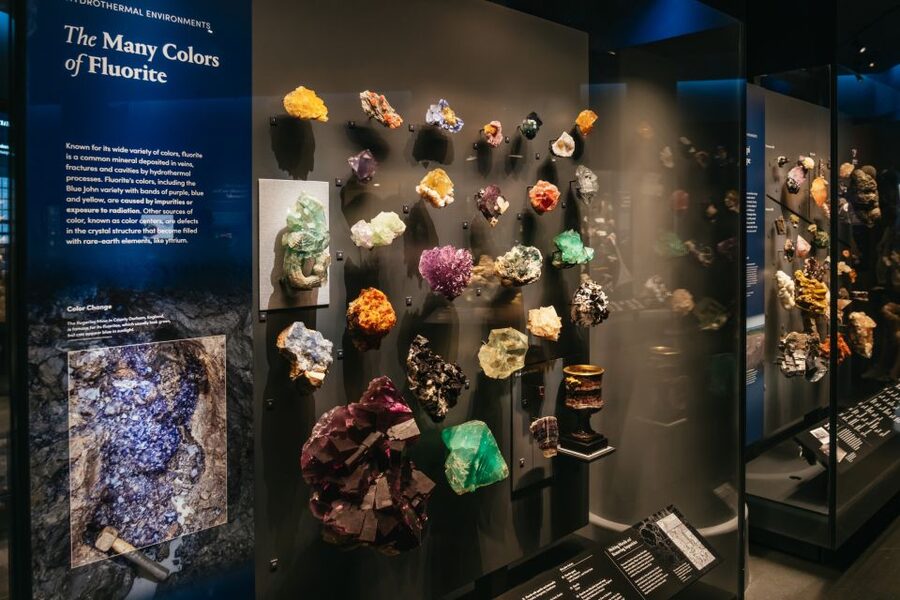
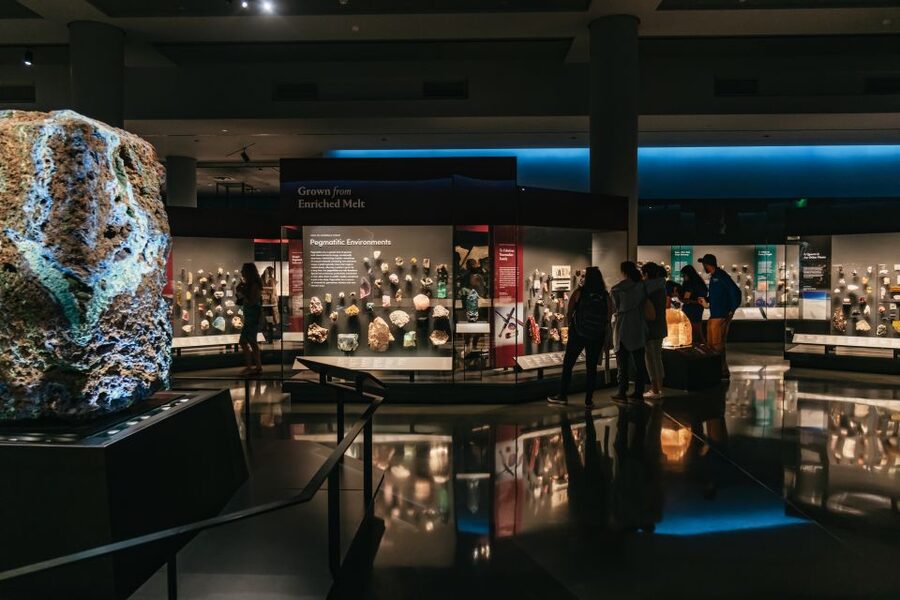
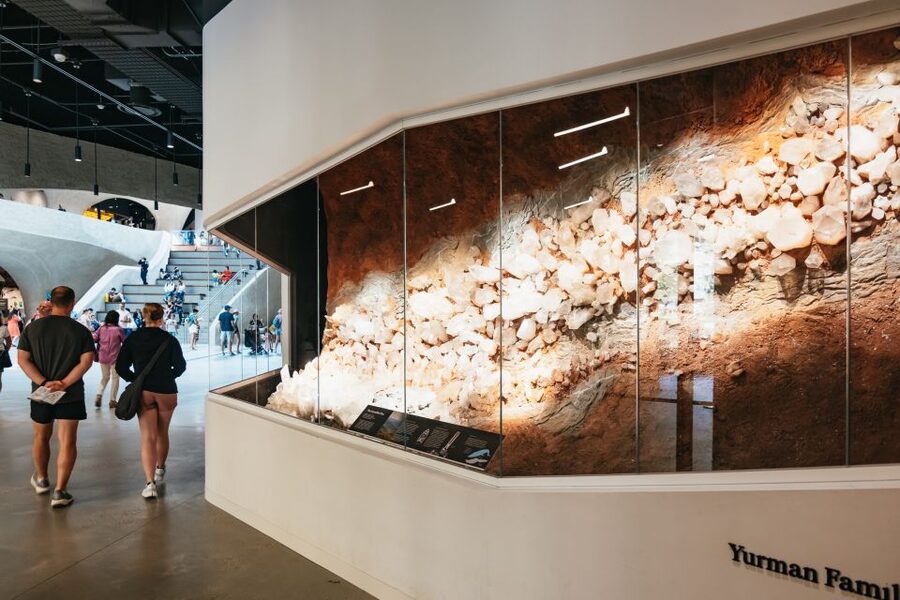
The Richard Gilder Center for Science, Education, and Innovation is the museum’s newest major addition. Its state-of-the-art exhibits and immersive experiences give the visit a more contemporary feel than the traditional fossil and diorama halls.
I would make a point of seeing it even if your main goal is dinosaurs. The Gilder Center is designed for all ages, with science presented through visual displays and interactive elements rather than long blocks of text.
It also helps balance the museum’s older galleries. The classic halls can feel grand and sometimes old-fashioned, while the Gilder Center offers a more current approach to science education. Families with children may find it easier to hold attention here, especially after several hours of looking at static displays.
Ocean life, biodiversity, and the natural world
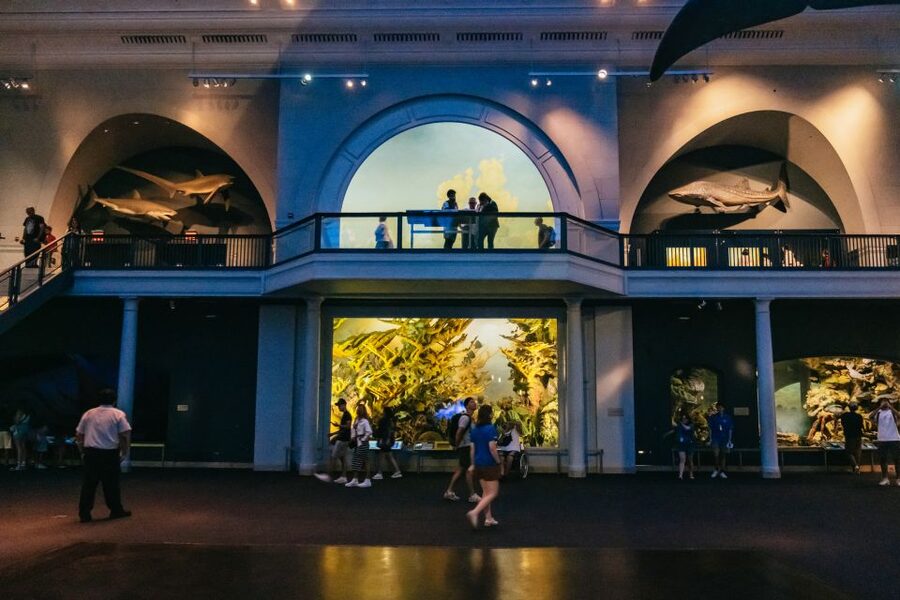
The Milstein Hall of Ocean Life is one of the museum’s most memorable spaces. Its large marine animals give you a sense of the scale and variety of life beneath the sea.
The Hall of Biodiversity takes a broader view, showing how living systems connect and change. It works well after the ocean halls because it moves your attention from individual animals to the larger patterns of life on Earth.
You can also choose Invisible Worlds, a permanent 360-degree theater experience included only with certain ticket types. It takes you into hidden parts of nature, from the depths of the ocean to the DNA found in living organisms.
Life at the Limits: Nature’s Superheroes is another ticketed option. It focuses on organisms that survive extreme conditions and the unusual abilities that make this possible. I would choose this exhibition if you enjoy biology and adaptation more than traditional museum displays.
Special exhibitions worth considering

The $37 price is easier to justify if you select a ticket that includes one or more special exhibitions. General admission alone still gives you plenty, but it does not include every major presentation.
Impact: The End of the Age of Dinosaurs looks at the asteroid collision 66 million years ago and the changes that followed. It is a natural companion to the dinosaur halls because it explains not only the creatures that disappeared, but also the burst of life that came afterward.
The museum also offers a giant-screen film in the LeFrak Theater. The screen is 40 feet high and 66 feet wide, with a modern digital sound system and nature films. This can be a welcome seated pause during a long day, particularly for children who need a break from walking.
The Davis Family Butterfly Vivarium is another special option. Up to 1,000 free-flying butterflies move through the year-round exhibit, and one might land on you. This is a very different experience from the fossil halls, so it can be a good pick for families who want something lively and close-up.
Remember that the butterfly vivarium, giant-screen film, Invisible Worlds, and Hayden Planetarium Space Show are not included with general entry alone. Select the matching ticket option when booking.
How the $37 ticket measures up
At $37 per person, this is not a cheap museum stop, but the length of the visit changes the calculation. If you stay four or five hours and use the permanent halls, Rose Center, and Gilder Center, you are paying for a large amount of content in one location.
The value improves if you are interested in several subjects. A child fascinated by dinosaurs may still enjoy the ocean hall, space displays, and butterfly vivarium. Adults can spend time with cultural exhibits, geology, astronomy, and the detailed dioramas.
The main value question is which ticket you choose. A basic entry ticket gives you a very large museum, but not the ticketed exhibitions. If you already know you want the planetarium show or butterfly vivarium, compare the upgraded options before paying.
New York residents have a different arrangement. The amount paid for general admission is up to the visitor and includes the permanent halls, Rose Center, and Gilder Center, but not the ticketed exhibitions. The standard $37 price is most relevant to other visitors.
Timing, crowds, and practical planning
The museum is open for one day of use with your ticket, but it is not realistic to see every hall in a few hours. I would reserve at least four hours, and more if you plan to add a film, butterfly visit, planetarium show, or special exhibition.
Busy periods can make the building feel crowded. Winter holiday weeks, including the New Year period, may bring heavy attendance. The museum remains enjoyable, but narrow viewing areas and popular displays can be harder to approach.
Book ahead and keep your barcode ready for entry. This can make the arrival process quicker. Large bags and oversize luggage are not allowed, and lockers are available for an extra charge, so arrive with only what you need.
There is no guide included. That is not a serious weakness for most people because the Explorer App provides directions and self-guided routes. It also lets you set your own pace instead of following a group through a fixed itinerary.
The app is available in English, Spanish, French, and Portuguese. That makes the museum easier to use for families who prefer one of those languages.
Who will enjoy this most
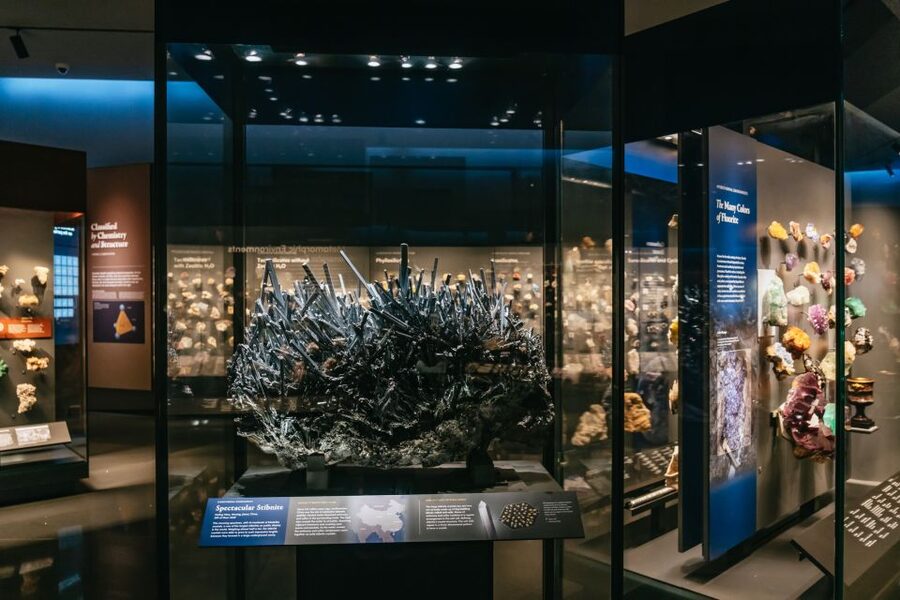
I would recommend this experience most strongly to families, dinosaur fans, science fans, and anyone who wants a reliable indoor activity in cold or rainy weather. The range of subjects means adults and children can usually find something that holds their attention.
It also suits first-time New York visitors who want to pair a museum morning or afternoon with Central Park. The location makes that combination easy, although I would not underestimate the time needed inside.
You may enjoy it less if you dislike large museums or prefer a short, tightly focused attraction. The building can feel overwhelming, and the map may take time to master. A clear plan of two or three priority halls will make the visit more relaxed than trying to cover every room.
The museum is wheelchair accessible. Seating, cafés, lockers, and staff support are available on site, which matters during a long visit. Still, check your route and allow extra time if you need regular rests or want to use several timed exhibitions.
Should you book the American Museum of Natural History?
I would book it if you can spare most of a day and want more than one subject. The dinosaurs are the hook, but the Rose Center, Gilder Center, ocean life halls, cultural galleries, and special exhibitions give the visit much greater range.
Choose general admission if you mainly want the permanent halls and are happy to explore at your own pace. Pay for an upgraded option if Invisible Worlds, the butterfly vivarium, the giant-screen film, or the Hayden Planetarium Space Show is part of your plan.
My practical advice is to arrive with a short list, use the Explorer App, start high if time is limited, and do not carry a large bag. At $37, it is best value when you treat the museum as a major part of your New York day, not as a quick stop before the next attraction.
FAQ
How long should I plan to spend at the museum?
Plan on at least four to five hours if you want to see several major areas. The museum is large enough that you may still not see everything in that time.
What does general admission include?
General admission includes access to more than 40 permanent exhibition halls, the Rose Center for Earth and Space, and the Richard Gilder Center.
Are special exhibitions included with general admission?
No. General entry does not include special exhibitions, Invisible Worlds, the butterfly vivarium, the giant-screen film, or the Hayden Planetarium Space Show. Choose the relevant ticket option if you want access.
Is the museum suitable for wheelchair users?
Yes. The museum is wheelchair accessible, and the LeFrak Theater is also wheelchair accessible. Captioning devices and audio description devices are available for the theater.
Is there a guide included?
No guide is included. You can connect to the museum Wi-Fi and use the free Explorer App, which offers directions, exhibit stories, quizzes, and self-guided tours.
Can I bring a large bag or luggage?
Oversize luggage and large bags are not allowed. Lockers are available on site for an additional charge.
Just added in New York City
- Brooklyn Food Walking Tour: Local Eats & Family‑Run Shops★ 5.0 · 592 reviews
- All Inclusive Airport Departure Transfer NYC/ Brooklyn/Queens★ 4.0 · 342 reviews
- Brooklyn Bridge & DUMBO Food Tour: Local Eats & Landmarks★ 5.0 · 478 reviews
- Harlem: Central Harlem Sunday Gospel with Locals★ 3.9 · 499 reviews
- New York City: Statue of Liberty & Ellis Island Guided Tour★ 4.2 · 1,031 reviews
- West Harlem: Gospel Church Service and Sunday Walking Tour★ 4.3 · 411 reviews
- Manhattan: Statue and Skyline Cruise Aboard a Luxury Yacht★ 4.8 · 540 reviews
- SoHo, Little Italy, and Chinatown 2-Hour Guided Walk★ 4.6 · 566 reviews
Historical Tours, compared.

Charleston’s Old South Carriage Historic Horse & Carriage Tour
Read our review →

Big Island in a Day: Volcanoes Waterfalls Sightseeing and History
Read our review →
Freedom Trail History Small Group Walking Tour
Read our review →
Historic Charleston Guided Sightseeing Walking Tour
Read our review →
Starship Landmark 90 Minute Sightseeing Cruise
Read our review →
Charleston Horse-Drawn Carriage Tour: Explore Historic Charleston
Read our review →
Savannah History and Haunts Candlelit Ghost Walking Tour
Read our review →Browse the lists this tour appears in