
Reviewed · HISTORICAL TOURS
American Museum of Natural History Admission Ticket
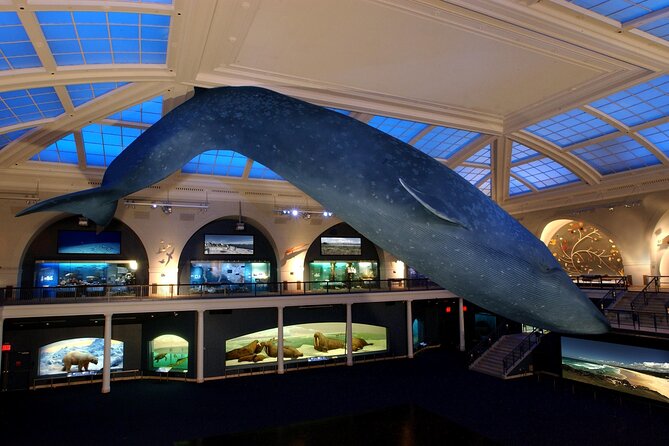
The American Museum of Natural History packs dinosaurs, elephants, ancient cultures, ocean life, and the history of the universe under one enormous roof. The 94-foot blue whale is the eye-catcher, but the museum rewards anyone who slows down for its smaller details too.
I like the freedom to arrive at a time that suits you and spend three or four hours, or much of the day, inside. I also like the family appeal: children can see animals and dinosaurs while adults get a serious look at science, culture, and space. The main drawback is the voucher exchange. Several visitors had to wait in a ticket line to turn an outside voucher into an admission ticket, so buying directly from the museum may be faster.
Key Points

- The blue whale and dinosaur halls are the major draws: The Milstein Hall of Ocean Life and Hall of Saurischian Dinosaurs deserve priority if your time is short.
- More than 40 permanent galleries are included: General Admission also covers the Rose Center for Earth and Space and the Richard Gilder Center.
- Plan for at least three hours: Four levels and many large galleries make this a poor choice for a rushed one-hour stop.
- Special attractions cost extra: The planetarium show, giant-screen film, butterfly vivarium, Invisible Worlds, and ticketed exhibitions are not included.
- The voucher may require an extra queue: You may need to exchange it for the museum’s actual admission ticket.
- It works well with a Central Park day: The Upper West Side location makes it easy to pair the museum with nearby park time.
Why This Museum Deserves a Half Day in New York
This is not a small museum you can casually wander through before lunch. It covers the natural world, human cultures, Earth science, and the universe across four levels, with more than 40 permanent exhibition halls.
The advertised visit lasts about three to four hours, but I would treat that as a minimum for a first visit. You can see the main dinosaur, mammal, ocean, and space displays in that time. If you read labels, stop for photographs, or visit with children who want to linger, the museum can easily fill most of your day.
The scale is both its strength and its challenge. You get a huge range of subjects in one place, but the building can feel confusing. Bring a paper map from an entrance, information desk, or membership desk, then mark the rooms you care about most. The map may not make every route obvious, so a simple priority list helps.
This admission is best for someone who wants flexibility rather than a guided tour. You arrive at a suitable time and explore at your own pace. There is no fixed sightseeing script pushing you from one room to the next.
Other tickets worth buying ahead in New York City:
- NYC: 9/11 Memorial & Museum Timed-Entry Ticket
★ 4.8 · 31,428 reviews - NYC: Edge Observation Deck Admission Ticket
★ 4.6 · 20,918 reviews - NYC: Museum of Modern Art (MoMA) Entry Ticket
★ 4.6 · 12,540 reviews
The Dinosaur Halls: Start With the Big Names
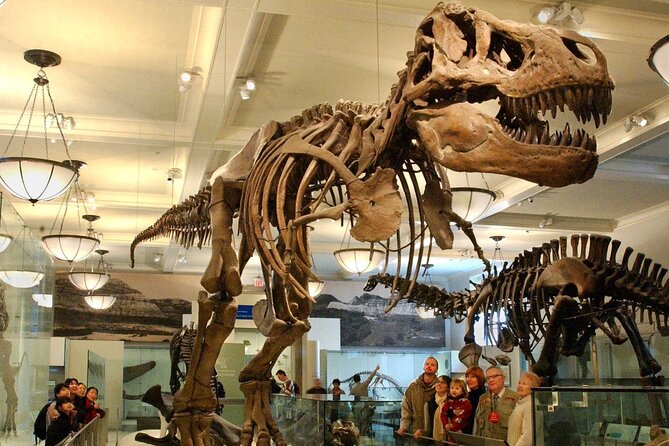
The Hall of Saurischian Dinosaurs is one of the museum’s essential stops. The Tyrannosaurus Rex skeleton gives you the expected blockbuster moment, while the surrounding displays help place these animals in a wider story of prehistoric life.
Families often make this their first target, and that is sensible. Children get a clear visual hook right away, and adults can spend more time reading about the specimens and the science behind them.
The dinosaur galleries are also a good example of why you need to plan your route. It is easy to lose an hour here, especially if you are taking photographs. If you have only three hours, see the dinosaur rooms, the blue whale, and the Akeley Hall of African Mammals before branching out.
The Blue Whale and the Akeley Mammals
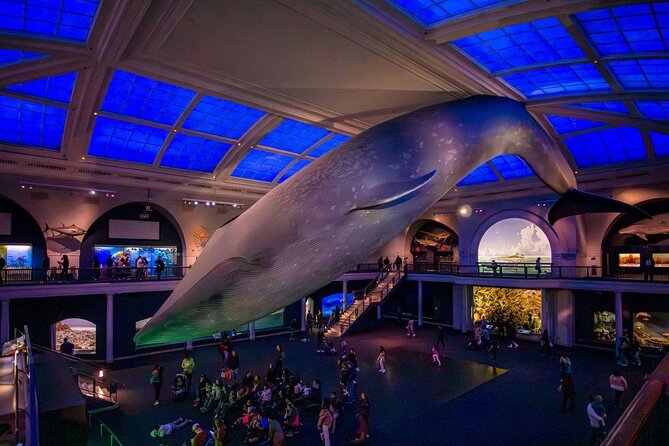
The 94-foot blue whale model in the Milstein Hall of Ocean Life is the museum’s great room-filling spectacle. Its size makes the scale of ocean life easier to grasp than any number on a display panel.
The hall is useful for families because the subject is instantly understandable. You do not need a science background to appreciate the model, though the displays give you more to consider if you have time.
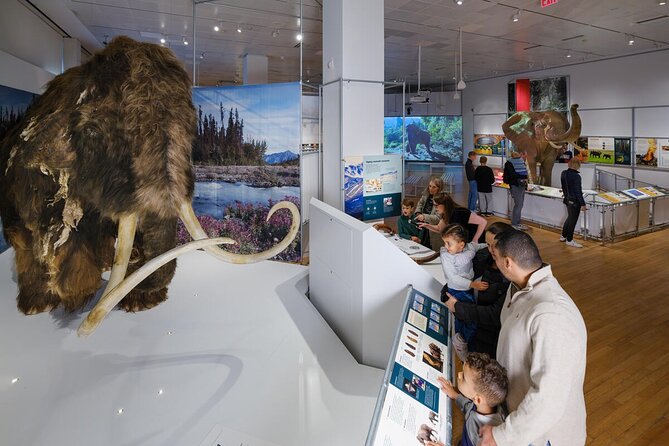
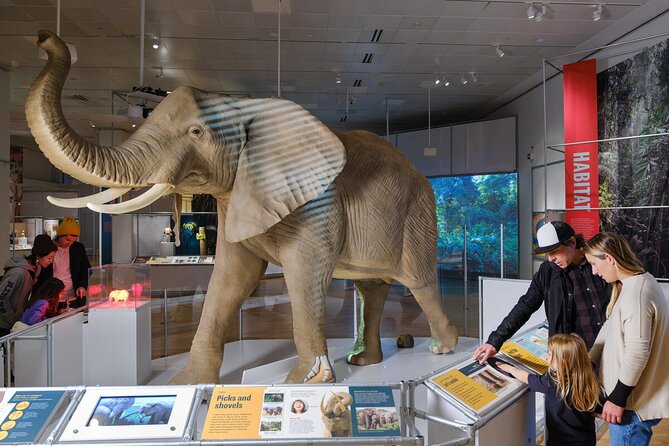
At the Akeley Hall of African Mammals, look for the Asian elephants. This gallery is known for its lifelike animal displays, and the museum’s animal rooms are a strong choice for younger children. The presentation makes it easy to move from one animal to the next while still giving adults useful context.
If children want to find the figures associated with Night at the Museum, staff can help point them toward the familiar displays. That can turn the visit into a small scavenger hunt, but the museum offers plenty beyond the movie connection.
Space, Earth, and 13 Billion Years of Time
General Admission includes the Rose Center for Earth and Space. This is where the museum broadens the story from dinosaurs and animals to planets, stars, and the 13-billion-year history of the universe.
The Rose Center gives you a change of pace after the darker, specimen-filled galleries. It is a good stop for older children, teenagers, and adults who want more than animal displays.
Admission also includes the Richard Gilder Center for Science, Education, and Innovation. The general ticket covers access to these areas, but it does not include every attraction inside the wider museum program.
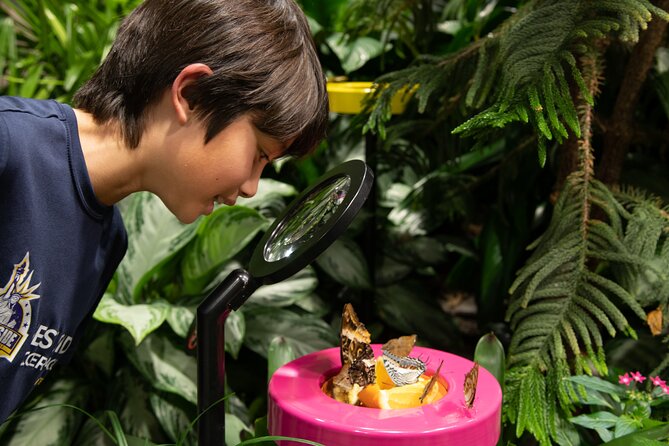
The Hayden Planetarium Space Show is separate. So are Invisible Worlds, the butterfly vivarium, the giant-screen film, and ticketed special exhibitions. Check the museum’s current options before you arrive if one of these is a priority. A basic admission ticket does not automatically cover them.
This distinction matters because a family may reasonably assume that a museum admission ticket includes every presentation. It does not. If you especially want the planetarium or butterflies, budget for an additional ticket and allow enough time in your schedule.
Other museums and galleries in New York City:
- NYC: Empire State Building Tickets – Observatory & Museum
★ 4.7 · 25,757 reviews - New York City: American Museum of Natural History Ticket
★ 4.5 · 15,447 reviews - 9/11 Memorial, Ground Zero Tour with Optional 9/11 Museum Ticket
★ 5.0 · 6,381 reviews - 9/11 Memorial Museum Admission Ticket
★ 4.5 · 6,376 reviews
How Long Should You Stay?

Three hours is the practical minimum. It gives you time for several major halls without forcing you to sprint from room to room.
Four hours feels more comfortable for a first visit. You can see the dinosaurs, mammals, blue whale, Rose Center, and part of the Gilder Center with some time for photographs and breaks.
A full day is justified if you want to read labels, visit extra exhibitions, eat inside the museum, or explore with children at their pace. The museum has four levels, and simply moving through the building takes time.
I would plan your visit around priorities:
- With three hours, choose dinosaurs, the blue whale, and African mammals.
- With four hours, add the Rose Center and Richard Gilder Center.
- With most of a day, add cultural galleries, special exhibits, food, and longer stops.
Do not try to see every room in one short visit. The sheer amount of material can make the experience tiring, particularly on the hard floors. Comfortable shoes matter.
Crowds, Queues, and the Voucher Problem

The biggest practical warning concerns entry. This product provides a voucher that may need to be exchanged for the museum’s actual admission ticket. That extra step can mean a wait at the ticketing area.
At busy times, this is more than a minor inconvenience. One family reported waiting over an hour with very young children, while people who bought directly from the museum entered more quickly. Other visits had efficient entry, so the delay is not guaranteed, but you should be prepared for it.
The safest advice is to compare the direct museum price and entry terms before booking this version. The $37 price may be reasonable if the booking method suits you, but a small saving or payment convenience is less attractive if it costs an hour in line.
Crowds can build quickly, even early in the day. Halls may become warm and humid when full, and the museum can feel harder to navigate once rooms are packed. Arriving early helps, but it does not guarantee an empty museum.
If you use the voucher, have the confirmation ready and allow extra time before any fixed plans. Do not schedule a tight lunch reservation or another timed attraction immediately afterward.
Is $37 Good Value?
At $37 per person, this admission offers reasonable value if you stay for several hours and use the included galleries. The museum is large enough that a short visit does not make the ticket feel worthwhile, but a half day gives you plenty to see.
The strongest value comes from the permanent halls, Rose Center, and Richard Gilder Center. You receive a wide range of subjects for one admission price, from natural history to astronomy.
The value is weaker if you expect the planetarium, butterfly vivarium, giant-screen film, or special exhibitions to be included. Those require separate tickets, so families should add up the likely total cost before arriving.
Children under three qualify for waived admission fees. New York residents can pay what they choose for General Admission, which may make the direct museum option especially important for local families.
The booking system may also offer payment flexibility, which some people find useful. Still, I would weigh that convenience against the chance of needing to queue for a physical ticket.
Food, Strollers, and Access
The museum is family-friendly, and the building works well with strollers and visitors using ADA access. Children under three enter without an admission charge, which helps reduce the cost for families with toddlers.
You will do a lot of walking. The museum covers four levels, and the floors can be tiring. Build in a food or rest break rather than treating the whole visit as one long march.
Food options include a food court with gluten-free choices such as gluten-free pizza and brownies. That is useful if someone in your group needs a simple meal without leaving the museum.
Service animals are allowed, and the attraction is near public transportation. Most people can take part without special arrangements, but the building’s size means you should allow extra time for lifts, routes, and breaks if anyone in your group tires easily.
Pairing the Museum With Central Park
The Upper West Side location makes this a good part of a larger day. You can visit the museum, then spend time in Central Park rather than crossing the city for another attraction.
That pairing also gives children a chance to move around after several hours indoors. You may prefer the museum in the morning and the park afterward, or use the park as a break before returning for another gallery.
Do not pack too many timed activities around it. The museum’s scale and entry arrangements make it hard to predict exactly when you will finish.
Who Will Enjoy This Most?
Families with school-age children and teenagers are a natural fit. Dinosaurs, elephants, the blue whale, and space displays offer immediate appeal, while the science and cultural galleries give adults plenty to explore.
It also suits couples, friends, and solo visitors who enjoy setting their own pace. You can focus on dinosaurs and animals, or spend more time with astronomy, anthropology, and the museum’s educational displays.
The experience is less suitable if you dislike large institutions, long walks, or busy indoor spaces. It can also frustrate anyone hoping to see every major attraction in a single hour.
For a first visit, I would choose the museum if you have at least half a day. If you have only a narrow window, select a few halls in advance and accept that much of the building will remain unseen.
Cancellation and Basic Planning
Free cancellation is available if you cancel at least 24 hours before the scheduled start time. Cancellations made within 24 hours are not refunded, and changes during that period are not accepted.
Confirmation is provided at booking. Since this is a self-guided admission rather than a tour with a named guide, you control the pace and route. The experience is offered in English.
Bring the paper map and decide on your top three galleries before entering. That one step will save time and reduce the chance of wandering through the enormous building without reaching the displays you came to see.
Should You Book It?
Book this admission if you want several hours of dinosaurs, mammals, ocean life, Earth science, and space in one Upper West Side stop. It is a strong family activity, a useful rainy-day plan, and an easy match with Central Park.
I would be cautious about booking this particular voucher if fast entry matters. The most important issue is not the museum itself, which offers plenty for the price, but the possible queue to exchange the voucher for an admission ticket.
For the best experience, compare direct museum admission with this $37 option, allow at least three hours, and budget separately for special exhibits or the planetarium. If the entry terms work for you, this is one of New York’s most worthwhile large museums. If you need a quick, guaranteed visit, choose the buying method with the clearest direct entry.
FAQ
How long should I plan for the American Museum of Natural History?
Plan for about three to four hours at minimum. The museum has four levels and more than 40 permanent galleries, so you can spend most of a day if you want to see more exhibits at a relaxed pace.
What does General Admission include?
General Admission includes more than 40 permanent exhibition halls, the Rose Center for Earth and Space, and the Richard Gilder Center for Science, Education, and Innovation.
Are the planetarium and butterfly vivarium included?
No. The Hayden Planetarium Space Show, butterfly vivarium, Invisible Worlds, giant-screen film, and ticketed exhibitions are not included with General Admission.
Do children under three need a ticket?
Children under three qualify for waived admission fees.
Can I cancel for a refund?
Yes. You can cancel at least 24 hours before the experience start time for a full refund. Cancellations within 24 hours are not refunded.
Can I get a map at the museum?
Yes. Paper maps are available at museum entrances, information desks, and membership desks. A map is useful because the museum is large and can be confusing to navigate.
More history to see in New York City
- NYC: Starship Landmark 90 Minute Sightseeing Cruise
★ 4.6 · 3,666 reviews - Starship Landmark 90 Minute Sightseeing Cruise
★ 4.5 · 2,073 reviews - NYC: Speakeasy Drinks and Prohibition History Tour
★ 4.7 · 474 reviews - History and Hauntings of Salem Guided Walking Tour
★ 5.0 · 14,564 reviews
Just added in New York City
- Brooklyn Food Walking Tour: Local Eats & Family‑Run Shops★ 5.0 · 592 reviews
- All Inclusive Airport Departure Transfer NYC/ Brooklyn/Queens★ 4.0 · 342 reviews
- Brooklyn Bridge & DUMBO Food Tour: Local Eats & Landmarks★ 5.0 · 478 reviews
- Harlem: Central Harlem Sunday Gospel with Locals★ 3.9 · 499 reviews
- New York City: Statue of Liberty & Ellis Island Guided Tour★ 4.2 · 1,031 reviews
- West Harlem: Gospel Church Service and Sunday Walking Tour★ 4.3 · 411 reviews
- Manhattan: Statue and Skyline Cruise Aboard a Luxury Yacht★ 4.8 · 540 reviews
- SoHo, Little Italy, and Chinatown 2-Hour Guided Walk★ 4.6 · 566 reviews
Historical Tours, compared.


Charleston’s Old South Carriage Historic Horse & Carriage Tour
Read our review →

Big Island in a Day: Volcanoes Waterfalls Sightseeing and History
Read our review →
Freedom Trail History Small Group Walking Tour
Read our review →
Historic Charleston Guided Sightseeing Walking Tour
Read our review →
Starship Landmark 90 Minute Sightseeing Cruise
Read our review →
Charleston Horse-Drawn Carriage Tour: Explore Historic Charleston
Read our review →Browse the lists this tour appears in