
Reviewed · WALKING TOURS
Secrets of Grand Central Station Walking Tour New York City
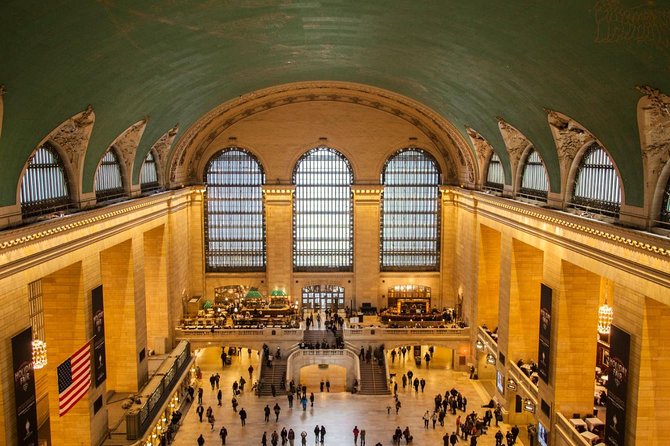
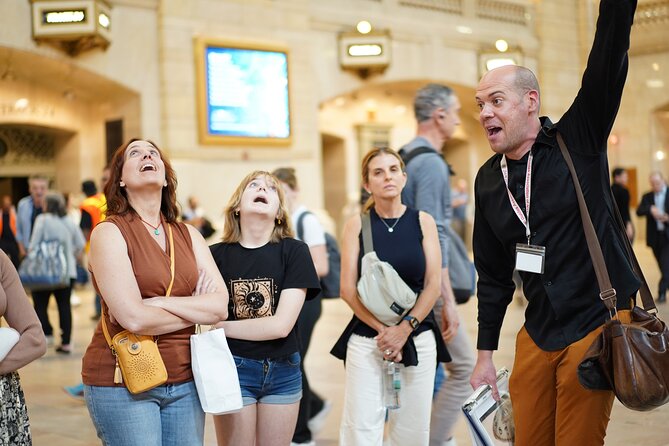
Grand Central Terminal is far more than a place to catch a train. This 90-minute walking tour points out design details, old stories, and tucked-away corners that are easy to miss when you are rushing for the subway. You’ll also step outside to see the terminal’s clock up close, with the Chrysler Building nearby.
I like the small group size, capped at 15, and the use of earpieces. Guides such as Jonathan, John, Richard, and Ro have earned strong praise for making the building’s past clear, lively, and easy to follow. The tour also gives you a look at the Campbell Apartment, a bar tucked inside the terminal.
The main drawback is that the audio equipment may not always work perfectly. One participant reported several failed devices and no spare units, so tell the guide at once if you cannot hear. At $39, the tour is good value for history and architecture fans, but casual visitors may prefer to explore the terminal on their own.
Key points to know before you book

- Start inside the main concourse: Meet in front of Track 29 at Grand Central Terminal, where your guide will hold an Untapped New York sign.
- Look closely at the building: The tour focuses on details and design choices that are easy to overlook without a guide.
- Expect a lively guide: Jonathan, John, Richard, Ro, Justin, Bob Geller, and others have led tours praised for clear storytelling and strong presentation.
- See more than the main hall: The walk includes the MetLife Building, the Chrysler Building, the terminal’s exterior clock, and the Campbell Apartment.
- A manageable time commitment: The tour lasts about 1 hour and 30 minutes, though some outings may run closer to 1 hour and 45 minutes.
- Good for architecture fans: The tour suits anyone interested in New York history, Beaux Arts design, transportation, and urban preservation.
Why Grand Central deserves a closer look
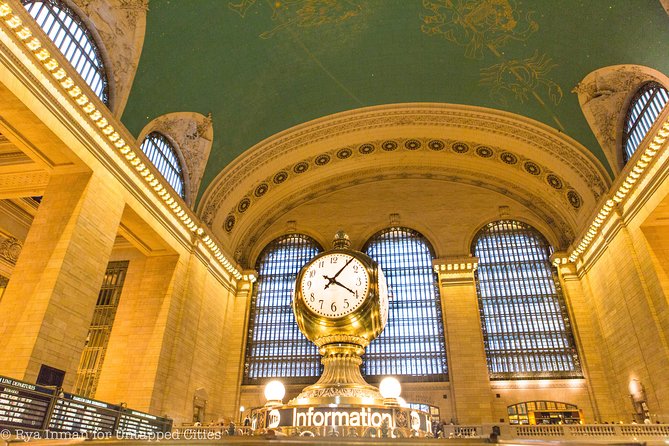
Most people enter Grand Central Terminal with one task in mind: find a train, buy a snack, or cross Midtown. That is understandable. The building is busy, and its scale can make it hard to know where to look.
This tour changes your pace. Instead of simply passing through the main concourse, you stop to examine the building’s decoration, structure, and small design choices. The guide explains how the terminal began, how it changed over time, and how it moved from glory to neglect and then back toward its former beauty through restoration.
I like this approach because Grand Central rewards close attention. Its grand features are obvious, but the smaller details give the building its character. A guide can direct your eyes to places you might walk past without a second thought.
The tour also places the terminal in the story of New York City. You learn about the people behind the building, including Cornelius Vanderbilt, and about the decisions that shaped its use and appearance. That context helps the terminal feel like more than an impressive train station.
Other walks around New York City:
- SoHo, Little Italy, and Chinatown Walking Tour in New York
★ 5.0 · 3,153 reviews - Greenwich Village Walking and Food Tasting Tour
★ 5.0 · 1,572 reviews - New York City: Gangsters and Ghosts 2-Hour Walking Tour
★ 4.7 · 615 reviews
Meeting at Track 29 in the main concourse
Your meeting point is inside Grand Central Terminal, in front of Track 29 on the main concourse. Look for the guide holding an Untapped New York sign.
This is a practical meeting spot, but give yourself time to find it. Grand Central is easy to reach by public transportation, yet its large interior can be confusing if you arrive at the last minute. I would enter the terminal early, find Track 29, and use the extra minutes to get oriented.
The guide provides an earpiece to each participant. That matters in a building filled with foot traffic and background noise. You are not expected to stand directly beside the guide at every moment, and the device should make it easier to follow while looking around.
Still, test your earpiece at the start. One account describes several devices failing during a tour, with no replacements available. That appears to be an exception rather than the normal experience, but it is the clearest practical weakness to keep in mind. If you cannot hear, speak up right away instead of trying to follow silently.
The main concourse and the terminal’s design story
The central part of the tour takes place inside Grand Central Terminal. You will learn about the building’s Beaux Arts design and the way its original plan and decoration reflected the importance of rail travel in its heyday.
The value here is not just the amount of information. It is the way a guide helps you connect individual features to a larger idea. A ceiling, clock, corridor, or ornament can seem decorative when seen alone. With an explanation, it becomes part of the building’s plan and its period.
The tour is especially useful if you have already visited Grand Central but felt you had only seen the surface. One guide may focus on a particular architectural feature while another gives more attention to the people and events tied to the terminal. Guides named Jonathan, John D, Richard, and Bob Geller have been singled out for clear explanations, humor, and strong presentation.
Jonathan, in particular, has been praised for remembering everyone’s names and keeping a group of 15 engaged. John D is described as keeping the group moving while adding humor and stories. Richard is known for combining facts with an entertaining presentation. These details suggest that the personality of your guide will shape the experience, as it does with most walking tours.
The guide may also point out unusual features that have become part of Grand Central’s modern folklore. One account specifically mentions the rocket and the tennis court. The information supplied does not give more detail about those subjects, but their inclusion shows the tour goes beyond the obvious grand staircase and main hall.
Looking beyond the main hall

A useful part of the route is the attention paid to the surrounding buildings. As you move through the Midtown area, you will see the MetLife Building and the Chrysler Building.
This gives the walk a little more breathing room than a tour spent entirely in one room. Grand Central is connected to a larger Midtown setting, and stepping outside helps you see the terminal as part of the city around it. The route is still centered on Grand Central, but you get a closer look at the building from outside.
The Chrysler Building adds a strong visual point to this section. You will go outside to look closely at Grand Central Terminal’s clock, with the Chrysler Building visible nearby. This is a good moment for photographs and for appreciating the terminal’s exterior rather than only its interior decoration.
The outdoor portion also explains why the tour requires good weather. Most of the experience takes place indoors, but the route includes time outside. If poor weather causes a cancellation, you are offered another date or a full refund.
Same base, a different kind of day out:
- NYC: SUMMIT One Vanderbilt Tickets
★ 4.7 · 51,195 reviews - NYC: 9/11 Memorial & Museum Timed-Entry Ticket
★ 4.8 · 31,428 reviews - NYC: Empire State Building Tickets – Observatory & Museum
★ 4.7 · 25,757 reviews - NYC: Empire State Building Observation Deck Tickets
★ 4.7 · 22,072 reviews
The Campbell Apartment in five minutes

The tour includes a brief look inside the Campbell Apartment, a bar located within Grand Central Terminal. The stop is listed at about five minutes, so think of it as a quick peek rather than a long break or a full drink stop.
That short visit adds variety to the route. Grand Central is not only a transportation hub. It also contains spaces with a different mood and purpose, and the Campbell Apartment gives you a glimpse of that side of the building.
The tour ends there before returning to the meeting point. Since this is a brief stop, do not book the tour expecting a leisurely visit to the bar. Its value is in seeing a less obvious interior space and learning how it fits into the terminal’s story.
Restoration, decline, and the people behind Grand Central
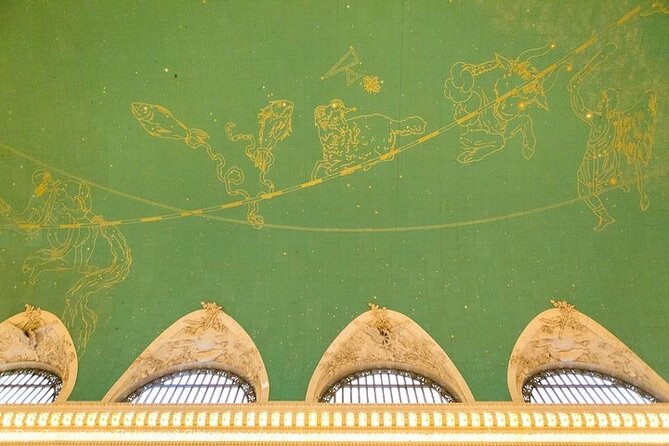
The tour’s historical arc is one of its strongest features. You learn about the terminal’s original importance, its period of decline, and the restoration work that helped return it to a grander appearance.
That story gives the building emotional weight. Grand Central can look permanent and invincible, but its condition changed over time. The restoration in the 1970s is a key part of the tour’s subject, especially for anyone interested in preservation and the care of older city buildings.
The guide also brings attention to the people connected with the terminal. Cornelius Vanderbilt receives particular attention, and the tour presents the building as part of a larger plan rather than an isolated architectural object.
I appreciate tours that explain both the beauty and the practical purpose of a place. You are not just told to admire the ceiling or the clock. You learn why the building was made in this way, how it served New York, and what had to happen for it to survive.
How the guide affects the experience
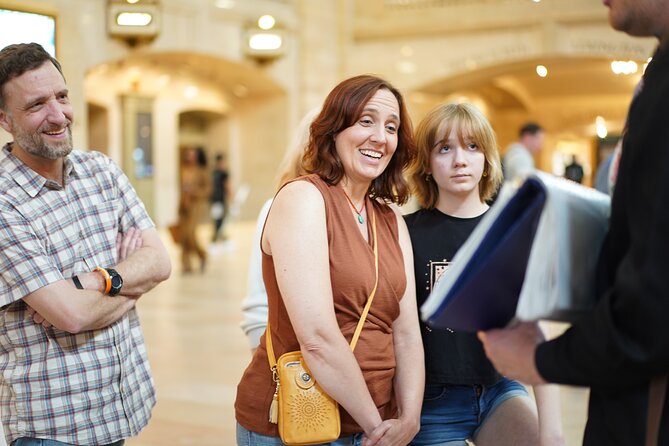
The tour is led by a local New Yorker, and the guide’s delivery matters. The strongest accounts describe guides who use humor, personal energy, and stories to keep the history moving.
You may be assigned a guide such as Jonathan, John, Richard, Ro, Justin, Andy, Christian, or Bob Geller. The schedule does not promise a particular person, so book this for the subject and format rather than for one named guide.
The recurring strength is clear explanation. John is described as a strong presenter with plenty of stories. Ro is praised for being easy to hear and follow. Justin is noted for pointing out details that would otherwise go unnoticed. Andy combines the terminal’s history with nearby sights, while Christian is described as well prepared and engaging.
The small group helps here. With a maximum of 15 people, the guide can keep the group together without turning the walk into a large crowd. You also have a better chance of asking a question or getting a quick explanation if you miss a point.
The earpieces are meant to let you stand at a slight distance and still hear. That is useful when the guide is pointing toward a ceiling detail or exterior feature and you need to turn away to look.
Is $39 a fair price?
At $39 per person, this is not the cheapest way to see Grand Central. You can enter the terminal on your own without paying admission, and the main concourse is easy to visit independently.
The price pays for interpretation. You are buying a local guide, a planned route, a small group, and an earpiece. If you enjoy architecture or New York history, that can be a good trade. The guide saves you from researching the building in advance and helps you notice things you would likely miss alone.
The value is strongest for a first visit, a return visit after years away, or a family group that wants a clear activity in Midtown. It also works well before dinner, since the tour lasts about 90 minutes and has been described as a useful afternoon plan.
The value is weaker if you only want a quick look inside the main concourse. In that case, you can visit independently and spend your money elsewhere. You should also remember that the tour may last closer to 1 hour and 45 minutes, so leave room in your schedule.
Who should book this walking tour?
I would choose this tour if you enjoy architecture, transportation history, or the story of how New York protects important old buildings. It is also a good pick if you have visited Grand Central before and want to see more than the familiar central hall.
Families can use it as an easy Midtown activity, provided everyone is comfortable walking and listening for 90 minutes. Couples and friends may like the mix of indoor history, exterior views, and the short Campbell Apartment stop.
The tour is conducted in English. Most people can participate, and service animals are allowed. Since the route includes time outdoors, check the weather before you leave and dress for conditions.
This is not a private tour, and you will be part of a group of up to 15. That size is small enough to feel personal, but it is still a shared experience. If you prefer complete control over your pace, an independent visit may suit you better.
Booking, cancellation, and timing
The tour is often booked about 17 days ahead, so reserve early if your New York schedule is fixed. Confirmation is provided when you book, and the experience starts and ends at Grand Central Terminal.
You can cancel for a full refund up to 24 hours before the start time. Cancellations or changes made within 24 hours are not refunded. If the minimum number of participants is not reached, the operator offers another date or experience, or a full refund.
The same choice applies if poor weather forces cancellation. Because the walk includes outdoor viewing, this policy is worth noting even though much of the tour is inside.
Final verdict: should you book it?
Book this tour if you want Grand Central Terminal to make sense, not simply look impressive. The strongest reasons are the small group, the close look at design details, the restoration story, and guides who bring the building to life with humor and clear explanations.
Skip it if you only need a quick photo in the main concourse or if you prefer exploring without a set pace. At $39, the tour earns its price through interpretation rather than access to a paid attraction.
For most visitors interested in New York architecture and local history, I think it is a smart use of 90 minutes. Test the earpiece at the start, arrive early at Track 29, and keep some time afterward for your own look around the terminal.
FAQ
How much does the Secrets of Grand Central Station Walking Tour cost?
The tour costs $39 per person.
How long does the tour last?
The scheduled duration is approximately 1 hour and 30 minutes. Some outings may last closer to 1 hour and 45 minutes.
Where does the tour begin?
It begins in front of Track 29 inside Grand Central Terminal’s main concourse at 89 E 42nd St. The guide will hold an Untapped New York sign.
Where does the tour end?
The tour ends back at the meeting point at Grand Central Terminal.
Is the tour offered in English?
Yes. The tour is conducted in English.
How large is the tour group?
The tour has a maximum of 15 participants. Earpieces are provided so you can hear the guide.
Can I cancel for a refund?
Yes. You can cancel at least 24 hours before the start time for a full refund. Cancellations or changes made less than 24 hours before the start time are not refunded.
Just added in New York City
- Brooklyn Food Walking Tour: Local Eats & Family‑Run Shops★ 5.0 · 592 reviews
- All Inclusive Airport Departure Transfer NYC/ Brooklyn/Queens★ 4.0 · 342 reviews
- Brooklyn Bridge & DUMBO Food Tour: Local Eats & Landmarks★ 5.0 · 478 reviews
- Harlem: Central Harlem Sunday Gospel with Locals★ 3.9 · 499 reviews
- New York City: Statue of Liberty & Ellis Island Guided Tour★ 4.2 · 1,031 reviews
- West Harlem: Gospel Church Service and Sunday Walking Tour★ 4.3 · 411 reviews
- Manhattan: Statue and Skyline Cruise Aboard a Luxury Yacht★ 4.8 · 540 reviews
- SoHo, Little Italy, and Chinatown 2-Hour Guided Walk★ 4.6 · 566 reviews
Walking Tours, compared.
New Orleans Premier Ghost, Voodoo and Vampire Walking Tour
Read our review →
Freedom Trail History Small Group Walking Tour
Read our review →
Historic Charleston Guided Sightseeing Walking Tour
Read our review →
New Orleans Food Walking Tour of the French Quarter with Small-Group Option
Read our review →
St. Louis Cemetery No. 1 Official Walking Tour
Read our review →
Harvard University Student-Guided Walking Tour
Read our review →
Harvard University Campus Guided Walking Tour
Read our review →Browse the lists this tour appears in