
Reviewed · TOURS IN NEW YORK CITY
NYC: The Secrets of Grand Central Terminal
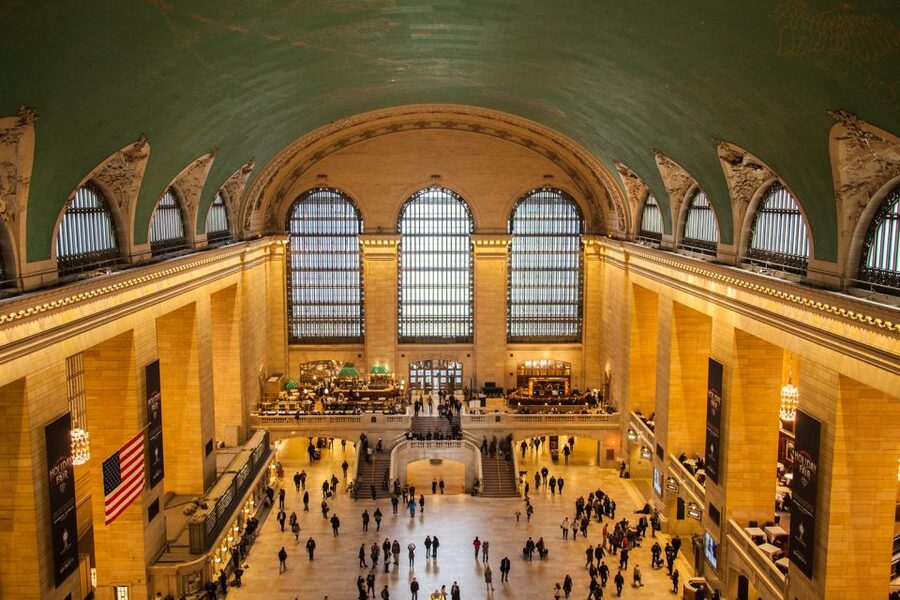
Grand Central Terminal keeps some of its best stories away from the famous four-faced clock. This 90-minute walk leads you to hidden tennis courts, a whispering gallery, the remains of a lost movie theater, and a tucked-away bar that once served as a private office. You also hear how the terminal survived neglect and returned as one of New York’s great public spaces.
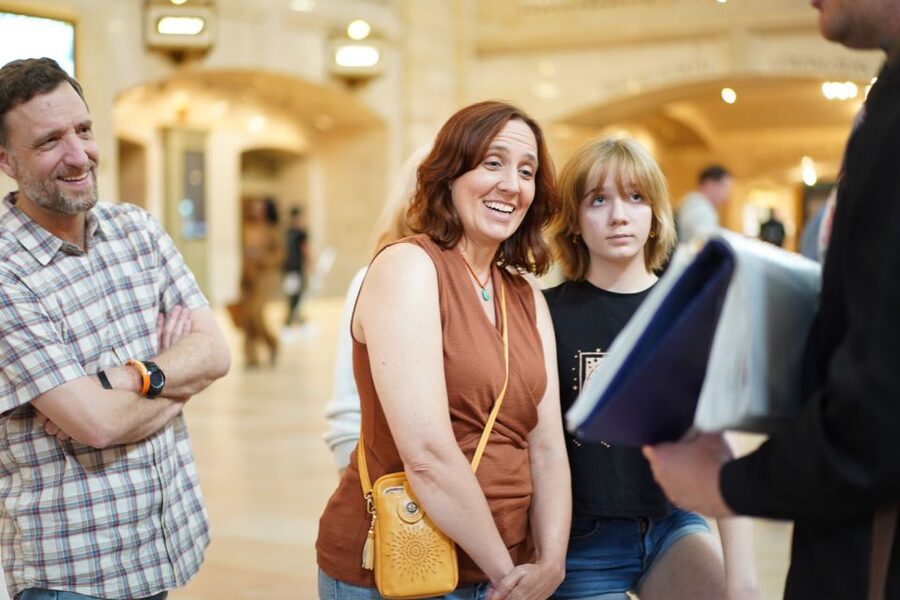
I like the way the tour combines architecture with human stories, from railroad tycoons and design mistakes to movie history and New York personalities. I also like the headsets, which let you hear the guide over station noise. Guides including Jonathan, Richard, AJ, John, and Ray are praised for clear storytelling and a friendly pace.
The main drawback is that 90 minutes moves quickly. Some places are only viewed from an entrance or corridor, and holiday crowds or commuter traffic can make it harder to stop. If you want a long architectural lecture or a detailed look at train operations, this tour may leave you wanting more.
Key points to know before you book
- See Grand Central’s private tennis courts: A surprising stop that most passengers would never find on their own.
- Hear the whispering gallery work: The curved arches create a simple but memorable sound trick.
- Look for the lost movie theater: You’ll see what remains of a once-popular cinema inside the terminal.
- Study the Tiffany clock and atrium flaw: The tour points out major design details, including a costly mistake in the main hall.
- Visit The Campbell: This tucked-away bar occupies the former private office of financier John W. Campbell.
- Expect a lively local guide: Jonathan, Richard, AJ, John, Peter, Christian, Ray, and other guides are noted for strong stories, clear explanations, and personal New York experience.
Why Grand Central rewards a closer look
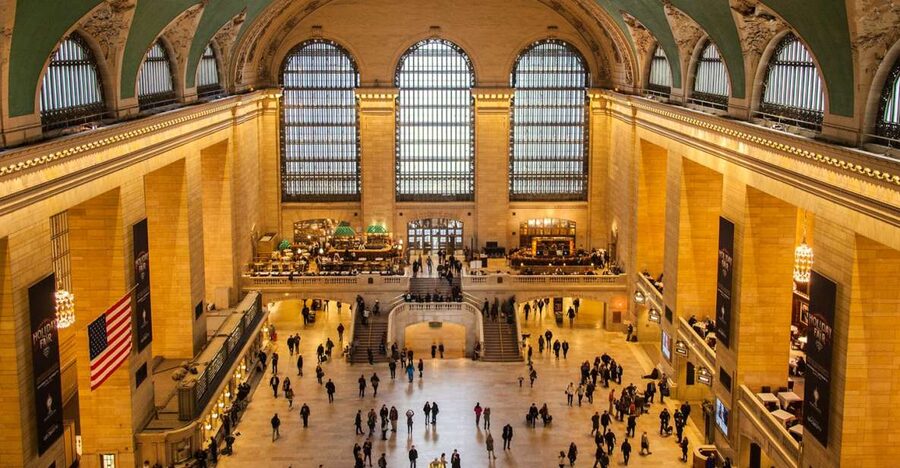
Grand Central Terminal is easy to treat as a backdrop. You rush beneath the painted ceiling, glance at the clock, find your train, and move on. This tour asks you to slow down and notice the building as a working machine, a civic monument, and a survivor.
You’ll learn about the terminal during the great railroad boom, when rail travel shaped New York’s growth. You’ll also hear about its later period as a worn-down embarrassment, followed by the renovation that returned its Beaux-Arts details to public view.
That change gives the tour its shape. It is not only a pretty-building walk. You see how architecture, transport, business, entertainment, and preservation overlap in one busy place.
The meeting point is inside the main atrium, in front of track 29. Arrive with comfortable shoes and allow time to find the meeting spot. Grand Central is large, crowded, and full of signs, stairways, and passing commuters, so giving yourself a few extra minutes is sensible.
The tour is offered in English, with a live guide and English audio support. Wheelchair access is available. Since the tour runs rain or shine, you’ll want a coat or umbrella when the route moves outside.
Other trips people book in New York City:
- NYC: SUMMIT One Vanderbilt Tickets
★ 4.7 · 51,195 reviews - NYC: 9/11 Memorial & Museum Timed-Entry Ticket
★ 4.8 · 31,428 reviews - NYC: Empire State Building Tickets – Observatory & Museum
★ 4.7 · 25,757 reviews
The main atrium, the famous clock, and a major design mistake
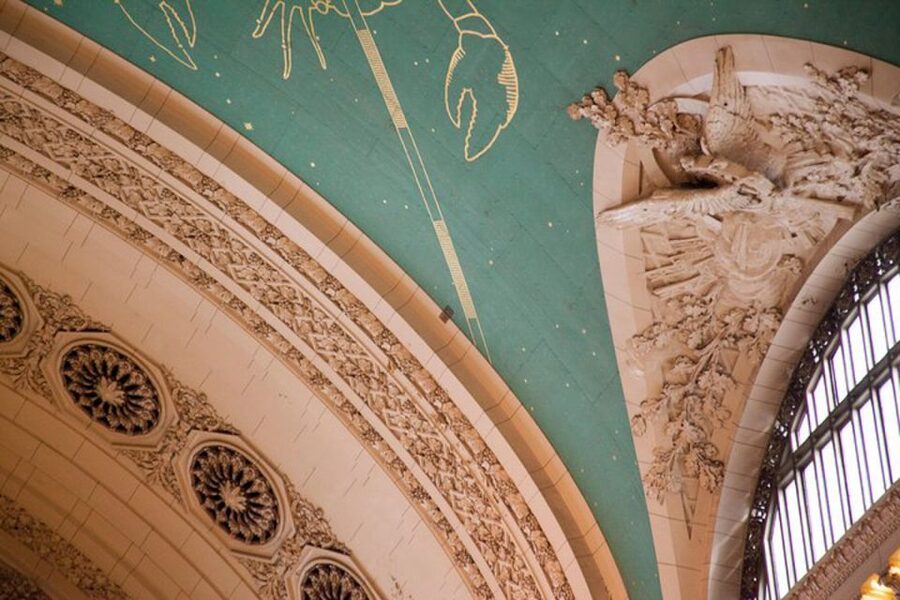
The tour begins in Grand Central’s main atrium, where the ceiling draws most eyes upward. The celestial mural is famous, but the guide helps you look at the room as an engineered space as well as a grand picture.
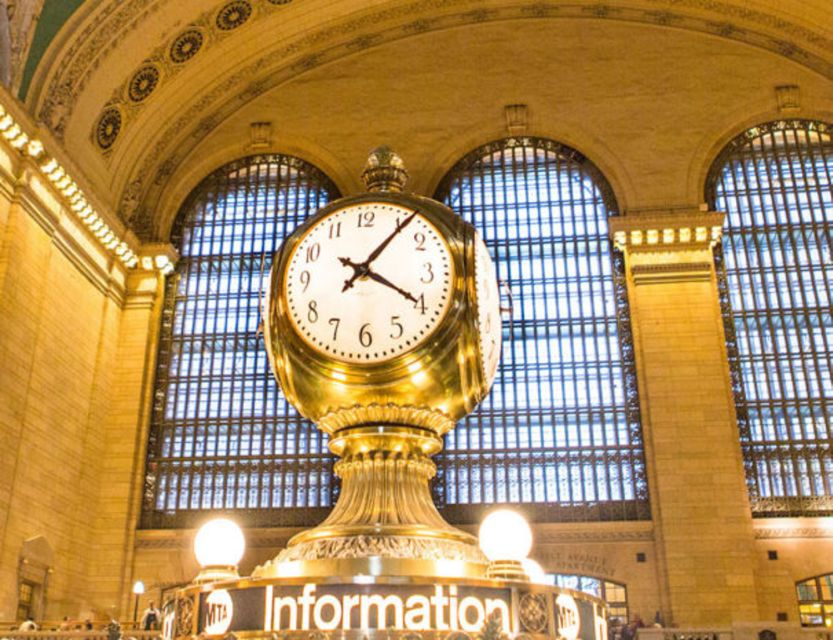
The world’s largest Tiffany clock is one of the early highlights. Its location makes practical sense, since passengers once needed a clear time reference before heading to their trains. Yet it also works as an ornament, with the kind of polished detail that shows how seriously the original builders treated even a public timepiece.
The guide also points out a large design flaw in the main atrium. The exact details are part of the tour’s storytelling, but the larger lesson is clear: even a building planned with extraordinary care can contain an expensive mistake. That gives you a better eye for the difference between decoration and function.
Look up, but do not stop there. Notice the scale of the room, the sightlines, and the way the terminal handles a constant flow of people. Your guide may ask you to compare what you see now with the terminal’s original purpose and later decline.
The main hall can be noisy. That is where the headsets matter. Several guides, including Jonathan and John, are praised for staying easy to hear while leading groups through crowded areas. You are less likely to miss a key point while photographing the ceiling or watching commuters cross the floor.
The whispering gallery and the pleasure of small surprises
The whispering gallery is one of the tour’s simplest stops, and one of its most satisfying. Curved surfaces carry a quiet voice from one side to another, creating a sound effect that feels almost out of place in such a large public building.
This is a good example of what makes the tour useful. You could pass through the space alone and never test the acoustics. With a guide, the architectural detail becomes an experience rather than a fact you read on a plaque.
The stop is brief, so do not expect a long performance or a private room. The fun comes from trying the effect and then understanding why it works. It is especially good for families and anyone who likes the practical side of architecture.
The tour balances these hands-on moments with larger stories. One minute you are testing a sound trick, and the next you are hearing about railroad planning, changing city life, or the terminal’s years of decline. That mix keeps the 90 minutes from feeling like a string of dry dates.
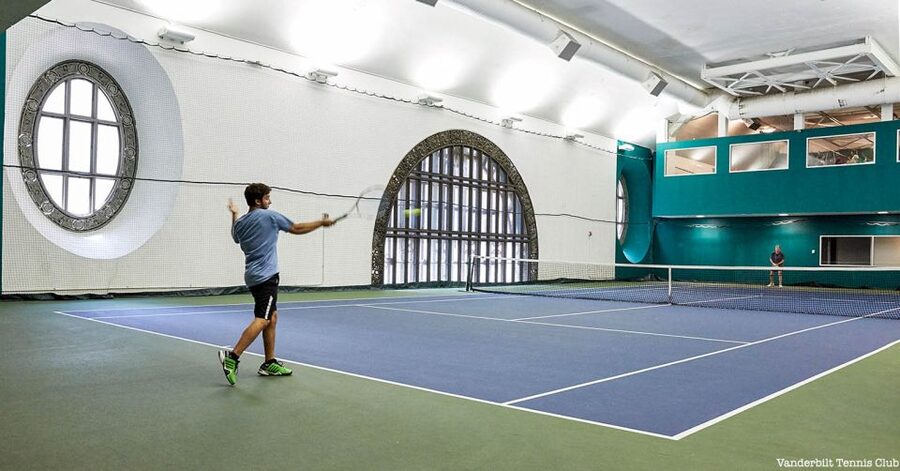
Tennis courts above the usual route
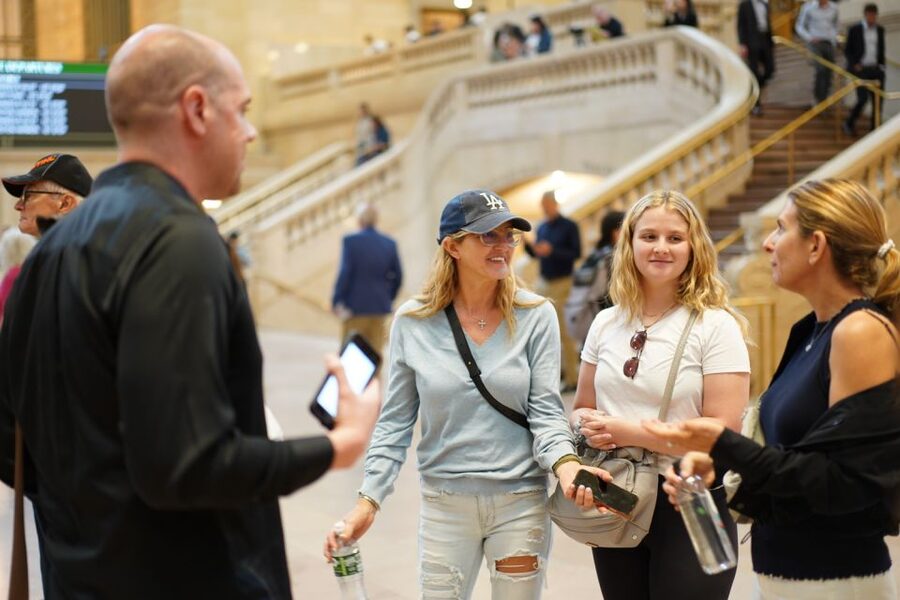
The tennis courts are among the tour’s strongest surprises. Grand Central is so closely tied to trains that most people do not expect to find a place for tennis inside the terminal complex.
You will not be taking a match break during the tour. The point is seeing a part of the building that lies far outside the usual passenger route and understanding how the terminal has been reused over time.
This stop also shows why a guided visit can be worth paying for when you already know the building. A regular passenger can see the main hall, dining areas, and platforms. A guide can direct you toward spaces you would not reasonably locate on your own.
Access can vary by conditions inside the building, so think of this as a chance to see the courts or their area rather than a promise of an extended visit. The tour description specifically includes the courts, and the route is designed to reveal these less obvious corners, but the visit remains a short walking-tour stop.
Same base, a different kind of day out:
- NYC: Empire State Building Observation Deck Tickets
★ 4.7 · 22,072 reviews - NYC: Edge Observation Deck Admission Ticket
★ 4.6 · 20,918 reviews - New York City: Statue of Liberty & Ellis Island with Ferry
★ 4.6 · 18,683 reviews - New York City: American Museum of Natural History Ticket
★ 4.5 · 15,447 reviews
The lost movie theater and Grand Central’s changing purpose
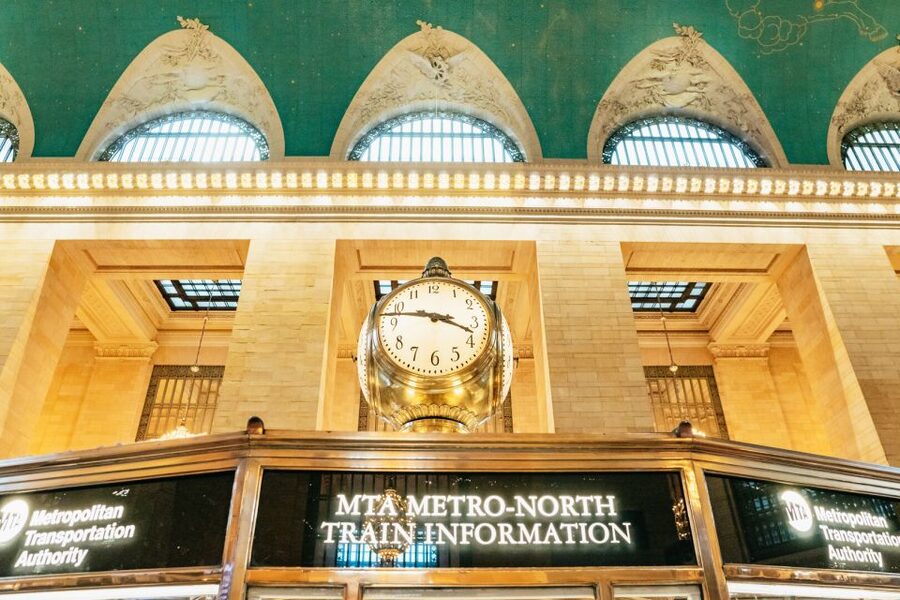
Another unusual stop concerns what remains of a former movie theater. The theater is no longer a normal part of the terminal experience, which makes the surviving pieces more interesting.
The story adds a social layer to Grand Central. This was not only a place to board a train. It also offered ways to wait, meet, eat, shop, and pass time. The theater reflects the era when major transportation buildings operated almost like self-contained districts.
You may find the remains less dramatic than a preserved cinema with rows of seats and a working screen. That is part of the point. The tour helps you read traces of older uses instead of presenting a perfectly preserved museum set.
Guides often connect the theater to film history and scenes shot in or around Grand Central. If you enjoy movies, architecture, or the way New York locations change on screen, this section adds extra interest. If your main goal is railroad engineering, it will feel more like a side story.
The glass walkways and what you can actually see
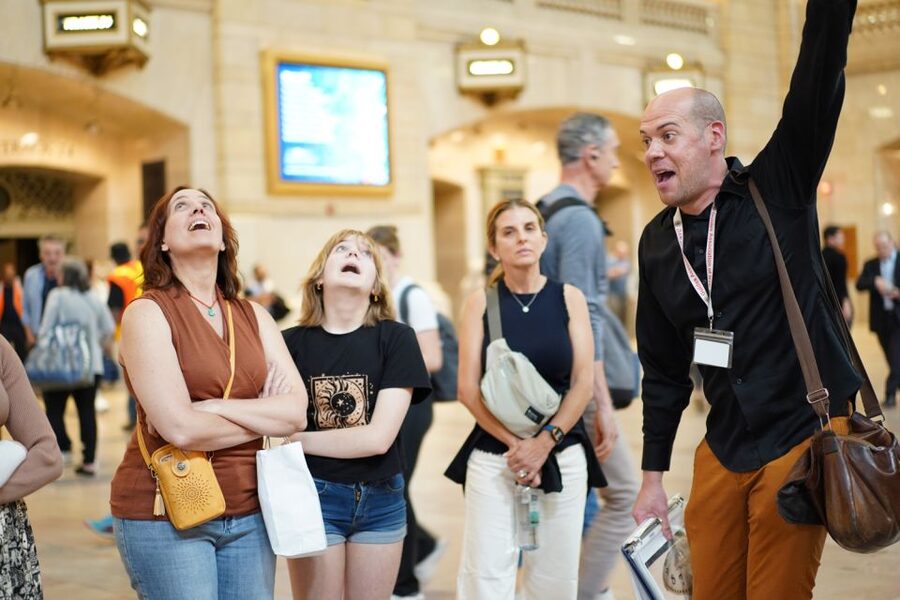
The tour includes a look toward the entrance of Grand Central’s glass walkways. This is another place where expectations matter. You are getting a peek into an area that is not part of the normal public route, not an extended exploration of every walkway.
The value is in seeing how the terminal’s upper and less visible circulation spaces fit together. Grand Central can feel like one enormous hall, but its design depends on layers of corridors, stairs, offices, tracks, and support areas. Even a short look helps you understand that the famous atrium is only the most visible part of a much larger structure.
This stop may appeal most to people who enjoy architecture and building systems. It is less about a grand view and more about the pleasure of being shown a door, passage, or angle you would otherwise overlook.
The route also moves through Midtown Manhattan and passes the Chrysler Building and One Vanderbilt. These are photo stops or exterior looks rather than full visits to those buildings. That outdoor portion gives you a little air and helps place Grand Central within the surrounding Midtown skyline.
The Campbell, a private office turned bar
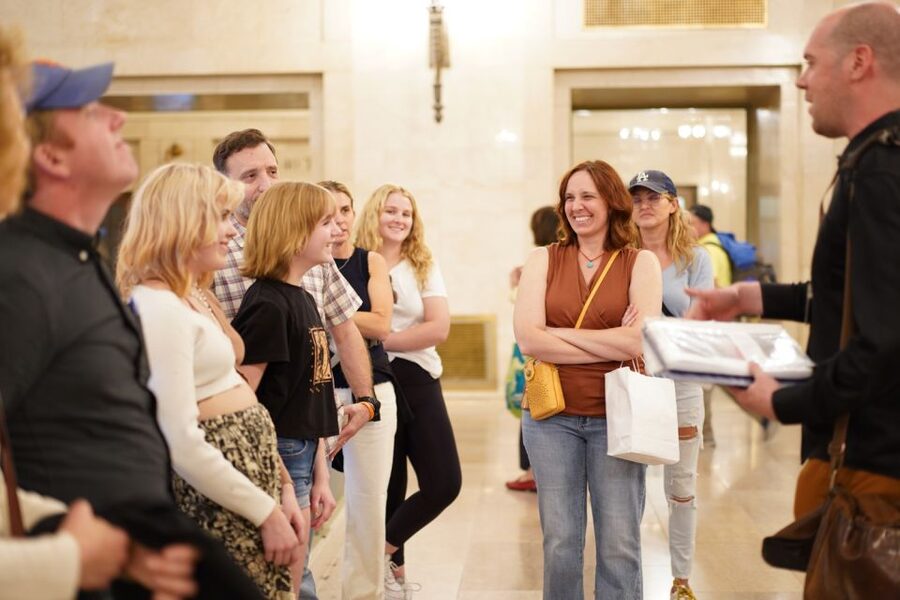
The Campbell is one of the tour’s most atmospheric stops. Tucked away from the main passenger flow, the bar occupies what was once the private office of business tycoon John W. Campbell.
The setting gives the story a different tone from the station’s public spaces. The main atrium was designed for crowds and movement. The Campbell reflects privacy, status, and business power. It helps you see how Grand Central served the people who financed and controlled major parts of New York, not only the people buying train tickets.
You should think of this as a guided look at the space, not necessarily a promise of a drink or a long bar visit. The tour is built around sightseeing and storytelling. If The Campbell is open and operating, the atmosphere may be shaped by its current use, schedules, or crowd levels.
Still, it is a strong stop for anyone who likes old interiors and stories about the people behind famous buildings. The contrast between the noisy terminal and this more secluded room gives the route a welcome change of pace.
Dining Concourse and the terminal’s working side
The route passes through the Dining Concourse, linking the grand architecture with Grand Central’s practical side. Food areas are part of what keeps the terminal useful today, not just beautiful.
You should expect a pass-through rather than a long meal break. The tour’s focus is the building’s design and story, so this section helps you understand how passengers move through the terminal without turning the walk into a food tour.
The contrast is useful. The main atrium asks you to look up and admire. The Dining Concourse reminds you that Grand Central must also process people efficiently. A successful station has to serve daily commuters as well as visitors taking photographs.
The tour returns to Grand Central Terminal after the Midtown portion. The route is mostly indoors, with some outdoor walking. One person noted that a section near the end was not air-conditioned in summer, so hot-weather comfort can vary depending on where the group pauses.
The guide makes the difference
The strongest part of this experience is the human delivery. A building this large can produce a dull tour if the guide simply recites dates. The guides on this route are repeatedly praised for making the material clear, funny, and personal.
Jonathan is especially noted for remembering names, checking in with people, and keeping the group together through busy parts of the terminal. Richard is described as patient and attentive, with a strong command of the station’s past. AJ is praised for a good balance of information and humor.
Other guides bring different angles. Ray draws on his experience as a New Yorker and adds stories about the people connected with the terminal. Peter focuses on transport planning, architecture, and railroad construction. Christian and John are noted for energy, strong pacing, and an easy way of explaining complex points.
Your guide will determine the exact tone. That is normal for a walking tour with several guide options. The common thread is a strong focus on stories, questions, and keeping the group moving. Headsets help, but they do not replace a guide who knows when to pause and when to move on.
One useful detail: the pace appears adaptable. Guides have helped older people and special-needs students, and one guide assisted people with directions to the shuttle after the tour. Still, you should be ready to walk and stand for most of the 90 minutes.
Is $39 a fair price?
At $39 per person, this is not a free wander through a public building. You can enter Grand Central on your own and admire the main hall without paying anything. The price makes sense only if the hidden spaces, guided access, and historical context matter to you.
I think the value is strongest for a first visit, a repeat visitor who has only used the terminal for commuting, or anyone who likes architecture and transport history. The tennis courts, glass walkways, old movie theater remains, and Campbell office give you more than the standard clock-and-ceiling visit.
The headsets also add practical value. Grand Central is active and loud, and a guide who can be heard clearly saves you from missing half the commentary. A small group can make the walk more personal, though group size may vary.
The price is less compelling if you want a full technical explanation of train routing or the underground track system. One person specifically wished for more detail on how trains are routed. This tour is about stories, design, people, and unusual spaces, not a specialist railway operations course.
Free cancellation up to 24 hours before the start and the option to reserve now and pay later reduce the risk of booking. You still need to check the available start times, since the tour lasts 90 minutes and runs on a set schedule.
Who should book this walk?
I would choose this tour if you want to understand why Grand Central matters, not simply photograph it. It suits first-time New York visitors, returning visitors who have never looked beyond the main hall, train fans, architecture lovers, and families who enjoy small surprises.
It is also a good rainy-day activity because much of the route is indoors. You will still move outside for part of the walk, and the tour operates in all weather, so dress for the forecast.
You may prefer a different experience if you dislike group tours, want long independent photography stops, or need a slow itinerary with frequent seating. Tripods are not allowed, and the pace is designed to cover several areas in 90 minutes.
Should you book The Secrets of Grand Central Terminal?
Book it if your image of Grand Central is still just the ceiling and the four-faced clock. The tour adds the tennis courts, whispering gallery, old theater, glass walkways, Campbell office, and the building’s difficult path from railroad glory to neglect and restoration.
For $39, you are paying for access to overlooked corners and for a guide who can connect the details. Jonathan, Richard, AJ, John, Ray, Peter, and the other guides bring different personalities, but the experience depends on clear storytelling and a brisk pace.
I would not book it expecting an exhaustive study of train mechanics or a long visit to every restricted area. I would book it for the pleasure of seeing a familiar New York landmark with fresh eyes, then leaving with several stories you could not easily find by walking through alone.
FAQ
How long is The Secrets of Grand Central Terminal tour?
The tour lasts 90 minutes.
How much does the tour cost?
The listed price is $39 per person.
Where do I meet the guide?
Meet the guide inside Grand Central Terminal’s main atrium, in front of track 29.
What language is the tour offered in?
The live tour and included audio support are offered in English.
Are headsets included?
Yes. Headsets are provided so you can hear the guide clearly, even when standing farther away.
Is the tour wheelchair accessible?
Yes, the activity is listed as wheelchair accessible.
What should I bring?
Wear comfortable shoes. The tour is a walking experience and runs for 90 minutes.
Are tripods allowed?
No. Tripods are not allowed on the tour.
Does the tour run in bad weather?
Yes. The tour takes place rain or shine, and part of the route goes outdoors.
What can I see on the tour?
You can see the main atrium, the Tiffany clock, the whispering gallery, the tennis courts, the remains of a former movie theater, the entrance to the glass walkways, The Campbell, the Dining Concourse, and exterior views near the Chrysler Building and One Vanderbilt.
Just added in New York City
- Brooklyn Food Walking Tour: Local Eats & Family‑Run Shops★ 5.0 · 592 reviews
- All Inclusive Airport Departure Transfer NYC/ Brooklyn/Queens★ 4.0 · 342 reviews
- Brooklyn Bridge & DUMBO Food Tour: Local Eats & Landmarks★ 5.0 · 478 reviews
- Harlem: Central Harlem Sunday Gospel with Locals★ 3.9 · 499 reviews
- New York City: Statue of Liberty & Ellis Island Guided Tour★ 4.2 · 1,031 reviews
- West Harlem: Gospel Church Service and Sunday Walking Tour★ 4.3 · 411 reviews
- Manhattan: Statue and Skyline Cruise Aboard a Luxury Yacht★ 4.8 · 540 reviews
- SoHo, Little Italy, and Chinatown 2-Hour Guided Walk★ 4.6 · 566 reviews
Tours in New York City, compared.

Empire State Building Tickets – Observatory & Museum
Read our review →Empire State Building Observation Deck Tickets
Read our review →


Browse the lists this tour appears in