
Reviewed · WALKING TOURS
Martin Luther King Jr. History Walking Tour
Atlanta’s Sweet Auburn neighborhood is not just a backdrop to the Civil Rights movement. It is where Martin Luther King Jr. was born, preached, worked, and was laid to rest. This 2.5-hour walking tour connects those places with stories about Dr. King, Coretta Scott King, John Lewis, and the many people who shaped Atlanta’s fight for justice.
I like the way the tour links famous sights with less obvious places, especially Prince Hall Grand Lodge and the old Madam C.J. Walker Beauty Salon. I also like the guides’ personal approach. Zoe, Joy, Jessica, Jay, Nic, and others are praised for their energy, humor, and gift for storytelling. The main drawback is simple: you will walk about 1.5 miles, with some hills, and much of the experience takes place outdoors in Atlanta weather.
Key points to know before booking

- Hear the story where it happened: The tour stays in Sweet Auburn, the neighborhood at the heart of Dr. King’s Atlanta life.
- See more than the famous church: You visit the Prince Hall Grand Lodge, the King Center, Jackson Street Bridge, and the International Civil Rights Walk of Fame.
- Expect strong storytelling: Guides such as Zoe, Joy, Jessica, Jay, and Nic use speeches, family details, humor, and clear explanations to keep the tour moving.
- Plan for a real walk: The route takes about 2.5 hours and covers roughly 1.5 miles, with short breaks and some small hills.
- Know what is not included: The birth home tour and the inside of Ebenezer Baptist Church are not part of this experience.
- Small groups help: The maximum group size is 14, so questions and conversation should be easier than on a large coach tour.
Why Sweet Auburn is the right place to learn about Dr. King
If you visit Atlanta only for a few museums and city-center attractions, you can miss the place where the Civil Rights story feels most personal. Sweet Auburn brings together Dr. King’s family, church, work, public leadership, and final resting place within a walkable area.
That concentration gives the tour a clear shape. You are not jumping across Atlanta from one disconnected landmark to another. Instead, the guide helps you understand how a neighborhood produced, supported, and remembered one of the most important American leaders of the 20th century.
The tour is also broader than a single biography. Dr. King is the central figure, but the story includes Coretta Scott King, John Lewis, other Civil Rights leaders, Black business owners, religious figures, mentors, and local institutions. That matters because the movement was never the work of one person alone.
The tone can shift from serious to warm and even funny. Guides have been praised for keeping the group engaged while still treating painful subjects with care. A strong guide can explain a difficult event, answer a pointed question, then give you enough space to take in the place itself.
Other history to see in Atlanta:
- Atlanta’s Black History and Civil Rights Tour
★ 5.0 · 1,330 reviews - 3-Hour Atlanta Beltline Food, Street Art and History Tour
★ 5.0 · 345 reviews - New York City: American Museum of Natural History Ticket
★ 4.5 · 15,447 reviews
Meeting at the Martin Luther King Jr. National Historical Park
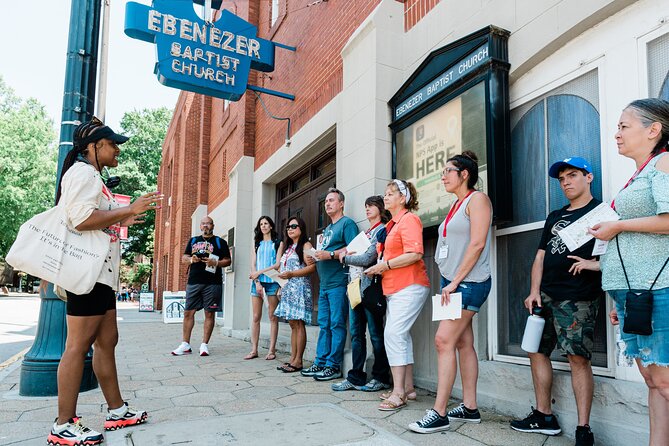
The tour begins and ends at 450 Auburn Avenue NE, within the Martin Luther King Jr. National Historical Site. This is useful if you want to explore the park before or after the walk, though you should allow extra time rather than assume every building will be open.
The opening portion gives you an overview of the site and a closer walk through several areas. It is not merely a quick photo stop. The guide sets up the people and places you will encounter later, so the rest of the walk has more meaning.
The National Park buildings can close at any time because of staffing shortages. That is the most important practical warning here. The walking tour may still operate, but access to individual buildings is not guaranteed. If entering park buildings is your main reason for booking, check current conditions before you go.
The tour does not include the Birth Home Tour. The supplied information lists that visit as closed until 2025, so if you are booking after that date, verify its current status separately. Do not assume the walking tour includes entry simply because the birthplace is part of the wider park.
Ebenezer Baptist Church, seen from the outside
Historic Ebenezer Baptist Church is one of the tour’s essential sights, but the experience includes the exterior only. This is the church where Martin Luther King Jr. and his father, Martin Luther King Sr., preached.
That limitation is worth knowing before you arrive. You will not tour the inside of the Heritage Sanctuary as part of this activity. Still, standing outside the church while hearing about its role in Dr. King’s life gives the building weight beyond its appearance.
This is where the guide can explain the connection between faith, public speaking, and social action. Dr. King’s religious training was not separate from his Civil Rights leadership. His sermons, speeches, and organizing all grew from that world.
The best guides use the church as a starting point for stories about the King family rather than treating it as a quick landmark. You may hear about Coretta Scott King’s influence, Dr. King’s mentors, and the family setting that helped shape his public life.
Prince Hall Grand Lodge and the stories beyond the headline names

The Prince Hall Grand Lodge is one of the tour’s more unusual stops. It is connected with offices used by Dr. King and Congressman John Lewis, and the site also includes a historic Madam C.J. Walker Beauty Salon.
This stop helps widen the story. Famous speeches and major marches are only part of how movements operate. Offices, businesses, meeting places, and community institutions gave people room to organize and build support.
I especially like this part for visitors who already know the basic outline of Dr. King’s life. You may recognize the major names, yet still learn about the local settings that made their work possible. The guide’s job here is to connect a physical address with the less visible planning behind public change.
It is also a good reminder that Sweet Auburn was a center of Black business and civic life. The salon reference points to the importance of entrepreneurship and community gathering, not just politics and religion.
Other walks around Atlanta:
- History and Hauntings of Salem Guided Walking Tour
★ 5.0 · 14,564 reviews - New Orleans Premier Ghost, Voodoo and Vampire Walking Tour
★ 4.5 · 12,856 reviews - Little Havana Food and Walking Tour in Miami
★ 5.0 · 8,882 reviews - Chicago: Gangsters and Ghosts Walking Tour
★ 5.0 · 7,155 reviews
Jackson Street Bridge and Atlanta’s memorable view

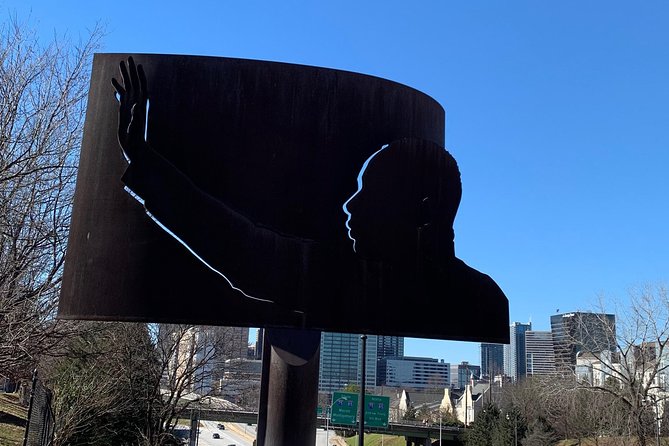
The Jackson Street Bridge stop lasts about 10 minutes, but it can be one of the most visually striking parts of the outing. From here, you take in one of Atlanta’s best-known city views.
This is a welcome change of pace after several stops focused on people and events. You can pause, take photographs, and see the city from a different angle. The guide can also connect the view back to Atlanta’s growth and the setting around Sweet Auburn.
Do not expect a long sightseeing break. Ten minutes passes quickly, and the tour keeps moving. Bring a charged phone if you want photos, but keep the group’s pace in mind.
The bridge also gives the walk some breathing room. Several people have found the tour easy to stay engaged with because the guide varies the rhythm: explanation, movement, a major site, a short pause, then another story.
Walking Sweet Auburn for nearly two hours
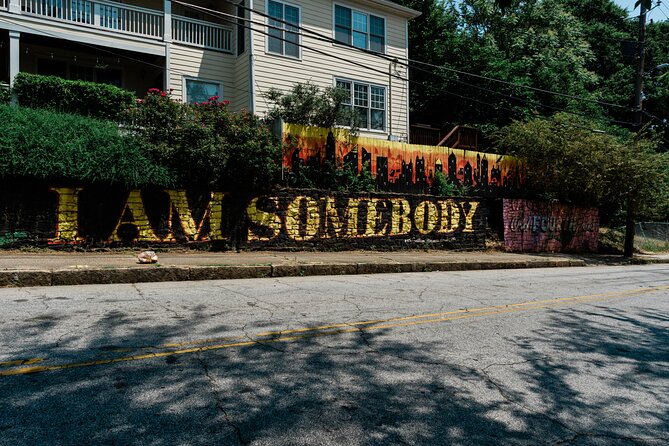
Sweet Auburn is the main event. The route includes several points of interest over about two hours, so you should think of this as an active neighborhood walk rather than a lecture with a few stops.
The distance is about 1.5 miles, according to the practical guidance provided for the tour. That is manageable for many people, but the time on your feet matters more than the mileage. You will walk, stand, listen, look around, and occasionally wait while the guide speaks.
There are some small hills. Wear comfortable shoes, bring water, and dress for the forecast. The tour runs rain or shine, except when poor weather causes a cancellation, so Atlanta’s heat, sun, or rain can affect your comfort.
The route includes breaks, and guides have found shady places during hot conditions. Even so, this is not a good choice if you have difficulty walking or standing for long periods. Service animals are allowed, and most people who can manage a moderate urban walk should be able to take part.
The small group limit of 14 is a real benefit. A guide can usually hear your questions more easily, and you are less likely to feel like a face in a crowd. It also helps with the emotional side of the subject. A smaller group can pause and listen without the rushed feeling of a large sightseeing operation.
The King Center and the human side of the story
The King Center is included as an exterior stop, with about 10 minutes scheduled there. Its listed hours are 10 a.m. to 5 p.m., seven days a week, but the walking experience does not promise a full interior visit.
The surrounding area is closely tied to Dr. King’s family and memory. This is where the guide can move from public achievements to personal details about Dr. King, Coretta Scott King, and the King family.
That personal material is one of the strongest reasons to take the tour with a guide instead of simply walking the area alone. You can see a building on your own, but a guide can explain why a family connection matters, how a public figure’s private life shaped the work, or why a particular object or place carries emotional weight.
Several guide styles are represented among the named guides. Zoe is noted for lively delivery and careful pacing. Joy brings warmth and personal touches to stories about Dr. King and Coretta Scott King. Jessica is praised for theatrical storytelling, while Jay and Nic are known for humor, clear explanations, and keeping the group involved.
Your guide will vary, but the consistent pattern is an approach that combines facts with narrative. At key points, guides may play excerpts from Dr. King’s speeches, allowing you to hear his voice while looking at places connected to his life. That can make the history feel immediate without turning the tour into a performance detached from the sites.
The International Civil Rights Walk of Fame

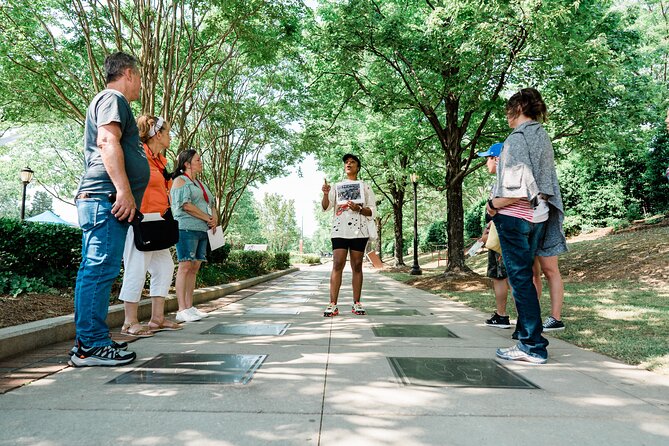
The International Civil Rights Walk of Fame provides a fitting later stop. You see shoe prints connected with prominent Civil Rights leaders and make links to the people discussed during the walk.
This is a small detail with a useful purpose. It gives the guide a chance to bring several names and stories together rather than ending only with Dr. King. The movement becomes a shared effort involving leaders, organizers, speakers, and ordinary people who pushed for change.
The stop lasts about 10 minutes. It is not a large museum visit, but it works as a visual reminder of the wider network behind the movement. You can take in the names and footprints while considering how each person contributed.
What the price of $40 really gets you
At $40 per person, this is a reasonable price if you want interpretation rather than a self-guided walk. You are paying for about 2.5 hours, a small group capped at 14, a planned route, and a guide who can connect the sites into one story.
The value is strongest for first-time visitors to Atlanta and for people who know Dr. King’s famous speeches but want to understand his Atlanta roots. It is also useful for locals who have passed these places without learning how they fit together.
The price is less compelling if you only want to photograph the landmarks or if you already have detailed plans for touring the National Historical Park on your own. Since the church and King Center are exterior stops, and park buildings can close, you should not book expecting a full indoor museum program.
The tour is offered in English and includes a mobile ticket. Transportation to or from the meeting point is not provided, so you need to arrange your own way to Auburn Avenue. The start and finish are at the same meeting point, which makes the outing easier to fit into a day of sightseeing.
The emotional pace and the role of the guide
This tour covers violence, loss, injustice, courage, and political conflict. It is not a light sightseeing stroll, even though good guides add humor and keep the energy up.
The strongest guiding seems to come from people who can balance emotion with plain explanations. Jessica, Joy, Zoe, Jay, Nic, Kristen, Kirsty, and Ariel are among the guides praised for warmth, enthusiasm, or clear storytelling. That does not mean you can select a specific guide, but it gives you a useful sense of the tour’s intended style.
A guide may correct common misunderstandings, explain facts that receive little attention in standard school lessons, and answer questions in detail. You should take part rather than simply trail behind the group. The experience works best when you listen closely, ask questions, and give the guide room to tell the story.
I also appreciate that the tour can hold both serious and lighter moments. A long stretch of solemn narration can exhaust a group. Small jokes, changes in scenery, and lively delivery help you stay focused without making light of the subject.
Who should book this Atlanta walking tour?
Book it if you want a focused Civil Rights experience rooted in actual Atlanta places. It is a particularly good choice for families with older children, couples, solo visitors, educators, history-minded locals, and anyone who wants context before visiting other Atlanta attractions.
It suits people who prefer stories to display cases. You will spend much of your time outside, moving through a neighborhood, listening to a guide explain how people and institutions connect.
Think twice if you dislike walking, standing, heat, rain, or emotionally serious subjects. Also reconsider if you need guaranteed access to every National Park building or want to enter Ebenezer Baptist Church. Those are not promised parts of the experience.
The tour requires good weather to operate. If bad weather cancels it, a different date or a full refund is offered. If the minimum number of participants is not reached, you receive the same choice. Otherwise, the booking is non-refundable and cannot be changed, so choose your date carefully.
Should you book the Martin Luther King Jr. History Walking Tour?
I would book this tour if you have at least half a day in Atlanta and want to understand why Sweet Auburn matters. The best reason is not simply that you will see famous locations. It is that the guide ties churches, offices, family places, public memorials, and city views into one clear account of Atlanta’s role in the Civil Rights movement.
Bring comfortable shoes, water, a charged phone, and patience for outdoor conditions. Arrive ready to listen, ask questions, and accept that some of the most important stops are viewed from the outside.
Skip it only if you need a fully indoor activity, cannot walk and stand for roughly 2.5 hours, or expect a complete tour of every building in the National Historical Park. For everyone else, $40 buys a thoughtful, local-scale introduction to Dr. King’s Atlanta and the people who helped shape the movement around him.
FAQ
How long does the Martin Luther King Jr. History Walking Tour last?
The tour lasts approximately 2 hours and 30 minutes.
Where does the tour begin?
It begins at 450 Auburn Avenue NE, Atlanta, Georgia 30312, at the Martin Luther King Jr. National Historical Site.
Where does the tour end?
The tour ends back at the same meeting point.
How much does the tour cost?
The price is $40 per person.
How far do you walk?
The tour involves about 1.5 miles of walking, with some small hills and periods of standing.
Is entry inside Ebenezer Baptist Church included?
No. The tour includes the exterior of Historic Ebenezer Baptist Church only.
Is the Birth Home Tour included?
No. The Birth Home Tour is not included in this activity and is listed as closed until 2025. Check its current status separately if you want to visit it.
Are National Park buildings guaranteed to be open?
No. National Park buildings may close at any time because of staffing shortages.
Is the tour accessible for people who cannot walk or stand for long periods?
No. The activity is not recommended for people with an inability to walk and stand for long periods. Service animals are allowed.
Does the tour operate in bad weather?
The tour operates rain or shine, but it requires good weather and may be canceled because of poor conditions. In that case, you are offered a different date or a full refund.
How many people can join the tour?
The maximum group size is 14 people.
Is transportation provided?
No. Transportation to and from the meeting point is not included.
What language is the tour offered in?
The tour is offered in English.
Can I cancel for a refund?
The experience is non-refundable and cannot be changed for any reason. A full refund is offered if the operator cancels because of poor weather or because the minimum number of participants is not met.
Just added in Atlanta
- City Lights Atlanta Night-Time Tour with Photos & Dinner Stop★ 5.0 · 485 reviews
- Private Stranger Things “The Upside Down” Film Locations Tour in Atlanta★ 5.0 · 338 reviews
- 3-Hour Atlanta Beltline Food, Street Art and History Tour★ 5.0 · 345 reviews
- Atlanta Sightseeing Bus Tour★ 4.5 · 837 reviews
- Guided Bike Tour in Atlanta with Snacks★ 5.0 · 394 reviews
- 2.5 Hour Atlanta Local Food + Victorian Cemetery Tour★ 5.0 · 693 reviews
- 90-Minute Guided Sightseeing Tour★ 5.0 · 1,004 reviews
- Midtown Atlanta Food & Cocktail Tour★ 5.0 · 681 reviews
Walking Tours, compared.
New Orleans Premier Ghost, Voodoo and Vampire Walking Tour
Read our review →

Freedom Trail History Small Group Walking Tour
Read our review →
Historic Charleston Guided Sightseeing Walking Tour
Read our review →
New Orleans Food Walking Tour of the French Quarter with Small-Group Option
Read our review →
St. Louis Cemetery No. 1 Official Walking Tour
Read our review →
Harvard University Student-Guided Walking Tour
Read our review →
Harvard University Campus Guided Walking Tour
Read our review →Browse the lists this tour appears in