
Reviewed · SNORKELING, SHARK & MANTA RAY TOURS
Manta Ray Night Snorkel from Kona — Small Group
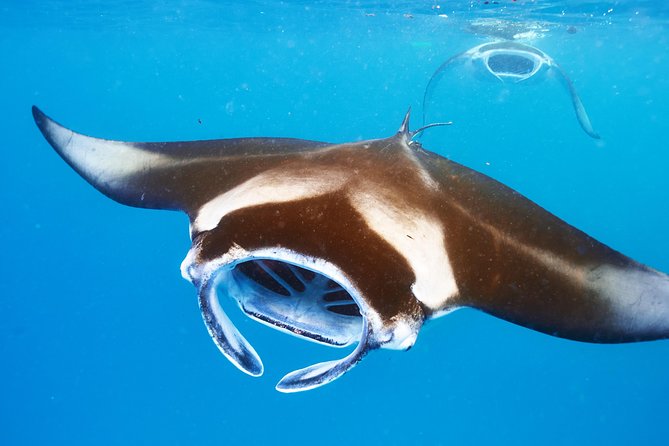
Off Kona, the sea turns into a nighttime theater. You float at the surface while underwater lights draw plankton close, and large manta rays sweep beneath you in slow loops, sometimes passing within inches. Some have wingspans near 20 feet, yet these vegetarian animals are gentle and calm.
I like the small maximum group of 16, which means less crowding around the float and more help from the crew. I also like the flexible approach to the manta site, since the boat can choose between northern and southern areas around Garden Eel Cove. The main drawback is simple: this is an active ocean outing, not a boat ride with a quick look over the rail. You must be able to get into and out of the water, and the 265-pound weight limit is strict.
Key points before you book
- Manta rays can pass within inches of you: The best action happens as they feed around the underwater lights.
- Sunset leads into moonlight: The evening departure makes the dark-water setting less startling and gives you ocean views on the ride out.
- Groups are capped at 16 people: This allows more personal help with flotation gear, wetsuits, and water entry.
- The boat can use more than one manta area: Leaving from Honokohau gives the crew some choice between northern and southern sites.
- A free second trip is offered without a sighting: This protects your investment if the animals do not appear.
- You need to plan for the ride home: Bring a towel and warm clothing, since wet passengers can get chilly after sunset.
Why Kona’s night manta swim is so special
Manta rays gather off the Kona coast to feed on plankton. The tour places you at the surface above lights that attract this tiny food source. The rays then glide through the illuminated water, turning and looping as they feed.
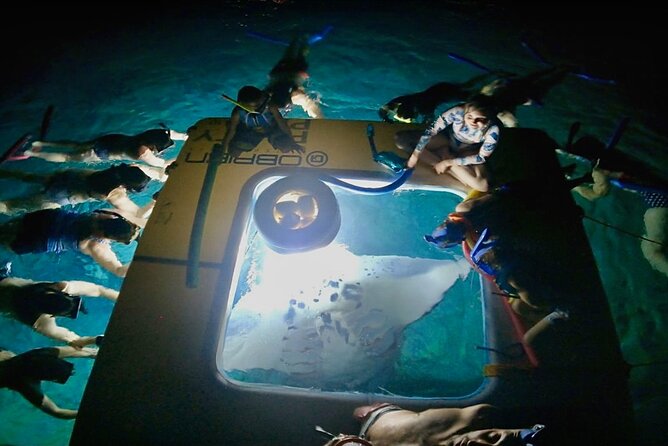
That setup gives you a close view without touching or chasing the animals. You wear a mask and snorkel, hold onto flotation equipment, and watch the action below. The rays are not being fed by the crew. They are following their normal evening feeding pattern.
The scale is what makes this experience memorable. A manta with a wingspan of 20 feet can look enormous from the water, but its movement is smooth and quiet. The shape of the animal changes as it banks, rolls, and turns back toward the light.
The strongest accounts describe several rays feeding for 40 to 45 minutes. Other outings have produced five rays or nine to ten rays. Nature sets the schedule, so no operator can promise a specific number, but the free return policy gives you some protection if the conditions are poor.
More Snorkeling Tours in Big Island of Hawaii
- Big Island Manta Ray Night Snorkel
★ 5.0 · 5,656 reviews - Big Island: Kona Manta Ray Snorkel Tour in Keauhou Harbor
★ 4.5 · 2,465 reviews - Big Island: Captain Cook Snorkel On A Power Catamaran With Lunch
★ 5.0 · 2,232 reviews
From Honokohau Harbor to the open water
You make your own way to 74 Kealakehe Parkway in Kailua-Kona, at Honokohau Marina and Small Boat Harbor. Arrive at least 15 minutes early. The exact departure location and directions are sent 24 hours before the tour, so check your phone and do not rely only on a general map pin.
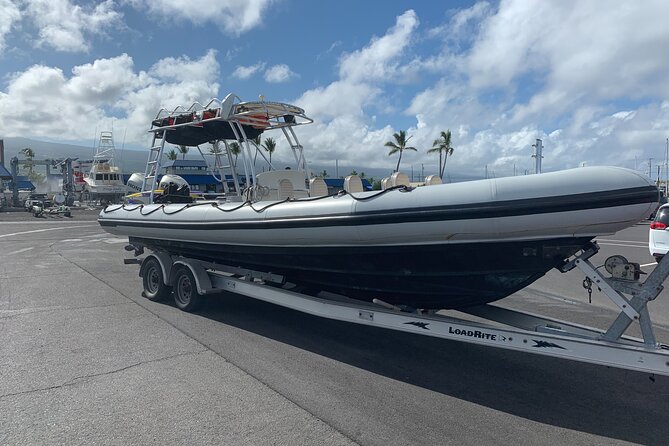
The boat ride is part of the experience. You leave in the fading light, with the sunset behind you and the coast becoming darker as you move offshore. Some boats used for this outing are compact hard-hulled inflatables. That keeps the ride quick and gives you an open view, but it is not the same as sitting in a large enclosed cabin.
That distinction matters. An open boat makes the evening feel immediate and lets you look up at the sky on the way back. It also leaves you more exposed to spray and wind. Pack a sweater, windbreaker, or other warm layer in a dry bag or protected bag, and bring a towel. The return ride can feel cold after you have been in the water.
The trip lasts about two hours in total. The exact amount of time at the manta site can vary, since the crew may wait for the best feeding conditions rather than rushing back on a fixed schedule.
The safety briefing and getting ready
Before entering the water, the crew explains the activity, the equipment, and basic safety rules. You are provided with a wetsuit, mask, snorkel, and flotation equipment. Wear a swimsuit under the wetsuit so you can get changed without fuss.
The crew helps people get set up and provides extra support to those who are less confident in the water. Several accounts describe guides assisting nervous swimmers and keeping flotation available. That is useful, but you should still be honest about your swimming ability. One account describes a passenger panicking after entering the water, which is a good reminder that the ocean at night can feel very different from a daytime beach swim.
You do not need to be an expert snorkeler, but you must be able to participate safely. The tour is not wheelchair accessible, pregnant women are not permitted, and children under 5 cannot join. The listed weight limit is 265 pounds. These are not minor footnotes. Getting into the water and back onto the boat is a real physical part of the outing.
If you have a disability, mobility concern, or question about getting onto the boat, contact the operator before booking. A waiver does not replace a conversation about physical requirements.
Garden Eel Cove and Manta Heaven after dark
The listed route identifies Garden Eel Cove, also called Manta Heaven, as the manta stop. The two itinerary entries represent the main water portion of the evening rather than two separate sightseeing attractions. You ride to the feeding area, enter the water, and remain there while the crew positions the lights and watches the activity.
The crew may choose between nearby manta areas based on conditions and recent activity. That flexibility is one benefit of departing from Honokohau. A boat leaving farther south may have fewer options because traveling north takes more time.
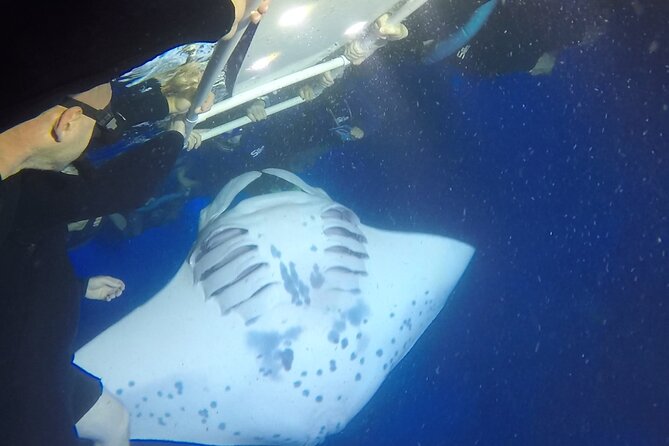
Once you are in the water, the view is mostly below you. The lights form a bright pool in the dark sea, and the manta rays move in and out of it. You may see them roll beneath the group, sweep their broad fins toward the surface, or turn sharply to make another pass.
The guides add context while you watch. Captain Chris or Kris is frequently named as the boat leader, while Ryan, Tori, or Gary may assist in the water, though the exact crew can vary. Their job is not just to point at the rays. They help guests stay calm, keep people positioned safely, answer questions, and remind everyone to give the animals room.
This is also where patience pays off. You might see activity soon after arriving, or you might wait through a quiet spell. The better outings allow enough time for the lights to attract plankton and for the rays to settle into a feeding pattern. The small-group format helps here because you are not one person among a huge crowd packed around a large platform.
Other reefs and snorkel spots around Big Island of Hawaii:
- KONA Manta Ray Night Snorkel – FREE re-ride if no Sightings
★ 5.0 · 2,212 reviews - Manta Ray Night Snorkel at Kona, Big Island
★ 5.0 · 1,758 reviews - Kona Snorkel Tour: Captain Cook Reef Snorkel, Dolphin & Sea Caves
★ 4.5 · 1,411 reviews - Glow of the Deep: Night Snorkeling with Manta Rays
★ 4.5 · 1,254 reviews
What the manta encounter feels like
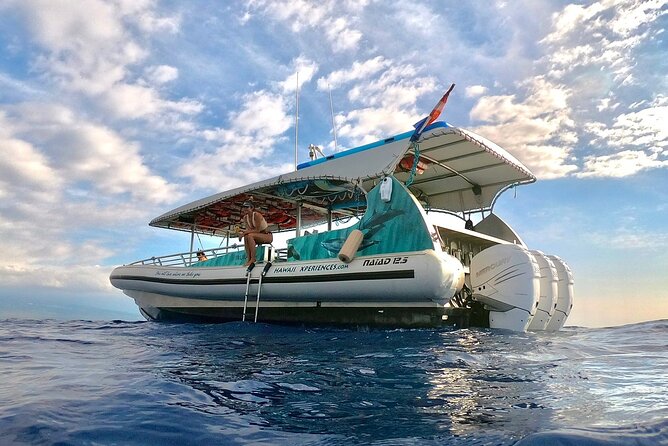
The word gentle fits these animals, but the experience itself can feel intense. You are floating in dark water with only the lights and the shapes below to focus on. A large ray can appear suddenly, glide toward you, and roll away at the last moment.
The closest passes are usually the most striking. You may see the underside of a ray, the curve of its wings, and its mouth opening as it feeds. You should not touch the animals or try to chase them. The best encounters happen when you hold your position and let the mantas choose their path.
The crew’s calm manner matters. Guides have helped passengers with seasickness and anxiety, and some have taken cameras below the platform for different angles. If you bring a GoPro, ask first and secure it well. The supplied information does not promise photography equipment or edited videos, so treat your camera as your responsibility.
The water time can feel generous for a two-hour tour. Some outings have kept the group at the site for roughly 40 to 45 minutes, with several rays returning again and again. The crew may also spend time positioning the boat, helping people enter and exit, and watching for safe conditions.
A small boat has clear advantages and limits
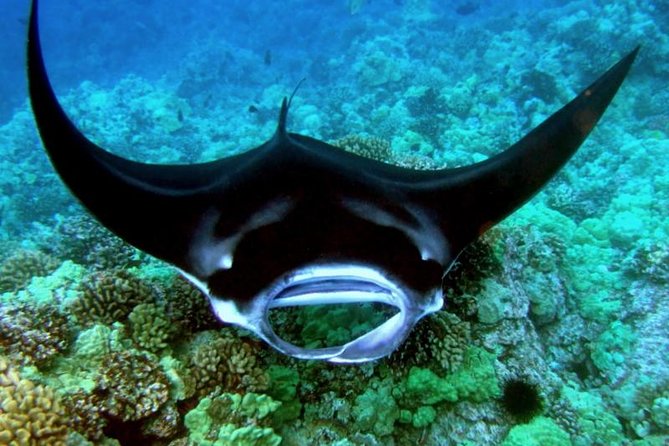
With a group capped at 16, the boat offers a more personal setup than a large cattle-call operation. You get into the water faster, and the crew has a better chance of noticing if someone needs help. Families with teenagers and mixed swimming abilities may appreciate the extra attention.
The smaller boat can also reach the site quickly and may allow the crew to stay later if the manta activity is good. Several accounts describe the boat remaining among the last in the area, with little pressure to leave after only a brief look.
The tradeoff is comfort. A compact boat has less room to spread out, and there is no suggestion of a full cabin. If you dislike open-water motion or often get seasick, consider that carefully. Tori and other crew members have helped passengers settle after seasickness, but assistance does not remove the movement of the sea.
This is not a luxury cruise. It is a practical boat trip built around time in the water. I see that as a good match for people who care more about the manta encounter than cushioned seating or onboard facilities.
Snacks, drinks, and the return to shore
After the snorkel, the crew provides bottled water, island juices, soda, and light snacks. That is welcome after time in the water, but it is not a full meal. Eat beforehand if you need substantial food, especially if you are prone to seasickness or low energy.
You return to Honokohau Harbor at the end of the evening. The ride back can be peaceful, with the night sky overhead, but you will likely be wet and cooler than you expect. Your towel and warm layer are essential, not optional extras.
The activity ends at the same general meeting point where it begins. You arrange your own transport to and from the harbor, so allow time for parking, finding the correct departure spot, and getting settled before the boat leaves.
Is $123 a fair price?
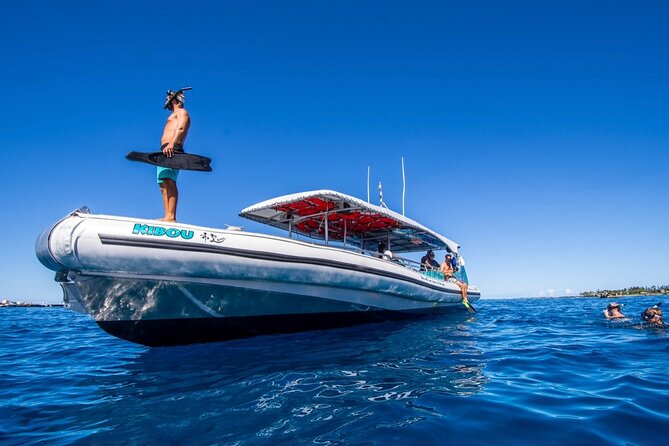
At $123 per person, this is a reasonable price for a focused two-hour manta outing, especially when you count the wetsuit, snorkel equipment, flotation devices, drinks, snacks, and the small group. The most important part of the value is not the gear. It is the chance to spend meaningful time at the feeding site rather than making a short stop and hurrying away.
The free second outing also improves the value. Manta sightings are wildlife encounters, not a mechanical show. If no manta appears, you can return at no extra charge, subject to scheduling and availability.
I would compare this tour by looking at group size and time at the site, not just the lowest price. A cheaper boat may carry more people, offer less help in the water, or leave quickly after arriving. A more expensive boat may provide extra comforts you do not need. For this experience, the small group and flexible timing are the features worth paying for.
The tour is often booked well ahead, with an average advance booking time of about 33 days. If swimming with manta rays is a top Big Island goal, reserve early and keep a little flexibility in your schedule in case weather causes a change.
Who should book this Kona manta tour?
I would recommend it to confident beginners, families with older children, couples, and anyone who wants close wildlife viewing without committing to scuba equipment. The provided flotation gear helps, and the crew offers hands-on assistance, but you still need to be comfortable entering the ocean and floating in darkness.
It suits people who value a relaxed pace. The crew has been praised for taking time with the group, choosing the better site, and staying with the mantas when conditions are good. It also suits visitors who prefer a smaller local operation over a large boat packed with passengers.
I would think twice if you are pregnant, under 5, over the weight limit, or unable to get in and out of the water safely. I would also reconsider if you strongly dislike open boats, nighttime snorkeling, or the possibility of seasickness. The crew can help, but it cannot turn an ocean activity into a dry, fully accessible sightseeing trip.
Weather can cancel the outing. If that happens, you are offered another date or a full refund. You can also cancel for a full refund up to 24 hours before departure, but changes or cancellations inside that window are not refunded.
Should you book it?
If manta rays are high on your Big Island list, I would book this tour, provided you meet the physical requirements and are comfortable in open water. The strongest reasons are the small group, the evening setting, the option to use more than one manta area, and the amount of time available at the feeding site.
Choose it for the animals, the guides, and the chance to watch natural behavior at close range. Skip it if you need a large boat, a dry viewing option, or guaranteed conditions. Bring a towel, warm clothes, and realistic expectations about wildlife. With those points handled, this is one of Kona’s most memorable ocean experiences.
FAQ
Where does the manta ray snorkel begin?
The tour begins at Honokohau Marina and Small Boat Harbor, with the listed meeting address at 74 Kealakehe Parkway, Kailua-Kona, Hawaii 96740. Exact location details and directions are sent 24 hours before departure.
How long does the experience last?
The tour lasts approximately two hours, including the boat ride, preparation, time in the water, and return to the harbor.
What equipment is provided?
The operator provides a wetsuit, snorkel gear, and flotation devices. Snacks, island juices, soda, and bottled water are also included.
What should I bring?
Bring a swimsuit, towel, and warm clothing such as a sweater or windbreaker. The return boat ride can feel chilly after snorkeling.
What happens if I do not see any manta rays?
You are offered a complimentary second outing if no manta rays are seen during your trip.
Is there a group-size limit?
The tour has a maximum of 16 travelers.
Is there a weight restriction?
Yes. The listed maximum weight is 265 pounds.
Can children or pregnant women join?
Children under 5 are not permitted, and pregnant women cannot participate. Most other travelers can participate if they meet the activity’s physical requirements.
What is the cancellation policy?
You can cancel at least 24 hours before the start time for a full refund. Cancellations or changes made less than 24 hours before departure are not refunded. If poor weather or an insufficient number of participants cancels the tour, you are offered another date or a full refund.
Just added in Big Island of Hawaii
- Hilo Shore Excursion: Active Volcano, Lava Tube, Waterfall and Gardens★ 5.0 · 393 reviews
- Volcano Adventure: Hilo Sightseeing w/ Optional Helicopter Tour★ 4.5 · 412 reviews
- Whale Watching On The Big Island★ 5.0 · 573 reviews
- Zodiac Raft Whale Watching Adventure★ 5.0 · 456 reviews
- Kealakekua Bay Snorkeling Tour – 4 hour Kona Zodiac Adventure★ 5.0 · 508 reviews
- Big Island, Hawaii: Volcanoes National Park Safari★ 4.5 · 545 reviews
- Small Group Big Island Twilight Volcano and Stargazing Tour★ 5.0 · 1,619 reviews
- Hawaii Volcanoes, Waterfalls, Beaches & Hilo Highlights Day Tour★ 5.0 · 391 reviews
Snorkeling, Shark & Manta Ray Tours, compared.
Grand Tour Around Island 16 Locations plus Snorkeling
Read our review →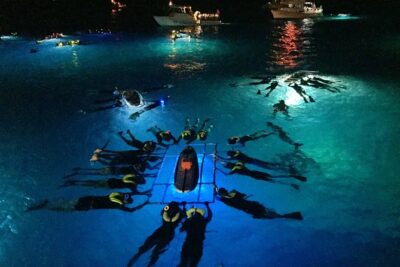
Oahu’s Ultimate Tour: Dole, Turtle Snorkel, Pali Lookout & More
Read our review →
Oahu Circle Island Tour with Turtle Snorkeling— Small-Groups
Read our review →
Waikiki, Hawaii: Turtle Canyon Snorkel Excursion
Read our review →
Shell Island Snorkel and Dolphin Catamaran Cruise with Island Time
Read our review →
Turtle Canyon Snorkel Adventure in Waikiki, Oahu
Read our review →
Browse the lists this tour appears in