
Reviewed · SNORKELING, SHARK & MANTA RAY TOURS
Kailua-Kona: Manta Ray Watching Nighttime Boat Trip
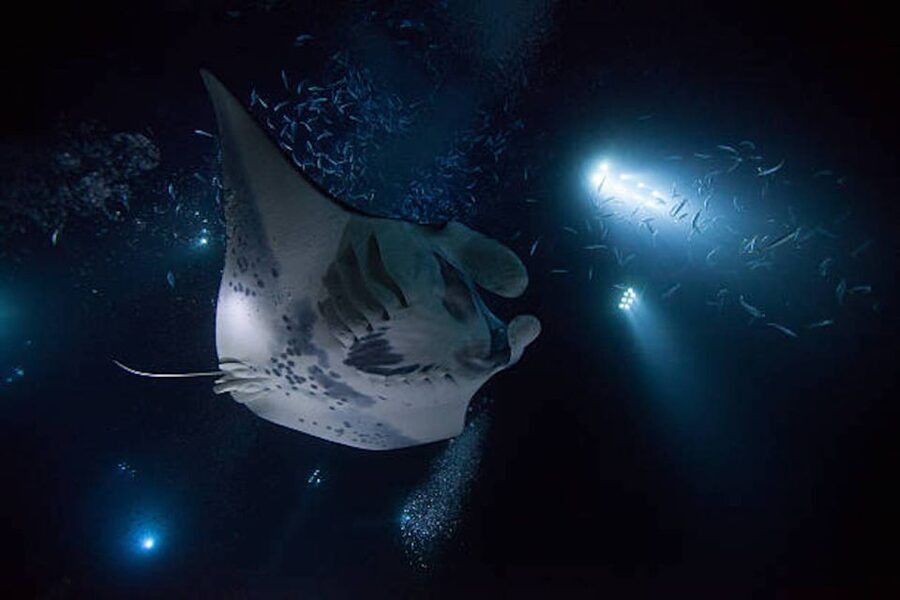
The main event is wonderfully strange: you float on the dark Pacific while manta rays sweep beneath you in wide, graceful circles. Their pale undersides catch the boat’s lights, and some may glide within inches of your face. The nighttime setting makes this feel far more personal than a daytime wildlife cruise.
I like two things here. First, the crew puts real effort into helping nervous swimmers, with guides such as Kelley, Bryce, Koa, and Elayo often praised for their calm, funny approach. Second, the $75 price includes the boat, snorkel gear, wetsuit top, snacks, and instruction, which is strong value for a two-hour Big Island outing.
The key choice is the snorkeling option. From the boat alone, you may not see much of the rays, so the boat-only trip can feel thin for the price. You must also be comfortable in the ocean at night, though non-swimmers and children under five cannot join.
Key points to know before booking
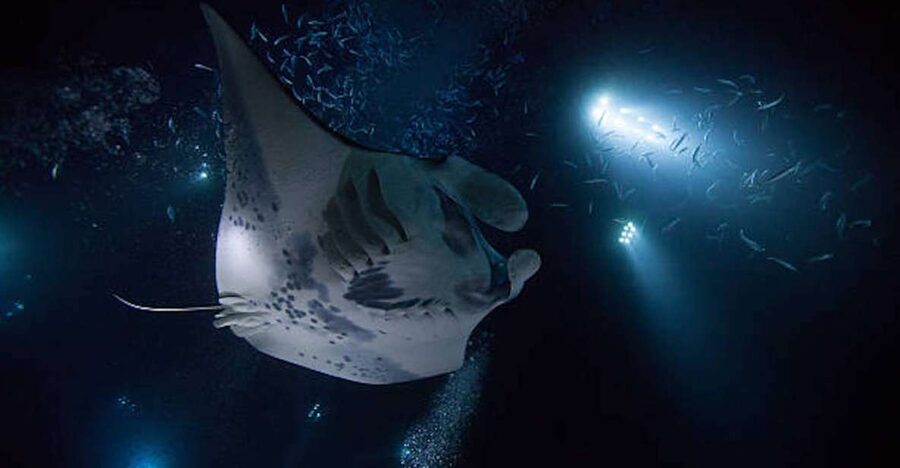
- The snorkeling option is the real attraction: You get the best view of the mantas from the water, not from the boat deck.
- The crew takes safety seriously: Guides stay close, explain what to do, and help first-time snorkelers settle in.
- The outing leaves from Honokohau Harbor: The meeting point is in front of the restrooms, after the second right inside the harbor.
- Bring warm clothes for the return: The boat can feel chilly after you come out of the water.
- Manta sightings are the goal, not a guarantee: You may see several rays, and some outings have seen more than 10, but wildlife remains unpredictable.
- The trip suits confident swimmers best: Children under five and non-swimmers are not allowed.
Why Kona’s night manta encounter feels so different
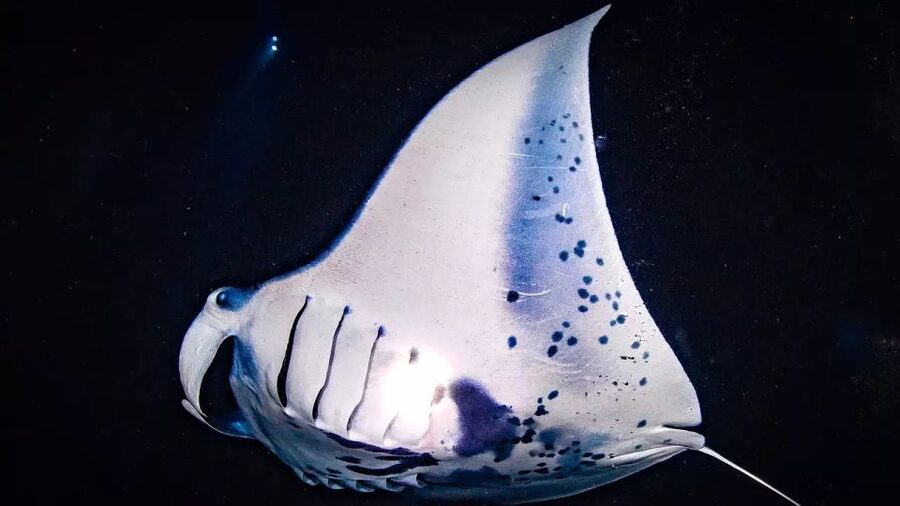
Kona’s manta trips are not ordinary sightseeing cruises. You are not simply looking over a rail and hoping to spot a fin. With the snorkeling option, you hold onto a floating light board or stay near the group while the rays circle below, feeding on tiny sea life drawn toward the lights.
The setting changes everything. At night, the water around you becomes black, while the illuminated area below turns into a stage. The manta rays pass through it with slow wingbeats, sometimes turning on their sides or rolling into a spiral. You can see their size and movement in a way that is difficult from shore.
I also like that the activity focuses on watching rather than chasing. The rays are wild animals in their usual feeding area. You do not need to touch them, and the best encounters come from staying still while they move around you.
The experience has a strong emotional contrast. Getting into dark ocean water can sound intimidating, especially if you are new to snorkeling. Once the first manta passes beneath you, that fear often gives way to concentration. You find yourself watching the next turn, then the next one, while the boat lights shimmer across the surface.
More Snorkeling Tours in Big Island of Hawaii
- Big Island Manta Ray Night Snorkel
★ 5.0 · 5,656 reviews - Big Island: Kona Manta Ray Snorkel Tour in Keauhou Harbor
★ 4.5 · 2,465 reviews - Big Island: Captain Cook Snorkel On A Power Catamaran With Lunch
★ 5.0 · 2,232 reviews
From Honokohau Harbor to the open water
The meeting point is at Honokohau Harbor, about 4.5 miles south of Kona International Airport and 3.5 miles north of Kailua-Kona town. After turning into the harbor from the main highway, take the second right and find the crew member in front of the restrooms.
Allow extra time to locate the correct boat. The harbor has several boats and operators, and the meeting directions can feel vague if you arrive without checking the details. The provider specifically asks you to confirm the boat location and booking by phone 12 hours ahead. That simple call can prevent a rushed start.
Once aboard, you will head away from the shore on a spacious catamaran. The boat ride is fairly short according to the available trip details, but wind can make the ride choppy. Sit where you feel comfortable, and if you want to look at the moon and stars, the upper area offers the best view, though it can be windy and you will need to hold on.
The harbor itself can offer small surprises before the main event. One outing reported turtles in the marina, and other trips have encountered dolphins or a monk seal. Those sightings are bonuses, not promises, but they show why it pays to keep watching during the entire boat trip.
What happens during the two-hour outing
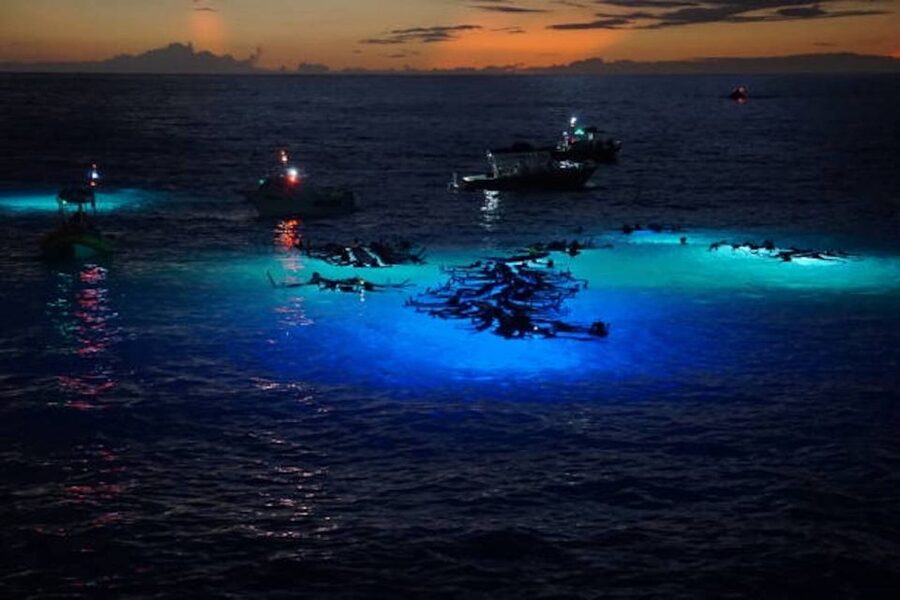
The full activity lasts about two hours, though the exact start time depends on availability. After boarding, the crew explains the plan, reviews safety rules, and introduces the manta rays. You will hear why the animals gather near Kona’s warm coastal waters and how the lights help bring food toward the surface.
That explanation matters. You are not just looking at large animals in the dark. You learn what you are seeing and how to behave around it. The guides also explain how to use the mask and snorkel, and they help people who are new to the water.
You can stay on the boat if you choose the boat-only option. This is the quieter version of the trip, with ocean views, snacks, and the chance to watch for marine life. It may suit someone who cannot snorkel but still wants a short nighttime cruise.
Still, I would not book this trip expecting the boat-only version to provide the full manta encounter. The rays are best viewed from the water, and one direct assessment of the options makes the point clearly: the boat ride alone may offer little actual manta viewing. If seeing the animals up close is your reason for booking, select snorkeling from the beginning.
With the water option, you put on the provided wetsuit top, mask, and snorkel gear, then enter the ocean with the crew nearby. A life jacket is included, and the guides remain attentive while everyone gets positioned around the lights.
Water time can vary. One late outing had about an hour in the water, while another group stayed for roughly 40 minutes. Weather, sea conditions, the animals, and the group all affect the schedule. The listed activity time is two hours, not a guarantee of a fixed amount of time in the water.
The guides make the dark water easier
The strongest part of the operation is the crew’s approach. Names appearing often in the trip details include Captain Kelley, Bryce, Koa, Elayo, Ilio, Kelly, Chase, AJ, and Connor. Crews change, but the pattern is consistent: clear instructions, humor, and close attention to people who feel uncertain.
That matters most before you enter the sea. A first-time snorkeler may need help adjusting a mask, finding a comfortable position, or simply getting used to the black water. The guides have helped beginners and less confident swimmers step through the process without making them feel embarrassed.
You should still be honest about your ability. This is not a pool lesson, and the tour is not suitable for non-swimmers. The crew can support a nervous beginner, but you need enough water comfort to follow instructions and remain in the ocean with the group.
The friendly tone also helps on the ride back. The crew has been described as funny and relaxed, with music on some trips. That light mood is welcome after an intense encounter, though you may be cold and tired by then. Bring a towel and a warm layer for the return.
Other reefs and snorkel spots around Big Island of Hawaii:
- KONA Manta Ray Night Snorkel – FREE re-ride if no Sightings
★ 5.0 · 2,212 reviews - Manta Ray Night Snorkel at Kona, Big Island
★ 5.0 · 1,758 reviews - Kona Snorkel Tour: Captain Cook Reef Snorkel, Dolphin & Sea Caves
★ 4.5 · 1,411 reviews - Glow of the Deep: Night Snorkeling with Manta Rays
★ 4.5 · 1,254 reviews
Snorkeling above manta rays
The first appearance can be startling. A manta ray may glide beneath you with its broad fins extended, then curve upward toward the light. The animal can seem to come within inches of your face, though you should never reach out or try to touch it.
You will likely spend much of the water portion looking down, holding your position, and waiting for the next pass. This is not an active swim around a reef. The best approach is to stay calm and let the rays set the pace.
Several experiences have included multiple mantas, and one group saw more than 10. Another saw four. Some people have also encountered dolphins, turtles, a monk seal, or other fish during the wider outing. These examples show the range of possible wildlife, but no operator can promise a certain number of rays.
The rays are the stars because of their movement. Their size can make them seem imposing, but they are not presented as aggressive animals. Their sweeping turns and slow, graceful motion create the feeling of an underwater performance without any need for a staged show.
The water itself may be choppy. Wind made one trip rough on the way out, while other outings had a smooth ride. If you are prone to seasickness, consider your usual needs before booking. One person took motion-sickness medicine as a precaution and found the trip manageable, but that is personal advice rather than a guarantee for every departure.
What the $75 price really covers
At $75 per person, this is one of the more reasonably priced ways to see Kona’s manta rays. The cost includes the boat ride, an English-speaking guide or instructor, snorkel equipment, a wetsuit top, life jacket, and light snacks.
That package is important because separate equipment rental or a short boat transfer could quickly add to the cost. You are paying not only for transportation but also for the crew’s handling of a nighttime water activity, safety briefing, equipment setup, and time at the manta site.
The value is strongest if you snorkel. You receive the close view that makes the trip special, and the gear is supplied. The value is weaker if you remain on the boat and see few or no rays from the deck. I would treat the boat-only choice as an option for someone who cannot enter the water, not as the best version of the experience.
The included snacks are light rather than a meal. Eat beforehand if you need a full dinner, especially since departure times can run late. The schedule may also leave you returning to Kona after dark, so plan the rest of your evening with that in mind.
Free cancellation up to 24 hours before departure and the reserve-now, pay-later option make the booking less rigid. You should still confirm the reservation and exact boat location 12 hours ahead, as requested.
Who should book this Kona manta trip
This is a strong match for:
- Confident swimmers who want a close wildlife encounter
- First-time snorkelers who appreciate patient instruction
- Families with children aged five and older who can swim
- Solo visitors who want a well-supported group activity
- Couples looking for an unusual evening on the Big Island
- Anyone who values wildlife viewing over a polished luxury cruise
It can also work for someone nervous about night snorkeling, provided that person can swim and is willing to follow the crew’s instructions. Several outings have included people who were uneasy at first and felt more relaxed once the guides explained the process.
I would be more cautious if you dislike cold water, get motion sick, or want a calm sightseeing cruise. The ocean can be choppy, the boat ride can feel chilly, and the wetsuits may show wear. One person specifically found a wetsuit top tattered and unpleasant smelling, so do not expect spa-level equipment.
Children under five cannot join, and non-swimmers are excluded. If part of your group wants to snorkel and another part does not, check the available option carefully before booking. The boat-only experience may not satisfy someone who came specifically to see rays up close.
Practical tips for a smoother evening
Call 12 hours before the trip to confirm both your booking and the exact boat. Honokohau Harbor has multiple boats, and the restroom meeting point can be easy to miss. Look for the crew member in front of the restrooms after taking the second right inside the harbor.
Wear swimwear under your clothes. Pack a towel, a waterproof camera, and a warm sweatshirt or jacket for the return trip. Even in Hawaii, an open boat after nighttime snorkeling can feel cool.
If you want photos, a waterproof camera is worth bringing, but do not let it distract you from the encounter. The rays move close and quickly, and the most memorable part may be the moment you look up from the camera and see one directly below you.
Arrive ready for a short but active outing. You may spend a long period holding position in the water, and your arms can feel tired afterward. A wetsuit top helps with warmth, but it does not turn the ocean into a heated pool.
Finally, choose snorkeling at booking if you can swim. Some people have upgraded after boarding, which left them without a towel or proper preparation. It is better to make the decision before you leave the harbor.
Should you book the Kona manta ray night tour?
Yes, if you are a swimmer and want a close look at one of Hawaii’s most memorable marine animals. The combination of dark water, bright lights, and slow-moving manta rays is unusual, and the crew’s patient style gives beginners a fair chance to enjoy it.
Book the snorkeling option, not just the boat ride, if the mantas are your main goal. Expect some wind, possible chop, a chilly ride home, and basic rather than luxurious equipment. At $75, the water option offers very good value, especially for a two-hour trip with gear and instruction included.
FAQ
How long is the manta ray boat trip?
The activity lasts about two hours. The amount of time spent in the water can vary, with some outings lasting around 40 minutes and others closer to an hour.
Where do I meet the boat?
Meet the crew at Honokohau Harbor, about 4.5 miles south of Kona International Airport and 3.5 miles north of Kailua-Kona town. After entering the harbor from the main highway, take the second right and meet in front of the restrooms.
What is included in the $75 price?
The price includes the boat trip, an English-speaking guide or instructor, snorkel gear, a wetsuit top, life jackets, and light snacks.
Should I choose the snorkeling option?
Choose snorkeling if you want the closest and best view of the manta rays. The boat-only option lets you stay aboard, but you may see little of the rays from the deck.
What should I bring?
Bring swimwear, a towel, and a waterproof camera if you want photos. You should also bring something warm for the boat ride back.
Can children and non-swimmers participate?
Children under five and non-swimmers cannot join. Older children may participate if they can swim and are comfortable following instructions in the ocean.
Can I cancel the booking?
You can cancel up to 24 hours before the activity for a full refund. The reserve-now, pay-later option also lets you hold a place without paying immediately.
Just added in Big Island of Hawaii
- Hilo Shore Excursion: Active Volcano, Lava Tube, Waterfall and Gardens★ 5.0 · 393 reviews
- Volcano Adventure: Hilo Sightseeing w/ Optional Helicopter Tour★ 4.5 · 412 reviews
- Whale Watching On The Big Island★ 5.0 · 573 reviews
- Zodiac Raft Whale Watching Adventure★ 5.0 · 456 reviews
- Kealakekua Bay Snorkeling Tour – 4 hour Kona Zodiac Adventure★ 5.0 · 508 reviews
- Small Group Big Island Twilight Volcano and Stargazing Tour★ 5.0 · 1,619 reviews
- Big Island, Hawaii: Volcanoes National Park Safari★ 4.5 · 545 reviews
- Hawaii Volcanoes, Waterfalls, Beaches & Hilo Highlights Day Tour★ 5.0 · 391 reviews
Snorkeling, Shark & Manta Ray Tours, compared.
Grand Tour Around Island 16 Locations plus Snorkeling
Read our review →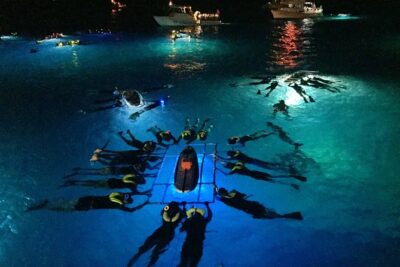
Oahu’s Ultimate Tour: Dole, Turtle Snorkel, Pali Lookout & More
Read our review →
Oahu Circle Island Tour with Turtle Snorkeling— Small-Groups
Read our review →
Waikiki, Hawaii: Turtle Canyon Snorkel Excursion
Read our review →
Shell Island Snorkel and Dolphin Catamaran Cruise with Island Time
Read our review →
Turtle Canyon Snorkel Adventure in Waikiki, Oahu
Read our review →
Browse the lists this tour appears in