

Reviewed · WALKING TOURS
Charleston: Old Walled City Historical Walking Tour
Charleston’s past is best understood on foot, where a churchyard, cobblestone lane, or painted house can open a window onto the city’s complicated story. This two-hour walk moves through the old walled city, connecting grand architecture with piracy, rice wealth, war, disease, fire, hurricanes, and the earthquake that changed Charleston.
I like the local perspective, especially when your guide is a seventh-generation Charlestonian such as Bruce or a longtime resident such as Al. I also like the route’s mix of famous sights and less obvious corners. The main drawback is simple: you cover plenty of ground, and the pace may feel brisk if you need frequent rests or have trouble hearing a guide outdoors.
Key points to know before you book
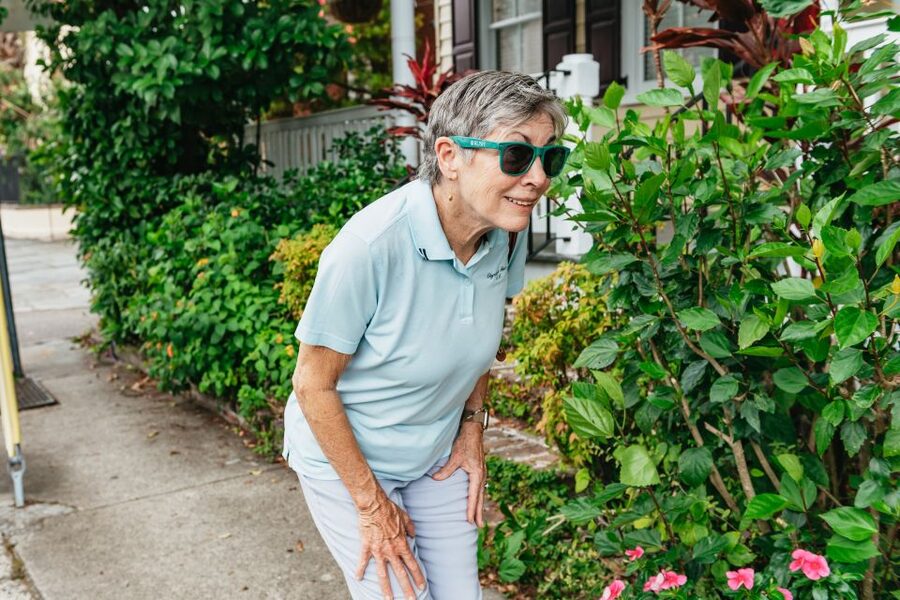
- A seventh-generation Charlestonian may lead your walk: Guides such as Bruce bring family ties and personal memories to the city’s story.
- The route links major sights in one compact circuit: You see the French Quarter, Dock Street Theatre, the Old Exchange, Waterfront Park, Rainbow Row, historic homes, and St. Michael’s Episcopal Church.
- The story goes beyond pretty buildings: Expect frank discussion of slavery, rice-planter wealth, epidemics, fires, hurricanes, sieges, bombardments, and the earthquake.
- The guide makes a major difference: Al, Bruce, Eric, Alfie, Kent, Bob, Judi, and others have been praised for humor, detail, patience, and storytelling.
- You pay $30 for two hours: That is fair value if you want a strong orientation to Charleston rather than a quick photo walk.
- Come ready to walk: Wear comfortable shoes, carry water and sunscreen, and dress for the weather.
Starting on Meeting Street and Chalmers Street
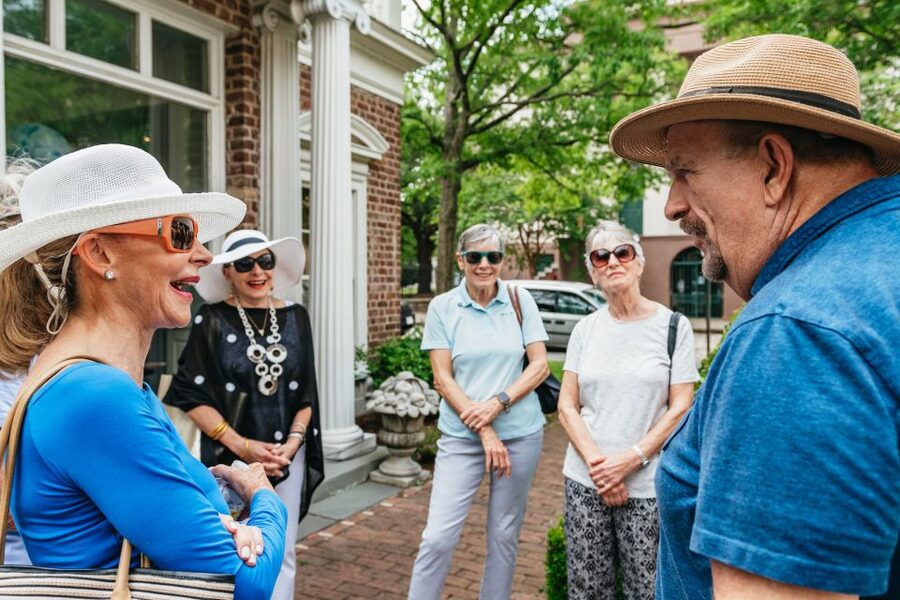
The tour begins on the sidewalk at the corner of Meeting Street and Chalmers Street, beside the cobblestones. This is a useful location because you start in the heart of historic Charleston rather than spending the first part of the tour getting there.
Arrive ready to listen and walk. The tour lasts two hours, and the route includes several stops plus the streets between them. Charleston’s old center is easy to admire, but its uneven surfaces and warm weather can make a walking tour more tiring than the distance suggests.
The guide leads in English. Past groups have been small enough to feel personal, including one tour with only two people and another with eight. Group size can vary, so you should not assume a private experience, but the format allows room for questions when numbers are modest.
Other history to see in Charleston:
- Charleston’s Old South Carriage Historic Horse & Carriage Tour
★ 5.0 · 10,023 reviews - Historic Charleston Guided Sightseeing Walking Tour
★ 5.0 · 6,216 reviews - Charleston Horse-Drawn Carriage Tour: Explore Historic Charleston
★ 5.0 · 3,561 reviews
The French Quarter: Charleston’s story in close quarters
About 50 minutes of the walk is spent around the French Quarter and nearby historic streets. This is the longest portion of the tour, and it gives you time to look closely instead of simply ticking off landmarks.
You’ll pass colorful homes, storefronts, churches, public buildings, and houses from both the colonial and post-colonial periods. The value here is not just architectural. Your guide explains how Charleston grew, who gained power, and how trade and agriculture shaped the city.
The tour covers the age of piracy and the rise of the rice planters. Those subjects help explain why Charleston developed such a distinctive mix of wealth, danger, and social order. You are not left with a postcard view of grand facades. The guide connects buildings to the people and systems behind them.
This section can also be information-heavy. Mary, visiting from Thailand, appreciated the enthusiasm but found that her guide sometimes spoke too quickly. If you have hearing difficulty, stand near the guide and ask for a slower pace or clearer projection. One visitor with hearing loss found that a guide’s voice occasionally dropped at the end of a sentence.
Churches, tombstones, and the clues in old stone
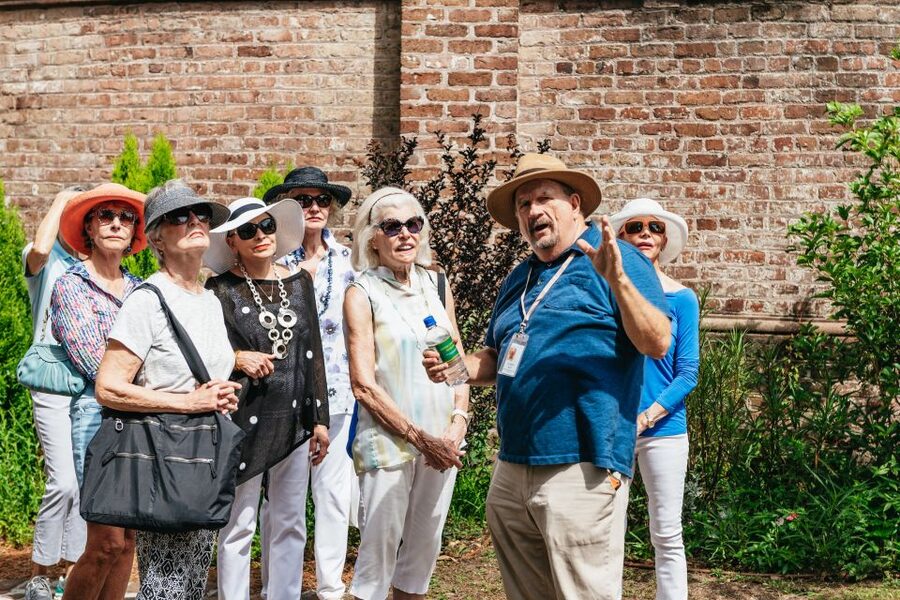
Churches are among the most picturesque stops on the route, but the tour treats them as more than photo backgrounds. Their locations, design, and burial grounds help show how Charleston’s residents worshipped, organized society, and remembered the dead.
You may get a chance to read old symbols on tombstones. Those marks carry clues about faith, family, status, and mortality. A good guide turns a graveyard from a quiet scenic stop into evidence of another era.
St. Michael’s Episcopal Church receives a dedicated sightseeing stop of about 12 minutes. The church is one of the tour’s strongest visual pauses, giving you time to take photographs while hearing how the city’s religious and civic life developed around landmark buildings.
The route also includes Charleston’s older public spaces and buildings. You should expect commentary while standing outdoors, not a long indoor visit with exhibits. That matters if you want museum-style interpretation. This tour is better for seeing the city in place, with the guide using streets and facades as the teaching tools.
Dock Street Theatre and the Old Exchange
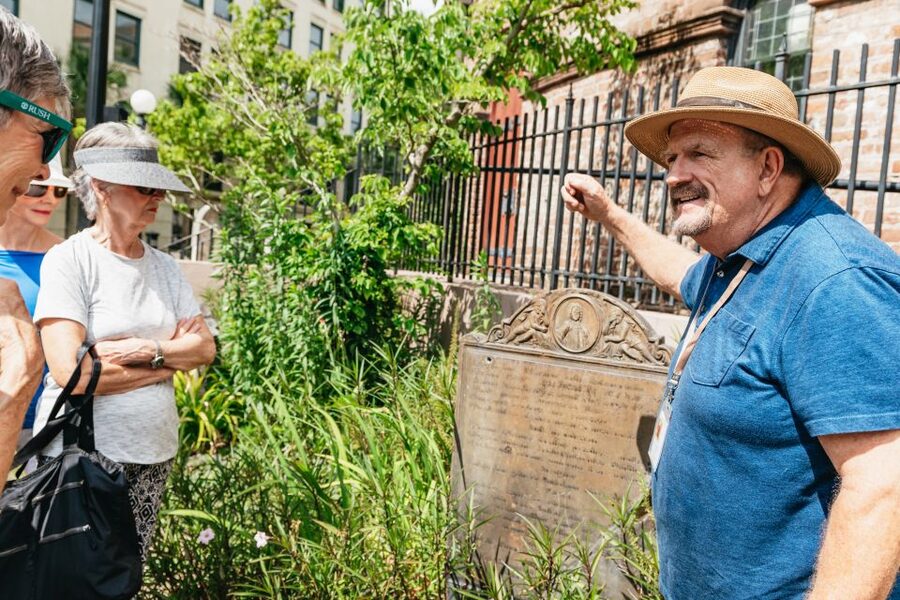
The Dock Street Theatre gets about 15 minutes. This stop brings the performing arts into the story and shows how Charleston’s public life was shaped by more than commerce and politics.
The Old Exchange and Provost Dungeon follows with roughly 12 minutes. It is a compact stop, but it adds weight to the tour’s account of conflict, authority, and punishment. You’ll hear about the forces that disrupted Charleston, including sieges and bombardments.
These stops are a good example of the tour’s method. You are not spending a long time inside each place. Instead, the guide uses several sites to build a connected picture of Charleston. If you want extended admission time at the Dock Street Theatre or the Old Exchange, this is not that kind of visit. If you want an efficient introduction before choosing which places to explore later, it works well.
Other walks around Charleston:
- Ghosts of Charleston Night-Time Walking Tour with Unitarian Church Graveyard
★ 4.5 · 2,835 reviews - Hidden Alleyways and Historic Sites Small-Group Walking Tour
★ 5.0 · 2,335 reviews - Highlights of Charleston Guided Walking Tour
★ 5.0 · 2,206 reviews - Charleston Haunted Booze and Boos Ghost Walking Tour
★ 5.0 · 1,569 reviews
Waterfront Park and the harbor-facing view
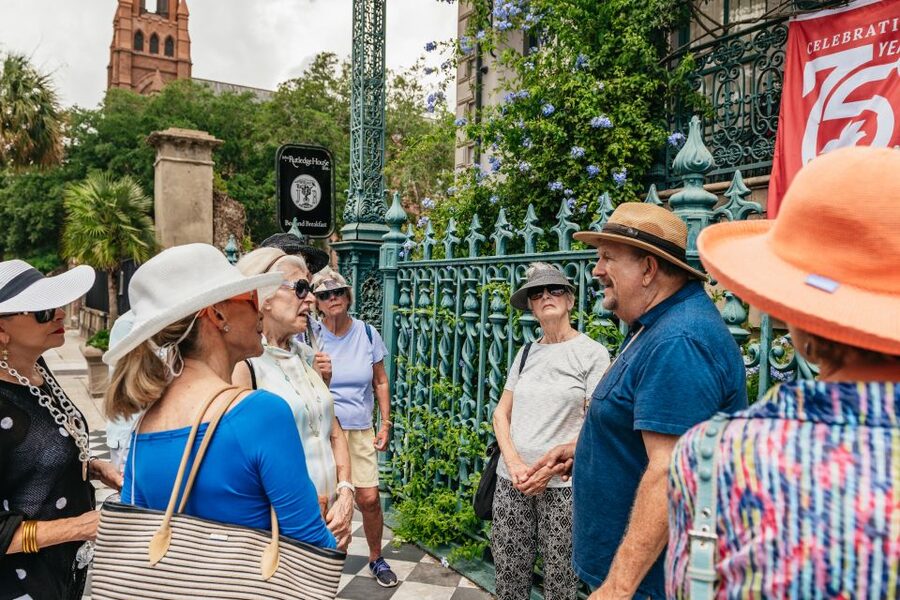
Waterfront Park is one of the more scenic stretches of the walk, with views along the way and space to pause. It gives your eyes a break from close-set buildings and lets you consider Charleston’s relationship with the water.
The park stop lasts about 15 minutes. Your guide may use this part of the route to connect the city’s position with trade, conflict, storms, and natural disasters. The tour specifically covers seven major fires, hurricanes, epidemics, sieges, bombardments, and a devastating earthquake.
That list is important because Charleston’s story is not only about preservation and beauty. Repeated disasters altered streets, buildings, businesses, and daily life. Hearing about those events while moving through the city makes the past feel less like a series of dates and more like a record of people rebuilding again and again.
Weather matters here. In hot or bright conditions, sunscreen, water, and a hat are sensible. A guide has sometimes adjusted the route to use more shade, but you should still plan for outdoor exposure.
Rainbow Row and the photogenic side of Charleston
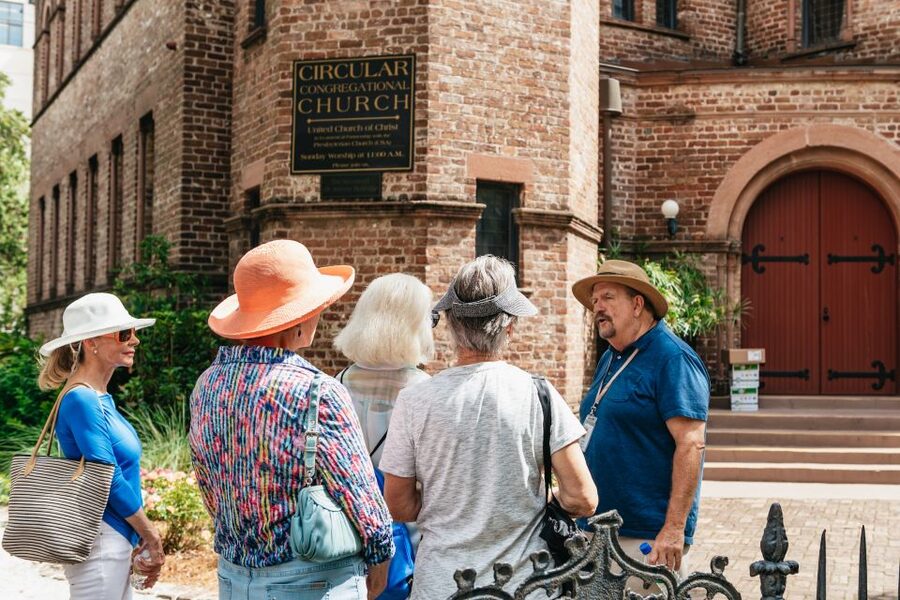
Rainbow Row is the quickest named stop, at about seven minutes. The colorful buildings are made for photographs, and the stop gives you a classic Charleston image without taking over the tour.
The short timing is a benefit if you want a broad overview. You see the row, hear why the area matters, and keep moving. The tradeoff is that photographers who want time for careful compositions may feel rushed.
I like the contrast between Rainbow Row and the tour’s tougher subjects. Charleston is undeniably pretty, but the walk does not use color and charm to avoid difficult questions. The guide places attractive streets beside stories of wealth, disaster, conflict, and inequality.
Heyward-Washington House and colonial homes
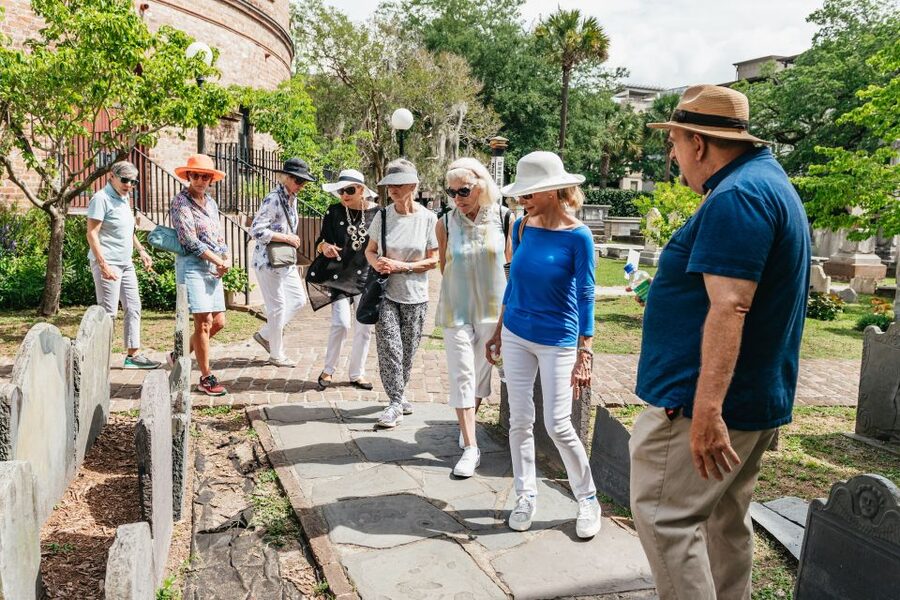
The Heyward-Washington House gets about five minutes for photographs and sightseeing. Along with the other colonial homes on the route, it helps you see how architecture reflected the city’s early society.
This is another brief exterior-focused stop. You may not get a full house tour, but you will gain a clearer sense of the period buildings that line Charleston’s historic core. The guide’s storytelling is especially useful here, since a facade alone cannot tell you how the city grew or who lived behind it.
The route also gives you chances to notice pre-colonial and post-colonial buildings side by side. That range keeps the tour from presenting Charleston as a single frozen moment. The city’s appearance was shaped over many periods, and the guide follows those changes through streets, homes, churches, and public buildings.
St. Michael’s and the return through the old city
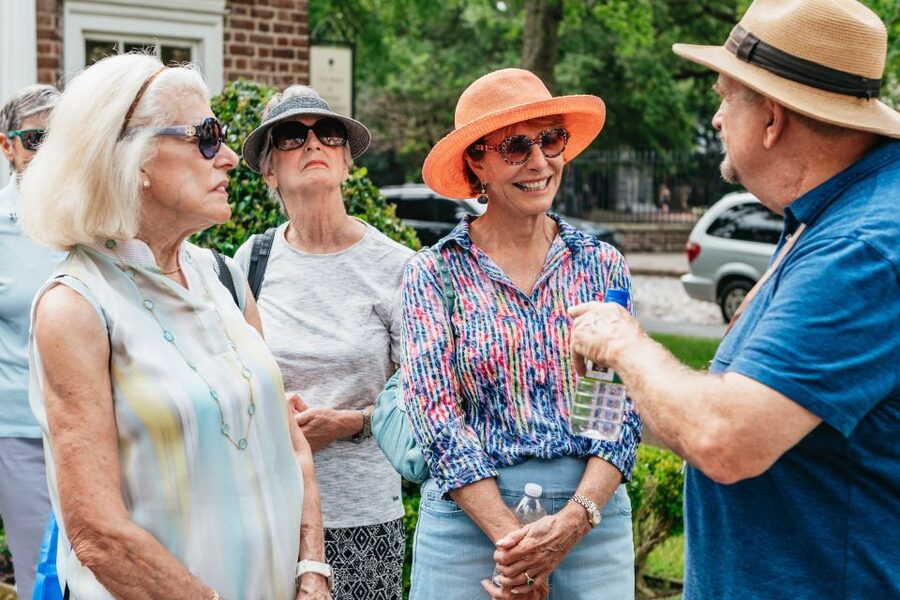
The tour includes another 12-minute sightseeing stop at St. Michael’s Episcopal Church before returning to the starting point. By this point, the route has given you a useful framework for Charleston’s center: French Quarter streets, public buildings, waterfront views, colorful homes, churches, and burial clues.
The final return is valuable because you finish where you began, rather than being left at a distant landmark. You can continue exploring from there or use what you learned to choose a museum, house, restaurant, or street for a later visit. Several guides have also answered questions about restaurants and the city beyond the formal route.
The guide can make or break the experience
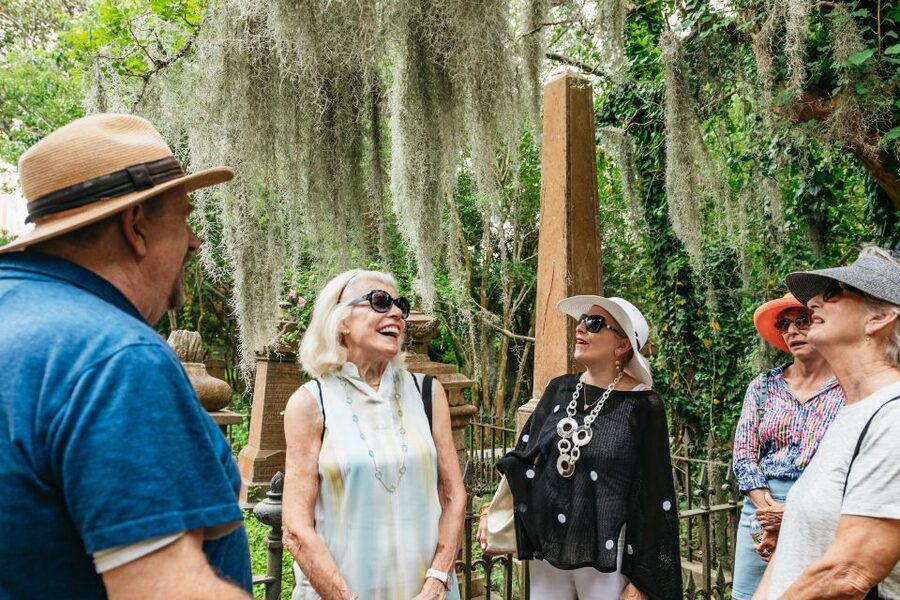
The strongest praise centers on the guides. Al is repeatedly described as funny, enthusiastic, and full of detail. Bruce is a seventh-generation Charlestonian, and his personal connection to the city adds a different tone. Alfie has guided since 1982 and is also a native Charlestonian.
Eric Wright has been praised for linking stories to people in the group, adjusting the route for a wheelchair user, and combining formal history with an intimate feel for his adopted hometown. Other guides named in feedback include Kent, Bob, Judi, and Ed.
You cannot choose every guide in advance based on the information provided, so treat the names as examples of the range you may encounter. The common thread is a strong local voice, a conversational style, and plenty of stories.
Guides do not all deliver information in the same way. Some speak quickly because they have a great deal to cover. Some may be more anecdotal, while others lean harder on dates, architecture, and political events. If you have a specific interest, tell your guide early. One guide tailored the walk to the group’s interests, and that kind of conversation can make the two hours more useful.
What the $30 price gives you
At $30 per person, this is a reasonably priced introduction to Charleston’s historic center. You are paying for two hours with a live English-speaking guide, not admission to a series of interiors.
The value is strongest if you are new to Charleston and want context before exploring alone. A guide can point out connections you might miss, explain why a building matters, and help you understand the city’s difficult past without reducing it to a list of dates.
It is less valuable if you already know Charleston well and want a specialist tour focused on one subject. Even then, the personal angle can reveal places and stories you have not encountered. A longtime Charleston resident who has lived through more recent changes can add something that a guidebook cannot.
The activity offers free cancellation up to 24 hours before the start time and allows you to reserve now and pay later. Those options are useful when Charleston weather or your wider schedule is uncertain.
Who should book this Charleston walk
I would recommend it for first-time visitors, history fans, architecture fans, and anyone who wants to get oriented on the first morning in town. It suits people who prefer stories and conversation over a bus ride or a quick list of landmarks.
Families can also make it work. One guide was especially patient with children, and another adjusted the experience for a wheelchair user. Still, the route involves substantial walking, and the company does not describe it as a fully accessible tour. Ask about your needs when booking rather than assuming every street or surface will be easy.
This is not the best pick for anyone who dislikes outdoor walking, struggles with heat, or wants long indoor visits. It may also feel demanding if you need the guide to repeat information often. Comfortable shoes, water, sunscreen, and weather-appropriate clothing are essential, not optional extras.
Should you book the Old Walled City Historical Walking Tour?
Book it if you want Charleston explained by a local voice, with the pretty streets balanced by stories of fire, disease, war, piracy, plantation wealth, and natural disaster. The route covers a lot in two hours, and the strongest guides, especially Al, Bruce, Eric, and Alfie, bring humor and personal connection to the material.
Skip it if you want a slow architectural photography walk or extended entry into historic interiors. For most first visits, though, $30 buys a useful sense of place, a solid route through the old city, and the background you need to appreciate Charleston beyond its colorful facades.
FAQ
How long does the tour last?
The walking tour lasts two hours.
How much does the tour cost?
The price is $30 per person.
Where does the tour meet?
Meet on the sidewalk at the corner of Meeting Street and Chalmers Street, beside the cobblestone street.
What language is the tour conducted in?
The live tour guide speaks English.
Which Charleston sights are included?
The route includes the French Quarter, Dock Street Theatre, the Old Exchange and Provost Dungeon, Waterfront Park, Rainbow Row, the Heyward-Washington House, and St. Michael’s Episcopal Church.
Does the tour include churches and historic homes?
Yes. You stop at picturesque churches and colonial homes, including St. Michael’s Episcopal Church and the Heyward-Washington House.
What subjects does the guide cover?
The tour covers Charleston’s colonial roots, piracy, the rise of rice planters, tombstone symbols, seven major fires, hurricanes, epidemics, sieges, bombardments, and a devastating earthquake.
What should I bring?
Bring comfortable shoes, sunscreen, water, and clothing suitable for the weather.
Can I cancel for a full refund?
Yes. You can cancel up to 24 hours in advance for a full refund.
Just added in Charleston
- Charleston Ghosts of Liberty Guided Walking Tour★ 4.5 · 473 reviews
- 2-Hour Guided Kayak Eco Tour in Charleston★ 5.0 · 954 reviews
- Charleston Harbor Sunset Cruise★ 5.0 · 905 reviews
- Charleston’s Best Highlights: History, Culture & Architecture★ 5.0 · 422 reviews
- Savor the Flavors of Charleston Walking Food Tour★ 4.5 · 881 reviews
- Lost Stories of Black Charleston Walking Tour★ 5.0 · 412 reviews
- Undiscovered Charleston: Half Day Food, Wine & History Tour with Cooking Class★ 5.0 · 948 reviews
- Private Luxury Yacht Charters, BYOB & Dolphins★ 5.0 · 395 reviews
Walking Tours, compared.
New Orleans Premier Ghost, Voodoo and Vampire Walking Tour
Read our review →

Freedom Trail History Small Group Walking Tour
Read our review →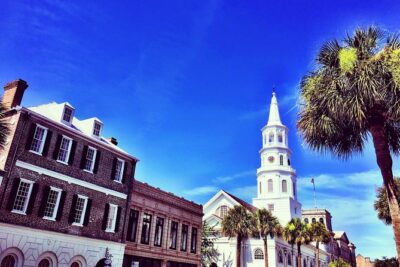
Historic Charleston Guided Sightseeing Walking Tour
Read our review →
New Orleans Food Walking Tour of the French Quarter with Small-Group Option
Read our review →
St. Louis Cemetery No. 1 Official Walking Tour
Read our review →
Harvard University Student-Guided Walking Tour
Read our review →
Harvard University Campus Guided Walking Tour
Read our review →Browse the lists this tour appears in