
Reviewed · WALKING TOURS
Highlights of Charleston Guided Walking Tour
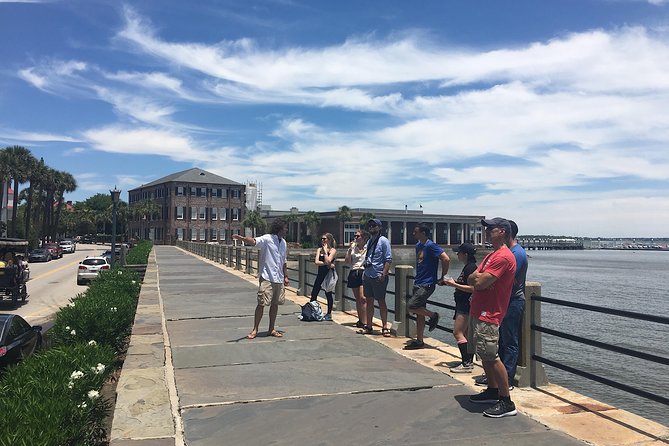
Charleston’s story comes into sharper focus on foot, especially with a guide who connects grand buildings to the forces that shaped the city. This two-hour walk moves through the French Quarter and South of Broad, with stops at Rainbow Row, the Old Slave Mart Museum, and the Old Exchange.
I like the tour’s small-group limit of 20 people and its strong focus on history rather than quick photo stops. Guides such as Bill Harris are known for a lively, personal style, while Vanna brings humor and clear explanations. The main drawback is that the tour may involve long talks at a few locations, so it may feel slow if you want constant walking.
Key things to know before you book
- Bill Harris is the guide many people specifically request: He brings wide-ranging knowledge of Charleston, American history, religion, and politics, with plenty of humor.
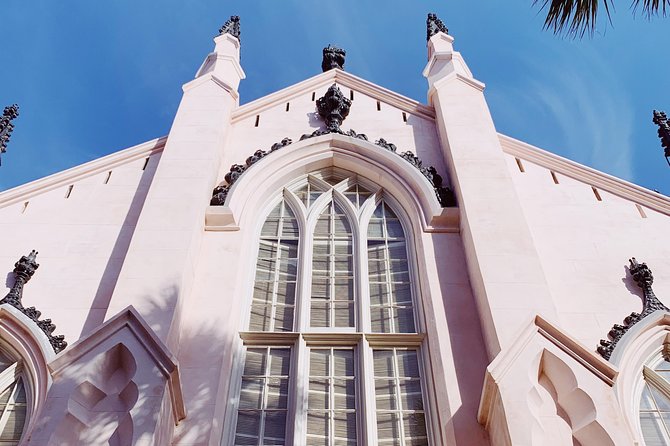
- The route covers six meaningful historic stops: You’ll see St. Philip’s Church, the French Huguenot Church, the Pink House Gallery, the Old Slave Mart Museum, the Old Exchange, and Rainbow Row.
- The tour tells Charleston’s difficult story directly: Slavery, colonial politics, religion, and preservation are part of the discussion, not side notes.
- It is a short orientation walk, not a museum tour: Two hours gives you a useful framework, but admission to the Old Slave Mart Museum and Old Exchange is not included.
- You need to prepare for the weather: Bring water, sunscreen, a hat, sunglasses, comfortable shoes, and rain gear if needed.
- The start and finish are different: Meet at 200 East Bay Street and usually finish near Meeting and Broad Streets.
Why this Charleston walk is worth your first two hours
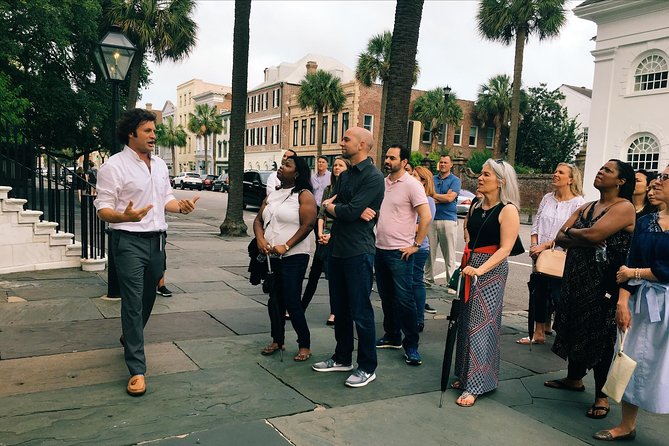
I see this tour as a strong first look at central Charleston. It gives you the street plan, the major landmarks, and enough background to make later sightseeing more meaningful. Instead of treating old buildings as pretty façades, the guide explains who built them, what happened around them, and how Charleston developed.
That approach matters here. Charleston’s historic center is compact, but its story is not simple. Colonial trade, religious disputes, the American Revolution, slavery, the Civil War era, and modern preservation all overlap within a few blocks. A good guide can connect those subjects while you are standing in front of the places where they mattered.
The tour is also more discussion-based than a quick stroll. Bill Harris is often singled out for his humor, strong opinions, and ability to adjust the amount of detail to the group. If you request Bill, expect a history lesson delivered with personality rather than a memorized list of dates. Vanna has also been praised for making the experience funny and approachable.
The tradeoff is pace. One experience was much less positive because the guide spent too long speaking in one place and covered less ground than expected. That is useful to know. If you want a brisk route with nonstop movement, this may not be the best match. If you want context and conversation, the slower moments may be exactly what you came for.
Other walks around Charleston:
- Historic Charleston Guided Sightseeing Walking Tour
★ 5.0 · 6,216 reviews - Ghosts of Charleston Night-Time Walking Tour with Unitarian Church Graveyard
★ 4.5 · 2,835 reviews - Hidden Alleyways and Historic Sites Small-Group Walking Tour
★ 5.0 · 2,335 reviews
Starting at St. Philip’s Church
The meeting point is at 200 East Bay Street, and the first stop is St. Philip’s Church. You spend about 10 minutes viewing the historic church, home to Charleston’s longest-meeting congregation.
This opening stop sets the tone. You are not simply looking at an old church. You are hearing how religious institutions helped shape the city’s civic and social life. The guide can also place Charleston’s religious history within the wider colonial story, a subject that several guests particularly appreciated from Bill’s tours.
Admission to this stop is free, and the tour only views the site. Do not expect a full interior visit or a long church tour based on the information provided. The value is the setting and the explanation you receive while standing in the historic district.
The French Huguenot Church and Charleston’s religious mix
Next comes the French Huguenot Church, described as the only church of its denomination in North America. The stop lasts about 10 minutes and also has no separate admission charge.
This is one of the more unusual stops because it shows how Charleston attracted different religious communities. A guide with a strong grasp of religion can add useful context here, explaining why a French Protestant congregation took root in this city and how faith shaped early settlement.
I would pay close attention during this part of the walk. It may be easy to focus on the architecture and miss the larger point: Charleston was formed by people arriving with different beliefs, political loyalties, and cultural traditions. That background helps explain why the city has such a distinct character.
As with St. Philip’s, this is primarily an exterior viewing stop. The tour gives you a foundation for further exploration, but it does not replace a dedicated visit to the church.
The Pink House Gallery and Charleston’s oldest private residence
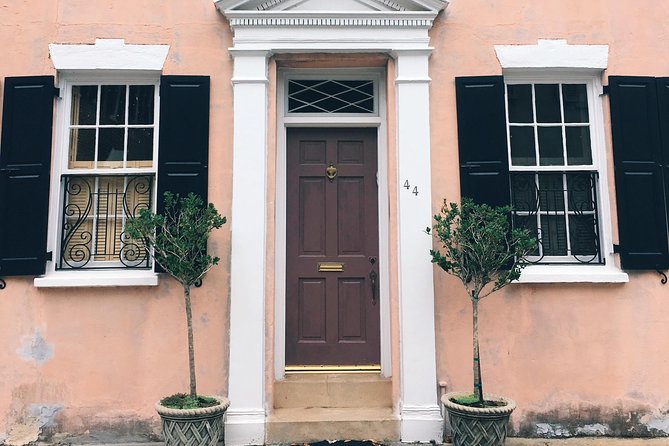
The Pink House Gallery is the third stop, with about 10 minutes to view what is described as the oldest private residence in Charleston. Its pink exterior makes it an easy landmark to spot, but the architectural story is more important than the color.
This is the kind of stop that benefits from a guide. On your own, you may take a picture and keep walking. With historical context, you get a better sense of how private homes fit into Charleston’s early city plan and how preservation has kept these buildings in public view.
The short stop also gives the group a change of pace after the churches. You see a private residence rather than a major civic or religious building, which helps round out the picture of daily life in the old city.
The tour does not advertise interior access here. Plan on viewing the house from the street and listening to the guide’s explanation.
A few more things to do in Charleston worth a look
- Fort Sumter Admission and Self-Guided Tour with Roundtrip Ferry
★ 4.5 · 3,343 reviews - Charleston Ghost & Graveyard Night-Time Guided Walking Tour
★ 4.5 · 1,100 reviews - 2-Hour Guided Kayak Eco Tour in Charleston
★ 5.0 · 954 reviews - Charleston: Historic City Highlights Guided Bus Tour
★ 4.6 · 719 reviews
The Old Slave Mart Museum and Charleston’s hardest history
The Old Slave Mart Museum is the most important stop for many people. It is described as the only museum in Charleston devoted to the history of enslaved people in the city. The tour allows about 10 minutes at the location, but admission is not included.
That short time is useful as an introduction, but it is not enough for a full museum visit. If you want to read exhibits carefully and spend time with the subject, return on your own after the walking tour. The guided stop helps you understand why the museum matters and places Charleston’s wealth and development within the history of slavery.
This is also where the guide’s approach matters most. Several guides are praised for presenting the past plainly rather than smoothing over its painful parts. Bill Harris is repeatedly described as direct about Charleston’s history, including the political and social forces that led to slavery’s central role in the city.
You should expect the subject to be serious. The tour is not only about attractive streets and old buildings. That honesty is one of its strongest features, especially if you want more than a polished version of Charleston’s past.
The Old Exchange and Provost Dungeon
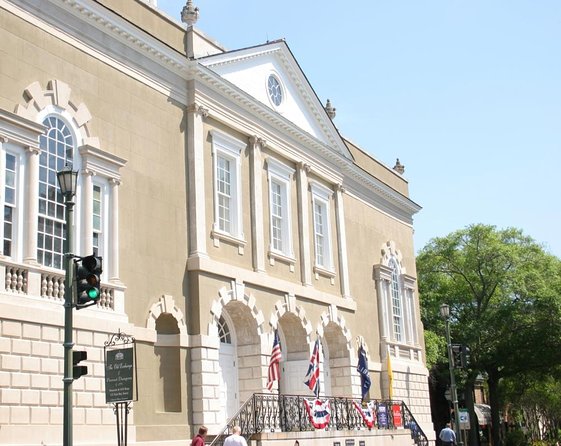
The fifth stop is the Old Exchange and Provost Dungeon, described as the pre-Revolutionary center of Charleston’s economic life. You spend about 10 minutes viewing it, with admission not included.
This building helps connect the city’s commercial power to its political importance. The guide can explain how Charleston functioned before the Revolution and why this location mattered to the growth of the colony. It is a useful counterpoint to the earlier religious and residential stops.
The name Provost Dungeon adds a darker layer. You are looking at a place connected not only to trade and public life, but also to confinement and colonial authority. The tour’s broader historical approach makes this stop more meaningful than a quick photograph from the sidewalk.
If you want to go inside, budget for a separate admission. Since the walking tour includes only a view of the site, check the opening hours independently if you plan to return.
Rainbow Row and the final walk toward Broad Street
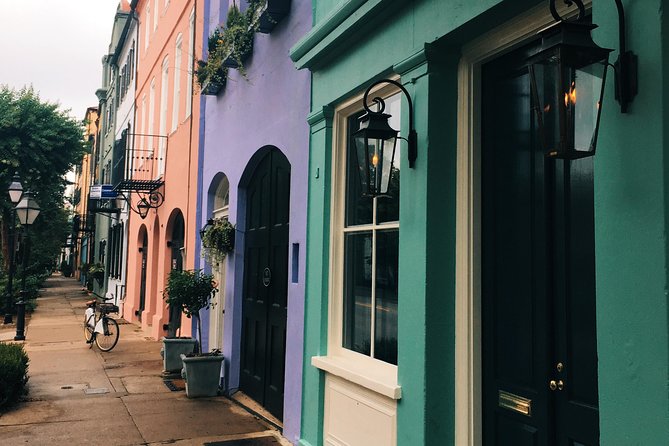
Rainbow Row is the final named stop and the most photographed sight in Charleston. Its row of colorful historic houses makes an obvious closing scene, but the guide can help you see more than the paint.
The buildings represent the visual side of Charleston that attracts so many people, while the earlier stops provide the harder context behind the city’s wealth and preservation. That contrast is useful. You get the picture-perfect street, but you also understand that Charleston’s beauty is tied to complicated economic and social forces.
The tour generally ends near the intersection of Meeting Street and Broad Street at 71 Broad Street. The precise ending point can change with the group’s pace and the guide’s choices. This location is practical because you are still in the historic center and can continue sightseeing afterward.
I would plan another activity nearby rather than schedule a timed reservation immediately after the walk. The tour lasts about two hours, but group pace can vary, and the exact end point is not fixed.
What the guide adds to the experience
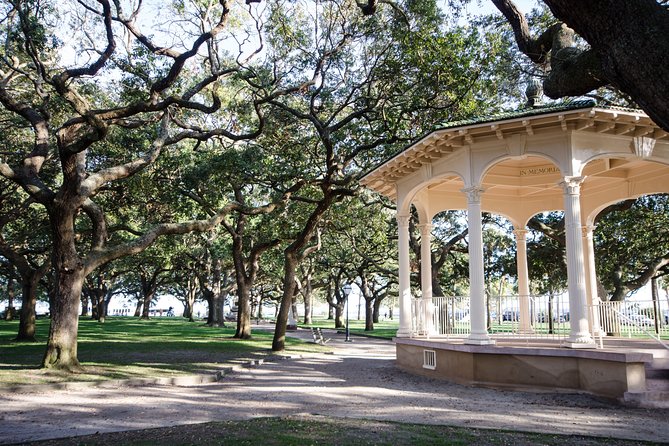
The guide is the main reason to choose this walk over a self-guided route. You can find the buildings yourself, but you cannot easily recreate the connections among religion, colonial government, slavery, economics, and preservation while moving through the streets.
Bill Harris receives the strongest personal praise. He is described as funny, personable, passionate, and able to give anything from a broad city overview to a detailed account of early Charleston. Some people enjoy his stories and historical opinions so much that they would gladly continue for hours.
That style will not suit everyone. Bill and other strong personalities may talk at length, and the experience can feel more like a walking seminar than a sightseeing loop. If you prefer short explanations followed by lots of free time, tell your guide early that you want a lighter overview.
The group is capped at 20 people, which helps keep the discussion manageable. It is not a private tour, though, and the amount of interaction depends on the group size and the guide assigned that day. You can request Bill if he is available, but a specific guide is not guaranteed in the information provided.
Walking conditions, timing, and what to bring
This is an outdoor tour in Charleston’s historic center. You should wear comfortable walking shoes and bring bottled water because water may not be available for purchase along the route.
Sun protection is essential in warm weather. Pack sunscreen, a hat, sunglasses, or a parasol. Bring your own rain gear for wet conditions. Tours usually operate in rain, but dangerous weather such as lightning, flooding, or high winds can lead to cancellation.
Use a restroom before arriving. Restrooms are not always easy to access along the route. Check in 5 to 10 minutes early because late arrivals cannot be held for.
The route is near public transportation, and the suggested parking garages are at 1 Cumberland Street and 89 Cumberland Street. Both are about a five-minute walk from the meeting point, but parking fees are extra. Since the walk ends elsewhere, remember that you may need to return to your car by foot or public transportation.
Children can take the tour, though it is designed mainly for adults. Children and young adults have enjoyed the route, but the amount of discussion about slavery, politics, and history may be better suited to older children. Strollers should be mentioned in advance. Registered service animals are allowed, but ordinary pets are not.
Value, admissions, and cancellation rules
The tour price is not provided here, so I cannot judge it against a specific dollar amount. I would measure its value by the quality of the guide and the amount of historical context you want. For a first visit, paying for a strong two-hour orientation can save time and help you choose which buildings and museums deserve a longer return visit.
The Old Slave Mart Museum and Old Exchange charge separate admission. That is not a flaw, but you should include those costs if you want to enter both places. Several other stops are viewed from outside and do not require an admission ticket.
Gratuity is optional and accepted. If your guide gives you a thoughtful, energetic experience, tipping is a reasonable way to show appreciation, but it is not part of the ticket.
You can cancel up to 24 hours before the start time for a full refund. Within 24 hours, changes and cancellations are not accepted for a refund. If severe weather forces the operator to cancel, you can choose another date or receive a full refund.
Who should book this Charleston tour?
I would recommend it most to first-time visitors, history fans, and anyone who wants Charleston explained rather than simply photographed. It is also a good choice after a trolley ride because the walking format allows more discussion and closer views of the historic streets.
Families can enjoy it, especially with older children, but you should prepare them for serious material and a guide-led pace. The tour is less suitable for anyone who has difficulty walking outdoors, dislikes standing during explanations, or wants a fast route with little narration.
The current score is 4.9 from 2,206 ratings, with 98 percent recommending it. Those numbers suggest unusually consistent satisfaction, but the one serious complaint about long talks is worth remembering. The guide’s personality shapes the experience.
Should you book it?
Book this tour if you want a history-first introduction to Charleston and enjoy guides who explain the uncomfortable parts as plainly as the pretty ones. Request Bill Harris if possible, and come ready for a lively, sometimes lengthy conversation.
Skip it if you want a quick photo walk, guaranteed indoor access, or a tightly timed route. For most first visits, though, this is a useful way to get your bearings, understand what you are seeing, and decide where to spend the rest of your time in Charleston.
FAQ
How long is the Highlights of Charleston Guided Walking Tour?
The tour lasts approximately two hours.
Where does the tour begin?
The meeting point is 200 East Bay Street, Charleston, South Carolina 29401.
Where does the tour end?
It generally ends near the intersection of Meeting Street and Broad Street, around 71 Broad Street. The exact end point can change based on the group’s walking speed and the guide.
Which historic places are included?
The route includes St. Philip’s Church, the French Huguenot Church, the Pink House Gallery, the Old Slave Mart Museum, the Old Exchange and Provost Dungeon, and Rainbow Row.
Are museum admission fees included?
No. Admission to the Old Slave Mart Museum and the Old Exchange is not included. The other listed stops have no separate admission charge for the tour’s viewing stop.
What should I bring?
Bring comfortable walking shoes, bottled water, sunscreen, a hat, sunglasses, and rain gear if needed. Restrooms may not be available along the route.
Are children allowed?
Yes. Children must be accompanied by an adult. The tour is designed mainly for adults, but children and young adults have taken and enjoyed it. Notify the operator if you plan to bring a stroller.
Are pets allowed?
Registered service animals are allowed. Other pets are not permitted.
What happens if the weather is bad?
Tours usually operate in rain, but dangerous or disruptive conditions such as lightning, flooding, or high winds may cause cancellation. If the operator cancels, you can reschedule or receive a full refund.
Just added in Charleston
- Charleston Ghosts of Liberty Guided Walking Tour★ 4.5 · 473 reviews
- 2-Hour Guided Kayak Eco Tour in Charleston★ 5.0 · 954 reviews
- Charleston’s Best Highlights: History, Culture & Architecture★ 5.0 · 422 reviews
- Charleston Harbor Sunset Cruise★ 5.0 · 905 reviews
- Savor the Flavors of Charleston Walking Food Tour★ 4.5 · 881 reviews
- Lost Stories of Black Charleston Walking Tour★ 5.0 · 412 reviews
- Undiscovered Charleston: Half Day Food, Wine & History Tour with Cooking Class★ 5.0 · 948 reviews
- Private Luxury Yacht Charters, BYOB & Dolphins★ 5.0 · 395 reviews
Walking Tours, compared.
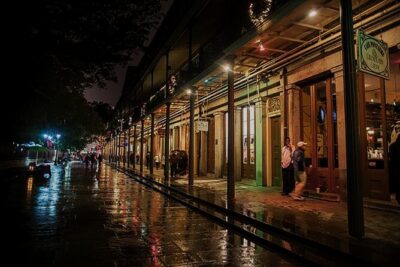
New Orleans Premier Ghost, Voodoo and Vampire Walking Tour
Read our review →
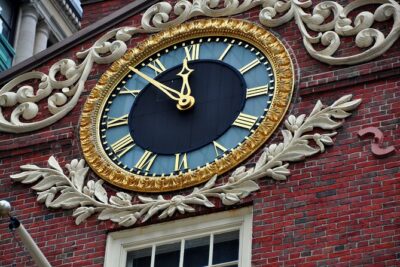
Freedom Trail History Small Group Walking Tour
Read our review →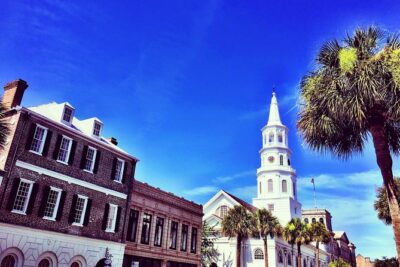
Historic Charleston Guided Sightseeing Walking Tour
Read our review →
New Orleans Food Walking Tour of the French Quarter with Small-Group Option
Read our review →
St. Louis Cemetery No. 1 Official Walking Tour
Read our review →
Harvard University Student-Guided Walking Tour
Read our review →
Harvard University Campus Guided Walking Tour
Read our review →Browse the lists this tour appears in