
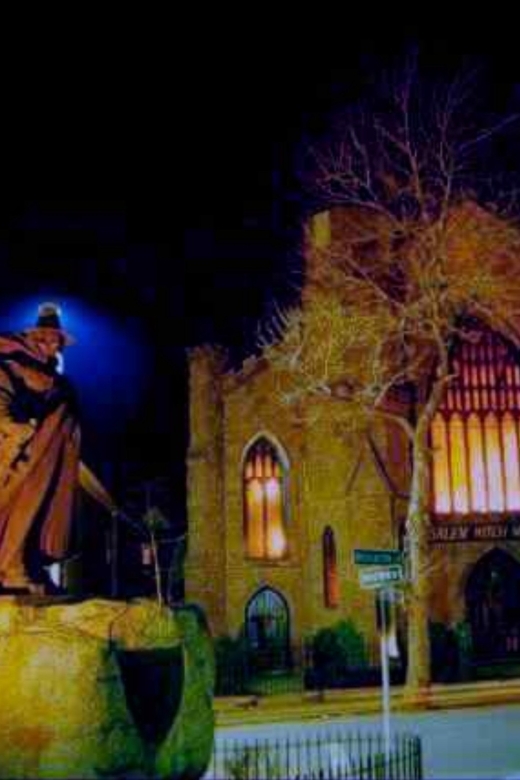
Reviewed · MUSEUMS
Salem Witch Museum Admission Ticket
The Salem Witch Museum tells its story from a dark auditorium, where 13 life-size stage sets light up around you in sequence. You follow the Salem Witch Trials of 1692 through narration, courtroom scenes, and carefully arranged figures rather than a traditional room full of objects.
I like the clear chronological structure, which helps you understand how fear and accusation spread. I also like the second exhibit’s wider reach, connecting Salem to earlier pagan beliefs and later witch hunts. The main drawback is that the experience is short and the guided second section can feel crowded, with voices hard to hear from the back.
Key points to know
- Thirteen illuminated stage sets surround the auditorium during the 30-minute Salem presentation.
- A second exhibit traces the word witch from pre-Christian pagan beliefs to modern Wicca.
- The visit takes about 1 hour and 15 minutes, so it fits neatly into a day of sightseeing.
- Audio translations are available in eight languages, including Spanish, Chinese, French, German, Italian, Japanese, Russian, and English.
- The museum is wheelchair accessible, but large bags and luggage are not allowed.
- October scheduling needs care, since vouchers are not valid on weekends in October or on Halloween Day.
The 1692 story told from the walls
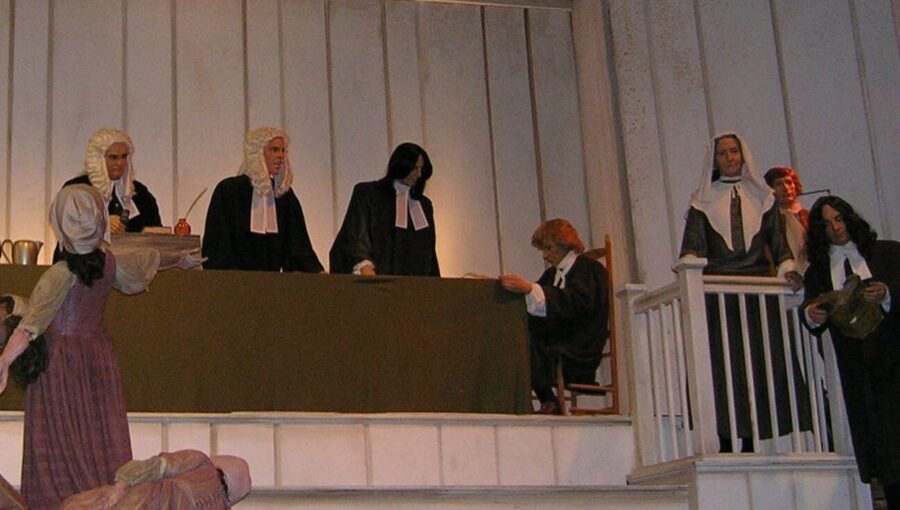
At 19 1/2 Washington Square North, you exchange your voucher at the front counter and wait for the next available presentation. The auditorium is large, dark, and arranged with seating throughout, so you can settle in before the story begins.
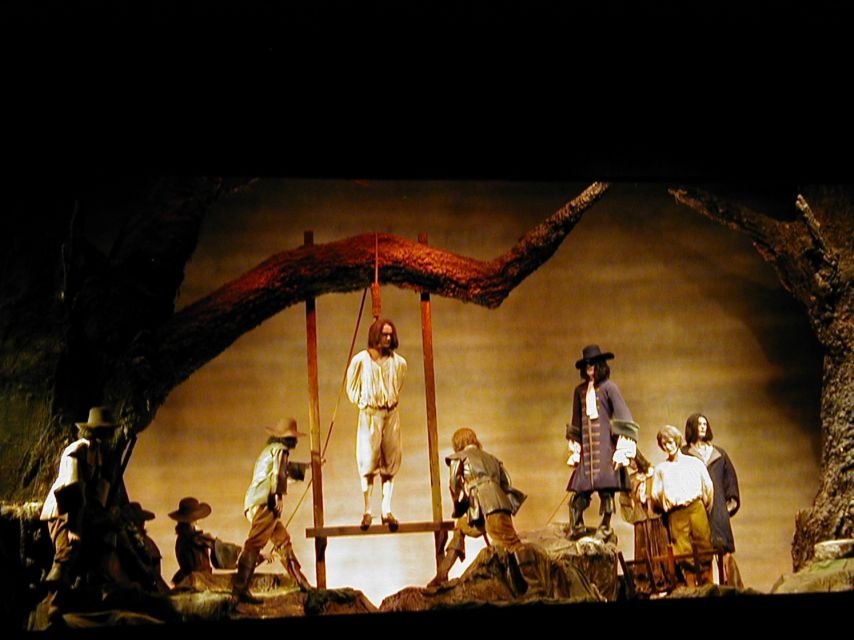
This is not a conventional museum where you wander from case to case. Instead, the first part is a staged presentation. One section of the wall brightens, then another, while narration moves the story forward. The scenes are built into the walls above and around the audience, giving you a sense of looking into separate moments of the Salem crisis.
The format feels old-fashioned in a useful way. It is closer to a historical pageant than a modern multimedia show. Some people will find the presentation a little theatrical, but that is also what makes the sequence easy to follow. You are not asked to read long panels or keep track of scattered dates.
The story is presented in chronological order, covering the court proceedings and the accusations that defined Salem in 1692. The museum focuses on the human cost of the trials and on the way public fear can turn into official punishment.
The narration does most of the teaching. The figures and sets give you something to look at, but this is primarily a listening experience. Sit where you can hear clearly and, if possible, choose a seat with a broad view of the surrounding scenes. Depending on your position, some figures may be partly hidden when a scene lights up.
The first presentation lasts about 30 minutes. That is long enough to provide useful context without taking over your whole afternoon. It also means you should not expect a full theatrical performance with actors moving through the room. The story is delivered through lighting, narration, and static life-size scenes.
Other tickets worth buying ahead in the USA:
- NYC: 9/11 Memorial & Museum Timed-Entry Ticket
★ 4.8 · 31,428 reviews - NYC: Edge Observation Deck Admission Ticket
★ 4.6 · 20,918 reviews - NYC: Museum of Modern Art (MoMA) Entry Ticket
★ 4.6 · 12,540 reviews
Why the courtroom story still matters
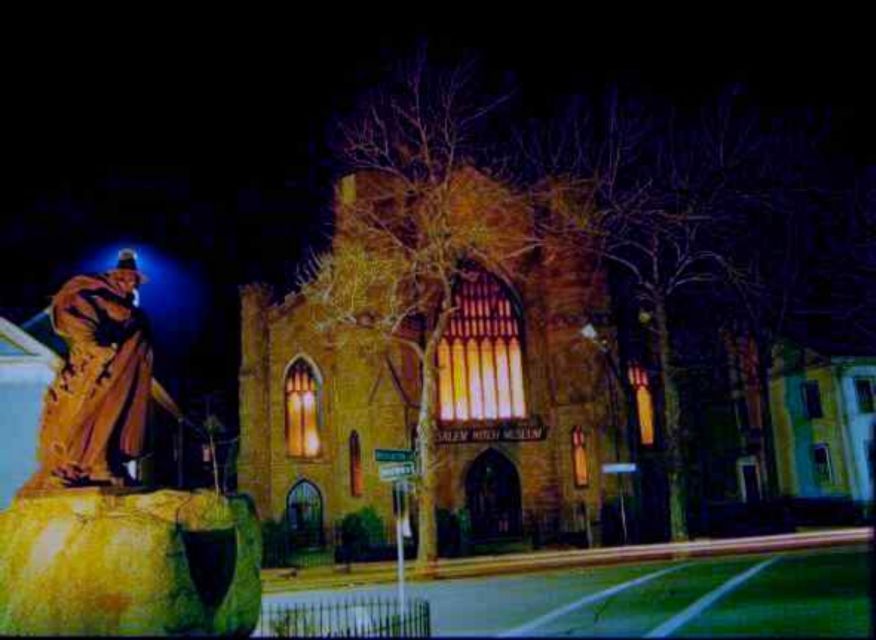
The Salem Witch Trials are often reduced to a spooky tale, especially in a town closely associated with Halloween. The museum gives the subject a more serious frame. Its focus is not simply on witches as folklore, but on accusation, fear, social pressure, and the use of courts to punish people for supposed wrongdoing.
That distinction matters. You leave with a better sense of how the term witch was used as a charge and a tool. The presentation also helps explain why the Salem events deserve more than a quick photograph beside a witch-themed sign.
The museum does not require you to arrive with a detailed knowledge of colonial Massachusetts. The narration supplies the basic sequence and context. If you are visiting Salem with children or teenagers, this structure can make a difficult subject easier to grasp, though younger children may find the material somber or the presentation longer than expected.
I also find the staging useful for first-time visitors to Salem. The town has many sites connected with the trials, but it can be hard to understand those places without a starting point. This visit gives you a framework before you walk through the rest of Washington Square and the surrounding historic area.
The second exhibit, from pagan midwife to modern Wiccan
After the auditorium presentation, museum staff guide you through Witches: Evolving Perceptions. This section shifts away from the specific events of 1692 and examines how the idea of the witch changed over time.
The exhibit uses additional life-size scenes to trace the word witch from the pagan midwife of pre-Christian times to the modern-day Wiccan. That broader approach is one of the more useful parts of the visit because it prevents Salem from being treated as an isolated oddity.
You hear how witch hunts begin and how similar patterns appeared after 1692. The presentation includes examples of later witch hunts, making the subject relevant beyond colonial New England. It takes no more than 15 minutes, though the full visit includes transitions and time at the museum shop, so you should allow about 1 hour and 15 minutes altogether.
This portion is guided rather than self-directed. That has a benefit: staff can explain the material in a clear order and provide context that a display label might miss. The drawback is crowding. If your group is near the back, you may have trouble seeing the items being discussed or hearing every word.
One practical tip is to move close enough to see the display and the guide without blocking others. The room can contain more than one group, and a soft speaking voice becomes a problem when several people are listening at once. Some visitors have found the main presentation stronger than this second section because the auditorium gives everyone a fixed seat and a better view.
A simple visit with an old-school presentation style
The museum’s style is plainly theatrical. The sets and figures are not the highly animated, technology-heavy attractions found at some modern museums. You get illuminated scenes, narration, and a controlled sequence of historical moments.
That approach works best if you enjoy a direct story. I like that the museum does not bury the basic information under too many objects or side displays. You see a scene, hear its explanation, and then move to the next part of the story.
At the same time, the production may feel a little cheesy to some adults. The presentation has been familiar to repeat visitors for decades, and the format is not designed to change dramatically with every visit. If you want an academic museum with original documents, extensive collections, or hours of self-guided browsing, this is not that kind of place.
The museum’s strength is accessibility of information. You can walk in without preparation and leave with a clearer idea of what happened, how the trials were presented, and how the idea of witchcraft developed over time.
Staff quality can shape the second half of the experience. Guides are generally friendly and prepared, but delivery varies. One guide may use humor and keep the history moving, while another may speak too softly or offer less detail. Sean, named by one visitor as a particularly entertaining guide, mixed humor with history in a way that kept the explanation lively. Since staff assignments change, treat that as a pleasant possibility rather than a guaranteed part of your visit.
Other museums and galleries in the USA:
- NYC: Empire State Building Tickets – Observatory & Museum
★ 4.7 · 25,757 reviews - New York City: American Museum of Natural History Ticket
★ 4.5 · 15,447 reviews - 9/11 Memorial, Ground Zero Tour with Optional 9/11 Museum Ticket
★ 5.0 · 6,381 reviews - 9/11 Memorial Museum Admission Ticket
★ 4.5 · 6,376 reviews
How much time and money should you plan?
Admission costs $18 per person. For Salem, that is a moderate price for an experience lasting roughly 75 minutes, especially if you value a clear introduction rather than a large collection of artifacts.
The value is strongest when this is your first Salem attraction. You get the basic story in half an hour, then a short explanation of how the word witch has changed. That context can make later visits to historic streets and trial-related sites more meaningful.
The value is weaker if you are looking for a long museum visit. The first presentation lasts 30 minutes, the second presentation is no more than 15 minutes, and the remaining time includes movement, waiting, and browsing the shop. Some people will feel finished sooner than expected.
The gift store adds a final stop, with Salem and witchcraft souvenirs for different ages. Prices can feel high, so I would browse before buying. Its practical benefit is convenience: you can pick up a small reminder of Salem without adding another shop to your schedule.
The ticket is valid for one day, but the voucher is valid only for the date purchased. It is also not valid on weekends in October or on Halloween Day. Those restrictions matter because Salem is especially busy during the Halloween season, so check the date carefully before paying.
Free cancellation is available up to 24 hours in advance, and reserve-now, pay-later booking may be offered. Those terms help if your schedule is still shifting, but you should still confirm the exact date and available presentation time before you finalize plans.
Hearing, seating, and access
Seating is available throughout the main auditorium, which is helpful for older visitors and anyone who prefers not to stand during a presentation. The museum is wheelchair accessible, and staff have assisted wheelchair users during visits.
The audio translations are a useful feature. Complimentary versions are available in Spanish, Chinese, French, German, Italian, Japanese, Russian, and English. The host and museum staff operate in English, but the translated audio lets you follow the main content in another language.
The second exhibit deserves more care if hearing is difficult. It is guided in person, and people at the back may miss words if the guide speaks quietly. Try to position yourself near the front of the group and ask the guide to speak up if needed.
Large bags and luggage are not allowed. Plan to visit before collecting shopping bags or carrying a suitcase. The museum is at 19 1/2 Washington Square North, and the activity ends where it begins, so it is easy to place at the start of a walking day.
Parking can be a challenge around Salem, especially when the town is busy. If you are driving, allow extra time rather than arriving at the ticket counter at the last minute.
Who will enjoy this museum most?
This is a good choice for a first visit to Salem, for families wanting a manageable introduction, and for adults who prefer a narrated story to dense reading. The clear sequence also helps if you want to understand the trials before visiting other historic locations.
It suits visitors with about an hour to spare. You do not need to commit a full morning, and the indoor format provides a useful break from walking around town.
History fans should set expectations correctly. The museum offers an accessible overview, not an extensive research collection. If you already know the Salem story well, the second exhibit’s broader discussion of witch hunts may be more interesting than the basic trial narrative.
The experience is less suitable for someone expecting live actors or audience participation. There are no live interactions described in the main presentation. The figures remain in their sets, and the narration carries the action.
Should you book the Salem Witch Museum?
I would book it if you want a short, clearly organized introduction to Salem’s most famous historical episode. The 30-minute staged presentation is the main reason to come, and the second exhibit adds useful context about how the idea of witchcraft changed across time.
I would skip it if you want a large, self-guided museum with many original objects or a long theatrical show. Also think twice about visiting during a crowded October weekend unless you have confirmed that your voucher is valid.
At $18, the ticket is reasonable for a first stop, especially if you use the visit to understand the rest of Salem. Choose a seat with a good view, stay near the guide during the second exhibit, and allow the full 1 hour and 15 minutes rather than planning another activity immediately afterward.
FAQ
Where is the Salem Witch Museum?
The museum is at 19 1/2 Washington Square North in Salem, Massachusetts. You enter through the front entrance and visit the ticket counter.
How long does the museum visit take?
You should allow about 1 hour and 15 minutes for the complete visit. The main presentation lasts about 30 minutes, and the second presentation takes no more than 15 minutes.
What does the $18 ticket include?
The ticket includes admission to both museum exhibits: the presentation about the Salem Witch Trials and Witches: Evolving Perceptions.
What happens during the first presentation?
You sit in a darkened auditorium while 13 life-size stage sets light up around the room. Narration presents scenes from the Salem Witch Trials of 1692 in chronological order.
What is the second exhibit about?
The second exhibit explains how perceptions of witches changed over time. It follows the idea of the witch from the pagan midwife of pre-Christian times to the modern-day Wiccan and includes examples of later witch hunts.
Are audio translations available?
Yes. Complimentary audio translations are available in Spanish, Chinese, French, German, Italian, Japanese, Russian, and English.
Is the museum wheelchair accessible?
Yes, the museum is wheelchair accessible. Seating is available throughout the main auditorium.
Can I bring luggage or a large bag?
No. Luggage and large bags are not allowed inside the museum.
Is the voucher valid any day?
The voucher is valid only for the date purchased. It is not valid on weekends in October or on Halloween Day.
Can I cancel the ticket?
Yes. You can cancel up to 24 hours in advance for a full refund. Reserve-now, pay-later booking may also be available to keep your plans flexible.
Just added in the USA
- Road to Hana: Full-Day Scenic Drive with Blacksand & Waterfalls★ 4.5 · 837 reviews
- Road To Hana: Maui Waterfall Hiking Tour in Private Jeep★ 5.0 · 343 reviews
- Original La Jolla Sea Cave Kayak Tour for Two★ 4.5 · 871 reviews
- Maui Nui Luau at the Sheraton Maui Resort & Spa★ 4.5 · 1,622 reviews
- 2 Hour Sailing Cruise on Lake Tahoe★ 5.0 · 886 reviews
- La Jolla Sea Caves Kayak Tour For Two (Tandem Kayak)★ 4.5 · 1,205 reviews
- Behind-the-Scenes at Petco Park Tour★ 4.5 · 339 reviews
- Key West: All-Inclusive Watersports Adventure with Lunch & Beer★ 4.5 · 351 reviews
Museums, compared.

Empire State Building Tickets – Observatory & Museum
Read our review →

9/11 Memorial, Ground Zero Tour with Optional 9/11 Museum Ticket
Read our review →

All-Access 9/11: Ground Zero Tour, Memorial and Museum, One World Observatory
Read our review →
Browse the lists this tour appears in