
Reviewed · TOURS IN KAUAI
Po’ipu Surf Lesson
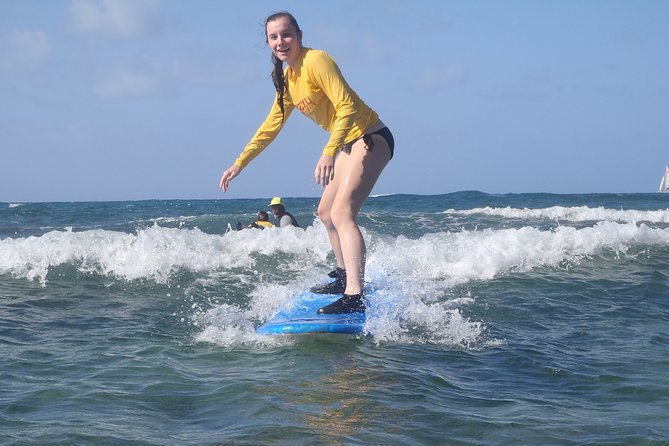
Standing on a surfboard in Kaua‘i’s warm Poipu water is the main event, but the real strength of this lesson is the patient coaching that gets you there. Instructors including Kele and David break the sport into plain steps, then give you useful tips each time you paddle back out.
I like the small groups of no more than eight and the fact that boards, booties, and rash guards are included. I also like the low-pressure mood, which helps nervous beginners and families focus on catching a first wave instead of looking polished. The catch is that surfing is a real workout, and Poipu’s entry area can be rocky.
Poipu Surf Lesson at a Glance
- Start on grass, then move into the waves: Learn the pop-up, paddling, and basic safety before getting wet.
- Patient instructors make the difference: Kele, David, Dave, and Ikeake are praised for clear instruction and steady encouragement.
- Equipment is included: Your board, booties, and rash guard are provided, with wetsuit-style protection available for cooler conditions.
- Small groups keep coaching personal: A maximum of eight people means you should get direct help in the water.
- Plan for a workout: Paddling takes energy, even when the waves are gentle and beginner-friendly.
- Poipu is convenient but rocky: The meeting point is at Koʻa Kea Resort on Poipu Beach, with no hotel transportation included.
What the 90-Minute Lesson Feels Like
This is a beginner surf lesson, not a sightseeing trip with a board attached. You meet at Koʻa Kea Resort on Poipu Beach, at 2251 Poipu Road in Koloa, and the activity finishes at the same place.
The first part takes place on land. Your instructor shows you how to lie on the board, paddle with purpose, and move from lying down to standing. That quick motion is called the pop-up, and it is the skill that makes beginners look either like surfers or startled sea lions.
You also receive a safety briefing before entering the water. That matters at any beach, especially if you are unfamiliar with currents, boards, and the habits of other people in the surf. The lesson is designed to give you enough information to feel confident, not to turn you into an ocean lifeguard.
Once the group reaches the water, the instructor helps you put the land lesson to work. You paddle for waves, try to stand, and receive corrections as you return. Several people describe the coaching as simple, concise, and encouraging, which is exactly what a first lesson needs. Too much technical detail can make a beginner freeze.
The goal is not a perfect ride. It is to catch a few waves, learn what your body needs to do, and leave with a clearer idea of surfing. Some people get up on their first attempt. Others need several tries. Both outcomes fit a 90-minute introduction.
Other things to learn to make in Kauai:
- Private Hanalei Sandy Bottom Surf Lesson on Kauai
★ 5.0 · 339 reviews - New Orleans Demonstration Cooking Class with Meal
★ 5.0 · 3,000 reviews - Undiscovered Charleston: Half Day Food, Wine & History Tour with Cooking Class
★ 5.0 · 948 reviews
Why Kele, David, Dave, and Ikeake Matter
Surf instruction is only partly about the beach and the waves. A calm teacher can make a nervous adult try again after a wipeout. A distracted teacher can make a willing beginner feel lost.
Kele receives especially strong praise for warmth, humor, and patience. He has helped children and adults stay engaged, and he gives tips each time students swim back out. That repeated feedback is valuable because your first mistake is rarely your last one. You may need a reminder to keep your head up, shift your weight, or paddle harder.
David is also praised for helping teenagers feel comfortable, including one student who was worried about the waves. That makes him a good fit for families with mixed confidence levels. Dave is described as positive, professional, and clear, with a habit of spending the lesson actively coaching in the water rather than watching from a distance.
Ikeake helped one nervous beginner keep trying after several wipeouts. That is a useful sign for anyone who feels uneasy about being out of their comfort zone. The instructors do not appear to treat falling as failure. They treat it as part of learning.
Names and assignments can change, so you should not book on the assumption that one particular instructor will be present. Still, the repeated pattern is clear: encouragement and clear instructions are central to this lesson.
The Land Practice Is Short but Useful
The dry-land portion may seem basic, especially if you have watched surfing videos before. Do not skip its value. On the beach, you can focus on hand position and foot placement without a moving board and a breaking wave demanding your attention.
You learn the pop-up in stages. The instructor demonstrates how to move from your stomach to your feet, then explains the body position needed to stay balanced. You also work on paddling technique and basic wave timing.
One point deserves a realistic note: one person felt the land instruction was very brief before the group entered the water. That may suit someone eager to start surfing, but a very nervous beginner might prefer a longer rehearsal. The benefit is that most of your lesson is spent in the ocean, where you actually practice.
The instruction also covers ocean safety. This is not filler. A board has weight, waves can push you around, and a crowded beach requires awareness. Listen closely before you head out, even if you are confident in the water.
Poipu Water, Rocky Entry, and Warm Conditions
Poipu is a practical place for a first lesson because the activity takes place beside the Koʻa Kea Resort, and the water is described as warm and crystal-clear. One person specifically appreciated the provided long-sleeved gear when conditions felt cold. Booties and rash guards are included, which is useful protection and saves you from arranging equipment separately.
The setting is attractive, but it is not a soft, sandy entry everywhere. A specific caution from the feedback is that the area can be rocky, unlike Kaua‘i’s north shore. Booties are therefore more than a nice extra. Move carefully and follow the instructor’s directions when entering and leaving the water.
You may also see Hawaiian monk seals on or near the beach. That is not a promised part of the lesson, and you should never approach or disturb them. If one appears, give it plenty of space and let it remain a wild animal, not an impromptu photo prop.
The water can look inviting enough to hide the effort involved. You still need to paddle, push through small waves, and repeatedly get back on the board. The warm conditions make that work more pleasant, but they do not remove it.
Same base, a different kind of day out:
- Koloa Zipline in Kauai
★ 5.0 · 6,764 reviews - Kauai Deluxe Sightseeing Flight
★ 5.0 · 2,162 reviews - Kauai Eco Adventure Helicopter Tour
★ 5.0 · 2,032 reviews - Kauai Airplane Tour: Na Pali Coast, Waterfalls & Window Seats
★ 5.0 · 1,964 reviews
How Hard Is It?
You do not need to be an athlete, but you should have a moderate level of physical fitness. Surfing asks more from you than standing on a board. Paddling uses your shoulders and arms, while getting back on the board and pushing up can tire your legs and core.
Several people in their 50s and 60s managed to surf and described the lesson as tiring but rewarding. That is encouraging, though it is not a promise that everyone will feel comfortable. Your swimming endurance matters, and people with limited cardio fitness may tire before the lesson ends.
The stated weight limit is 230 pounds. Pay attention to that rule when booking. It is not a minor preference, since boards and instruction are matched to safe use in the water.
Wear a swimsuit or other suitable beach clothing under the provided gear. Food and drinks are not included, although a food and beverage outlet is available on the property. Since the lesson lasts about an hour and a half, you may want to eat and hydrate beforehand rather than expect refreshments during the activity.
Is the Small Group Worth the Price?
At $89.01 per person, this is not the cheapest way to spend an hour and a half at the beach. It is also more than simply renting a board. The fee includes professional instruction, a surfboard, booties, a rash guard, safety guidance, and a small group capped at eight people.
That package makes the price reasonable for a first attempt. If you rented equipment alone, you would still need to understand the surf, choose a safe place to practice, and figure out how to catch a wave. Here, an instructor watches your attempts and gives you a next step.
The value is strongest if you are new to surfing, traveling with children, or nervous about beginning alone. It is less compelling for an experienced surfer who already has equipment and knows how to read the local water.
The group format also affects the value. You will not receive the constant one-to-one attention of a private lesson, and a group may include people with different strengths. Still, eight is a manageable maximum, especially when the instructor stays active in the water.
Best Timing and Family Fit
The activity is promoted as a good choice for families with children over age eight. That is the practical age guideline to use when deciding. Younger children may appear capable, but the formal information does not promise suitability below that age, so contact the provider before booking for a younger child.
Families with teenagers should find the lesson especially useful. Teens can be eager to try surfing but may also worry about looking awkward or failing in front of parents. The supportive tone gives them room to learn without turning every fall into a family discussion.
An early start may help you avoid heavier beach crowds. It also gives you a better chance of beginning the day with energy, rather than arriving after hours in the sun. Exact conditions vary, and the booking information does not promise a specific crowd level or wave size.
Couples fit well, too. One person can be nervous while the other is eager, and both can work through the lesson at their own pace. Adults over 55 should not assume surfing is off-limits, but you should be honest about your swimming ability, stamina, and comfort getting on and off a board.
Booking, Meeting Point, and Weather Rules
You receive confirmation at booking, and the ticket is mobile, so there is no need to print paperwork. Meet at Koʻa Kea Resort on Poipu Beach, not at your hotel. Hotel pickup and drop-off are not included, so arrange your own way to the resort.
The activity is offered in English. Service animals are allowed, and the meeting point is near public transportation. Those details help with planning, but the main physical requirements remain the same: moderate fitness, comfort in the water, and a body weight of no more than 230 pounds.
You can cancel for a full refund up to 24 hours before the local start time. Changes made inside that 24-hour window are not accepted, and late cancellations are not refunded. If poor weather forces cancellation, you are offered another date or a full refund.
That policy is fairly clear, but check the forecast before committing to other plans around the lesson. Ocean activities depend on conditions, and a weather cancellation is safer than forcing the lesson through poor water conditions.
Who Should Book This Poipu Lesson?
I would choose this lesson if you want a guided first taste of surfing rather than a full-day water-sports program. It gives you enough time to learn the basics and make real attempts without taking over your entire day in Kaua‘i.
It suits families with children over eight, couples trying something new, and adults who are curious but nervous. The strongest reason to book is the coaching. Instructors such as Kele, David, Dave, and Ikeake are repeatedly praised for patience, clarity, and encouragement.
I would think twice if you dislike physical exertion, have limited swimming endurance, or want a quiet beach activity. Paddling can leave you tired, and Poipu’s rocky entry calls for care. I would also choose a private lesson if you need constant individual attention.
For most beginners, the $89.01 cost is fair because it includes the gear and the instruction that makes a first wave possible. Book it if you are ready to work, laugh at a few falls, and measure success by learning rather than by looking like a professional surfer.
FAQ
Where does the Poipu surf lesson begin?
It begins at Koʻa Kea Resort on Poipu Beach, located at 2251 Poipu Road, Koloa, Hawaii 96756.
Where does the activity end?
The lesson ends back at the same meeting point at Koʻa Kea Resort on Poipu Beach.
How long does the surf lesson last?
The lesson lasts approximately 1 hour and 30 minutes.
What equipment is included?
The price includes a surfboard, booties, and a rash guard, along with professional instruction and the safety briefing.
Is hotel transportation included?
No. Hotel pickup and drop-off are not included. You must make your own way to the meeting point.
Is there a weight limit?
Yes. The stated weight limit is 230 pounds.
Can I cancel for a refund?
Yes. You can receive a full refund if you cancel at least 24 hours before the experience start time. If poor weather causes the provider to cancel, you are offered a different date or a full refund.
Just added in Kauai
- Waimea Canyon Downhill Bike Ride★ 5.0 · 650 reviews
- Kauai Adventure: Kayak & Hike to Secret Falls with Expert Guide★ 5.0 · 1,387 reviews
- Kauai: Na Pali Sunset & Sightsee Boat Tour★ 4.5 · 1,168 reviews
- Ni’ihau and Na Pali Coast Snorkel Boat Tour★ 4.5 · 428 reviews
- Kauai: Secret Falls Kayak and Hike★ 5.0 · 1,403 reviews
- Wailua River Kayak and Sacred Falls Guided Hike with Lunch★ 5.0 · 783 reviews
- Kauai: NaPali Boat Tour on the Amelia K★ 5.0 · 1,240 reviews
- Kauai’s Na Pali Coast Snorkel and Sail Tour★ 5.0 · 541 reviews
Tours in Kauai, compared.



Kauai Airplane Tour: Na Pali Coast, Waterfalls & Window Seats
Read our review →
Hughes 500 4-Passenger Doors-Off Helicopters
Read our review →

Na Pali Coast Half-Day Raft and Snorkel Adventure
Read our review →
Browse the lists this tour appears in