
Reviewed · TOURS IN NEW ORLEANS
New Orleans Demonstration Cooking Class with Meal
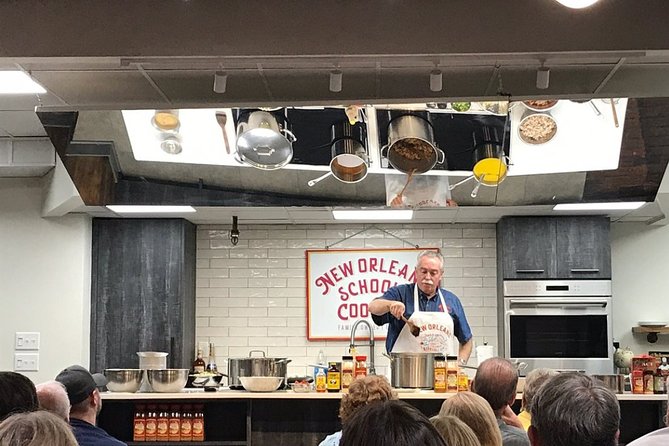
New Orleans cuisine makes more sense once you understand the roux, the seasoning, and the people who shaped the pot. This two-hour class at the New Orleans School of Cooking turns that lesson into lunch, with a chef preparing dishes such as gumbo, jambalaya, crawfish etouffée, and pralines in a converted 19th-century molasses warehouse.
I like two things especially: the generous tasting portions, which add up to a full meal, and the way cooking facts come mixed with Louisiana stories. Chefs such as Lynn, Eric, Austin, Vivian, Dianne, and Terri have led recent classes, so the personality varies, but the best sessions feel like a cooking lesson and a small stage show at once.
The main consideration is size. This can be a large class, with capacity for 68 people and one recent class hosting 48. It is a demonstration only, so you watch, ask questions, and eat, but you do not chop or cook.
Key points at a glance
- The roux gets its due: Learn why this slow-cooked mixture is central to gumbo and other Louisiana dishes.
- You eat the lesson: Samples can include several savory dishes and multiple desserts, not just a token taste.
- The setting has character: Class takes place in a converted 19th-century molasses warehouse on St. Louis Street.
- Chef personality matters: Instructors such as Lynn, Chef Eric, Austin, Vivian, Dianne, and Terri bring different stories and styles.
- It is a show, not a workshop: You watch the food being prepared and receive recipes to try at home.
- $43 covers a lot: Food, one local beer, iced tea, coffee, water, and recipes are included, with gratuity extra.
A cooking class inside an old molasses warehouse
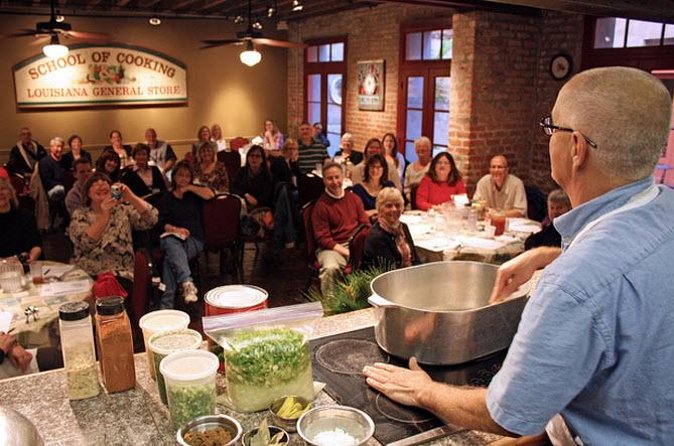
The New Orleans School of Cooking sits at 524 St. Louis Street, right in the French Quarter. You begin and end at the same location, so the class fits neatly into a day of walking the Quarter, visiting the French Market, or exploring nearby Bourbon and Royal streets.
The building itself helps set the mood. A converted 19th-century molasses warehouse is a better backdrop for this class than a polished hotel kitchen would be. You are learning about food tied to trade, migration, family cooking, and neighborhood restaurants while sitting in a building with its own food-related past.
The class is offered in English and uses a mobile ticket. It is near public transportation, but the central French Quarter location also makes it easy to reach as part of a walking day. Allow a little extra time to find the entrance and settle in, especially if you are arriving during a busy Quarter afternoon.
This is not a tiny table where everyone cooks side by side. The maximum is 68 people, and the room can feel full. That size keeps the price down and allows the school to offer a complete meal, but it also means the chef may be working at the front of the room while you watch from your seat.
Other classes where you do the cooking in New Orleans:
- New Orleans: Cajun and Creole Cooking Class
★ 4.9 · 730 reviews - Undiscovered Charleston: Half Day Food, Wine & History Tour with Cooking Class
★ 5.0 · 948 reviews
What happens during the two-hour demonstration
The class follows a simple rhythm. The chef introduces the food and the culture behind it, prepares several dishes in real time, answers questions, and serves samples as each part is completed.
You may see corn and crab bisque, gumbo, jambalaya, shrimp or chicken Creole, crawfish étouffée, shrimp and artichoke soup, bread pudding, bananas Foster, pralines, or pecan pie. The exact menu can vary, so do not book expecting every item on that list in one session.
The savory portion can be especially useful for first-time cooks. You see how a dish develops instead of receiving only a finished bowl. The chef talks through seasoning, timing, and the role of the roux, the browned flour-and-fat base that gives many Louisiana dishes their body and flavor.
You also get a chance to ask about the small difference between Cajun and Creole cooking. The answer is not just a matter of spice level. The class connects the food to Louisiana’s mix of cultural influences, giving you a better sense of why New Orleans cooking does not fit into one simple category.
The best part is the handoff from demonstration to tasting. After the chef prepares each item, you receive a portion. That makes the lesson practical: you can taste the texture and seasoning while the preparation is still fresh in your mind.
Gumbo, jambalaya, and the secrets behind the plate
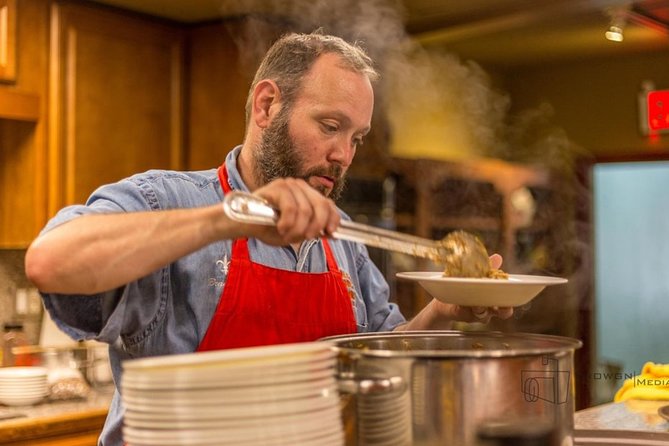
Gumbo and jambalaya are the stars for many people. Gumbo gives the chef a chance to explain the roux, stock, seasonings, and long cooking process. Jambalaya shows a different approach, with rice taking on the flavor of the other ingredients as everything cooks together.
Crawfish étouffée offers another useful comparison. It is a sauce-based dish that shows how seafood, seasoning, and a thickened base work together. Shrimp or chicken Creole may appear on the menu as well, giving you another taste of the tomato-forward side of New Orleans cooking.
The class does not aim to make everything aggressively hot. If you prefer more heat, seasonings are available at the table so you can adjust your plate. This is worth knowing if you expect restaurant-style spice from the first bite. The mild approach also makes sense for a large class with different tastes.
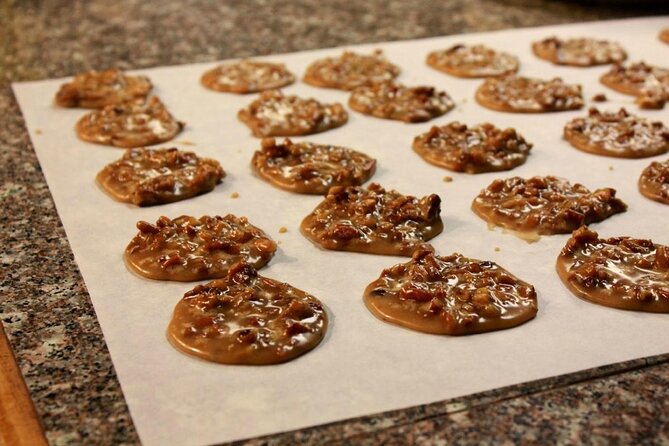
Dessert keeps the meal from feeling like a one-note lesson. Bread pudding, bananas Foster, pralines, and pecan pie may be included. A flaming dessert demonstration can add a bit of theater, while pralines show the sweeter side of Louisiana cooking and give you a recipe that is manageable to try at home.
You should arrive hungry. The class is built around generous samplings, and the combination of several savory dishes, dessert, and drinks can easily replace lunch.
The chef is part teacher, part storyteller
The chef shapes the experience more than any single menu item. Recent classes have featured instructors including Lynn, Eric, Dianne, Austin, Vivian or Viviane, Terri, Rene, and Chef Faucheaux. The school uses a rotating group, so you should not assume a particular person will lead your class unless the booking details say so.
Lynn has been praised for mixing cooking instruction with New Orleans stories. Chef Eric is known for an energetic presentation and practical advice that can send you home ready to try gumbo or red beans and rice. Austin has handled questions, jokes, and step-by-step instruction with an easy stage presence.
Vivian, Viviane, Dianne, Terri, and Rene have also led well-received sessions. The names matter because this is not a silent kitchen demonstration. You are buying a food lesson with a human voice, and an engaging chef can make two hours pass quickly.
A large room brings one possible nuisance: side conversations. One class member found the chef harder to hear when other people talked. If you want a quiet, intimate culinary lesson, sit close to the front if seating allows and keep your expectations realistic.
Other things to learn to make in New Orleans:
- Nashville: Line Dancing Class with Keepsake Video
★ 4.9 · 773 reviews - NYC: Brooklyn Graffiti Workshop with Local Artist
★ 4.8 · 570 reviews - Los Angeles: Surfing Lesson in Venice Beach
★ 4.8 · 442 reviews - Oahu: Beginner-Friendly Waikiki Beach Surfing Lesson
★ 4.9 · 425 reviews
Why $43 is a good food value
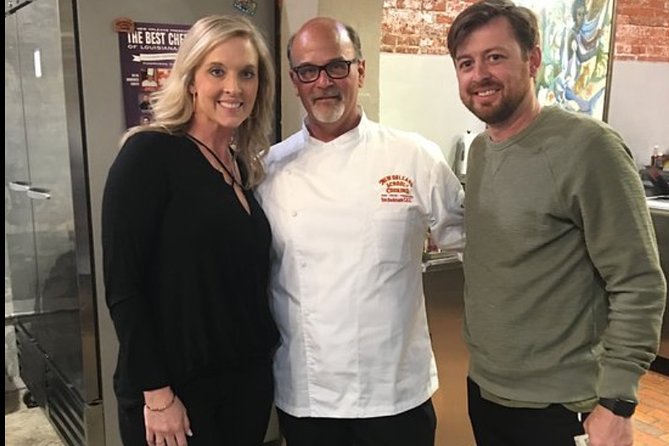
At $43 per person, the price is easy to assess because much of what you pay for is included. You receive samples of the dishes prepared, coffee, iced tea, water, and one local beer. You also take home the recipes.
The portions are not merely decorative tastes. The food is intended to add up to a full meal, and several classes include multiple main dishes and desserts. If you paid separately for a meal with gumbo, jambalaya, seafood or chicken, dessert, and a drink in the French Quarter, the class could compare well even before counting the instruction.
The value depends on what you want from a cooking class. If you want to handle a knife, stir a pot, or practice making a roux yourself, this is not the right format. If you want to understand the dishes, eat well, hear local stories, and leave with recipes, the price is strong.
Gratuity is not included. A 15 to 20 percent tip is recommended, so include that in your budget. Bring cash if you prefer to tip directly, as this is a service built around the chef’s presentation and the staff’s meal service.
A large class can still work well
The class size is the biggest tradeoff. With room for up to 68 people, the experience is closer to a small culinary theater than a private lesson. You will not get constant one-on-one attention, and you may not see every small technique as clearly from the back.
The benefit is energy. Questions from the room can keep the demonstration moving, and the chef has an audience for stories and jokes. The larger format also helps explain the reasonable price and the generous food service.
I would choose this class for a first visit to New Orleans, a couple with different levels of interest in cooking, or a family group seeking an indoor activity with a meal included. You do not need to be a serious cook. One appealing feature is that the non-cook in your group can enjoy the stories, food, and show without being asked to participate at a stove.
For a more focused culinary lesson, look for a smaller hands-on class instead. Here, your role is to watch, listen, ask, and eat.
Dietary restrictions and menu limits
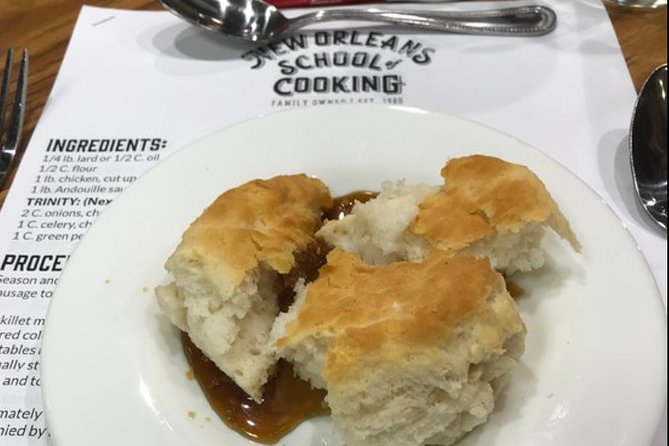
The school can accommodate certain dietary restrictions if you call the reservations line after booking. For a $5 charge paid at check-in, you can receive gumbo z’herbes and Creole z’herbes as substitutions. These are vegan, gluten-free, and nut-free.
There is an important limit. Those substitute dishes are not the recipes being demonstrated. They are discussed, and you receive copies of the recipes, but the chef cannot alter the dishes prepared for the full class.
Depending on your restriction, you may be able to eat the soup but not the main course. Tell the stewards when you check in so they can explain what works for you. If food allergies are a serious concern, contact the school before arrival rather than relying on an improvised change during the class.
Recipes you can actually use at home

The recipe handout is more than a souvenir. It gives the class a second life once you return home. You can use the gumbo, jambalaya, dessert, or seasoning notes as a starting point, then adjust heat and ingredients to suit your kitchen.
The demonstration also gives you visual clues that a printed recipe cannot. You see the color of the roux, the consistency of a sauce, and the order in which ingredients enter the pot. Those details help you avoid treating the recipe as a rigid list of measurements.
The school offers a diploma if you submit photos of yourself cooking the recipes at home. That is a playful extra, but it also encourages you to use what you learned rather than leaving the handout in a suitcase pocket.
Timing, meeting point, and cancellation terms
Plan on about two hours, beginning and ending at the New Orleans School of Cooking, 524 St. Louis Street. The class is offered in English, and confirmation is sent at booking.
You can cancel for a full refund up to 24 hours before the start time. Inside that window, changes are not accepted and the payment is not refunded. The cutoff uses New Orleans local time.
The experience requires good weather and a minimum number of participants. If the school cancels for either reason, you can receive a different date or experience, or a full refund. Those terms are worth noting if you are arranging the class near the end of a short trip.
Who should book this New Orleans food lesson?
Book it if you want a meal with a story, not just a meal in a restaurant. It works especially well early in your visit, since the cooking vocabulary and seasoning ideas can help you understand later menus around the city.
It also suits mixed groups. One person can be interested in food technique while another comes for the local culture, humor, beer, and desserts. The class does not demand prior cooking skill, and the demonstration format means you can enjoy it without spending two hours doing the work.
I would hesitate only if you require a quiet setting, a small group, or hands-on practice. Large classes can be noisy, and the chef cannot give every person individual instruction. You should also call ahead if your diet is limited, since substitutions cost extra and are not part of the live demonstration.
Should you book it?
For $43, this is a smart New Orleans introduction to gumbo, jambalaya, Creole cooking, and local food customs. You receive a substantial amount of food, a drink, recipes, and two hours with a chef who can turn a roux into a lesson about Louisiana.
Book it when you want an easy, filling, good-value activity in the French Quarter. Choose another format if your main goal is to cook with your own hands or escape a crowd. For most people who enjoy food, stories, and a relaxed classroom setting, this is one of the better ways to add a culinary edge to a New Orleans visit.
FAQ
Is this a hands-on cooking class?
No. It is a cooking demonstration. You watch the chef prepare the dishes, ask questions, and eat samples of the food made during the class.
How long does the experience last?
The class lasts approximately two hours.
Where does the class begin and end?
It begins and ends at the New Orleans School of Cooking, 524 St. Louis Street, New Orleans, Louisiana 70130.
What dishes might be prepared?
Possible dishes include gumbo, jambalaya, corn and crab bisque, shrimp or chicken Creole, shrimp and artichoke soup, crawfish étouffée, bread pudding, bananas Foster, pralines, and pecan pie. The menu can vary.
Are drinks included?
Yes. Coffee, iced tea, water, and one local beer are included.
Do I receive the recipes?
Yes. You receive copies of the recipes used in the class. You can also receive a diploma by submitting photos of yourself preparing the recipes at home.
Can dietary restrictions be accommodated?
Yes, with advance contact after booking. For a $5 upcharge at check-in, gumbo z’herbes and Creole z’herbes substitutions are available. They are vegan, gluten-free, and nut-free, but they are not demonstrated.
How large can the class be?
The activity can have a maximum of 68 participants. It is a group demonstration rather than a small private lesson.
What is the cancellation policy?
You can cancel at least 24 hours before the start time for a full refund. Cancellations or changes made less than 24 hours before the experience are not refunded or accepted.
Just added in New Orleans
- New Orleans: French Quarter, Voodoo and Cultural Experience★ 4.5 · 972 reviews
- From New Orleans: Oak Alley Plantation Tour★ 4.5 · 443 reviews
- New Orleans: Bayou Tour in Jean Lafitte National Park★ 4.8 · 428 reviews
- New Orleans: Whitney Plantation Tour with Transportation★ 4.7 · 619 reviews
- New Orleans: Guided Swamp Cruise by Tour Boat★ 4.7 · 570 reviews
- New Orleans: Voodoo Queen Tour of French Quarter★ 4.7 · 482 reviews
- New Orleans: Swamp Boat Ride & Oak Alley Plantation Tour★ 4.7 · 383 reviews
- New Orleans: Walking Tour Inside St. Louis Cemetery No. 1★ 4.6 · 1,519 reviews
Tours in New Orleans, compared.
New Orleans Premier Ghost, Voodoo and Vampire Walking Tour
Read our review →
New Orleans Steamboat Natchez Jazz Cruise with Dinner Option
Read our review →
Adults-Only New Orleans Ghost, Crime, Voodoo, and Vampire Tour
Read our review →
New Orleans Food Walking Tour of the French Quarter with Small-Group Option
Read our review →
New Orleans City Sightseeing Hop-On Hop-Off Bus Tour
Read our review →

Evening Steamboat Jazz Cruise + Optional Dinner
Read our review →
Daytime Steamboat Jazz Cruise + Optional Lunch
Read our review →Browse the lists this tour appears in