
Reviewed · WALKING TOURS
ORIGINAL Old Louisville Walking Tour seen in The New York Times!
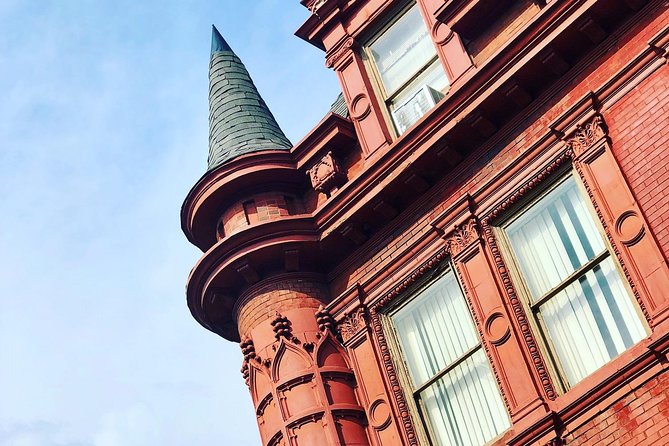
Old Louisville’s grandest story is written in stone, brick, iron, and stained glass. On this walking tour, you’ll pass mansions built for Louisville’s wealthy titans, hear the tale of the Witches’ Tree, and stroll through one of the largest historic districts in the United States. The Victorian streets are the main attraction, but the guide’s stories give them meaning.
I like the tour’s strong local storytelling, with guides such as David, Gabe, Angelique, Brenda, and Frances bringing different voices and details to the walk. I also like the manageable group size of no more than 20 people, which makes it easier to hear questions and follow the guide. The main drawback is simple: you must be able to walk for about 90 minutes without a bathroom break, and the tour does not enter the mansions.
Key points to know
- More than 1,000 historic structures: Old Louisville covers roughly 40 square blocks, giving you plenty to see in a compact area.
- A story-led walk: Guides explain the people, homes, architecture, gardens, trees, and local legends behind the streets.
- Outdoor sightseeing only: You see the Conrad-Caldwell House Museum and other mansions from the street. Interior visits are not part of the tour.
- A useful Louisville introduction: The walk helps you understand how the city’s past still shapes its neighborhoods and culture.
- About two hours and $25: The price is fair for a focused historical tour with a certified guide.
- Plan for a full walking effort: Comfortable shoes, weather-ready clothing, and realistic expectations about the transitional starting area matter.
Why Old Louisville deserves a walking tour

Old Louisville is not just a cluster of pretty houses. With more than 1,000 structures spread over 40 square blocks, it is a large district with changing blocks, varied architectural styles, and a long connection to Louisville’s wealthy families.
You can stroll here on your own, but the houses do not explain themselves. A large mansion may show a name on its gate or a plaque on its wall, yet you will not know who built it, why it mattered, or how the neighborhood changed without some help. A good guide connects the buildings to the people who lived in them.
That is the real value of this experience. You are not simply photographing porches and towers. You are learning how private wealth shaped the neighborhood, how public green space fits into the district, and why local legends still cling to particular trees and homes.
The tour was featured in The New York Times, and its strong 4.9 rating from 720 reviews reflects a clear pattern: people especially appreciate the guides’ command of local stories, friendly delivery, and ability to keep the walk moving. Several guides receive special praise, including David, Gabe, Angelique, Brenda, Frances, and Gage. Since guides can vary, your experience will have its own personality, but the format remains the same.
Other walks around the USA:
- History and Hauntings of Salem Guided Walking Tour
★ 5.0 · 14,564 reviews - New Orleans Premier Ghost, Voodoo and Vampire Walking Tour
★ 4.5 · 12,856 reviews - Little Havana Food and Walking Tour in Miami
★ 5.0 · 8,882 reviews
The start at West Ormsby Avenue and South Fourth Street
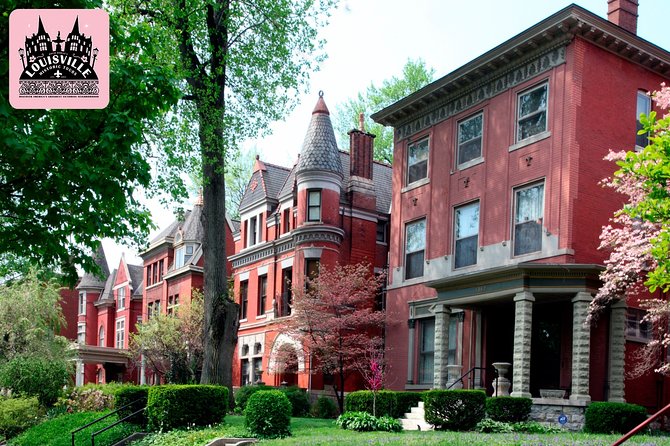
The tour begins at West Ormsby Avenue and South Fourth Street, near the north edge of Old Louisville. It is a central meeting point, and the walk returns there at the end.
You should know the character of the starting area before you arrive. This part of Louisville is transitional, and you may encounter panhandlers, people without homes, and people from many different backgrounds. That note is not meant to alarm you. It is practical advice so you arrive with open eyes and treat the area with ordinary city awareness.
The company limits the group to 20 people. That is a useful size for a walking tour. A group this small can gather around a doorway or tree without taking over the sidewalk, and you have a better chance of hearing the guide. One past participant specifically appreciated a guide using a microphone, which can help on busy streets or when the group spreads out.
Expect English-language commentary. The experience is led by a certified guide, and the strongest part of the tour is the spoken explanation rather than any printed material or admission ticket.
Millionaires Row and the grand Victorian streets
Much of the walk focuses on the grand homes associated with Old Louisville’s former upper class. The term Millionaires Row captures the mood: large private houses built to impress, with elaborate porches, stonework, towers, gardens, and decorative details.
I find this setting best suited to slow looking. Do not rush from one stop to the next with your camera pointed only at the biggest facade. Look at the smaller details too. The tour draws your attention to features such as Roman-arched porches, carved figures, landscaping, and the way one house differs from the next.
The guide’s role is especially useful here. You will hear about original owners and builders, rather than receiving a general lecture about Victorian design. That human detail helps explain why the neighborhood looks the way it does. The walk also gives you access to corners and houses you might skip if you simply drove through Old Louisville.
The district is still a residential area. Most houses are private homes, so you should admire them from public sidewalks and avoid treating the neighborhood like an open-air museum. That limitation is worth accepting because it preserves the character of the place.
St. James Court, Ormsby Avenue, and Floral Terrace
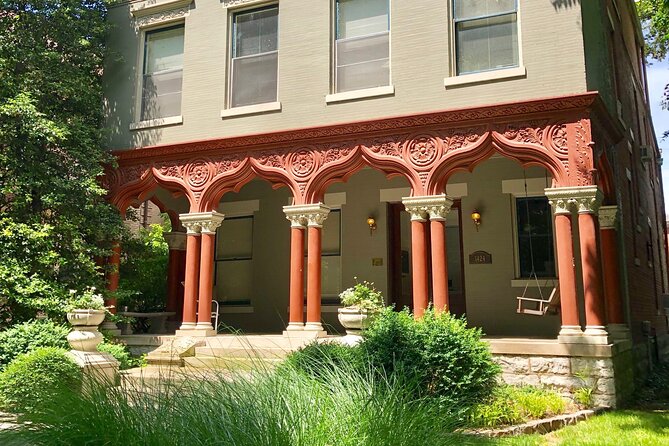
St. James Court, Ormsby Avenue, and Floral Terrace are among the notable areas included in the route. Each helps show the range of Old Louisville’s streets and the way the district is organized around handsome homes, landscaped spaces, and pedestrian-friendly blocks.
St. James Court is particularly important to the district’s identity, while Ormsby Avenue and Floral Terrace add more views of the neighborhood’s Victorian fabric. The exact emphasis can depend on your guide, weather, group pace, and the day’s conditions, but you should expect a broad look at Old Louisville rather than one single mansion visit.
This portion of the tour is also where a guide can help you read the streets. A local guide may point out a detail you would overlook, explain the background of a residence, or connect a building to a larger Louisville story. Angelique, for example, has been praised for covering everything from architecture and local history to trees, flowers, and neighborhood cats. That gives you an idea of the tour’s conversational range.
For architecture fans, this is likely the strongest section. For everyone else, the stories keep it from becoming a technical survey of facades.
Same base, a different kind of day out:
- NYC: SUMMIT One Vanderbilt Tickets
★ 4.7 · 51,195 reviews - NYC: 9/11 Memorial & Museum Timed-Entry Ticket
★ 4.8 · 31,428 reviews - NYC: Empire State Building Tickets – Observatory & Museum
★ 4.7 · 25,757 reviews - NYC: Empire State Building Observation Deck Tickets
★ 4.7 · 22,072 reviews
The Witches’ Tree and local legend
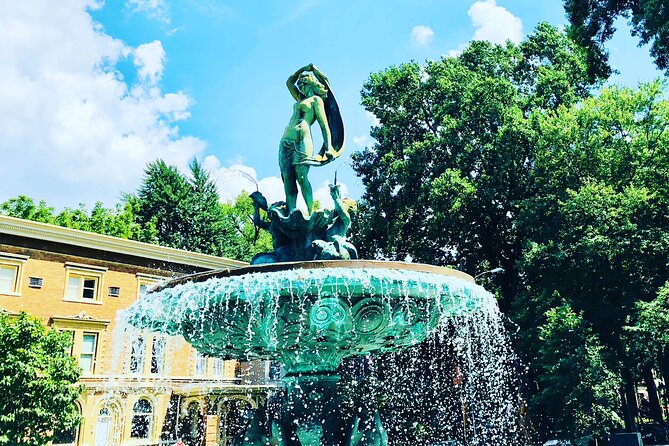
The Witches’ Tree is a five-minute stop, but it may be the most memorable point on the route. A gnarled tree marks the place where a tree cherished by local witches once grew.
According to the local legend, the city cut down the original tree. The witches, or crones, answered by sending a tornado to destroy the city. People still leave offerings on the twisted trunk to make peace with them.
You do not need to take the story literally to enjoy it. Local legends tell you how a neighborhood creates a sense of place. Among all the formal architecture and stories of wealthy families, the tree adds something stranger and more playful.
This is a quick stop, not a long folklore presentation. If you like unusual local stories, pay attention. It is also a good reminder that Old Louisville is more than a collection of grand houses.
Conrad-Caldwell House, known as Conrad’s Castle
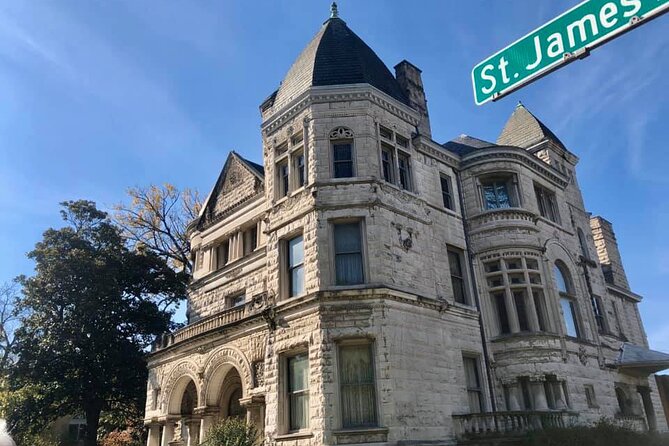
The Conrad-Caldwell House Museum is one of the tour’s key exterior stops. It is sometimes called Conrad’s Castle, a fitting nickname for a house with such a dramatic appearance.
The tour pauses outside the building, but admission is not included, and the walking tour does not enter any structure. You can arrange a separate visit to the mansion if you want to see the interior.
This distinction matters when you book. If your main goal is to tour a historic house room by room, this experience will not meet that goal by itself. If you want an overview of Old Louisville with a chance to identify one major house for a later visit, the stop works well.
I like this arrangement because it keeps the walk moving. Entering several houses would turn a two-hour neighborhood tour into something much longer, and many of the buildings are private residences. You get a useful exterior overview without paying for interior admissions you may not want.
Bernheim Mansion and the old Millionaires Row
The Bernheim Mansion is another short but striking stop. Located at the heart of old Millionaires Row, it is known for green men arranged around a triple Roman-arched porch.
That detail gives you something specific to look for. Instead of hearing only that the mansion is grand, you can study the carved figures and the heavy Richardsonian Romanesque design for yourself. The stop lasts about two minutes, so your guide will keep the explanation focused.
The mansion functions as a good example of how Old Louisville rewards close attention. Its scale may catch your eye first, but the decorative elements make the building memorable. Since the house is not part of the tour’s interior program, enjoy it from the sidewalk and let the guide provide the context.
The Filson Historical Society and Ferguson Mansion
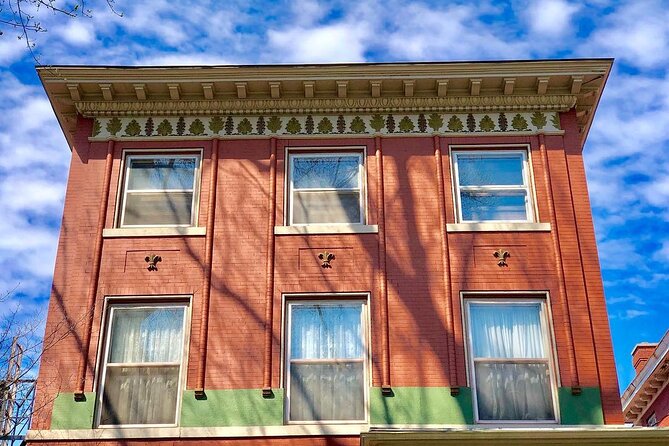
The Filson Historical Society occupies the Ferguson Mansion, built in 1905. The house was once considered the grandest home in Louisville and is a fine example of Beaux Arts architecture.
The tour stops outside for about five minutes. Visits to the historical society can be arranged separately, but that is not included in the $25 tour price.
This stop adds a useful layer to the walk. Old Louisville is not only about private residences and decorative porches. The Ferguson Mansion connects the neighborhood to organized efforts to preserve and study the region’s past. If you have a special interest in local history, you may want to mark this place for a separate visit.
For a general sightseeing walk, the exterior stop is enough to show the building’s scale and style. The guide can place it within the neighborhood without pulling the whole group into a separate museum visit.
Central Park and Frederick Law Olmsted’s green space
The route includes Louisville’s Central Park, a 14-acre public space designed by Frederick Law Olmsted, the same landscape designer associated with New York City’s Central Park.
Here, the tour shifts from buildings to open space. Native tree species and shaded walkways give the neighborhood a calmer center, and the park helps you understand how the district’s grand homes relate to public life.
Central Park is also home to Shakespeare in the Park each summer. The event has taken place since 1961 and is described as the nation’s oldest free outdoor Shakespeare event. You may not visit during the performance season, but the detail helps explain why the park remains important beyond its trees and paths.
The stop lasts about five minutes. That is enough for an introduction, though not enough for a full park exploration. If you want to linger, take photographs, or walk the paths at leisure, plan extra time after the tour ends.
What the $25 price gets you
At $25 per person, this is a reasonably priced introduction to Old Louisville. Your fee covers the certified guide and roughly 1 hour 40 minutes to two hours of focused walking and storytelling.
The value comes from interpretation. You can see the neighborhood for free, but a guide helps you understand the original owners, builders, architecture, legends, and public spaces. For a first visit to Louisville, that context can save you from wandering past important places without knowing why they matter.
The price does not include mansion admissions or tips. A $5 gratuity per person is listed as an additional cost, so budget about $30 per person if you plan to follow that recommendation.
The tour is especially good value if you enjoy architecture, local history, or stories about the people behind a city’s grand buildings. It is less useful if you want private-house interiors, a museum visit, or a short sightseeing loop with little walking.
Pace, comfort, and practical planning
Take the walking requirement seriously. You must be able to walk for 90 minutes without a bathroom break, and the tour is not recommended for people with mobility issues. A moderate level of physical fitness is expected.
Wear comfortable shoes. The route covers a large district, and the experience is built around walking from one outdoor stop to the next. Bring clothing suited to the weather, since poor weather can lead to cancellation and a choice of another date or a full refund.
Service animals are allowed, and the meeting point is near public transportation. The tour is offered in English only.
The group size is capped at 20, but the walk still takes place in an active city neighborhood. You should stay with the group, listen for the guide, and remain aware of sidewalks and traffic. A microphone may be used, but hearing clearly can still depend on where you stand.
The tour is normally booked about 11 days ahead, so do not wait until the last minute if your Louisville dates are fixed. The experience is non-refundable and cannot be changed after booking, except when the operator cancels because of poor weather.
Who should book this Old Louisville walk?
I would choose this tour if you want a clear introduction to Louisville’s historic center, especially if architecture and local stories appeal to you. It also suits repeat visitors. One local took the tour a second time and still found it worthwhile, which suggests the guide’s storytelling can add value even when the streets are familiar.
Families can enjoy it, including multigenerational groups, as long as everyone can manage the walking time. Couples, solo visitors, and friends should find the two-hour format easy to fit into a day of sightseeing.
I would skip it if you need frequent bathroom stops, have serious mobility limits, or mainly want to tour the interiors of historic mansions. In that case, consider visiting the Conrad-Caldwell House Museum separately and treating the outdoor tour as an optional addition.
Should you book it?
Book this tour if you want Old Louisville to make sense, not just look pretty. The grand homes, Witches’ Tree, Central Park, and Millionaires Row are appealing on their own, but the guide’s stories turn a walk into a lesson in how Louisville grew and changed.
The strongest reasons to go are the local guides and story-driven format. David, Gabe, Angelique, Brenda, Frances, and Gage have all been singled out for clear delivery, humor, warmth, and strong command of the area. Just remember that the tour stays outside, requires steady walking, and begins in a transitional city setting.
FAQ
How long does the Old Louisville Walking Tour last?
The tour lasts about 1 hour 40 minutes to 2 hours.
How much does the tour cost?
The listed price is $25 per person. A $5 gratuity per person is not included.
Where does the tour begin?
It begins at West Ormsby Avenue and South Fourth Street in Louisville, Kentucky.
Where does the tour end?
The activity ends back at the meeting point.
Is the tour offered in English?
Yes. English is the listed tour language.
Does the tour enter the historic mansions?
No. The walk stays outdoors, and most houses in Old Louisville are private residences. You can arrange a separate paid visit to the Conrad-Caldwell House Museum.
Is admission to the Conrad-Caldwell House included?
No. Admission to the museum is not included in the walking tour price.
How large can the group be?
The tour has a maximum of 20 participants.
Is the tour suitable for people with mobility issues?
It is not recommended for visitors with mobility issues. You should be able to walk for 90 minutes without a bathroom break and have a moderate level of physical fitness.
What happens if bad weather cancels the tour?
If poor weather causes a cancellation, you will be offered another date or a full refund. The experience is otherwise non-refundable and cannot be changed for another reason.
Just added in the USA
- Key West Reef Snorkel – Morning Mimosas or Afternoon Margaritas★ 4.0 · 620 reviews
- Key West Half-Day Fishing Charter★ 4.5 · 408 reviews
- Key West Haunted Pub Crawl and Ghost Tour with Free T-Shirt★ 4.5 · 549 reviews
- Key West Glass-Bottom Boat Tour with Sunset Option★ 4.0 · 576 reviews
- Key West Ghosts and Gravestones Trolley Tour★ 4.5 · 1,217 reviews
- Key West Dolphin and Snorkel Experience★ 4.5 · 334 reviews
- Key West Afternoon Reef Snorkeling with Open Bar★ 4.5 · 419 reviews
- Key West Ghost and Mysteries Guided Tour★ 4.5 · 1,079 reviews
Walking Tours, compared.
New Orleans Premier Ghost, Voodoo and Vampire Walking Tour
Read our review →
Freedom Trail History Small Group Walking Tour
Read our review →
Historic Charleston Guided Sightseeing Walking Tour
Read our review →
New Orleans Food Walking Tour of the French Quarter with Small-Group Option
Read our review →
St. Louis Cemetery No. 1 Official Walking Tour
Read our review →
Harvard University Student-Guided Walking Tour
Read our review →
Harvard University Campus Guided Walking Tour
Read our review →Browse the lists this tour appears in