
Reviewed · WALKING TOURS
Chicago’s Secret Interiors Architectural Walking Tour
Chicago’s best architectural surprises often sit behind doors you could walk past without noticing. This two-hour tour leads you from Union Station through the Loop, pairing famous exteriors with grand interiors such as the Rookery’s light court, the Marquette Building’s mosaics, and the Palmer House lobby.
I especially like the indoor access and the way the guides connect buildings to Chicago’s Gilded Age business empires. I also like the manageable price, $35, for a route that covers so much ground. The main consideration is weather: you will walk outside between stops, and the Rookery is not included on Sundays.
Key points to know
- Start at Union Station and finish at Macy’s: The route crosses the central Loop rather than returning to its starting point.
- Look up and look inside: The tour focuses on domes, mosaics, skylights, lobbies, gardens, and structural solutions that are easy to miss from the sidewalk.
- The Rookery is a major highlight: Its 1888 structure and Frank Lloyd Wright’s later lobby work make it one of the most rewarding stops.
- Expect strong guiding: Ethan, Grant, Ty, Avery, and Matthew have all led engaging tours, with clear explanations and a good sense of pace.
- Plan for changing group sizes: The stated maximum is 15 people, though one tour group was much larger, so the exact size may vary.
- Sunday has one important change: The Rookery is closed, and the route may include the Chicago Cultural Center or Monadnock Building instead.
Why Chicago’s interiors are the real attraction
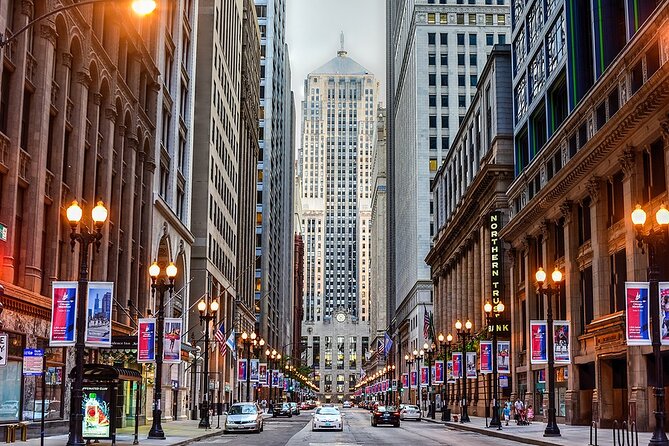
Chicago’s Loop is easy to admire from street level. You see the Chicago Board of Trade, Willis Tower, Union Station, and rows of old commercial buildings. The surprise comes when you enter.
Behind plain doors are marble floors, painted ceilings, elaborate metalwork, stained glass, and mosaics. These interiors explain how Chicago’s business districts once tried to impress clients, shoppers, hotel patrons, and visiting dignitaries. The buildings were not only offices. They were public statements about money, taste, ambition, and modern engineering.
That is what makes this walk different from a simple skyline stroll. You are not just collecting famous facades. You are learning to read the city from the inside out.
The tour also gives you a useful story about Chicago’s growth. After the Great Chicago Fire, architects and builders faced the challenge of creating tall, safe commercial buildings on a crowded street grid. The result was a new style of city building, with steel frames, large windows, elevators, elaborate lobbies, and increasingly tall towers.
Other walks around Chicago:
- Chicago: Gangsters and Ghosts Walking Tour
★ 5.0 · 7,155 reviews - Chicago Favorites Ultimate Food and Walking Tour
★ 5.0 · 1,962 reviews - Chicago: Gangsters and Ghosts Guided Walking Tour
★ 4.7 · 1,697 reviews
Starting at Union Station
The walk begins at Chicago Union Station, at 225 South Canal Street. The station is a fitting first stop because it shows how Chicago presented itself to people arriving from across the country.
Daniel Burnham designed the station, completed in 1925. Its Beaux-Arts character is formal and grand, with a large Great Hall and a skylight that gives the room its impressive scale. Even if you have passed through the station only to catch a train, this visit encourages you to pause and study the details.
You will hear how Union Station functioned as more than a transport center. It was a ceremonial gateway, built during an era when major public buildings were meant to create a sense of arrival.
The station also sets the tone for the walk. You are looking at a building where function and display work together. Trains had to move efficiently, but the public spaces were designed to make that movement feel important.
Walking through the Financial Canyon on LaSalle Street
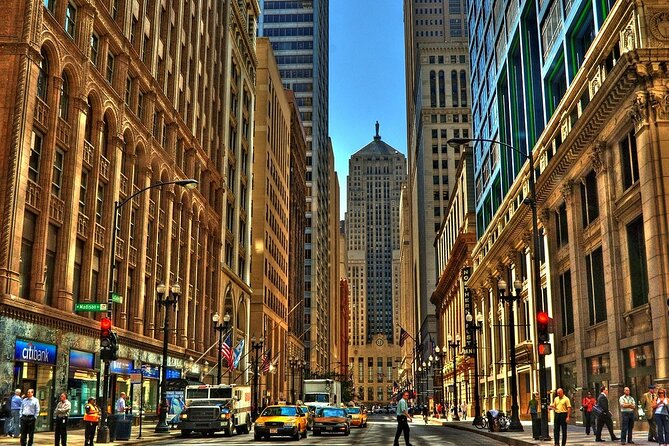
From Union Station, the route moves toward the Loop and LaSalle Street. This area is sometimes described as Chicago’s Financial Canyon because tall buildings press close around the street, creating a dramatic urban corridor.
The walk gives you time to connect the street walls with the financial forces that shaped them. The Chicago Board of Trade represents the power of commodities and speculation. Willis Tower points to the later age of corporate scale and engineering ambition.
You will hear about the architects behind these buildings and the industries that filled them. That context matters because the Loop is not simply a collection of old towers. Its form reflects decisions made by banks, brokers, retailers, hotel owners, and major companies.
The pace is generally practical. Stops are short, often around ten minutes, followed by a walk to the next building. That keeps the tour moving, but it also means you should not expect a long, detailed visit inside every location. The value comes from seeing many places in one outing and learning what deserves a closer look later.
The Rookery and its famous light court
The Rookery is one of the strongest stops on the route. Burnham and John Wellborn Root designed the building in 1888, and its interior combines Romanesque and Moorish influences with inventive ironwork and a remarkable light court.
Frank Lloyd Wright later redesigned the lobby, creating a cleaner, brighter interior within the older building. The result lets you see several stages of Chicago architecture in one place. The building does not belong neatly to one style or one generation.
Pay attention to the oriel staircase and the way the light court pulls daylight into the center of the structure. In a dense downtown block, light was a practical problem. The answer became part of the building’s beauty.
The Rookery is also a good example of why a guide helps. If you walk in alone, you may notice the polished surfaces and ornate details without understanding how the building was organized or why the light court mattered. A good explanation turns decoration into evidence of changing construction methods.
The Rookery is closed on Sundays, so it will not be included on the Sunday route. If this building is high on your list, choose another day.
Same base, a different kind of day out:
- Chicago Architecture River Cruise
★ 5.0 · 15,756 reviews - Chicago River 90-Minute Architecture Tour
★ 4.5 · 9,629 reviews - Chicago River: 1.5-Hour Guided Architecture Cruise
★ 4.8 · 8,046 reviews - Chicago Architecture Center River Cruise aboard First Lady
★ 5.0 · 5,536 reviews
The Field Building and Art Deco restraint
The Field Building brings the tour into the Art Deco period. Its design has a different mood from the older Rookery and the lavish Palmer House. Art Deco buildings often use strong lines, geometric patterns, and a sense of order, and the Field Building shows how Chicago’s commercial architecture changed in the early twentieth century.
This stop is useful because the tour does not treat Chicago architecture as one single style. You move from nineteenth-century experimentation to the more polished, controlled look of Art Deco.
The exterior may first catch your eye, but the point of the stop is to notice how the interior carries the same design language. Look for the relationship between decorative detail and the building’s role as a workplace. The elegance is present, but it is not simply hotel luxury.
Marquette Building mosaics and the Chicago window
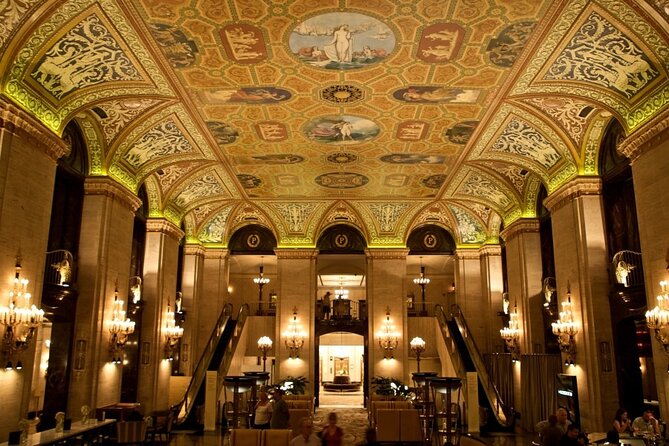
The Marquette Building offers one of the clearest lessons in Chicago School design. It is known for its use of the Chicago window, which helped provide larger areas of glass and more daylight in commercial buildings.
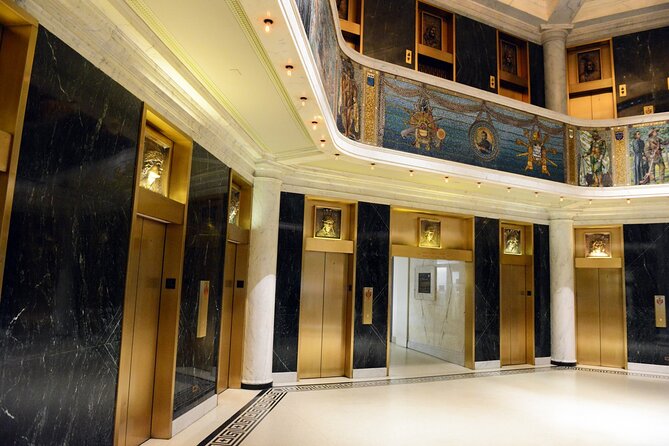
Its terra cotta facade deserves attention, but the interior is the real reward. The lobby contains mosaics connected to Jacques Marquette’s exploration of Illinois. These images give the building a decorative program rather than a random collection of ornaments.
I like this stop because it connects engineering, commerce, art, and regional identity. The building was designed for modern business, yet it also tells a story through images and materials.
Your guide may point out how the building’s windows and facade express a new approach to office construction. The lesson is simple: Chicago’s early skyscrapers were not just taller buildings. They changed how offices received light and how city streets were enclosed.
The Palmer House’s grand hotel style
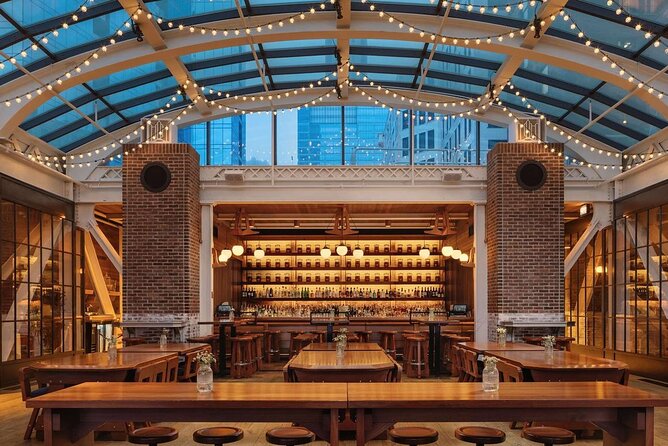
The Palmer House shows the luxury side of Chicago’s architectural story. The hotel was rebuilt after the Great Chicago Fire and became one of the city’s major social addresses.
Inside, the lobby features a frescoed ceiling, mosaic floors, and bronze peacock doors. These details were meant to make an impression before a visitor ever reached a room or restaurant. The hotel also hosted celebrities and dignitaries, adding a social layer to the architecture.
This is a good place to think about the difference between a commercial office building and a grand hotel. The office buildings emphasize business, efficiency, and daylight. The Palmer House emphasizes ceremony, comfort, and display.
You may spend only a short time here, so keep your eyes moving upward and across the floor. The best details are not necessarily at eye level. The tour’s short stops make it useful to know in advance that you are sampling the interiors rather than settling in for a long building visit.
Chicago Cultural Center or the Monadnock Building
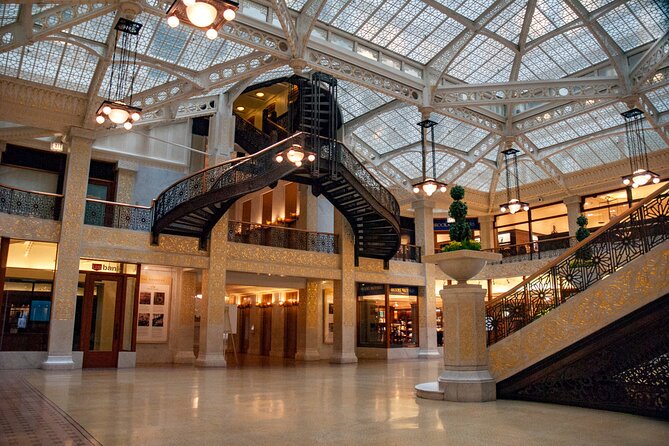
The route includes either the Chicago Cultural Center or the Monadnock Building. This variation means the exact experience can change, but both choices offer a worthwhile look at Chicago’s civic and commercial past.
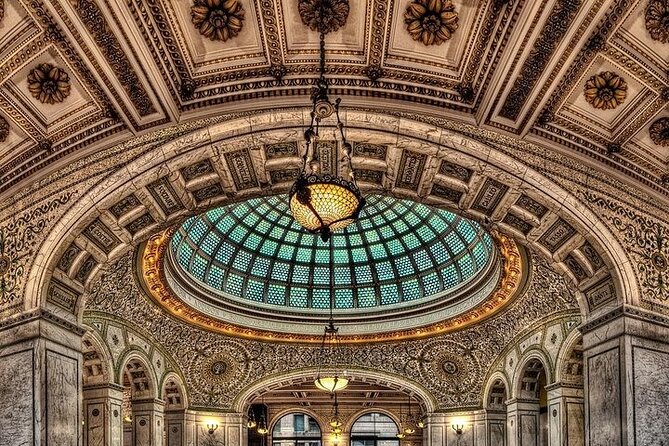
The Chicago Cultural Center is known for architectural beauty and cultural importance. It gives the tour a civic dimension, shifting attention from private offices and hotels to a public building designed for the city.
The Monadnock Building represents late nineteenth-century commercial design. Its importance lies in how it shows the changing form of the office building during Chicago’s early skyscraper era.
You should treat this stop as a useful bonus rather than a guaranteed single building. If you have a strong preference, ask the guide which location is planned that day.
Marshall Field and Company Building, now Macy’s
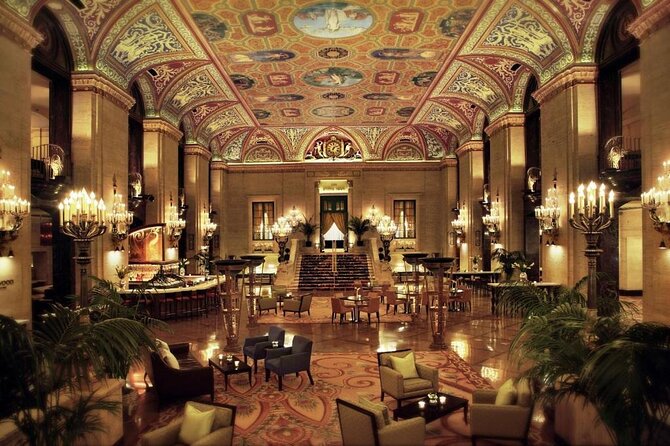
The walk finishes at the former Marshall Field and Company Building, now home to Macy’s, at 111 North State Street. This is a fitting ending because it shifts the story from offices and hotels to retail.
The building’s most famous interior feature is its Tiffany glass mosaic dome. The walnut-paneled Tea Room adds another layer of department-store luxury. These details show how early twentieth-century retailers turned shopping into a complete experience, with impressive rooms designed to encourage customers to linger.
This stop also explains why department stores mattered to Chicago’s growth. Marshall Field was not merely selling goods. The building projected trust, wealth, taste, and modern consumer culture.
The ending point is convenient for continuing around the Loop, shopping, or finding a meal. Since the tour does not return to Union Station, plan your route afterward from the State Street area.
How the guiding affects the experience
The guide makes a major difference on this walk. Ethan is described as animated and highly informed, with a clear passion for Chicago architecture. Grant is praised for warmth, organization, and keeping the group together, even in cold weather. Ty is noted for humor, flexibility, and a sharp point of view.
Avery and Matthew also receive strong praise for clear explanations and good group management. One particularly useful detail is that the route works even in unpleasant weather because so much of the time is spent indoors. You still need to walk between buildings, but the interior stops break up the exposure to cold or rain.
Some groups have been larger than the stated maximum of 15. A group of about 40 was handled well on one occasion, but a larger crowd can make it harder to hear or move through tight lobby spaces. If a small-group feel matters to you, confirm the expected group size before booking.
Is $35 a fair price?
At $35, this is a strong value if you want context rather than a self-guided list of addresses. You are paying for a guide who organizes the route, gets the group into public interiors, and explains details you could easily miss.
The price is especially reasonable for first-time visitors who want a compact introduction to the Loop. In roughly two hours, you cover Union Station, LaSalle Street, the Rookery, the Field Building, the Marquette Building, the Palmer House, a civic or commercial landmark, and the Marshall Field building.
The limitation is depth. Ten-minute stops do not allow you to study every room or spend long periods taking photographs. If you are an architecture specialist, you may want separate visits to the Rookery, Cultural Center, or other buildings afterward.
Practical advice before you go
Wear comfortable shoes. This is a walking tour, and even with frequent interior stops, you will cross several blocks of downtown streets.
Bring a phone with your mobile ticket ready. The tour starts at Union Station and ends at the Marshall Field and Company Building, so do not assume you will finish where you began.
Check the day of the week. Sunday excludes the Rookery, one of the route’s most appealing interiors. The alternate stop is either the Chicago Cultural Center or Monadnock Building.
Allow a little flexibility for weather. The tour requires suitable conditions and may be moved or canceled in poor weather. You can cancel for a full refund up to 24 hours before the start time, but cancellations or changes within 24 hours are not refunded.
The experience is near public transportation, service animals are allowed, and most people can take part. Since the route includes outdoor walking, anyone who has trouble walking between buildings should consider that part carefully.
Who should book this walking tour?
I would choose this tour if you enjoy old buildings, city planning, engineering, hotel interiors, department stores, or stories about Chicago’s business leaders. It also works well as a first architectural activity before exploring more of the city on your own.
It suits visitors who want a focused half-day activity without spending a full day in a museum. The guide adds humor and local perspective, and the route shows interiors that are easy to overlook.
I would choose something else if you want a long technical lecture at each building, a fully indoor experience, or a guaranteed visit to every listed stop. The route can change, the Rookery is closed on Sundays, and group size may vary.
For most people, though, $35 buys a useful introduction to Chicago’s architectural character. Book it on a day when you can walk comfortably, choose a non-Sunday date if the Rookery matters to you, and keep the rest of your afternoon open for exploring the Loop on foot.
FAQ
Where does the Chicago’s Secret Interiors Architectural Walking Tour start?
The tour starts at Chicago Union Station, located at 225 South Canal Street in Chicago.
Where does the tour finish?
The tour ends at the Marshall Field and Company Building, now home to Macy’s, at 111 North State Street.
How long does the tour last?
The experience lasts approximately two hours.
How much does the tour cost?
The listed price is $35.
Is the Rookery included every day?
No. The Rookery is closed on Sundays, so it is not included on the Sunday route.
What may replace the Rookery on Sunday?
The route may include the Chicago Cultural Center or the Monadnock Building instead.
Is the tour conducted outdoors the entire time?
No. You walk between buildings, but the route includes substantial indoor stops such as lobbies, halls, and other interior spaces.
What is the maximum group size?
The stated maximum is 15 people, although group sizes may vary.
Is a mobile ticket available?
Yes. The experience includes a mobile ticket.
Can I cancel for a full refund?
Yes. You must cancel at least 24 hours before the experience start time for a full refund. Cancellations within 24 hours are not refunded.
Just added in Chicago
- BYOB Spray Paint and Sip at Studio W.I.P.★ 5.0 · 401 reviews
- Delicious Donuts & City Sights: Chicago’s Original Donut Tour★ 5.0 · 1,389 reviews
- Bikes, Bites & Views: Chicago’s Signature Dishes Bike Tour-Adults★ 5.0 · 732 reviews
- Field Museum of Natural History Admission Tickets★ 4.5 · 489 reviews
- Original Chicago Architecture Interiors Tour: Dazzling Interiors★ 5.0 · 1,489 reviews
- Skip-the-line: Art Institute of Chicago Guided Tour★ 5.0 · 417 reviews
- Chicago Loop District Food Tour with Deep Dish & Beef Sandwich★ 5.0 · 870 reviews
- City Cruises Chicago: Signature Lunch Cruise on Lake Michigan★ 4.0 · 348 reviews
Walking Tours, compared.
New Orleans Premier Ghost, Voodoo and Vampire Walking Tour
Read our review →
Freedom Trail History Small Group Walking Tour
Read our review →
Historic Charleston Guided Sightseeing Walking Tour
Read our review →
New Orleans Food Walking Tour of the French Quarter with Small-Group Option
Read our review →
St. Louis Cemetery No. 1 Official Walking Tour
Read our review →
Harvard University Student-Guided Walking Tour
Read our review →
Harvard University Campus Guided Walking Tour
Read our review →Browse the lists this tour appears in