
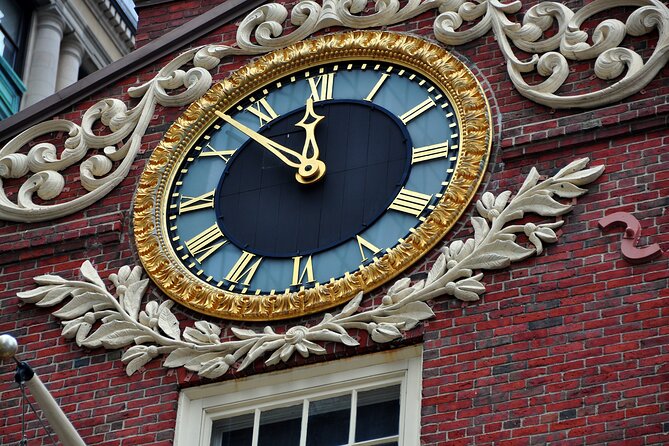
Reviewed · WALKING TOURS
Boston: Freedom Trail History Small Group Walking Tour
Boston’s Freedom Trail is at its best when the red-brick path becomes a chain of human stories. This tour connects the American Revolution to real places where people argued, worshipped, traded, protested, died, and chose sides. I especially like the small group limit of 15 and the way the route covers all 16 official landmarks without requiring museum admission fees.
I also like the guides’ focus on context rather than a pile of dates. Guides such as Maura, Nick, Alejandro, Cyrus, and Zoe have been singled out for clear storytelling, humor, and a willingness to explain myths. The tradeoff is simple: this is a serious 2-mile walk, often on crowded sidewalks and uneven historic streets, so cold, rain, heat, or tired legs can affect the experience.
Key points at a glance
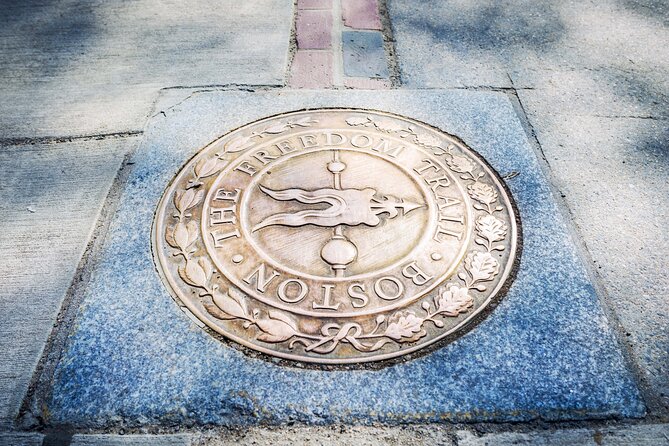
- All 16 official Freedom Trail landmarks: Follow the complete downtown and North End route, ending near the Old North Church.
- A genuinely small group: With no more than 15 people, it is easier to hear the guide and ask questions.
- A story-led history lesson: The focus is the 15-year buildup to the American Revolution, not just a list of buildings.
- A useful mid-tour pause: Quincy Market provides about 10 minutes for a drink, restroom stop, or quick breather.
- A strong final view: From Copp’s Hill Terrace, you can see the USS Constitution and Bunker Hill Monument across the water.
- Good value at $35: The price covers the complete guided route, though interior museum admissions and gratuity are extra.
Why this Freedom Trail walk works
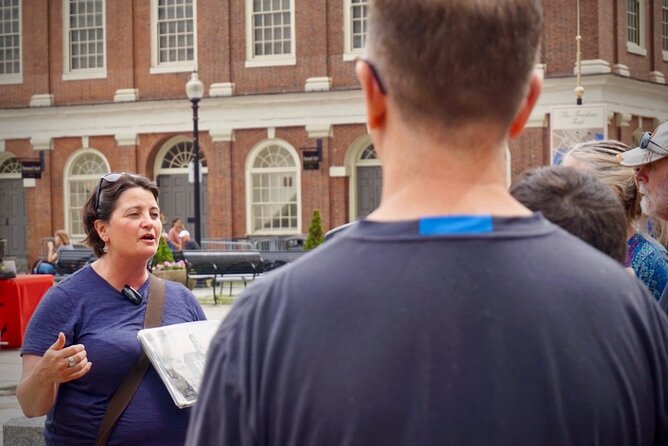
Boston’s Freedom Trail can be followed independently, but a line of red bricks does not explain why each stop matters. The value here is having someone connect the dots. You move from Puritan Boston to the disputes over taxation, military power, protest, and loyalty that helped push the colonies toward rebellion.
The tour lasts about 150 minutes, though the full outing can run as long as three hours. That extra flexibility matters because city walking rarely runs like a train timetable. A question, a crowded crossing, or a guide spending more time on an important site can stretch the route.
The small group format is one of the clearest advantages. A group of 15 is large enough to have some energy but small enough for the guide to speak without shouting constantly. You can also ask about details that interest you, whether that is the Boston Massacre, Paul Revere’s actual role in the midnight ride, or the political arguments behind the Tea Party.
The tour has earned a 4.9 rating from 1,590 reviews, and the praise is remarkably consistent: guides are energetic, friendly, well prepared, and good at making history stick. That last point is important. A few hours of names and dates can blur together, while a well-told story about one street corner tends to stay with you.
Other history to see in Boston:
- Boston: Freedom Trail History Small Group Walking Tour
★ 5.0 · 6,450 reviews - Tour of Historic Fenway Park, America’s Most Beloved Ballpark
★ 4.5 · 3,013 reviews - Boston Food & History: Pizza, North End & Freedom Trail
★ 5.0 · 1,772 reviews
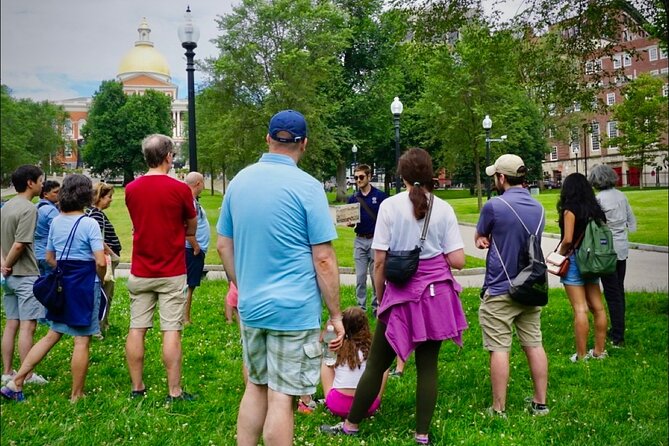
Starting at Boston Common and the State House
Meet inside Boston Common at the Boston Foundation Monument, on the park’s northern boundary opposite 50 Beacon Street. The granite memorial includes a bronze relief of two men shaking hands, linked to the arrival of the Puritans in 1630.
This is a sensible meeting place because Boston Common is where the Freedom Trail begins. It also gives your guide a chance to explain that Boston’s oldest public park was not simply a pleasant green space. The opening section introduces the city’s early civic life and sets up the political tensions that shaped the coming revolution.
The Massachusetts State House follows, with its prominent position above the Common. You will view the building from the route rather than take a full interior tour. Park Street Church and the surrounding streets add more setting before the group reaches one of the most memorable stops.
Granary Burying Ground and the people behind the rebellion
Granary Burying Ground is one of the emotional centers of the walk. The cemetery is the final resting place of figures including Paul Revere, Samuel Adams, John Hancock, and Benjamin Franklin’s parents.
The attraction is not only the old gravestones. This stop helps you see the Revolution as a movement shaped by individuals with competing interests and strong personalities. Samuel Adams was a political organizer, Revere was a craftsman and messenger as well as a famous patriot, and the people buried here belonged to a society full of disagreements.
The guide spends about 25 minutes at Granary Burying Ground, one of the longer stops on the route. That is useful because the cemetery rewards a slower pace. You can look at the narrow stones, listen to the stories, and understand who held influence in colonial Boston.
You should expect standing rather than sitting for much of the tour. The cemetery can also feel cold in winter, so gloves and a warm coat are sensible. February walks have continued in freezing temperatures and snow, with guides such as Mark, Toby, and Amir keeping the history moving despite difficult weather.
From King’s Chapel to Old City Hall
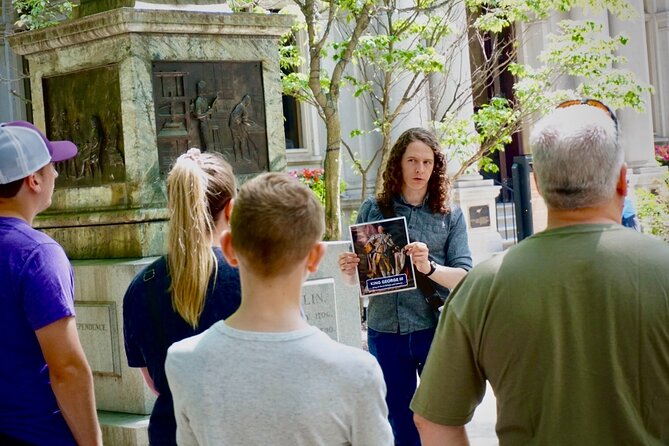
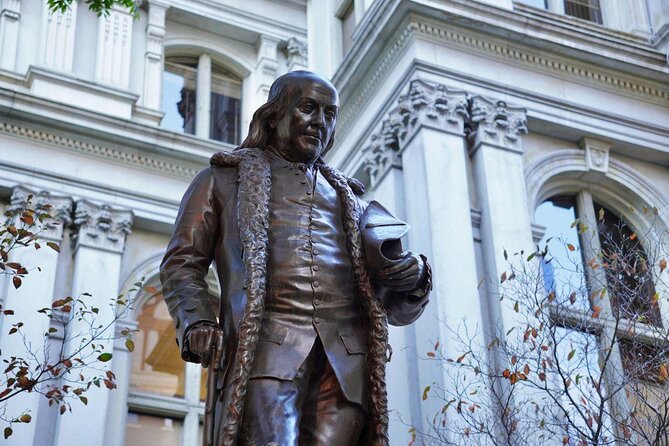
King’s Chapel and its burial ground show another side of Boston’s religious and civic story. The route then passes the Boston Latin School site and the statue of Benjamin Franklin.
The Franklin statue is a good reminder that the Revolution was not only about soldiers and battles. It was also about education, print, political thought, and the spread of arguments through public life. The Boston Latin School connection adds a local angle to that story.
Old City Hall and the Old Corner Book Store come next. These buildings are easy to pass without a guide because they sit among working streets and newer businesses. That is where the walking format earns its keep. You are not looking at history behind glass. You are seeing how old sites fit into Boston’s current streets.
The itinerary gives the Boston Latin School and Franklin stop about 10 minutes, and the Old South Meeting House another 10 minutes. These short stops keep the walk moving, but you should not expect a detailed indoor visit at every building.
Other walks around Boston:
- Cambridge: Harvard University Student-Guided Walking Tour
★ 4.6 · 3,931 reviews - Harvard University Campus Guided Walking Tour
★ 4.5 · 3,632 reviews - Boston Freedom Trail Walking Tour with Costumed Guide
★ 4.5 · 2,531 reviews - The Full Revolutionary Story Epic Small Group Boston Walking Tour
★ 5.0 · 2,356 reviews
Old South Meeting House, the Old State House, and the Boston Massacre Site
Old South Meeting House is one of the most important places on the route. It was a large gathering place where colonists debated British policies and where the crowd connected with the events that led to the Boston Tea Party.
The Old State House brings you into the center of colonial government. Its balcony and exterior are closely tied to Boston’s public life, while the narrow streets around it help you picture how quickly news and anger could spread.
Nearby, the Boston Massacre Site marks the deadly 1770 confrontation between British soldiers and Boston residents. The guide’s job here is especially valuable because the event has been used as political propaganda from the beginning. A strong explanation can separate the image created by patriot leaders from the messy facts of the confrontation.
Nick has been praised for presenting the period with balance, including the disputed details surrounding the word massacre. That approach suits this stop. You do not need a guide who simply repeats a schoolbook version. You need someone who explains how the event happened, how people interpreted it, and why the story mattered politically.
The stop at the Boston Massacre Site lasts about 15 minutes. Expect some street noise and foot traffic. This is a public urban corner, not a quiet memorial garden, and that setting is part of the point.
Faneuil Hall and a break at Quincy Market
Faneuil Hall continues the story of public debate and commerce. The building has long been linked to speeches, political meetings, and Boston’s civic identity.
The tour allows about five minutes at Faneuil Hall, then pauses at Quincy Market for around 10 minutes. The pause is practical rather than a full food tour. You can use it to buy a drink, find a restroom, or simply let your feet recover.
Several people have specifically appreciated the break halfway through the walk. I would not skip it, even if you feel fine at the start. A short pause makes the second half, through the North End, more comfortable.
Quincy Market can be busy, and the tour does not include a meal. If you want to eat in the North End afterward, the ending is well timed for that. Guides have also offered restaurant and bakery suggestions, with Italian food and places such as Limoncello mentioned in personal recommendations.
Paul Revere’s house and the North End
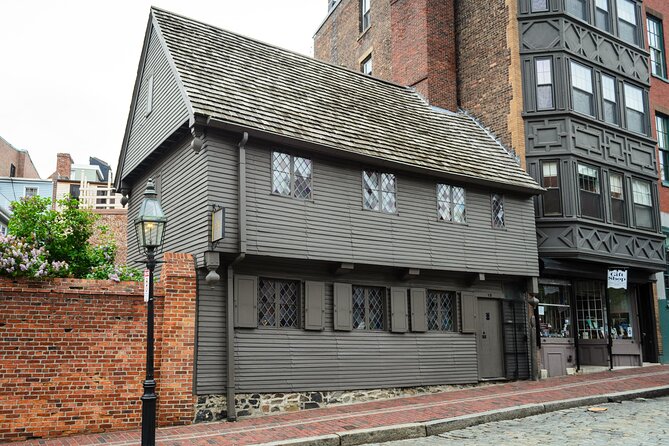
The route enters Boston’s North End at Paul Revere House. This small historic home puts a human scale on the famous messenger. You see where Revere lived rather than only hearing his name connected to one night in 1775.
The tour does not include admission inside museums, so this experience focuses on the exterior and the surrounding history. If you want a full interior visit at Paul Revere House or another museum, plan that separately and allow extra time.
One useful correction often made on the walk is that Paul Revere did not complete the entire midnight ride alone. His role was important, but the wider alarm system involved other riders and messengers. Details like this are why the tour works better than memorizing a heroic slogan.
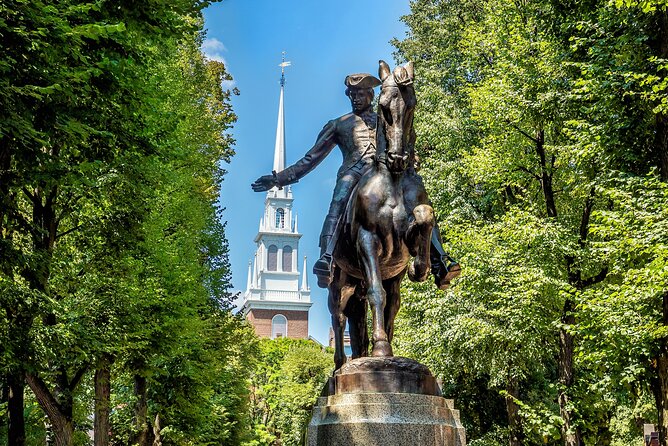
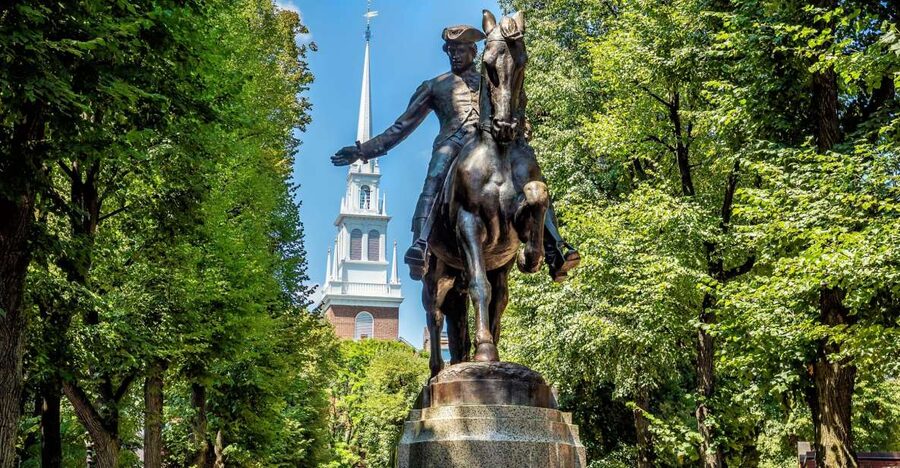
Hanover Street brings you through the North End’s restaurant district, followed by the Paul Revere Statue. The food smells and narrow streets give this section a different feel from the open Common and formal government buildings. You are still following the Revolution, but you are also seeing a living neighborhood with its own present-day character.
Old North Church and the final viewpoint
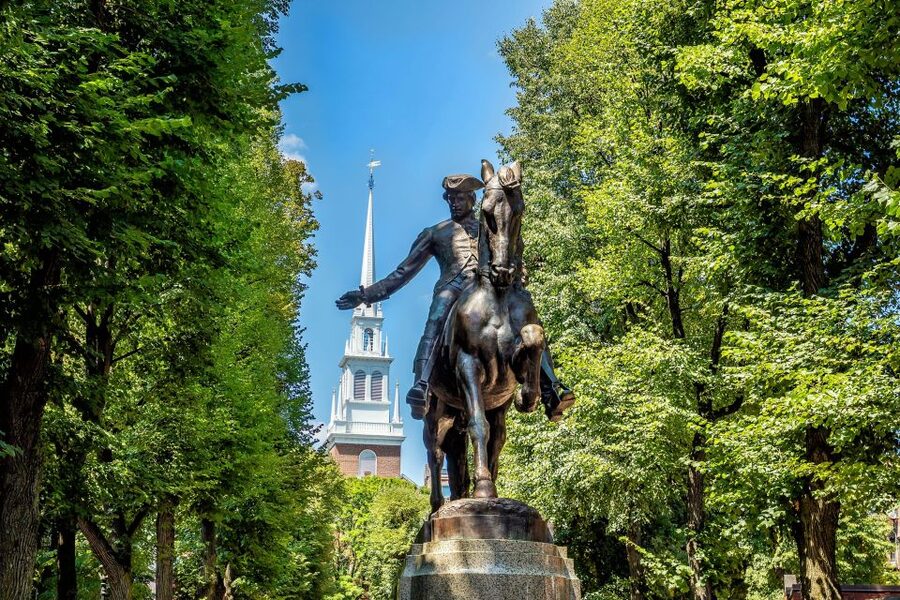
Old North Church is one of the most recognizable stops on the Freedom Trail. The church is tied to the signal lanterns that warned colonial riders about British troop movements. The guide explains the story in the setting where the signal became meaningful.
The route then passes Copp’s Hill Burying Ground, another old cemetery with connections to early Boston. Compared with Granary Burying Ground, it gives the story a different neighborhood setting and helps complete the city’s early burial-ground picture.
The walk does not continue into Charlestown. Instead, from Copp’s Hill Terrace, you get scenic views toward the USS Constitution and Bunker Hill Monument. This is a useful distinction when planning: you see those landmarks across the water, but they are not visited in person.
That final viewpoint gives the tour a satisfying geographic finish. You have crossed downtown and the North End, then look outward toward two major sites connected with the Revolution and its aftermath. The tour ends at Copp’s Hill Terrace, close to Old North Church and North End restaurants.
Guides, storytelling, and what makes the history stick
The guide can shape this experience more than any single building. Names praised for clear and lively presentations include Maura, Nick, Alejandro, Cyrus, Zoe, Jon, Maz, Mikayla, and Eric. Guide assignments vary, so you cannot count on a particular person, but the pattern of feedback points to a strong guide team.
The best guides do more than recite dates. They explain why a place mattered, how the people involved saw the situation, and what later generations changed in the story. Several guides have also handled tough questions well, including questions from people who already teach or study American history.
This is especially helpful for international visitors. If the Revolution is familiar only in broad outline, the guide supplies the local detail. If you already know the main story, the corrections and competing viewpoints can make the walk worthwhile.
The amount of information can still feel heavy. One person wished for a simple checklist of the Freedom Trail stops because so much happens in two and a half hours. I suggest keeping a note on your phone or taking a photo of the route before starting, though video recording is not allowed.
Walking conditions, weather, and accessibility
The accessible route is about 2 miles, or 3.2 kilometers. You need comfortable shoes, weather-appropriate clothing, and enough fitness for a long walk with frequent standing.
The activity is listed as wheelchair accessible, but it is also listed as unsuitable for people with mobility impairments and people with a low level of fitness. Those details do not fit perfectly together, so contact the provider before booking if you use a wheelchair or need a slower pace. The route crosses active city streets and historic areas, and access can vary from one site to another.
Weather matters. Winter walks have taken place in snow and freezing conditions, while another group continued through a heavy rainstorm. Dedicated guides may keep the tour going, but that does not make bad weather comfortable. A warm coat, waterproof layer, hat, and gloves can change the day.
Large bags and luggage are not allowed. Arrive ready to walk rather than treating the tour as a place to store belongings.
Is $35 good value?
At $35 per person, this is a fair price for a 150-minute guided walk covering all 16 official Freedom Trail landmarks. You are paying for the guide’s interpretation and route planning, not for admission to interiors.
The value is strongest if you are visiting Boston for the first time, want a clear introduction to the city, or prefer a small group to a large crowd. It is also a good opening activity because it gives you a map of the historic center and helps you decide which sites deserve a separate visit.
The price is less compelling if you only want to photograph the trail markers or already know Boston’s colonial story well. You will still walk the same public streets, and the tour does not include Charlestown, museum tickets, food, or drinks.
Gratuity is optional. If your guide keeps the stories clear, answers questions, and helps you navigate the city, a tip is a reasonable way to recognize that work.
Who should book this walk?
I would book it for first-time Boston visitors, history fans, families with older children, and anyone who wants an efficient introduction to downtown and the North End. Children under six are not suitable for the tour, and the pace may be too demanding for anyone who struggles with two miles of city walking.
It also suits visitors who like history with a human voice. Guides have connected political events to local characters, corrected familiar myths, and offered useful restaurant advice at the end.
I would choose another option if you need a relaxed, seated experience, want extensive indoor access, or plan to spend the day in Charlestown. This tour gives you views of the USS Constitution and Bunker Hill Monument, but not a visit there.
Should you book the Freedom Trail small-group tour?
Yes, if you want the complete Freedom Trail in one well-paced outing and value a guide who can turn famous sites into connected stories. The $35 price and 15-person limit make it a strong choice for a first day in Boston.
Book with realistic expectations. You will walk about 2 miles, stand outdoors, hear a lot in a short time, and pay separately for any museum interiors. Bring good shoes, prepare for the weather, and use the Quincy Market pause. If you do that, this tour gives you a useful foundation for exploring Boston on your own afterward.
FAQ
How long does the Boston Freedom Trail walking tour last?
The scheduled duration is 150 minutes, or about two and a half hours. The total duration can vary but will not exceed three hours.
How far does the tour walk?
The accessible route travels approximately 2 miles, or 3.2 kilometers.
What landmarks are included?
The route covers all 16 official Freedom Trail landmarks, including Boston Common, Granary Burying Ground, Old South Meeting House, the Old State House, Faneuil Hall, Paul Revere House, Old North Church, and Copp’s Hill Burying Ground.
Where does the tour begin?
Meet inside Boston Common at the Boston Foundation Monument on the park’s northern boundary, opposite 50 Beacon Street, Boston, Massachusetts 02108.
Where does the tour end?
The tour ends at Copp’s Hill Terrace in Boston’s North End, near the Old North Church.
Does the tour visit Charlestown?
No. The tour does not enter Charlestown. You can see the USS Constitution and Bunker Hill Monument from the final viewpoint at Copp’s Hill Terrace.
Are museum admissions included?
No. Admission inside museums is not included in the $35 price.
Is there a break during the tour?
Yes. The itinerary includes about 10 minutes of break time at Quincy Market. You can use it for a drink, a restroom stop, or a short rest.
Is the tour wheelchair accessible?
The activity is described as wheelchair accessible, and the accessible route is about 2 miles. It is also listed as unsuitable for people with mobility impairments, so contact the provider before booking if you have specific access needs.
What should you bring?
Bring comfortable shoes and clothing suitable for the weather. Luggage and large bags are not allowed, and video recording is not permitted.
Just added in Boston
- Boston’s Freedom Trail: A Revolutionary Walking Tour★ 5.0 · 1,343 reviews
- Delicious Donuts of Boston: A Sweet History Walking Tour★ 5.0 · 1,038 reviews
- Freedom Trail Walking Tour 250★ 4.5 · 1,118 reviews
- Sunset Sailing Cruise on a Tall Ship in Boston Harbor★ 4.5 · 414 reviews
- Boston North End Food Tour of 6+ Tastings, Cannoli, Lobster Roll★ 5.0 · 1,404 reviews
- Boston’s North End Food and History Walking Tour★ 5.0 · 459 reviews
- Narrated Sunset Cruise of Boston Harbor★ 4.0 · 532 reviews
- City Cruises Salem High Speed Ferry to/from Boston★ 4.5 · 727 reviews
Walking Tours, compared.
New Orleans Premier Ghost, Voodoo and Vampire Walking Tour
Read our review →

Freedom Trail History Small Group Walking Tour
Read our review →
Historic Charleston Guided Sightseeing Walking Tour
Read our review →
New Orleans Food Walking Tour of the French Quarter with Small-Group Option
Read our review →
St. Louis Cemetery No. 1 Official Walking Tour
Read our review →
Harvard University Student-Guided Walking Tour
Read our review →
Harvard University Campus Guided Walking Tour
Read our review →Browse the lists this tour appears in