
Reviewed · WALKING TOURS
Boston’s Freedom Trail: A Revolutionary Walking Tour
Boston’s Freedom Trail is not just a line of red bricks through downtown. It is a compact walk through the arguments, violence, ambition, and ordinary lives that helped shape the American Revolution. In 2.5 hours, this tour takes you past all 16 official sites, from the golden dome of the Massachusetts State House to Bunker Hill Monument.
I like two things right away. First, the guide connects famous names such as Paul Revere, John Hancock, and Samuel Adams with less familiar stories about women, African Americans, immigrants, abolition, and education. Second, the pace and humor help keep a long list of churches, graveyards, and meeting halls from feeling like a history exam.
The main drawback is simple: you cover a lot of ground. You see the USS Constitution and Bunker Hill Monument as part of the route, but this is primarily an outdoor walking tour, not a series of interior visits. Wear good shoes, bring water, and expect English-language storytelling at a steady pace.
Key points to know before you book
- All 16 sites in one walk: Cover Park Street Church, Granary Burying Ground, King’s Chapel, Faneuil Hall, Paul Revere House, Old North Church, the USS Constitution, Bunker Hill Monument, and the other official stops.
- A guide-led history lesson: Guides including Rob, Kenneth, Charlie R, Matthew, Alissa, Noah, Megan, and Stewart are praised for clear stories, humor, and friendly answers.
- A useful starting point: Meet at The Embrace statue beside the Boston Common Visitor Center at 139 Tremont Street.
- Good value at $31: You get a live guide and a full route, while entrance fees to attractions are not included.
- A real walking commitment: The tour lasts 2.5 hours and covers central Boston streets, graveyards, churches, and the Charlestown area.
- Flexible booking: You can cancel up to 24 hours ahead for a full refund, and reserve now while paying later.
Starting beneath The Embrace on Boston Common

Your meeting point is The Embrace statue, beside the Visitor Center on Boston Common at 139 Tremont Street. This is a sensible place to begin because the Common gives the group room to gather before moving into the tighter streets of historic Boston.
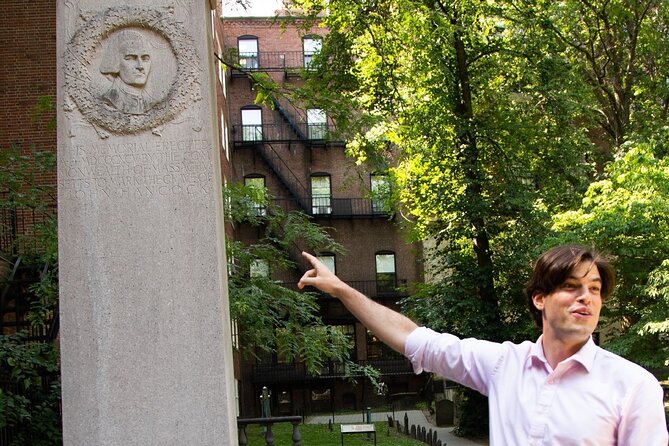
Look for a guide holding a Boston History Company flag. The guide will not be wearing a colonial costume, which is worth knowing if you are scanning the Common for powdered wigs and tricorn hats.
The tour begins with the broad setting of Boston Common and the nearby civic buildings. From there, you move through the older center of the city, where the sites are close together but not always obvious. A good guide matters here. The best moments come when the guide explains why a small street corner, statue, or grave marker mattered at the time, rather than simply naming it.
The route ends back at the meeting point. That makes the tour easier to fit into a day of sightseeing, though the full walk still requires stamina. One practical note: the booking information describes the activity as wheelchair accessible but also says it is not suitable for people with mobility impairments. If access is important for you, confirm the current route and conditions before booking.
Other walks around Boston:
- Boston: Freedom Trail History Small Group Walking Tour
★ 5.0 · 6,450 reviews - Cambridge: Harvard University Student-Guided Walking Tour
★ 4.6 · 3,931 reviews - Harvard University Campus Guided Walking Tour
★ 4.5 · 3,632 reviews
Park Street Church and Granary Burying Ground
Park Street Church is one of the first notable stops. Its steeple is part of the familiar Boston skyline, and the church helps introduce the way religion, public speech, and politics overlapped in the city.
Nearby, Granary Burying Ground gives the tour a quieter turn. This is where you find the final resting places of John Hancock, Paul Revere, and Samuel Adams. Their names are famous, but the cemetery also helps put the Revolution into human scale. Political change was not only made in grand halls. It was argued over by people who lived, worked, worshipped, and were later buried within a few blocks of one another.
The stop is especially useful if you want to understand the people behind the familiar schoolbook names. Your guide may also point out lesser-known figures and explain how memory is shaped by the monuments and names that survived.
The limitation is that a cemetery stop can feel brief on a fast group walk. If you want time to read every marker, take photographs, or find individual graves at leisure, plan to return on your own.
King’s Chapel and the Benjamin Franklin statue
King’s Chapel adds another layer to Boston’s religious story. The building and its setting show how different religious communities occupied the same compact part of town, while the guide places the church in the wider story of colonial Boston.
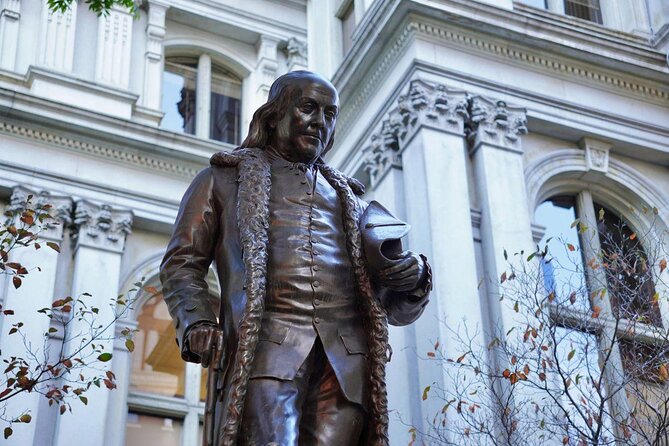
The Benjamin Franklin statue nearby connects the city to printing, public debate, education, and civic life. Franklin was born in Boston and became one of the era’s best-known public figures. The tour does not treat him as an isolated genius. Instead, the route helps you see how ideas moved through newspapers, meeting places, churches, and busy streets.
This part of the walk works well for first-time visitors because it builds a basic map of old Boston. You begin to see how quickly the sites follow one another. It also shows why a guided tour can be more useful than simply following the brick trail with a phone. The bricks tell you where to go. The guide explains why you should care.
Old Corner Bookstore and the Old South Meeting House

The Old Corner Bookstore marks a former center of Boston’s publishing world. It is a reminder that books, pamphlets, and printed arguments helped carry political ideas beyond the room where they began.
The Old South Meeting House has a more direct connection to the American Revolution. It was a major gathering place, including before the Boston Tea Party. The key value of this stop is scale. The Tea Party was not a single theatrical moment detached from daily life. It grew out of crowded meetings, angry debate, and a dispute over power and taxation.
Your guide will likely spend time on the human drama here: who gathered, what they wanted, and how public pressure could force a decision. The tour’s style includes the occasional dad joke, but the humor is used to keep the group alert rather than turn the subject into a comedy routine.
Entrance tickets are not included. You can see the outside of the sites as part of the walking tour, while going inside requires additional planning and payment. That is important if you want a museum-style visit rather than an outdoor overview.
Same base, a different kind of day out:
- Boston Duck Boat Sightseeing City Tour with Cruise Along Charles River
★ 4.5 · 9,378 reviews - Boston Hop-On Hop-Off Trolley Tour with 13 Stops
★ 4.5 · 5,576 reviews - Boston: City Cruises Whale Watching Cruise
★ 4.5 · 4,710 reviews - Boston Duck Tour: The Original and World-Famous
★ 4.6 · 3,935 reviews
The Old State House and Boston Massacre Site
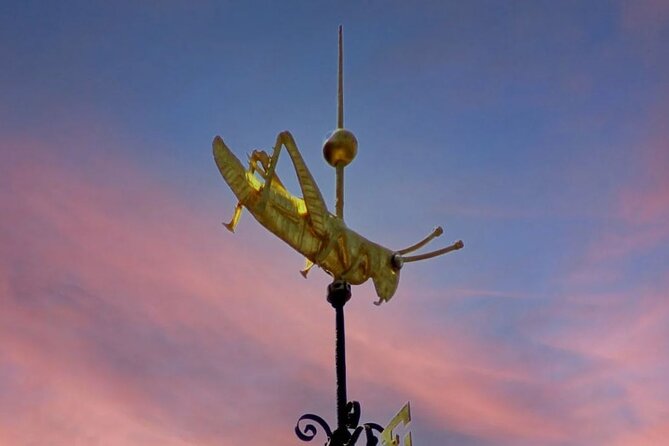
The Old State House is one of the strongest stops on the route because it puts colonial government and public conflict side by side. The building’s balconies and position in the street make it easy to picture how political announcements reached the public.
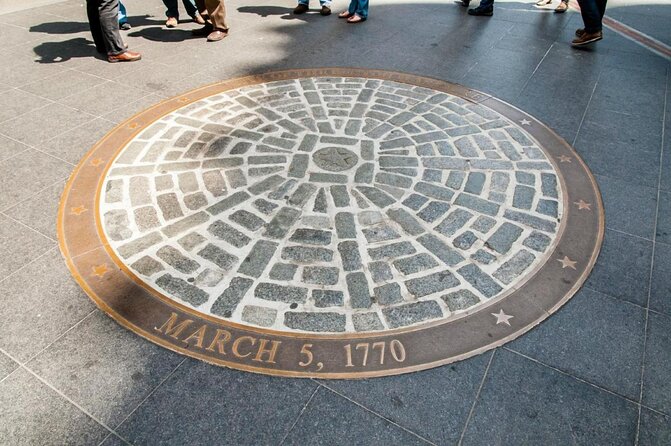
The Boston Massacre Site is nearby. This is where the tour addresses the shooting that became a powerful piece of revolutionary propaganda. The word massacre itself carried political force, and the guide can explain how the event was presented to people in Boston and beyond.
This stop benefits from careful explanation. It is easy to reduce the event to a slogan, but the setting encourages a more precise discussion of soldiers, civilians, tension, and the way images and language can shape public anger.
The nearby streets can be busy, and the group may need to stand close together while the guide speaks. Keep your attention on the guide and stay aware of pedestrians. You will get more from the stop if you listen for the connection between the physical site and the political reaction that followed.
Faneuil Hall and the city’s wider story
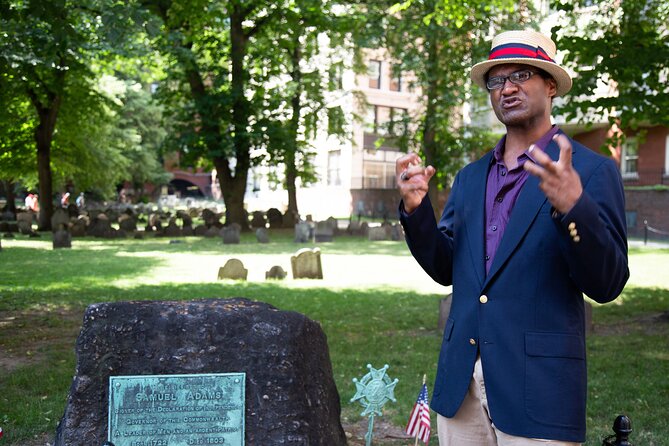
Faneuil Hall is often called the Cradle of Liberty, but the tour gives you a chance to consider what that phrase means. It was a place for speeches and public debate, yet Boston’s ideals did not always match its actions.
That tension is one of the better features of this walk. The story is not limited to heroic patriots. You also hear about abolition, immigration, education, women, and African Americans who shaped Boston’s civic life. This wider view keeps the tour from presenting the Revolution as a simple parade of famous men.
Faneuil Hall is also a useful orientation point for the modern city. Restaurants, shops, and public spaces surround the historic building, so this is a place where old Boston and present-day Boston meet directly.
Do not expect a long indoor visit here. The attraction is included as a stop on the route, but entry tickets are not part of the $31 price. If you want to explore the interior, ask your guide about timing or return later.
Paul Revere House and the Midnight Ride
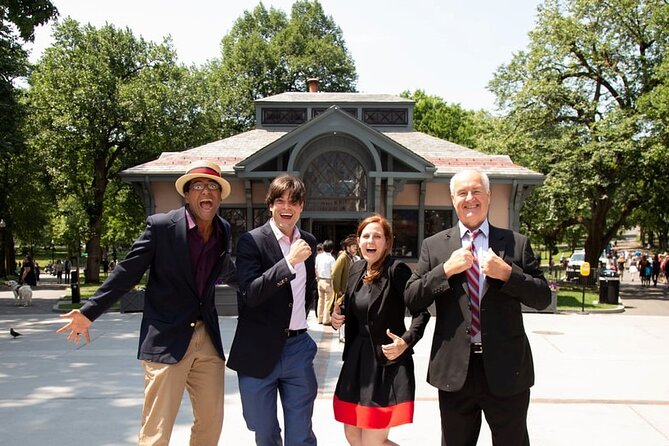
The Paul Revere House is among the most recognizable stops on the trail. Revere’s name is tied to the Midnight Ride, but the tour places him in the setting of his home, neighborhood, work, and family life.
That shift from legend to person is useful. It shows that the Revolution involved tradespeople, households, messengers, and local networks, not only generals and statesmen. You also hear about other Midnight Riders and the rapid spread of warnings through the countryside.
The house is in the North End, where streets feel tighter and the walking route becomes more intimate. That is a welcome change after the larger civic spaces downtown.
Again, admission is not included, so the tour gives you the outside setting and the guide’s explanation rather than a full house visit. If Paul Revere is your main reason for taking the trail, consider returning later with a separate entrance ticket.
Old North Church and the famous lantern signal
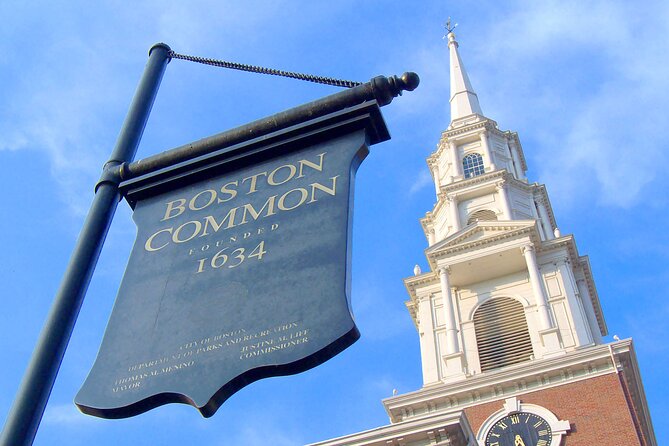
Old North Church is the stop connected with the two lanterns hung in the steeple. The signal warned that British troops would travel by sea, helping trigger the ride associated with Paul Revere.
The steeple is easy to recognize, but the guide’s explanation gives the sight its force. You learn how a simple signal could carry urgent military information in a city where communication was slow and uncertain.
This is also a good example of the tour’s overall method. You are not merely told that two lanterns were hung. You are shown the building, the surrounding streets, and the chain of events that made the signal important.
The North End is a popular part of Boston, so expect other pedestrians and street activity. Keep the group in sight as you move between stops. If you plan to eat in the North End afterward, save that for after the tour so you are not watching the clock during the walk.
Copp’s Hill Burying Ground and the move to Charlestown

Copp’s Hill Burying Ground adds another cemetery to the route, but it serves a different purpose from Granary. The stop helps explain Boston’s neighborhoods, social groups, and the people who lived on the north side of the city.
From here, the tour continues toward the Charlestown portion of the trail. This is where the distance becomes more noticeable. The route is designed to show all 16 sites in a single outing, so you should expect the walk to feel active rather than leisurely.
The payoff is that the tour connects Boston’s central landmarks with the sites across the water. You gain a stronger sense of the city’s geography and the way the revolutionary story moved between neighborhoods.
The tradeoff is time. You will not have long stretches for independent wandering. If you prefer to linger at every graveyard or read every plaque, take notes during the tour and return to your favorite stops later.
USS Constitution and Bunker Hill Monument
The USS Constitution is one of the tour’s major finishing sights. It widens the story beyond street protests and political speeches, bringing in the naval side of the Revolution and the nation’s military memory.
The route also includes Bunker Hill Monument, tied to one of the best-known battles of the period. The monument gives the end of the walk a large physical marker and a chance to reflect on how events in Boston became part of the country’s founding story.
The tour lets you view these sites as part of the complete trail, but attraction entry is not included. The information specifically notes Bunker Hill as a sight seen on the route rather than a full interior visit. If you want to climb, enter, or spend extended time at either location, plan a separate visit.
This final section is also where you may feel the tour most. Two and a half hours of walking, with repeated stops and city traffic, can be tiring. Bring water and wear comfortable shoes. The guide’s energy matters here, and the strongest guides keep the group focused with stories, questions, and a little humor.
The guides make or break the experience
A walking tour rises or falls on its guide, and this one has a notably strong group of hosts. Rob is praised for a lively style and broad command of the subject. Kenneth combines humor and personal warmth with detailed answers, and he can also offer suggestions about Boston restaurants and bars.
Charlie R is singled out for in-depth explanations and engaging presentation. Matthew gets credit for weaving stories into the places along the route, though one piece of practical advice is worth noting: he may speak quickly, which could challenge some non-native English speakers.
Alissa keeps the group involved for the full 2.5 hours. Noah is described as educational and funny, while Megan, Stewart, Julia, Malcolm, Sam, Jim, Jules, and others are praised for energy, passion, and clear storytelling.
Guide assignments can change, so you cannot book a specific personality from the information provided. Still, the pattern is clear: expect an English-language tour led by someone who explains, jokes, answers questions, and brings more than a memorized list of dates.
Is $31 good value for Boston?
At $31 per person, this is a fair price for a live 2.5-hour tour covering the entire official trail. You are paying for structure and interpretation, not admission to the historic buildings.
That distinction matters. If you only want to walk past the sites, you can follow the trail without booking a guide. But if you want the Boston Massacre, Boston Tea Party, Midnight Ride, abolition, immigration, and civic history tied together in one route, the fee is reasonable.
The tour is also useful early in a Boston visit. You get a city orientation, learn which places deserve a return visit, and receive local suggestions from the guide. If you are using a long layover or have only one day in Boston, the route covers a lot efficiently.
The value drops if you dislike group walks, want lengthy interior visits, or need a slow pace. In that case, use the trail as a self-guided route and choose only the sites that matter most to you.
Who should book this Freedom Trail walk?
I would choose this tour for a first visit to Boston, especially if you want the major sights explained without spending a full day inside museums. It also suits families and history fans who enjoy stories, questions, and a little humor.
It works well for a short stay because the route covers the complete trail in one session. A Boston resident can also get something from it. One local staycation participant learned new facts despite having lived in the city for years.
You should think twice if you have mobility limits, since the information gives mixed accessibility guidance and the walk covers considerable ground. You should also avoid booking it in unsuitable clothing. Comfortable shoes, water, and weather-ready clothes matter more than they might on a short downtown stroll.
FAQ
How long does the Freedom Trail tour last?
The tour lasts 2.5 hours. Starting times vary, so check availability when booking.
Where does the tour begin?
Meet your guide at The Embrace statue beside the Visitor Center on Boston Common at 139 Tremont Street.
How do I identify the guide?
The guide will carry a Boston History Company flag and will not be wearing a costume.
Does the tour visit all 16 official Freedom Trail sites?
Yes. The route covers all 16 official sites, including the USS Constitution and Bunker Hill Monument.
Are entrance tickets included?
No. The price includes the live guide and walking tour, but entry tickets to attractions are not included.
Is the tour available in languages other than English?
No. The tour is conducted in English with a live English-speaking guide.
Should you book it?
Book this walk if you want Boston’s main revolutionary sites explained in one organized outing, with stories that reach beyond Paul Revere and the usual colonial heroes. The strongest reason to choose it is the guide-led context, especially if you can keep pace and enjoy a full 2.5 hours on foot.
At $31, it offers good value for a first look at the city. Just treat it as an outdoor overview rather than a pass into every historic building. Wear comfortable shoes, arrive at The Embrace with time to spare, and save your favorite sites for a slower return visit.
Just added in Boston
- Boston’s Freedom Trail: A Revolutionary Walking Tour★ 5.0 · 1,343 reviews
- Delicious Donuts of Boston: A Sweet History Walking Tour★ 5.0 · 1,038 reviews
- Freedom Trail Walking Tour 250★ 4.5 · 1,118 reviews
- Sunset Sailing Cruise on a Tall Ship in Boston Harbor★ 4.5 · 414 reviews
- Boston North End Food Tour of 6+ Tastings, Cannoli, Lobster Roll★ 5.0 · 1,404 reviews
- Boston’s North End Food and History Walking Tour★ 5.0 · 459 reviews
- Narrated Sunset Cruise of Boston Harbor★ 4.0 · 532 reviews
- City Cruises Salem High Speed Ferry to/from Boston★ 4.5 · 727 reviews
Walking Tours, compared.
New Orleans Premier Ghost, Voodoo and Vampire Walking Tour
Read our review →

Freedom Trail History Small Group Walking Tour
Read our review →
Historic Charleston Guided Sightseeing Walking Tour
Read our review →
New Orleans Food Walking Tour of the French Quarter with Small-Group Option
Read our review →
St. Louis Cemetery No. 1 Official Walking Tour
Read our review →
Harvard University Student-Guided Walking Tour
Read our review →
Harvard University Campus Guided Walking Tour
Read our review →Browse the lists this tour appears in