
Reviewed · MUSEUMS
New Orleans: The National WWII Museum Ticket
The most striking thing about the National WWII Museum is its scale. Five soaring pavilions take you from the causes of World War II through D-Day, the Pacific campaign, the road to Berlin, the American Home Front, and the war’s aftermath. This is not a quick stop between French Quarter cocktails. Plan at least half a day, and a full day if you want to read, watch, and think your way through the exhibits.
I like the museum’s personal approach, especially the paper dog tags that let you follow one service member’s wartime story. I also like the mix of objects and technology: New Orleans-built landing craft, restored tanks, trucks, aircraft, films, photographs, and firsthand accounts. The main drawback is simple: the museum can feel crowded, and its size makes it easy to leave with whole sections unseen.
Key points to know before you go

- D-Day began with a New Orleans connection: Landing craft used in the Normandy invasion were designed and built in New Orleans.
- The museum needs real time: Four hours is a useful starting point, but many people need a full day or a second visit.
- The 4-D film is worth considering: Beyond All Boundaries uses physical effects, large screens, and a Tom Hanks narration to tell the war story.
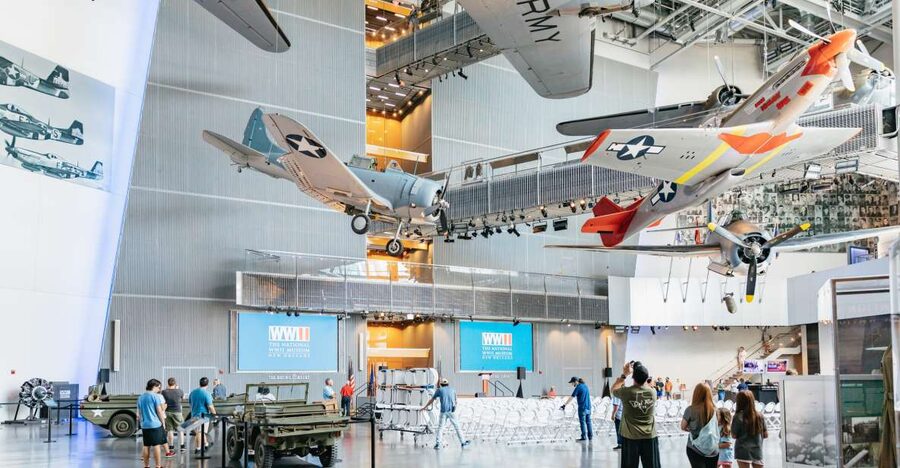
- The aircraft are displayed overhead: Catwalks in the U.S. Freedom Pavilion bring you close to famous planes, including a B-17E Flying Fortress.
- The guided option covers two major campaigns: An expert docent leads a two-hour tour through Road to Tokyo and Road to Berlin.
- You can eat without leaving: The American Sector Restaurant & Bar operates during the day, with Jeri’s also available for sweets and snacks.
Why this New Orleans museum needs a full day
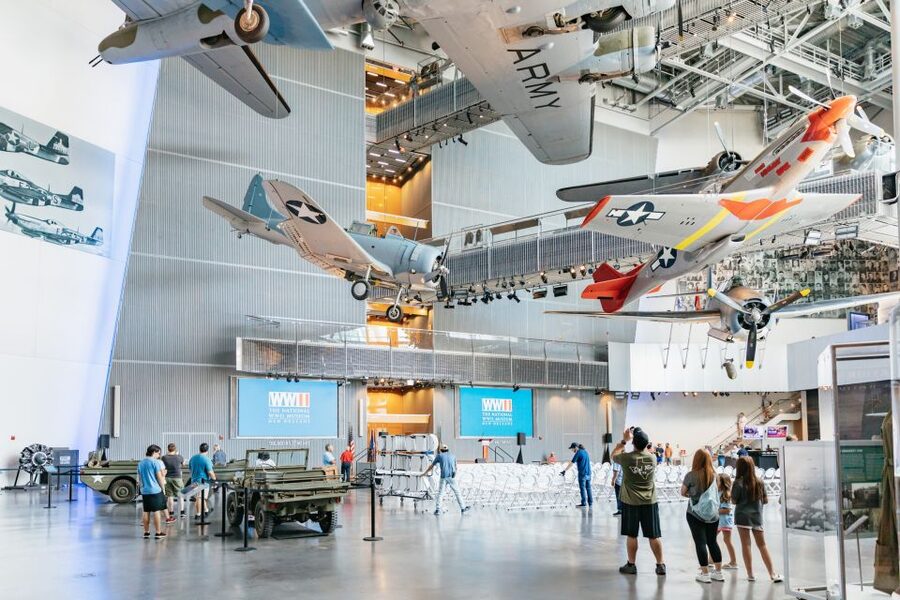
The National WWII Museum is the official World War II museum of the United States, designated by Congress. Its subject is broad, but the museum gives you a clear path through it: why the war began, how the Allies fought it, how the United States contributed, and what the conflict still means.
I would not treat this as a standard room-after-room museum visit. There are short films, personal accounts, maps, military equipment, reconstructed settings, and plenty of reading. You can move quickly through the headline displays in several hours, but that approach leaves out much of what gives the museum its weight.
A half-day visit works if your New Orleans schedule is tight. Four hours gives you a serious introduction, especially if you choose your priorities in advance. If you want to read the panels, watch the films, visit the aircraft displays, and take the 4-D movie or guided tour, leave most of the day open.
The museum has in-and-out privileges during the day, according to the ticket information used by visitors, which makes a lunch break practical. Still, check the timing of any film or guided tour before you wander too far from the assigned building.
Other museums and galleries in New Orleans:
- The National WWII Museum Admission Ticket New Orleans
★ 5.0 · 2,202 reviews - NYC: 9/11 Memorial & Museum Timed-Entry Ticket
★ 4.8 · 31,428 reviews - NYC: Empire State Building Tickets – Observatory & Museum
★ 4.7 · 25,757 reviews
Starting with D-Day and the Louisiana connection
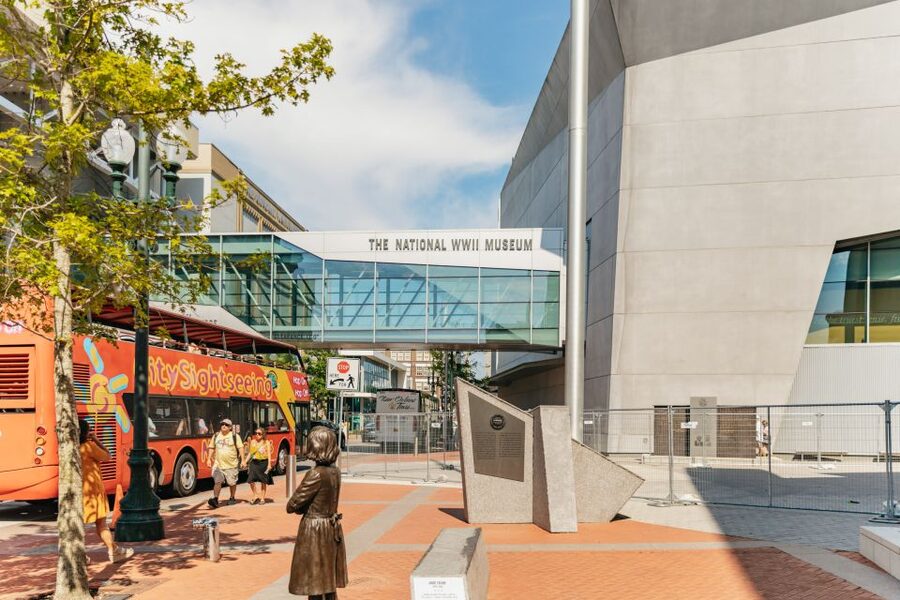
Begin at the main entrance on the north side of Andrew Higgins Boulevard. Your barcode is scanned there, and staff direct you to the correct entrance point and visitor materials.
The Louisiana Memorial Pavilion carries one of the museum’s strongest local connections. Its D-Day exhibit explains the Normandy invasion and highlights the landing craft designed and built in New Orleans. That detail gives the museum a useful sense of place. You are not simply looking at a distant European campaign. You are seeing how a Gulf Coast city helped produce the equipment that carried American troops onto the beaches.
The pavilion also covers the American Home Front. This section shifts attention from soldiers overseas to the factories, families, workers, and communities that supported the war effort. It helps explain the scale of the American contribution without reducing the story to generals and battles.
Expect a lot of visual material here, including photographs, videos, equipment, and explanatory text. The displays are accessible without a guide, but the amount of information can be tiring. If you read every panel, you will need more time than you first expect.
Following one person through a global war
One of the most useful ways to approach the museum is to pick up a paper dog tag and follow the individual story attached to it. This gives you a human thread through a conflict that can otherwise feel too large to grasp.
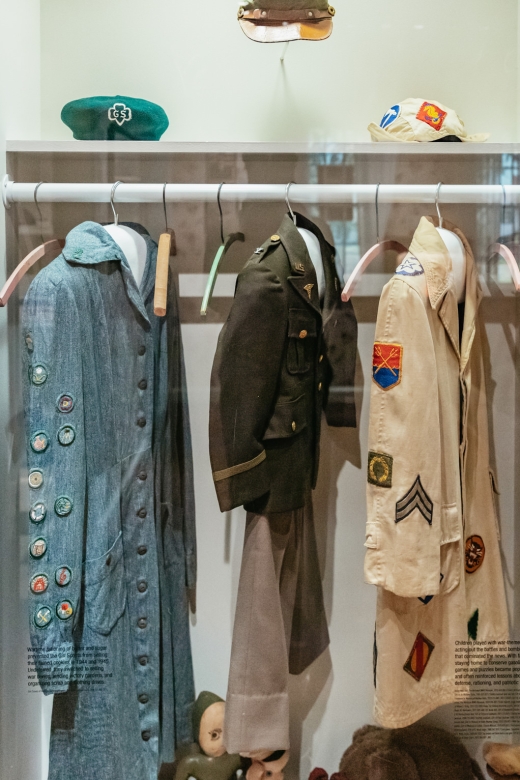
The dog tag idea works because the museum constantly connects military plans to individual lives. You may be reading about a major offensive one moment, then encountering a letter, photograph, or firsthand account that brings the cost of that offensive down to one family or one service member.
The museum also makes an effort to present the human experience across different groups. The material includes the service and contributions of men and women and people of different racial backgrounds. That wider view matters, especially if your knowledge of World War II is mostly made up of famous commanders and battlefield names.
The subject is often painful. The museum does not turn war into a clean adventure story. Accounts of fear, loss, hardship, and uncertainty are part of the experience, so this may not be the right choice if you want a light afternoon attraction.
Road to Tokyo: the Pacific campaign
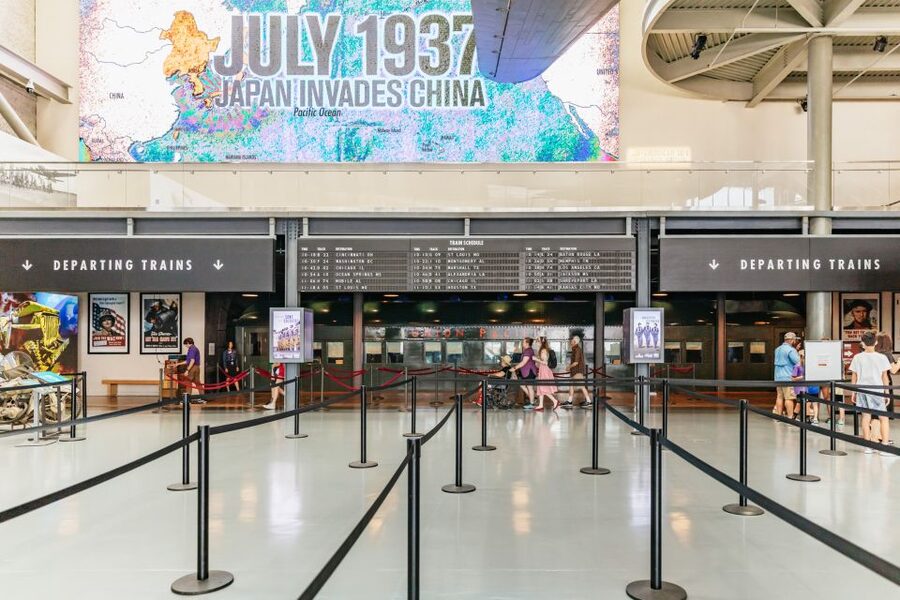
The Campaigns of Courage area includes Road to Tokyo, which traces the Pacific war from Pearl Harbor toward Japan. This section shows how difficult and costly the campaign was, rather than presenting it as a simple march from one victory to the next.
The Pacific exhibits are especially useful for placing American military strategy in context. Geography, distance, naval power, island fighting, and supply problems shaped the campaign in ways that can be hard to picture from a textbook. The museum’s maps, objects, and battle settings help make those problems easier to understand.
If you choose the Campaigns of Courage guided tour, an expert docent spends two hours covering Road to Tokyo and Road to Berlin. That option suits you if you prefer explanation and structure over reading at your own pace. The regular admission does not include a live guide, so select the guided option when booking if you want that format.
The main concern is time. A guided tour adds a fixed commitment to an already large visit. It can improve your understanding, but you will need to plan the rest of the day around it.
A few more things to do in New Orleans worth a look
- NYC: SUMMIT One Vanderbilt Tickets
★ 4.7 · 51,195 reviews - NYC: Empire State Building Observation Deck Tickets
★ 4.7 · 22,072 reviews - NYC: Edge Observation Deck Admission Ticket
★ 4.6 · 20,918 reviews - New York City: American Museum of Natural History Ticket
★ 4.5 · 15,447 reviews
Road to Berlin and the European campaign

Road to Berlin recreates battle settings and villages connected with the American campaign against the Axis powers. The setting-style displays help you picture the conditions in which the war was fought, rather than viewing equipment as isolated objects in glass cases.
This area is one of the reasons I would resist rushing through the museum. The displays are designed to be read and absorbed. Short films and individual accounts add texture to the military story, while the recreated settings give the larger campaign a physical feel.
The European section also works well for families with older children and teenagers. A 13-year-old or 16-year-old may not read every label, but the combination of vehicles, personal stories, videos, and staged scenes gives them several ways into the subject. Younger children may find the war material heavy, so use your judgment.
If you want the guided option, the two-hour Campaigns of Courage tour is the natural choice for these exhibits. You can also explore them independently, with informational booklets available in Chinese, English, French, Japanese, and Spanish.
Looking up at the U.S. Freedom Pavilion
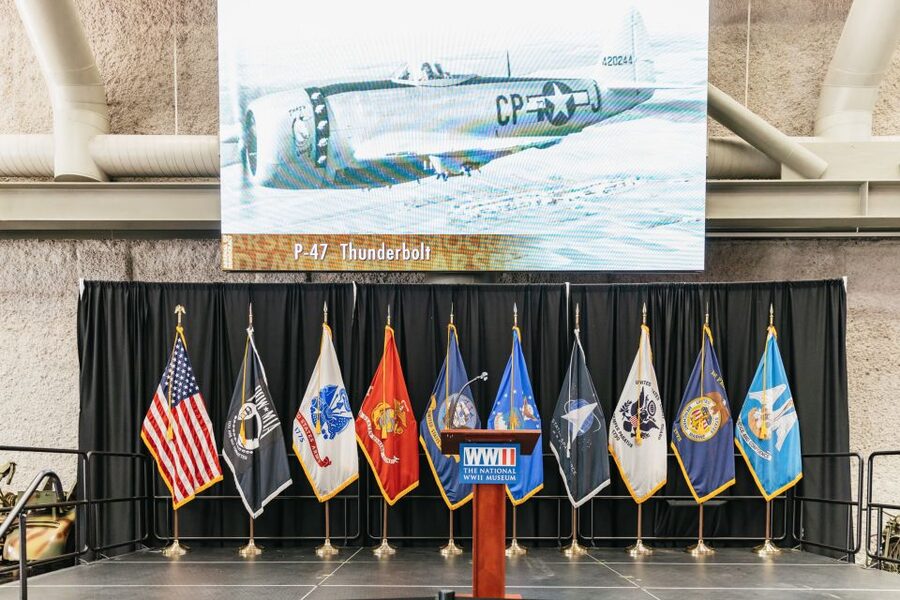
The U.S. Freedom Pavilion changes the pace of the visit. Here, actual World War II aircraft hang overhead, including a B-17E Flying Fortress. Tanks and trucks sit below, giving you a sense of the machines used in the air and on the ground.
The high catwalks are a major feature. They let you get closer to the aircraft and look at them from angles that a floor-level display cannot provide. You can see the structure of the planes and, according to the exhibit description, men positioned in the aircraft displays to show how crews worked inside them.
This is one of the museum’s strongest visual sections, but it may not be comfortable for everyone. If you dislike heights, the catwalks could be less appealing than the ground-level displays. Wheelchair access is available throughout the museum, and a limited number of wheelchairs can be borrowed on a first-come, first-served basis.
The aircraft also provide a useful reminder that the war depended on engineering, manufacturing, maintenance, and logistics, not just combat. You are looking at tools of war, but also at the industrial effort required to build and operate them.
The Home Front and the war beyond the battlefield
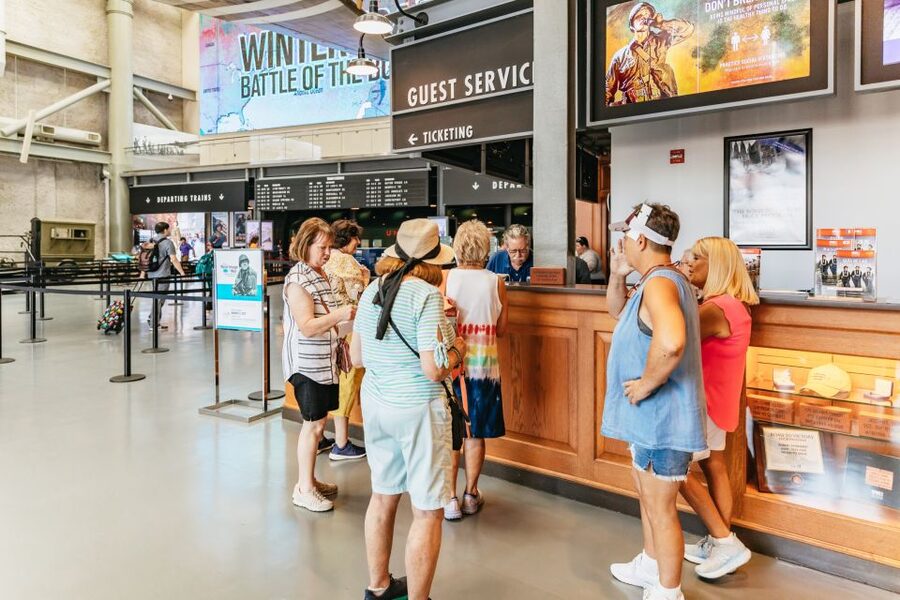
The Home Front exhibits show what the conflict meant inside the United States. This is an important part of the visit because it widens the story beyond overseas operations.
Look for the links between daily life and national mobilization. The displays explain how American society supported the war effort and how the conflict reached into workplaces, homes, and communities. The museum’s focus on personal stories keeps this section from becoming a list of production figures.
The museum also presents its story in a way that connects the war to the present. The Liberation Pavilion focuses on the closing months of World War II and the early postwar years, then considers how those events relate to life today. That final step gives the visit a larger purpose without requiring you to agree with every interpretation.
Give yourself time for this section. It is easy to spend most of your energy on D-Day and the aircraft, then discover that the final pavilions are closing.
Is Beyond All Boundaries worth the extra cost?
Beyond All Boundaries is a separate 4-D film option in the Solomon Victory Theatre. It is narrated by Tom Hanks and uses large-screen images, physical effects, and other sensory elements to tell the World War II story.
The film is frequently singled out as one of the most powerful parts of the experience. It is emotional and highly produced, with realistic effects designed to make the audience feel closer to the events. One visitor with military video experience particularly valued the wartime photography and the danger faced by the people who recorded it.
I would add the film if you want a dramatic overview or if you are visiting with family members who may not read every exhibit label. It offers a change from standing and reading, though it should not replace the galleries. The film compresses the war into a single presentation, while the exhibits give you time to examine personal stories and details.
Your ticket time for the 4-D film is the reserved time for the movie, not necessarily your museum entry time. The museum admission included with that option is generally valid for entry at any time during the day, so check the ticket details and arrive early enough to explore around the screening.
Food, rest stops, and practical pacing
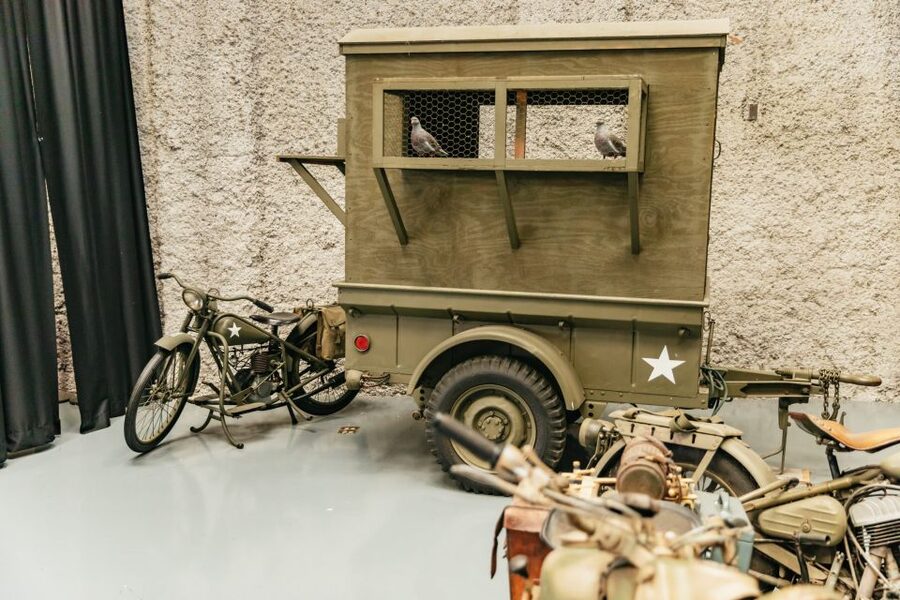
The museum is large enough that food and rest breaks matter. The American Sector Restaurant & Bar is open Sunday through Friday from 11 a.m. to 2 p.m., and Saturday from 11 a.m. to 3 p.m. That limited schedule makes an early lunch or planned break wise.
Jeri’s offers a sweet finish, and one visitor especially enjoyed the chocolate shake and beignet fries. I would not build the entire visit around food, but having a meal on site saves the trouble of leaving and returning.
Restrooms are easy to find, and staff and volunteers help direct you between buildings and checkpoints. The layout can still feel confusing at first because the museum spreads across several structures and levels. Take a moment to study the visitor guide before choosing your first route.
The paid parking garage is at 1024 Magazine Street. If you are arriving by car, factor parking into the cost of the day. The museum is in downtown New Orleans, so it also fits well into a day planned around the nearby central neighborhoods.
No flash photography or video is allowed. Any reservation made after 3 p.m. should be treated as a shortened visit, not a full museum day.
Who will get the most from this visit?
This museum suits history fans, military families, veterans, older children, teenagers, and anyone who wants a serious cultural stop in New Orleans. It is also a strong choice for people with a family connection to World War II. The personal accounts can make the visit especially meaningful when you recognize a place, unit, or generation from your own family story.
You do not need specialist military knowledge. The exhibits explain the major campaigns and provide enough context to follow the story. But you do need patience. There is a great deal to read, and the emotional tone is respectful rather than entertaining in the usual tourist sense.
The $37 admission is fair if you use the ticket for several hours or a full day. It is less appealing if you arrive late, rush through two buildings, and leave before seeing the major pavilions. The 4-D film and guided tours cost more as add-ons, so choose them based on how you prefer to learn.
Should you book the National WWII Museum?
Yes, if you can give it the time it deserves. Book ahead for your preferred entry or movie time, arrive early, and leave the rest of the day open. Start with the dog tag story, make room for the D-Day and campaign exhibits, and save enough energy for the Freedom Pavilion and the closing sections.
Choose the 4-D film if you want a moving, sensory overview. Choose the guided tour if you value an expert docent’s structure and explanation. Skip both only if your schedule is short and you would rather spend that time reading the permanent exhibits at your own pace.
I would not recommend this as a one-hour stop. For a focused half-day, it is worthwhile. For the best value, treat it as a full-day museum visit, with lunch and breaks built in.
FAQ
How much does admission to the National WWII Museum cost?
The listed admission price is $37 per person. Extra options are available for the Beyond All Boundaries 4-D film and guided tours.
How long should I plan to spend at the museum?
Plan at least half a day. Four hours gives you a useful start, but the five pavilions contain enough material for a full day or even a return visit.
Is the Beyond All Boundaries film included with basic admission?
No. The 4-D film requires the ticket option that includes the movie and its timed entry.
Is a live guide included with museum admission?
No. A live guide is included only when you select a guided tour option. The Campaigns of Courage guided tour lasts two hours and covers Road to Tokyo and Road to Berlin.
Where is the museum entrance?
Enter through the main museum entrance on the north side of Andrew Higgins Boulevard. Staff will direct you where to scan your barcode and collect a visitor guide.
Is the museum wheelchair accessible?
Yes, the museum is wheelchair accessible. A limited number of wheelchairs are available to borrow on a first-come, first-served basis.
Can I take photographs inside?
Photography is allowed without flash. Video and flash photography are not allowed.
Is food available at the museum?
Yes. The American Sector Restaurant & Bar serves food during daytime hours. It is open Sunday through Friday from 11 a.m. to 2 p.m., and Saturday from 11 a.m. to 3 p.m.
Just added in New Orleans
- New Orleans: French Quarter, Voodoo and Cultural Experience★ 4.5 · 972 reviews
- From New Orleans: Oak Alley Plantation Tour★ 4.5 · 443 reviews
- New Orleans: Bayou Tour in Jean Lafitte National Park★ 4.8 · 428 reviews
- New Orleans: Whitney Plantation Tour with Transportation★ 4.7 · 619 reviews
- New Orleans: Guided Swamp Cruise by Tour Boat★ 4.7 · 570 reviews
- New Orleans: Voodoo Queen Tour of French Quarter★ 4.7 · 482 reviews
- New Orleans: Swamp Boat Ride & Oak Alley Plantation Tour★ 4.7 · 383 reviews
- New Orleans: Walking Tour Inside St. Louis Cemetery No. 1★ 4.6 · 1,519 reviews
Museums, compared.


Empire State Building Tickets – Observatory & Museum
Read our review →


9/11 Memorial, Ground Zero Tour with Optional 9/11 Museum Ticket
Read our review →

All-Access 9/11: Ground Zero Tour, Memorial and Museum, One World Observatory
Read our review →
Browse the lists this tour appears in