
Reviewed · WALKING TOURS
Cambridge, Massachusetts: MIT and Harvard Walking Tour
MIT’s clever pranks, odd student traditions, and famous Smoot markings make this more than a campus photo stop. You get two very different universities in one 210-minute walk, with an included subway ride connecting them.
I like the mix of architecture and human stories, especially the MIT Banana Lounge, the Three Lies Statue, and the dorm traditions after Housing Day. I also like that guides such as Jenny, Alexandria, Maria, Holly, and Marybeth have been praised for clear explanations, humor, and keeping the group together. The main drawback is simple: you do not enter any campus buildings, and the walking is not suited to wheelchair users or people with mobility impairments.
Key points to know before booking
- MIT comes first: Start near Kendall Square and see the Media Lab, Killian Court, Great Dome, Stata Center, MIT.nano, and more.
- The subway ride is part of the tour: Your fare from MIT to Harvard is included, and the guide handles the two-stop trip.
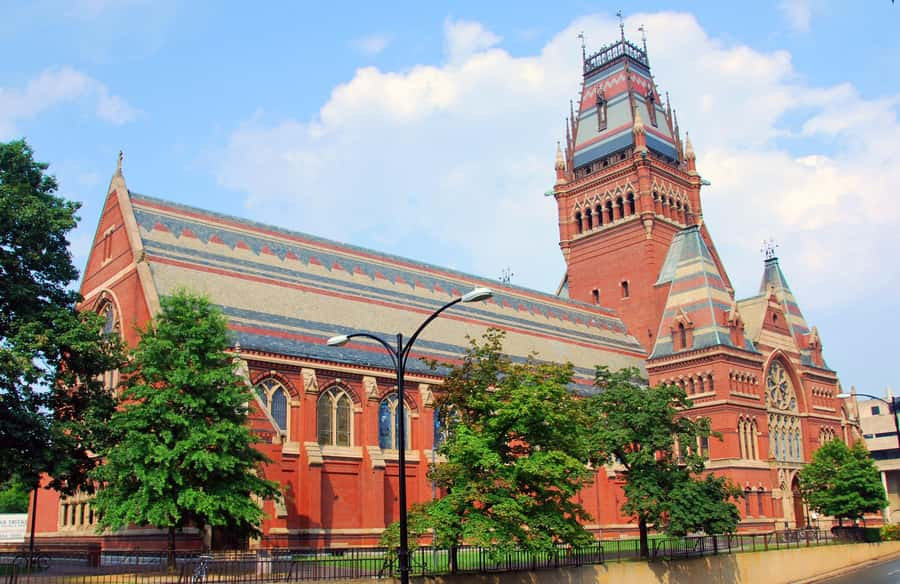
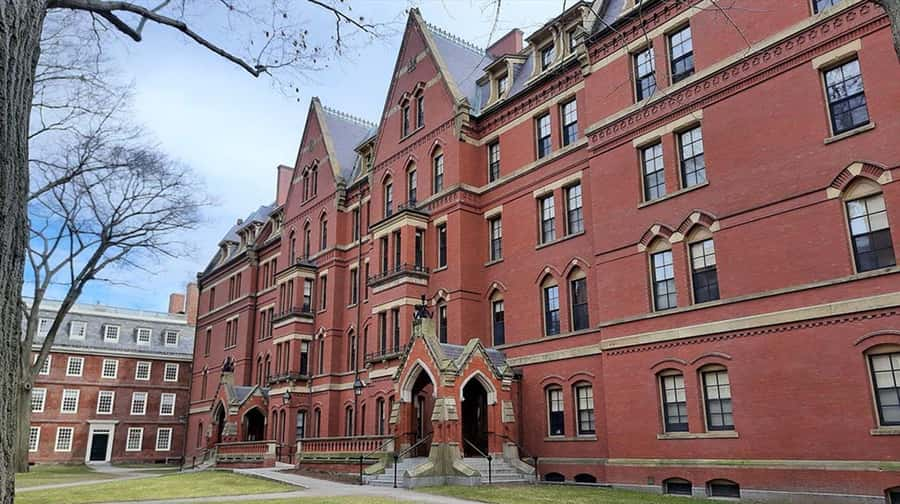
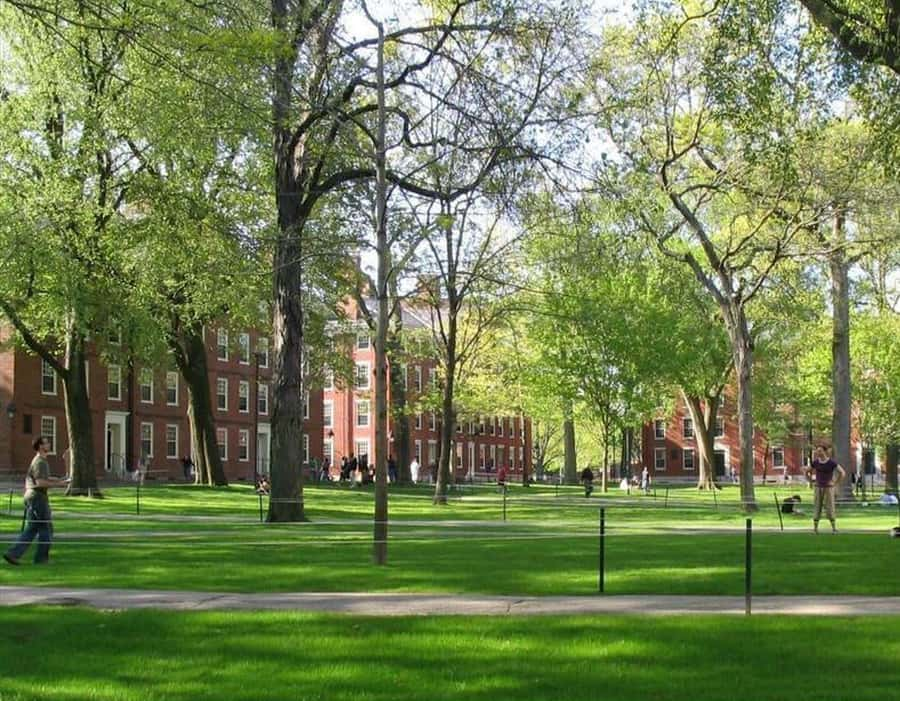
- Harvard is about stories and outdoor landmarks: See Harvard Yard, Johnston Gate, the John Harvard Statue, Widener Library, Memorial Hall, and old houses.
- Architecture gets equal billing: Frank Gehry and I.M. Pei are part of the visual story, along with buildings that inspire less admiration.
- It is not an admissions tour: You will hear about traditions, buildings, graduates, and history, but not receive official guidance about applications or student qualifications.
- Plan for a lot of walking: Wear comfortable shoes, and prepare for sun, rain, cold, or heat.
Two universities, two very different personalities
This tour works because MIT and Harvard do not feel like copies of one another. MIT is presented as a place of experiments, engineering, inventive mischief, and unusual student culture. Harvard brings older architecture, centuries of tradition, famous names, and rituals that can feel both grand and a little absurd.
You start in front of Ripple Cafe, next to the MIT and Kendall subway station. Look for a guide wearing a Boston Hidden Gems shirt. That meeting point is practical, since you can grab a drink before the walk and you already know where the subway connection will happen later.
The tour lasts three and a half hours. That is long enough to cover both campuses without turning the day into a rushed checklist. It is still a serious walk, though. A 15-minute break is built in, but you should wear shoes that can handle pavement and bring water.
The tour is led in English. Guide quality matters a lot on a route like this, since many of the buildings are easier to appreciate once someone explains what you are seeing. Jenny, Alexandria, Maria, Holly, and Marybeth have all led tours praised for humor, patience, clear explanations, and good pacing. Your assigned guide may be someone else, but the strongest part of the experience is the live storytelling.
Other walks around Boston:
- Boston: Freedom Trail History Small Group Walking Tour
★ 5.0 · 6,450 reviews - Cambridge: Harvard University Student-Guided Walking Tour
★ 4.6 · 3,931 reviews - Harvard University Campus Guided Walking Tour
★ 4.5 · 3,632 reviews
MIT Media Lab and the campus of useful oddities
The first part begins at MIT Media Lab, where you get an early taste of the university’s interest in unusual design and new ideas. You spend about 15 minutes here, long enough for the guide to explain the role of the school and set up the larger story of MIT.
From there, the route moves through Gray House and the Green Building. Gray House adds a residential and institutional note, while the Green Building gives the guide a chance to discuss MIT architecture and the visual quirks of the campus. The tour does not treat every building as beautiful. That is part of the fun. Some designs are admired, some are questioned, and the guide helps you understand why.
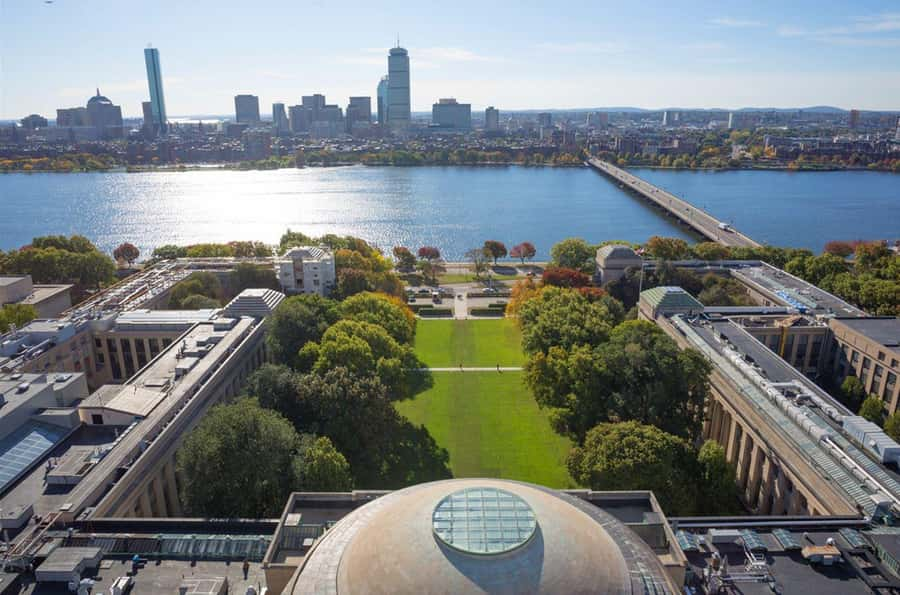
Killian Court gives you one of the more formal MIT views. It is a good place to slow down, take photographs, and see a calmer side of a campus better known for laboratories and technical work. You will hear about MIT’s founding, its famous alumni, and unusual events linked to the university.
The route then reaches Harvard Bridge, where the tour turns toward Boston and the Charles River. The bridge is famous for the Smoot markings, the odd measuring system created by MIT students. These small markings are easy to miss if you walk across alone, but with a guide they become one of the most memorable details of the morning.
You also get views back toward Boston from across the river. This is one place where the tour feels like more than a campus visit. The bridge connects the two institutions physically while giving you a better sense of their setting.
Architecture from I.M. Pei to Frank Gehry

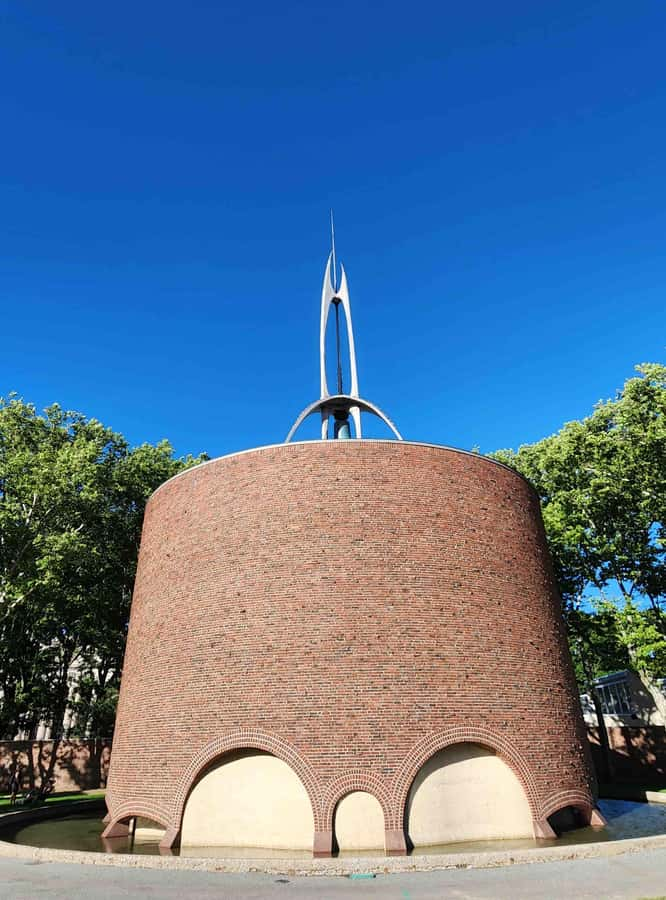
The MIT School of Architecture and Planning adds another layer to the route. Here, the guide can explain how the university’s buildings reflect changing ideas about design, technology, and public space.
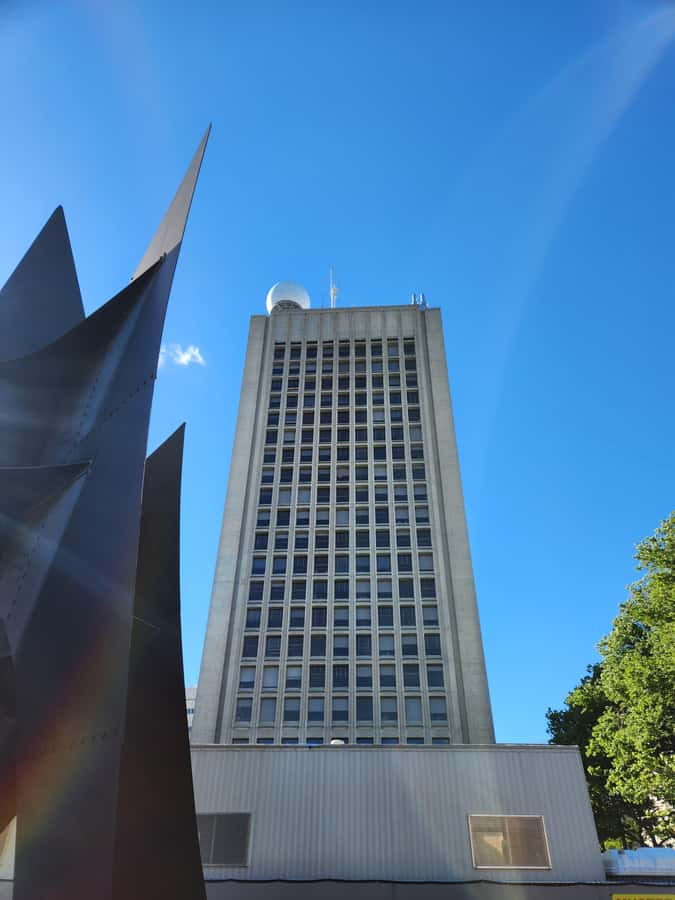
The Great Dome is the classic MIT photograph. It is the moment to get the camera out, especially if you want a recognizable image of the campus. The dome also helps anchor the tour after the more scattered early stops.
MIT.nano and the Banana Lounge show two sides of campus life. MIT.nano points toward advanced research and technical work. The Banana Lounge brings the focus back to student culture and the odd little places that make a university feel lived in rather than ceremonial.
The Stata Center receives about 15 minutes, making it one of the more substantial stops at MIT. Its design is associated with Frank Gehry, and it gives the guide room to discuss the difference between famous architecture and universally loved architecture. The building is visually striking, but your response may depend on your taste. That makes it a useful stop, not just a postcard backdrop.
I like this section because it avoids reducing MIT to a collection of impressive names. You see polished courtyards, technical facilities, dormitories, student hangouts, and designs that prompt debate. The stories about pranks and hacks help explain the playful side of a school often viewed only through its scientific achievements.
The subway from MIT to Harvard
After the MIT portion, the group takes the subway for two stops to Harvard. The fare is included in the tour price, so you do not need to arrange a separate ticket for this part.
The ride takes about 20 minutes, including the transition through the station. The guide uses the wait to explain the history of Boston’s subway system, which adds local context to what might otherwise be a plain transfer.
This change of pace is useful. You get a short break from walking, then arrive in a different part of Cambridge with a different mood. The route is not a private vehicle tour, so you are moving through the city in the same basic way residents do.
Be ready for a little crowd management around the station and train. The group has to stay together, and the guide’s role becomes practical as well as informative. Guides praised in the tour feedback, including Alexandria and Jenny, were especially good at keeping the pace comfortable and helping families manage the transition.
Same base, a different kind of day out:
- Boston Duck Boat Sightseeing City Tour with Cruise Along Charles River
★ 4.5 · 9,378 reviews - Boston Hop-On Hop-Off Trolley Tour with 13 Stops
★ 4.5 · 5,576 reviews - Boston: City Cruises Whale Watching Cruise
★ 4.5 · 4,710 reviews - Boston Duck Tour: The Original and World-Famous
★ 4.6 · 3,935 reviews
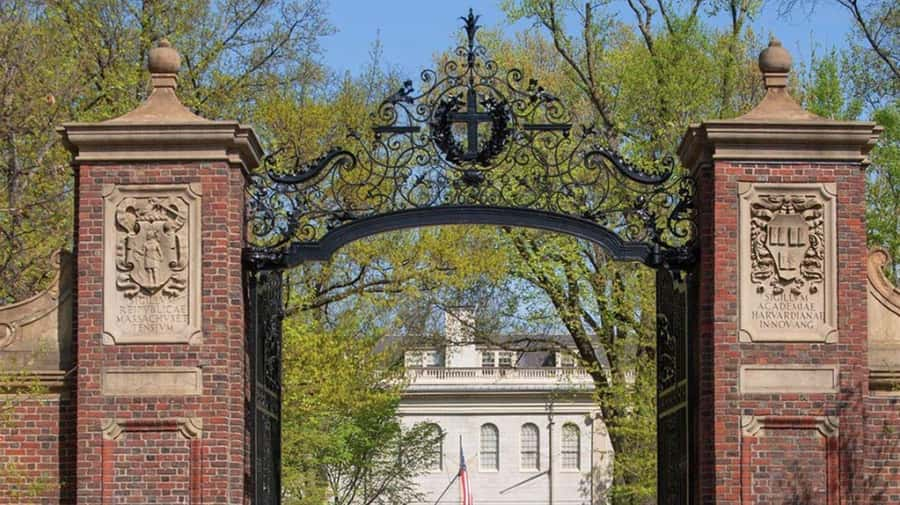
Johnston Gate and Harvard Yard
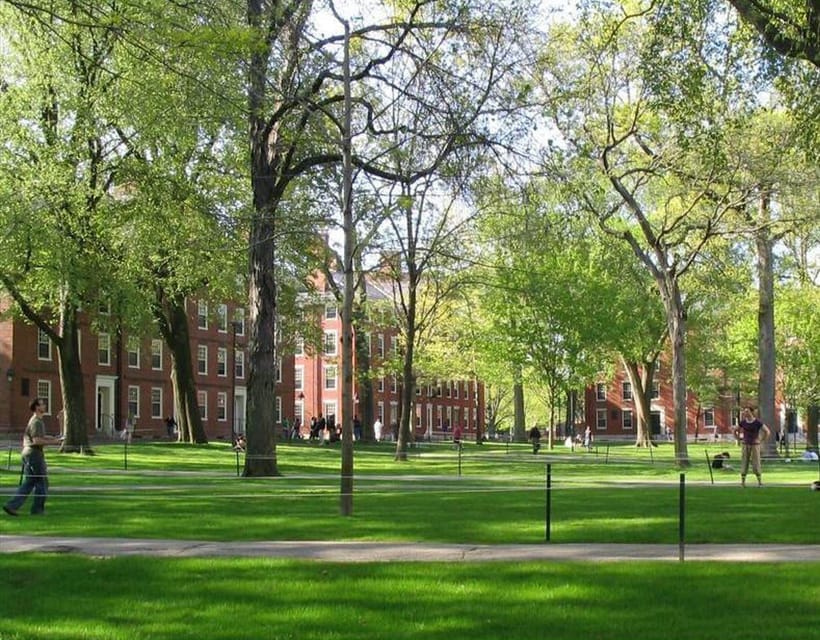
The Harvard portion begins around Johnston Gate, one of the most recognizable entrances to the university. From there, the guide leads you through the outdoor parts of Harvard Yard and nearby streets.
Harvard was founded in 1636, making it the oldest college in the United States. The tour uses that age as a starting point, but it does not turn into a dry list of dates. You hear about the university’s academic legacy, graduates, wartime connections, and student traditions.
The Three Lies Statue is one of the best examples of Harvard’s sense of humor. Its official name is the John Harvard Statue, but the nickname points to three claims associated with the monument that are not quite accurate. The guide explains the details, and you get a classic photo opportunity at the same time.
You will also hear where famous Harvard graduates lived and how students choose houses after Housing Day at the end of freshman year. That makes the university feel more personal. Instead of seeing only grand gates and libraries, you get a look at how Harvard organizes everyday student life.
The tour includes time around Harvard Yard, but remember that access can change. One group encountered a closure because of a concert and used other campus sights as a substitute. That is a useful reminder that outdoor university spaces can be affected by events, security, or campus schedules.
Memorial Hall, Widener Library, and Harvard’s grand side
Memorial Hall and Memorial Church bring a more formal tone to the Harvard route. These buildings help show how the university honors its past and presents itself through architecture.
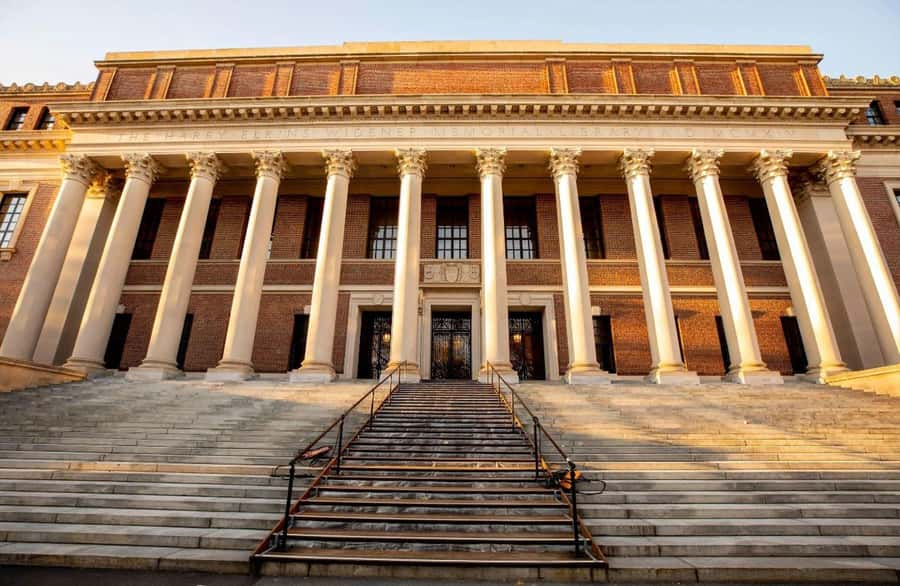
Widener Library is another major photo stop. Its broad facade is one of the clearest images of Harvard, and the guide places it in the larger story of the university’s academic identity. You will not go inside, but the exterior still carries much of the visual weight.
Wadsworth House adds an important Revolutionary-era connection. George Washington stayed there during his visit to Boston, and the guide explains Harvard’s role during the American Revolution. This is the kind of detail that gives the older campus a stronger connection to American history beyond famous alumni and academic prestige.
The route also includes Lowell House and Kirkland House. These stops connect the grand public face of Harvard with the houses where students live. Kirkland House receives more time than some other residential stops, so you get a better explanation of the housing system and the social side of campus life.
Harvard Square marks the end. You are left in a useful location with places to eat, shop, or continue exploring Cambridge on your own. Ending here also makes sense after the quieter spaces of Harvard Yard, since you can shift easily back into the city.
What you are paying for at $49
At $49 per person, the value depends on how much you want interpretation rather than simple access. You can walk around parts of both campuses independently, but you will not automatically know why the Smoot markings matter, which buildings are tied to I.M. Pei or Frank Gehry, or how Harvard’s house system works.
The price includes a licensed guide and the subway fare from MIT to Harvard. It does not include a tip, so budget for gratuity if the guide gives you the kind of attentive service this route needs.
I consider the price fair for visitors who want one organized outing covering both universities. You are paying for the bridge between the sites, the subway logistics, the stories, and the chance to ask questions. One person even described the cost as seeming high before booking, then felt it was well worth it afterward.
The value is lower if you mainly want interior access. This is not a tour of MIT laboratories, Harvard classrooms, libraries, or student facilities. Harvard does not allow non-students into campus buildings, and MIT interiors are available independently only on select days when the campus is open to visitors.
Pace, weather, and practical limits
The pace is designed to keep the group moving without overwhelming you. Several people found the timing well judged, with enough information to stay interested but not so much that the tour became a lecture.
Still, this is an outdoor walking tour. Guides have adjusted for heat by keeping groups in shaded areas where possible, and one guide continued through rain. You should not count on ideal conditions, though. A light rain layer, water, and seasonal clothing will make a real difference.
The route is not suitable for people with mobility impairments, wheelchair users, electric wheelchair users, mobility scooters, walking sticks, or crutches. Assistance dogs are allowed, but other pets are not. Unaccompanied minors are not accepted, and the activity is listed as unsuitable for people over 95.
Families can enjoy it, especially with older children and teenagers. One guide helped a family traveling with a three-year-old and a stroller, but the route still involves a long period of walking and public transportation. Younger children may enjoy the pranks and strange facts more than the architectural explanations.
This is also not the right choice for a prospective student who needs admissions advice. You will not get official details about required grades, application strategy, or campus enrollment. Contact the universities’ admissions departments for that.
Who should book the MIT and Harvard walk?
I would choose this tour if you want a guided introduction to Cambridge and prefer stories over a formal academic presentation. It suits first-time visitors, families with school-age children, architecture fans, and anyone curious about the contrast between MIT’s experimental culture and Harvard’s older traditions.
It is especially useful if you want both campuses in one morning or afternoon without working out the route yourself. The subway transfer is straightforward, but having a guide explain the city and keep the group together removes some small hassles.
You may want to skip it if indoor access is your priority, if you need a fully accessible route, or if you already know both campuses well. You may also prefer separate visits if you want a slower look at one university rather than a broad overview of two.
Should you book it?
Book this tour if you want history, architecture, student traditions, and memorable oddities rather than admissions information. The strongest reasons are the mix of MIT’s pranks and design, Harvard’s statues and houses, the Smoot markings, and the included subway connection.
I would not book it expecting classrooms or laboratories. But if you are comfortable walking for three and a half hours and viewing everything from outside, $49 buys a well-organized introduction to two of America’s best-known universities, with a guide to explain the details you would likely miss alone.
FAQ
How long does the MIT and Harvard walking tour last?
The tour lasts 210 minutes, or about three and a half hours.
Where does the tour start?
It starts in front of Ripple Cafe, next to the MIT and Kendall subway station.
How do I identify the guide?
The guide wears a Boston Hidden Gems shirt.
Is the subway fare included?
Yes. The fare for the subway trip from MIT to Harvard is included in the tour price.
Does the tour go inside MIT or Harvard buildings?
No. The tour covers outdoor areas only. You do not enter buildings on either campus.
Is this an admissions tour for future students?
No. The tour focuses on history, architecture, traditions, and stories. It does not provide official admissions guidance.
What language is the tour offered in?
The live tour is offered in English.
What should I bring?
Wear comfortable shoes. You should also prepare for changing outdoor conditions, since the tour takes place outside.
Is the tour suitable for wheelchair users?
No. The activity is not suitable for wheelchair users or people with mobility impairments. It also does not accommodate mobility scooters, electric wheelchairs, walking sticks, or crutches. Assistance dogs are allowed.
Just added in Boston
- Boston’s Freedom Trail: A Revolutionary Walking Tour★ 5.0 · 1,343 reviews
- Delicious Donuts of Boston: A Sweet History Walking Tour★ 5.0 · 1,038 reviews
- Sunset Sailing Cruise on a Tall Ship in Boston Harbor★ 4.5 · 414 reviews
- Boston North End Food Tour of 6+ Tastings, Cannoli, Lobster Roll★ 5.0 · 1,404 reviews
- Freedom Trail Walking Tour 250★ 4.5 · 1,118 reviews
- Boston’s North End Food and History Walking Tour★ 5.0 · 459 reviews
- Narrated Sunset Cruise of Boston Harbor★ 4.0 · 532 reviews
- City Cruises Salem High Speed Ferry to/from Boston★ 4.5 · 727 reviews
Walking Tours, compared.
New Orleans Premier Ghost, Voodoo and Vampire Walking Tour
Read our review →

Freedom Trail History Small Group Walking Tour
Read our review →
Historic Charleston Guided Sightseeing Walking Tour
Read our review →
New Orleans Food Walking Tour of the French Quarter with Small-Group Option
Read our review →
St. Louis Cemetery No. 1 Official Walking Tour
Read our review →
Harvard University Student-Guided Walking Tour
Read our review →
Harvard University Campus Guided Walking Tour
Read our review →Browse the lists this tour appears in