
Reviewed · GHOST, CEMETERY & HAUNTED HISTORY TOURS
Salem Voodoo, Vampires, and Ghosts Guided Walking Tour
Salem’s darker past comes into focus on this 90-minute walk, which mixes the documented cruelty of the 1692 Witch Trials with stories of voodoo, vampires, haunted churches, and ghost photographs. Guides such as Mike, Vin, and Dr. Vitka bring backgrounds in history and paranormal investigation, so the tour aims to separate old records from later legend.
I like the serious treatment of the Witch Trials, especially the attention given to Giles Corey and Tituba rather than treating Salem as one big Halloween prop. I also like the practical ghost-hunting angle: you can examine your own photographs and learn how investigators assess orbs, ectoplasm, and apparitions. The main consideration is that this is a busy 90-minute walk with many short stops, so some stories receive only a few minutes.
Key points to know before booking
- Giles Corey’s gruesome fate: Learn about the accused man who was pressed to death after refusing to enter a plea.
- Tituba and the Witch Trials: Hear how an enslaved woman became central to the witch hysteria and was accused of voodoo practices.
- A mix of fact and folklore: The tour covers court records, local legends, vampire stories, ghost sightings, and modern paranormal claims.
- A working ghost-hunting focus: Guides share investigation photographs and explain methods used to assess possible paranormal activity.
- Evening walks through central Salem: Most departures take place after dark, with weekend afternoon tours also available.
- A compact route with 13 stops: The walk includes cemeteries, historic streets, film locations, a museum exterior, and several reputedly haunted places.
Why this Salem ghost tour feels different
Many Salem tours focus on costumes, theatrical scares, or a narrow retelling of the Witch Trials. This one takes a broader route through the town’s dark reputation. You hear about the trials first, then move into voodoo claims, vampire folklore, ghost photographs, famous visitors, and modern paranormal investigation.
That wider scope is useful if you have already visited Salem once. You still get the essential trial story, but the guide also connects it to places many people might walk past without knowing their significance. One stop concerns the land connected to Bridget Bishop. Another covers the first large public demonstration of Alexander Graham Bell’s telephone at Lyceum Hall. A later stop looks at Harry Houdini’s dramatic escape in Salem.
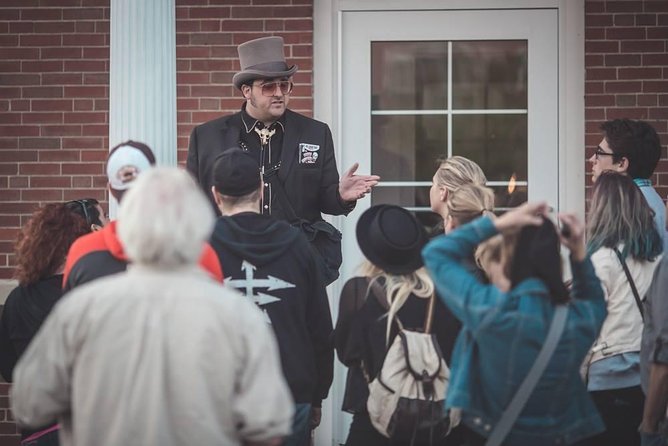
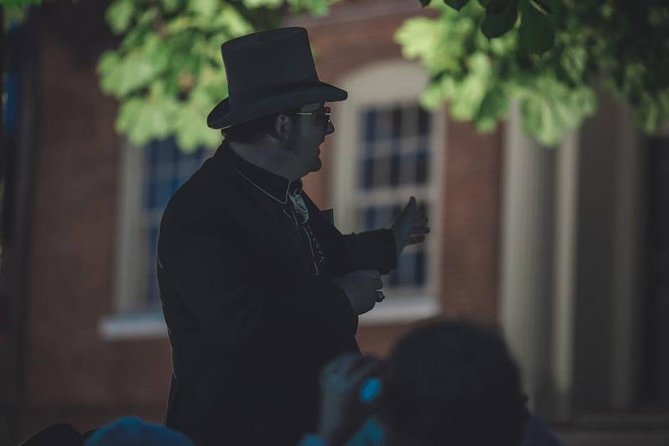
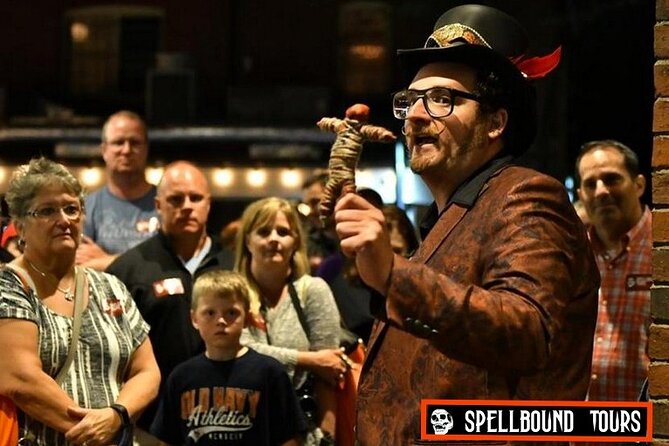
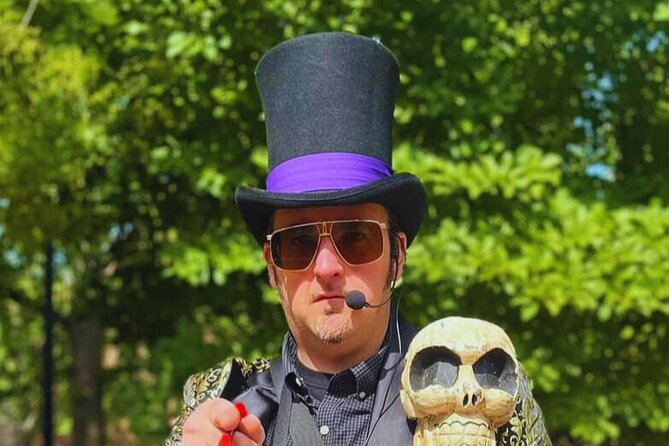
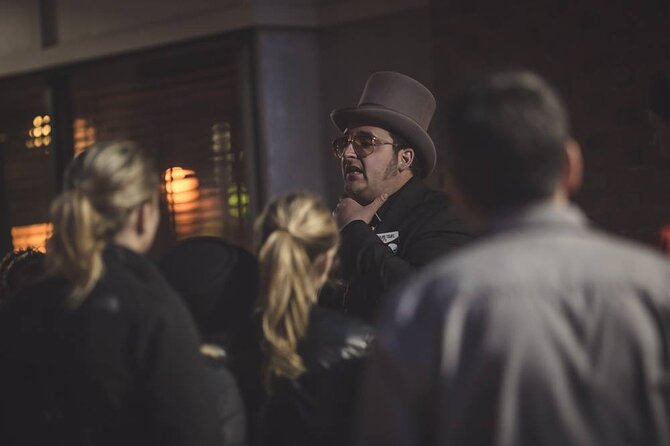
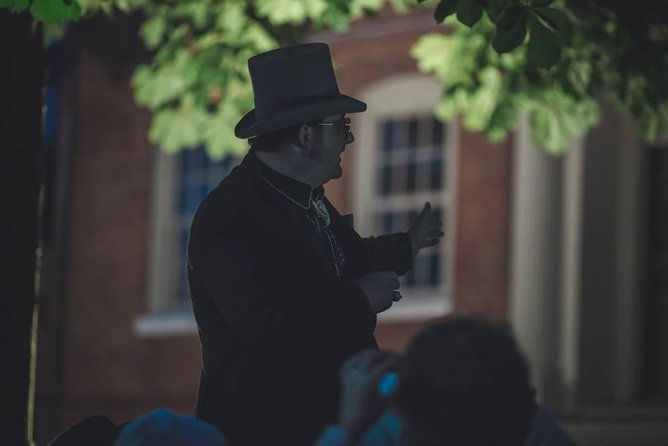
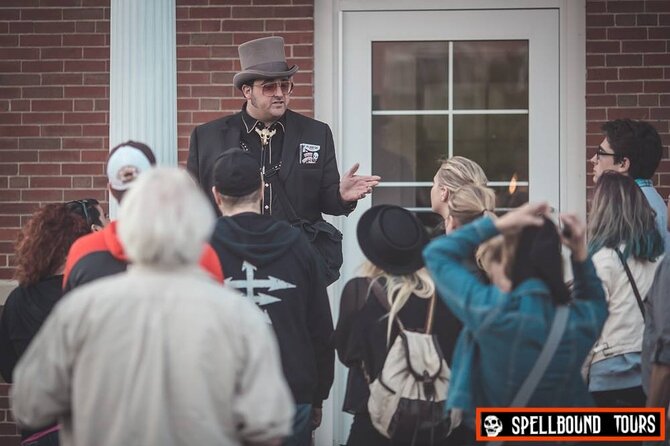
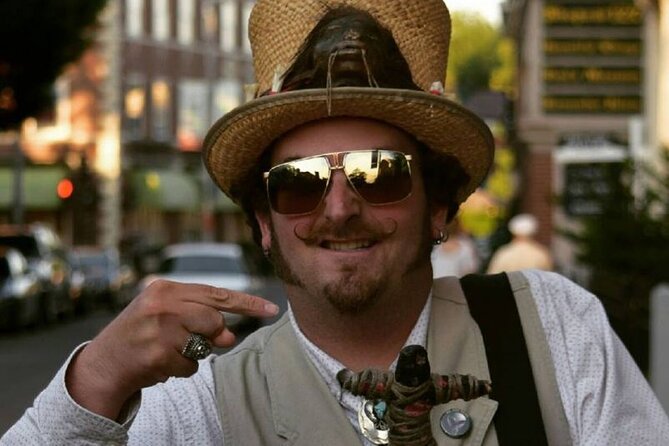
The tone depends heavily on the guide. The named guides associated with this experience include Mike, Vin, and Dr. Vitka, and the strongest praise centers on their storytelling, clear explanations, and ability to keep a group together in busy streets. You are not getting a costumed actor reading a script. The guide is presented as a licensed public guide, historian, and paranormal investigator.
That distinction matters. If you want theatrical jump scares, this may feel more measured. If you prefer a guide who can explain why a story is documented, disputed, or part of local folklore, it is a better match.
Other after-dark walks in the USA:
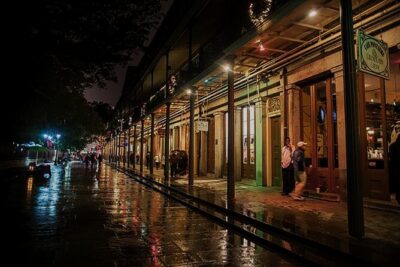
- New Orleans Premier Ghost, Voodoo and Vampire Walking Tour
★ 4.5 · 12,856 reviews - Chicago: Gangsters and Ghosts Walking Tour
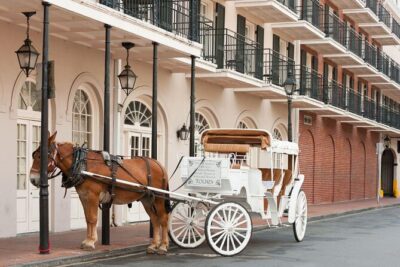
★ 5.0 · 7,155 reviews - Adults-Only New Orleans Ghost, Crime, Voodoo, and Vampire Tour
★ 5.0 · 6,545 reviews
Meeting the guide near the Salem Visitor Center
The meeting point is at the Revere Bell in front of the Salem Visitor Center, at 2 New Liberty Street. It is a sensible place to begin because you are already close to the historic center and the main Witch Trials sites.
The route is described as easy walking, but you should still wear comfortable shoes. The tour covers 13 stops in roughly an hour and a half, with many short explanations rather than long periods at one location. The group can include up to 40 people, so staying close to the guide matters, especially around foot traffic and roads.
Evening departures are the standard choice and suit the subject. Cemeteries and old streets feel different after sunset, and the darker setting supports the ghost stories without requiring artificial effects. Weekend afternoon tours are available if you prefer better visibility or if you are walking with children who may not enjoy a late outing.
Children must be accompanied by an adult. Service animals are allowed, and well-behaved pets are welcome. The tour is near public transportation, and most people can take part.
2 New Liberty Street and 15 Federal Street
The first stop begins near 2 New Liberty Street, where the guide sets the Witch Trials in the streets and buildings around you. This opening gives you the basic framework: Salem’s accusations, Puritan fears, courtroom failures, and the way rumor grew into imprisonment and execution.
The next stop, at 15 Federal Street, concerns Giles Corey. According to the tour, this is believed to be the location where Corey was pressed beneath heavy stones after refusing to confess. It is one of the tour’s most disturbing stories, not because it relies on a ghost tale, but because the cruelty is part of the historical record.
The guide also explains the curse Corey supposedly placed on Salem as he died. This is a good example of the tour’s method. You get the documented event first, then the legend that grew around it. The stop lasts only about eight minutes, so listen closely if you want the full sequence.
St. Peter Street and the old Witch Dungeon
At 24 St. Peter Street, the walk pauses at a church graveyard linked to the Witch Trials. The old markers make this a useful photography stop, particularly if you enjoy weathered stones and early cemetery art.
The route then reaches 10 Federal Street, identified with the dungeon where accused witches were held while awaiting trial and execution. Here the guide turns to the fanatical Puritan climate, the mechanics of the trials, and Tituba.
Tituba is one of the most important figures in the Salem story, and the tour gives her more attention than a simple ghost walk often would. She was an enslaved woman whose testimony helped fuel the panic, and she was herself accused of practicing voodoo. The tour presents the possibility of clandestine practice as part of the surrounding mystery, but the larger point is her vulnerable position within the accusations.
This site is also treated as one of Salem’s most active haunted places. You are encouraged to take photographs, then discuss possible signs of paranormal activity with the guide. Keep your expectations sensible. A photograph with an orb is not proof of a ghost, and the value here is learning how investigators examine such images rather than being promised a supernatural encounter.
Other walks around the USA:
- History and Hauntings of Salem Guided Walking Tour
★ 5.0 · 14,564 reviews - Little Havana Food and Walking Tour in Miami
★ 5.0 · 8,882 reviews - Boston: Freedom Trail History Small Group Walking Tour
★ 5.0 · 6,450 reviews - Historic Charleston Guided Sightseeing Walking Tour
★ 5.0 · 6,216 reviews
Bridget Bishop’s land and the Old Town Hall
At Turner’s Seafood at Lyceum Hall, the tour reaches land connected with Bridget Bishop, one of the people executed during the Witch Trials. This location appears on paranormal television programs and has a reputation for physical sensations and unusual photographs.
It also has a surprising non-ghostly connection. Alexander Graham Bell demonstrated his telephone here before a large audience. That contrast is one of Salem’s strengths: the same address can connect colonial fear, modern technology, tourism, and paranormal lore.
The next stop is Old Town Hall, a welcome change of tone. Film fans can recognize the location from Hocus Pocus, including the famous I Put a Spell On You ball scene. The stop lasts about five minutes, enough for a photo and a quick film connection rather than a full movie talk.
If you are visiting Salem during a crowded season, this part of the walk may require patience. Historic streets can be packed, and the guide must balance storytelling with keeping the group safe and together.
Derby Square and Salem’s vampire stories
At Derby Square, the subject shifts from witches to vampires. The guide covers New England vampire folklore along with documented cases of people who drank blood. These stories are more unsettling than the polished, romantic vampire image found in films.
This section suits you if you enjoy the strange edges of social history. The tour does not present Salem as the birthplace of every vampire tale. Instead, it uses local and regional folklore to explain how New England acquired a reputation for blood-drinking legends.
The material can be graphic. Families with young children may want to judge the group’s comfort level before booking, especially since the full tour also includes torture, executions, murder, and ghost stories. The wording of the experience makes clear that the vampire section gets bloody.
Houdini Way and Central Street
At Houdini Way, you hear about Harry Houdini’s dramatic escape performed in Salem. It is a short stop, but it broadens the tour beyond the usual Witch Trials subjects. Houdini was not part of Salem’s colonial story, yet his performance fits the town’s long connection with magic, illusion, and public fascination.
Central Street brings a much darker modern subject: the Boston Strangler and Carl Panzram. The guide discusses murders associated with Salem, making this one of the most severe sections of the walk.
This stop is worth noting before you book. The experience is not a gentle family ghost stroll made up only of old legends. It includes real violence, execution, torture, and serial murder. I would choose it for adults and older children who can handle grim material, not for anyone seeking a light, playful introduction to Salem.
The haunted bar and Old Burying Point
At 300 Derby Street, the group pauses at a haunted bar. The stop is brief, only about three minutes, so expect a quick story rather than time inside the building or a paranormal investigation.
The most substantial cemetery stop comes at The Burying Point, dating to 1636 and counted among the oldest cemeteries in the United States. It contains the graves of Witch Trials judges and townspeople who lived through the crisis. Judge John Hathorne is a key figure here, and the guide explains his connection to the trials.
The cemetery also connects Salem’s literary and modern spiritual past. Nathaniel Hawthorne spent time here during his life, and the tour raises the possibility that he remains part of the ghost lore. Modern magical practitioners also use the site for rituals, adding another layer to a place that is already important American history.
The cemetery is one of the strongest stops because it brings together names, dates, physical markers, and folklore. You can look at the stones while the guide explains the people behind them. At night, the setting is atmospheric, but visibility may be limited, so an afternoon tour could suit you better if cemetery details matter most.
The Peabody Essex Museum and ghost photographs
The Peabody Essex Museum appears on the route as a major art museum that holds artifacts connected with some of Salem’s darker stories. Admission to the museum is not included, and this tour does not turn into a museum visit. You see the location and hear about its connection to the town’s less comfortable past.
The final stop is Axelrod Walkway Park, where the guide shares photographs collected during paranormal investigations. This gives the tour a clear ending: instead of merely telling you that Salem is haunted, the guide shows images and explains the methods investigators use.
You can also ask for help examining your own photos. The discussion may include orbs, ectoplasm, and apparitions. The useful part is the chance to question what you see. Dust, moisture, reflections, camera artifacts, and odd lighting can create unusual images, so a careful guide should help you consider ordinary explanations as well as supernatural ones.
The activity ends back at the meeting point. That makes it easy to continue exploring central Salem, find dinner, or return to a nearby hotel without arranging another ride.
What the guide style adds
The strongest part of this experience is the guide’s delivery. Mike is described as funny, attentive, and able to explain information clearly. Vin is associated with personal investigation stories and photographs. Dr. Vitka is known for a strong command of Salem’s past and a polished speaking style.
Your guide may be someone else, so do not book on the assumption that a particular person will lead every departure. Still, the pattern is clear: the experience depends on a guide who can manage a group, handle questions, and connect the documented past with the paranormal material.
The guide also needs to keep the group moving. A 90-minute route with 13 stops leaves little spare time. One stop may last 10 minutes, while another may last only three or five. That pace keeps the tour lively, but it means you will not receive a full lecture at every site.
Value, timing, and who should book
No price is provided here, so I cannot judge the exact cost. In value terms, the tour includes a licensed English-speaking guide, a compact route through many central sites, and access to stories and investigation photographs you would not get from simply walking around town.
You do not pay separate admission for the outdoor stops. The Peabody Essex Museum is the exception, and its admission is not included. If you want a museum visit, treat that as a separate plan rather than part of the walking tour.
I would choose the evening departure if mood matters most. I would choose the weekend afternoon option if you want clearer views of gravestones, prefer easier photography, or are traveling with children. The tour is offered in English and can hold up to 40 people, so you should expect a public group experience rather than a private conversation.
This tour suits:
- First-time Salem visitors who want the Witch Trials explained alongside the legends.
- People interested in paranormal investigation rather than only theatrical scares.
- Film fans who want the Old Town Hall connection from Hocus Pocus.
- Adults who enjoy grim crime stories, vampire folklore, and historical violence.
- Repeat visitors looking for less obvious Salem stories and locations.
It may not suit you if you dislike gore, want a strictly academic account, or need long visits at each site. The experience gives equal space to fact, folklore, and paranormal claims, so it is best approached with curiosity rather than a demand that every ghost story be proven.
Should you book the Salem Voodoo, Vampires, and Ghosts tour?
Book it if you want Salem’s Witch Trials placed in a larger story about fear, magic, crime, film, folklore, and ghost hunting. The strongest reasons are the focus on Giles Corey and Tituba, the cemetery visit, the vampire section, and the chance to examine photographs with a guide who works in paranormal investigation.
Skip it if you want a quiet cemetery walk or a strictly documented history lesson. For everyone else, this is a lively way to get oriented in Salem, especially at night, with enough real history to keep the spooky material from becoming empty theater.
FAQ
How long is the Salem Voodoo, Vampires, and Ghosts tour?
The walking tour lasts approximately 1 hour and 30 minutes.
Where does the tour begin?
It begins at the Revere Bell in front of the Salem Visitor Center, at 2 New Liberty Street, Salem, Massachusetts.
Where does the tour end?
The activity ends back at the meeting point.
Is the tour offered at night?
Daily evening tours are available. Afternoon tours are offered on weekends.
What language is the tour conducted in?
The tour is offered in English.
Does the tour visit the Salem Witch Trials sites?
Yes. It covers locations connected with Giles Corey, the Witch Trials dungeon, Tituba, Bridget Bishop, Judge John Hathorne, and the Old Burying Point cemetery.
Is admission to the Peabody Essex Museum included?
No. Admission to the Peabody Essex Museum is not included in the activity.
Can children and pets join the tour?
Children must be accompanied by an adult. Service animals are allowed, and well-behaved pets are welcome.
Just added in the USA
- Road to Hana: Full-Day Scenic Drive with Blacksand & Waterfalls★ 4.5 · 837 reviews
- Road To Hana: Maui Waterfall Hiking Tour in Private Jeep★ 5.0 · 343 reviews
- Original La Jolla Sea Cave Kayak Tour for Two★ 4.5 · 871 reviews
- Maui Nui Luau at the Sheraton Maui Resort & Spa★ 4.5 · 1,622 reviews
- 2 Hour Sailing Cruise on Lake Tahoe★ 5.0 · 886 reviews
- Key West: All-Inclusive Watersports Adventure with Lunch & Beer★ 4.5 · 351 reviews
- La Jolla Sea Caves Kayak Tour For Two (Tandem Kayak)★ 4.5 · 1,205 reviews
- Behind-the-Scenes at Petco Park Tour★ 4.5 · 339 reviews
Ghost, Cemetery & Haunted History Tours, compared.
New Orleans Premier Ghost, Voodoo and Vampire Walking Tour
Read our review →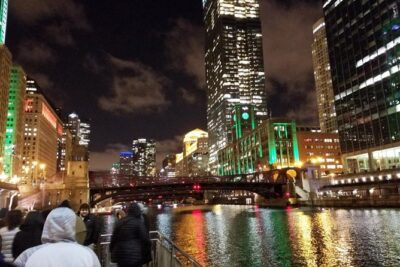
Adults-Only New Orleans Ghost, Crime, Voodoo, and Vampire Tour
Read our review →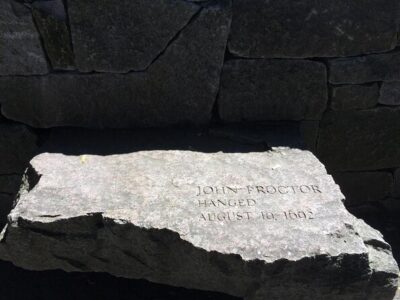
St. Louis Cemetery No. 1 Official Walking Tour
Read our review →
Haunted Evening Horse and Carriage Tour of Charleston
Read our review →
Savannah History and Haunts Candlelit Ghost Walking Tour
Read our review →
New Orleans French Quarter, Voodoo and Culture Walking Tour
Read our review →Browse the lists this tour appears in