
Reviewed · TROLLEY & HOP-ON HOP-OFF TOURS
Big Bus NYC: Hop-On Hop-Off Sightseeing Tour by Open-top Bus
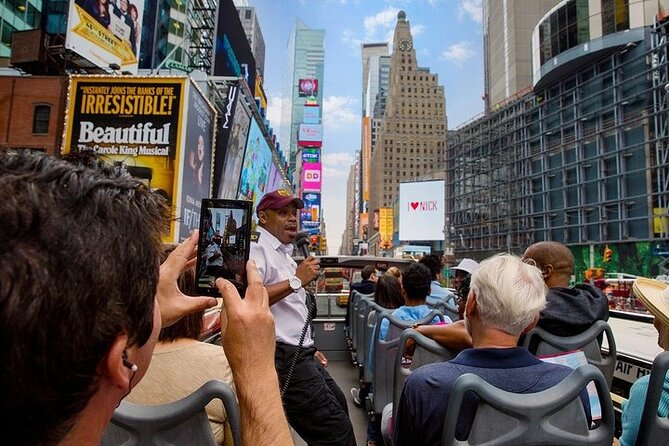
The best thing about Big Bus NYC is simple: it gives you a quick visual tour of Manhattan before you commit your limited time to particular neighborhoods. From the upper deck, you can connect Times Square, the Empire State Building, SoHo, the Brooklyn Bridge, Wall Street, Hudson Yards, and Central Park without constantly checking a subway map. I especially like the hop-on, hop-off freedom and the chance to get your bearings on a first New York visit.
I also like the 90-minute full loops, which work well when you want a broad city overview or a break from walking. The audio commentary adds useful context, and a few drivers, including Ms. Copeland and Santana, have made the ride more personal by pointing out sights and offering local tips. The main caution is timing: buses are scheduled about once an hour on each route, traffic can cause delays, and some rides have had weak audio or unclear stop information.
Big Bus NYC at a glance
- Two routes cover the city’s main visitor zones: The Red Downtown Loop links Lower Manhattan, Midtown, SoHo, Chinatown, and the West Side. The Blue Uptown Loop covers Rockefeller Center, Central Park, the Metropolitan Museum of Art, Columbus Circle, and Carnegie Hall.
- A 24-hour ticket is the basic option: It focuses on the Downtown route. The 48-hour ticket adds Uptown, while the 72-hour ticket also includes Brooklyn tours and four self-guided digital walking tours.
- Each complete loop takes about 90 minutes: That makes the bus useful for a quick overview, but not a fast taxi substitute. Traffic and seasonal schedules can stretch the ride.
- The recorded commentary is useful but uneven: Bring the supplied earphones, check that the audio works, and listen for stop announcements. A few buses may have low volume or faulty commentary.
- Stops are near attractions, not always directly beside them: The Statue of Liberty stop is at Trinity Church, and the Brooklyn Bridge stop is at Park Row and Beekman Street. Plan on walking after you get off.
- The bus is open-top and weather-sensitive: You get the best views upstairs in good weather, but rain, cold, and wind can change the experience. Service may be canceled in poor weather.
Why use a sightseeing bus in New York?
New York is easy to cross on the subway, but the subway hides the city. Big Bus gives you a moving view of the streets, buildings, bridges, and neighborhoods between major sights. That matters most on a first visit, when you want to understand how Midtown connects to Lower Manhattan and the West Side.
I would treat this as a sightseeing and orientation tool, not as a guaranteed fast transport service. A full loop takes about 90 minutes, and the official arrival estimate is roughly once an hour on both the Red Downtown and Blue Uptown routes. Traffic, street closures, crowding, and weather can change that rhythm.
The tour is most useful if you have one to three days in New York and want to combine transportation with commentary. It is less useful if you already know the city, need to reach a destination at a fixed time, or plan to make many short hops. In those cases, the subway is cheaper and usually more dependable.
You can show a mobile or printed ticket at any listed stop. There is no need to travel to one central redemption point. Activate the pass in the Big Bus app or with staff, then use the app for live bus tracking and stop details.
Other sightseeing routes around New York City:
- New York: Hop-on Hop-off Sightseeing Tour by Open-top Bus
★ 4.2 · 5,863 reviews - Savannah Hop-On Hop-Off Trolley Tour
★ 4.5 · 6,527 reviews - Nashville Hop On Hop Off Trolley Tour
★ 4.5 · 5,643 reviews
Red Downtown Loop: Midtown to Lower Manhattan
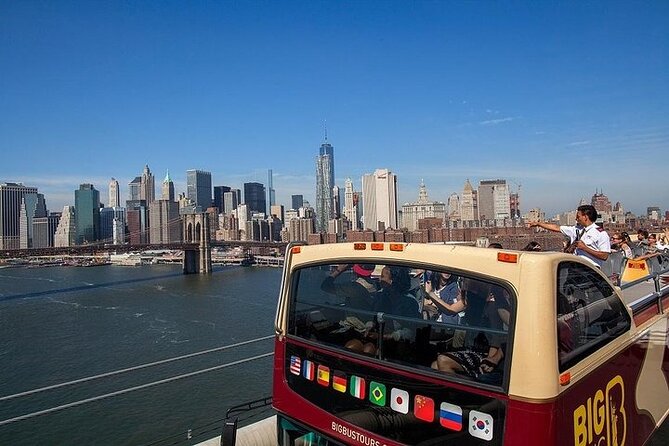
The Red route gives you the most recognizable New York tour. A full circuit takes around 90 minutes, though you should allow more time in traffic. The route is especially useful for connecting places that are spread across Midtown, Lower Manhattan, and the Hudson River side of the city.
M&M’S New York and Times Square
The route begins near M&M’S New York at 7th Avenue and West 48th Street, then continues to Times Square at West 42nd Street and Broadway. These stops put you in the middle of the theater district, giant signs, shops, and constant pedestrian movement.
Times Square is worth seeing once, but it can be tiring if you are on foot with luggage or young children. The bus lets you view the spectacle without having to fight through every block. Get off here if you want Broadway theaters and central Midtown, but check the exact pickup side before you leave.
Empire State Building and Koreatown
The Empire State Building stop is at Fifth Avenue and West 32nd Street, near Koreatown. This is a good place to combine an observation-deck visit with Korean restaurants and shops around 32nd Street.
The bus stop does not replace a timed ticket to the Empire State Building, so keep your sightseeing schedule flexible. If you get off for a visit, allow plenty of time before expecting the next bus. A missed bus can mean a long wait.
Same base, a different kind of day out:
- NYC: SUMMIT One Vanderbilt Tickets
★ 4.7 · 51,195 reviews - NYC: 9/11 Memorial & Museum Timed-Entry Ticket
★ 4.8 · 31,428 reviews - NYC: Empire State Building Tickets – Observatory & Museum
★ 4.7 · 25,757 reviews - NYC: Empire State Building Observation Deck Tickets
★ 4.7 · 22,072 reviews
Flatiron District
At Fifth Avenue and West 23rd Street, the bus serves the Flatiron District. The stop is near the famous triangular Flatiron Building area and the broad streets around Madison Square.
This is a pleasant place to leave the bus and walk, but it is not the sort of stop you need to rush. The neighborhood rewards a little time on foot, especially if you want a calmer contrast to Times Square and Midtown.
SoHo
The SoHo stop is on West Broadway near Spring Street, in front of the Nike store. This puts you near cast-iron buildings, boutiques, galleries, restaurants, and the streets leading toward Greenwich Village.
SoHo is one of the better hop-off points because the area is best explored slowly. You will not see much of it from the bus alone. Use the bus to get there, then walk, eat, and browse before returning to the route.
Chinatown and Little Italy
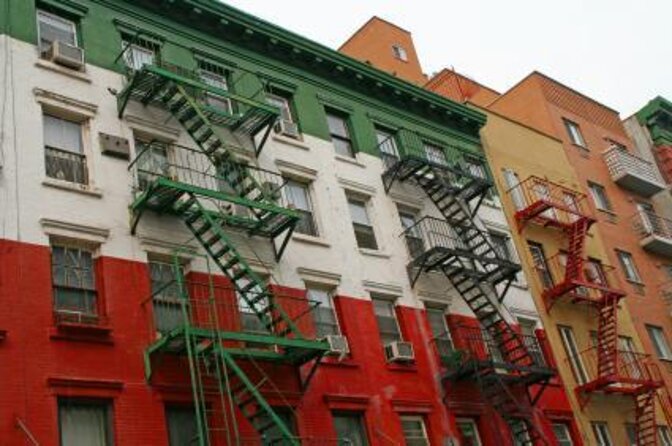
The Chinatown and Little Italy stop is near Walker Street at 100 Lafayette Street. This is a practical starting point for exploring restaurants, bakeries, markets, and the dense streets of Lower Manhattan.
The route’s value here is less about narration and more about saving your legs. The neighborhoods are close enough to explore together, but you may still want to walk several blocks before catching another bus.
Brooklyn Bridge
The Brooklyn Bridge stop is at Park Row and Beekman Street. Despite the name, you are not stepping off directly onto the bridge walkway. You will need to walk from the stop to reach the bridge entrance.
That detail matters when planning your day. The stop works well for a bridge walk, City Hall, and the nearby civic buildings, but do not assume you can see the bridge or cross it immediately from the bus door. Street layouts and closures can also make the pickup point confusing.
Wall Street and the Statue of Liberty area
The Wall Street stop is listed at Wall Street and the Statue of Liberty area, while the nearby Statue of Liberty stop is at Trinity Church on Trinity Place and Cedar Street. This places you near the Financial District, Trinity Church, Wall Street, and the route toward Battery Park.
The bus does not take you to Liberty Island, and the Statue of Liberty stop does not provide a direct view of the statue from the bus. You need a separate ferry ticket and enough time for security and boarding if Liberty Island is your goal.
This is one of the route’s most important limitations. Big Bus can help you reach Lower Manhattan, but it is not a Statue of Liberty cruise.
World Trade Center
The World Trade Center stop is at Church Street and Vesey Street, across from the post office. From here, you can reach the 9/11 Memorial area, the Oculus, and other Lower Manhattan sights.
The stop is useful because the World Trade Center complex can feel spread out when you are seeing it for the first time. Listen carefully for the stop announcement, and confirm the return pickup location before walking away.
Pier 57, Hudson Yards, and Circle Line
The Red route then heads north along the west side, stopping near Pier 57 at 11th Avenue between West 15th and West 16th Streets. It continues to Hudson Yards at 12th Avenue and West 30th Street, then to the Circle Line area at 12th Avenue and West 40th Street.
These stops connect several newer parts of Manhattan. Pier 57 is useful for the Hudson River waterfront, while Hudson Yards serves the Vessel area and nearby developments. The Circle Line stop is convenient if you have a separate sightseeing cruise booked.
This stretch can be slower because of traffic and longer distances. It is a good section to ride when you want a city view, but less reliable when you are trying to arrive somewhere at a fixed time.
Blue Uptown Loop: Rockefeller Center to Central Park
The Blue route covers a different side of Manhattan. It begins near the Hope Sculpture at 7th Avenue and West 53rd Street, then moves through Times Square, Rockefeller Center, Museum Mile, Central Park, Columbus Circle, and Carnegie Hall.
You need at least the 48-hour ticket to use both Downtown and Uptown. Since the route can operate less often than you expect, plan this loop as a half-day sightseeing activity rather than a quick shuttle.
Hope Sculpture, Times Square, and Rockefeller Center
The Hope Sculpture stop is on 7th Avenue near West 53rd Street. The route then returns to Times Square before stopping at Rockefeller Center on West 49th Street and Fifth Avenue.
Rockefeller Center is a strong hop-off choice. You can walk to St. Patrick’s Cathedral, Fifth Avenue shops, and the plaza, while the location also works well for a timed visit to Top of the Rock. As with the Empire State Building, reserve any paid attraction separately and allow time for the bus schedule.
Metropolitan Museum of Art
The Metropolitan Museum of Art stop is on Fifth Avenue at East 83rd Street, outside the museum area. This is the key stop for Museum Mile and one of the best reasons to buy the longer ticket.
The Met is far too large for a quick visit. If you get off here, give yourself several hours or choose a short section of the museum. The bus makes reaching the museum easy, but the next ride may not arrive quickly, so do not build a tight afternoon schedule around it.
Central Park Zoo and Columbus Circle
The Central Park Zoo stop is at Fifth Avenue and East 66th Street. The route then reaches Columbus Circle at the southwest corner of Central Park.
These stops provide access to the park’s southern and eastern edges. You can use them for a walk, the zoo, or a break from the tall buildings. Columbus Circle also connects you with the park’s west side and nearby attractions.
Carnegie Hall
The final listed Uptown stop is near Carnegie Hall at 7th Avenue and West 57th Street. This is a handy point for Midtown hotels, concert plans, and the streets around Central Park South.
The Blue Loop gives you a useful look at Manhattan’s cultural core, but its value depends on how long you have. With only one day, the Red route covers more of the classic city sights. With two days, Uptown becomes far more worthwhile.
The audio commentary and the people on board
The standard experience uses recorded commentary through earphones. It gives you basic facts and helps identify upcoming stops, but it is not the same as having a guide beside you.
Audio quality can vary. Some buses have had low volume, unavailable earphones, or commentary that does not match what you are passing. Pick up the earphones before boarding, test them early, and keep the Big Bus app open as a backup for route information.
The human touch depends on the staff member or driver. Ms. Copeland has been praised for making a winter ride memorable, and Santana has been singled out for explaining sights and offering practical New York advice. Those moments show what the tour can be at its best.
At other times, staff directions have been unclear or unfriendly. Street sellers from competing bus companies can also make the stops confusing. I would rely on the official app, exact stop addresses, and the bus color rather than on the first person who approaches you.
Price, ticket length, and real value
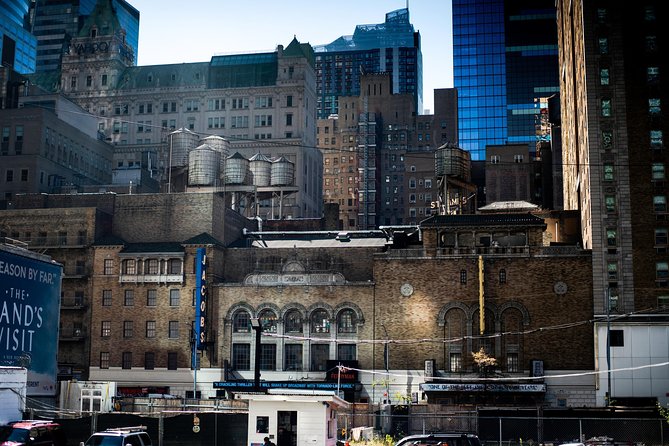
The listed price is $44 per person, with 24-, 48-, and 72-hour choices. The value depends less on the ticket price than on how much of the pass you use.
The 24-hour option is sensible if you want a Downtown overview and plan to ride most of the loop. It becomes poor value if you only board once and use the bus as a short transfer. A 48-hour ticket gives you time for both Red and Blue routes, while the 72-hour version adds Brooklyn tours and four digital walking tours.
Use consecutive days. You cannot spread a multi-day ticket across separate visits. The pass also does not include hotel pickup, food, luggage storage, or admission to attractions such as the Empire State Building, the Met, or the Statue of Liberty.
The strongest value comes from riding the full loops, hopping off at two or three areas, and using the pass to reduce long walks. If you mainly want transportation, public transit will cost less and often run more regularly.
Weather, access, and practical planning
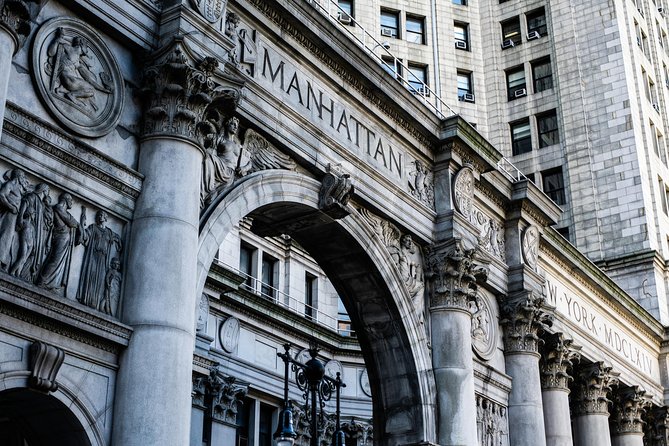
The upper deck offers the best views, but it is exposed to cold, wind, and rain. Winter rides can still be enjoyable if you dress warmly, though the bus is not a heated indoor sightseeing vehicle. Poor weather can lead to cancellation, with a different date or full refund offered.
Wheelchair-accessible buses with lifts are available, accommodating up to 650 pounds. State your accessibility needs at checkout so the appropriate vehicle can be arranged. Service animals are allowed, but ordinary pets are not.
Food and alcohol are not permitted onboard. A non-alcoholic drink in a screw-top bottle is allowed, while luggage is not. That makes this a poor choice immediately after arriving with bags or before a flight.
You can cancel for a full refund up to 24 hours before the start time. Cancellations or changes made inside that window are not refunded, except when poor weather causes the operator to cancel service.
Should you book Big Bus NYC?
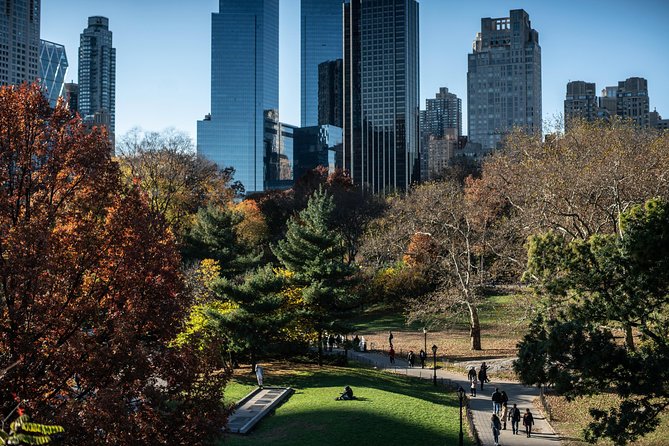
Book it if you are visiting New York for the first time, want a broad view of Manhattan, dislike constant subway transfers, or have a family group that benefits from sitting down between sights. The 48-hour ticket is the most useful choice for many people because it gives you both Downtown and Uptown without forcing everything into one long day.
Choose the 72-hour ticket if you want Brooklyn and the digital walking tours, and if you are willing to plan around the bus schedule. Choose the 24-hour option only when Downtown is your clear priority.
I would not book it as your only transportation plan. Check the app, confirm stops, allow an hour between buses, and keep the subway or a taxi as a backup. Used with those limits in mind, Big Bus NYC can save your legs and help you decide where to spend your precious New York hours. Used as a fast city shuttle, it may leave you waiting at the curb.
FAQ
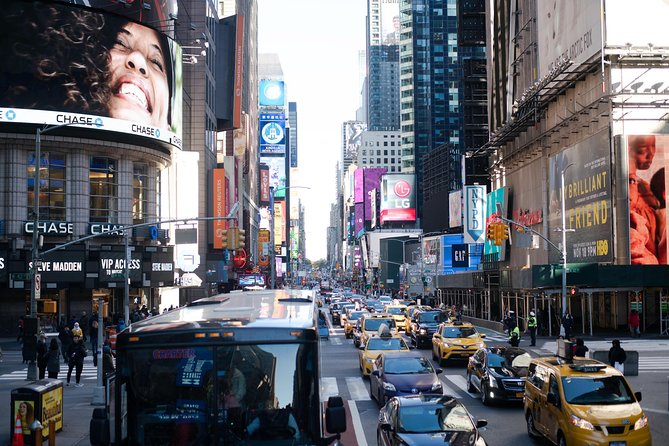
How often does a Big Bus arrive at each New York stop?
A bus arrives approximately every hour on both the Downtown Red route and Uptown Blue route. Traffic and seasonal conditions can affect the timing.
How long does a full Big Bus loop take?
A complete Red or Blue loop takes about 90 minutes without getting off. The exact duration can change with the season and road conditions.
Where can I redeem my Big Bus ticket?
You can show a printed or mobile ticket to staff at any listed stop along the route. You do not need to visit one central redemption location.
What does the 24-hour ticket include?
The 24-hour option covers the Downtown route. The 48-hour option adds the Uptown route, while the 72-hour ticket also includes Brooklyn tours and four self-guided digital walking tours.
Can I use a multi-day ticket on separate dates?
No. Multi-day tickets must be used on consecutive days.
Is the bus wheelchair accessible?
Yes. Accessible vehicles with lifts are available and can accommodate up to 650 pounds. Indicate your accessibility needs in the special requirements section when booking.
What happens if bad weather cancels the tour?
If poor weather causes a cancellation, you can receive a different date or a full refund. You can also cancel for a full refund up to 24 hours before the scheduled start time.
Just added in New York City
- Brooklyn Food Walking Tour: Local Eats & Family‑Run Shops★ 5.0 · 592 reviews
- All Inclusive Airport Departure Transfer NYC/ Brooklyn/Queens★ 4.0 · 342 reviews
- Brooklyn Bridge & DUMBO Food Tour: Local Eats & Landmarks★ 5.0 · 478 reviews
- Harlem: Central Harlem Sunday Gospel with Locals★ 3.9 · 499 reviews
- New York City: Statue of Liberty & Ellis Island Guided Tour★ 4.2 · 1,031 reviews
- West Harlem: Gospel Church Service and Sunday Walking Tour★ 4.3 · 411 reviews
- Manhattan: Statue and Skyline Cruise Aboard a Luxury Yacht★ 4.8 · 540 reviews
- SoHo, Little Italy, and Chinatown 2-Hour Guided Walk★ 4.6 · 566 reviews
Trolley & Hop-On Hop-Off Tours, compared.


Hop-on Hop-off Sightseeing Tour by Open-top Bus
Read our review →
Boston Hop-On Hop-Off Trolley Tour with 13 Stops
Read our review →
New Orleans City Sightseeing Hop-On Hop-Off Bus Tour
Read our review →
Waikiki Trolley Hop-On Hop-Off Tour of Honolulu
Read our review →
Big Bus SF: Hop-on Hop-off Tour with 17 Stops and Sunset Option
Read our review →
Waikiki Trolley Blue Line Coastline & Local Grindz Hop-on Hop-off
Read our review →Browse the lists this tour appears in