
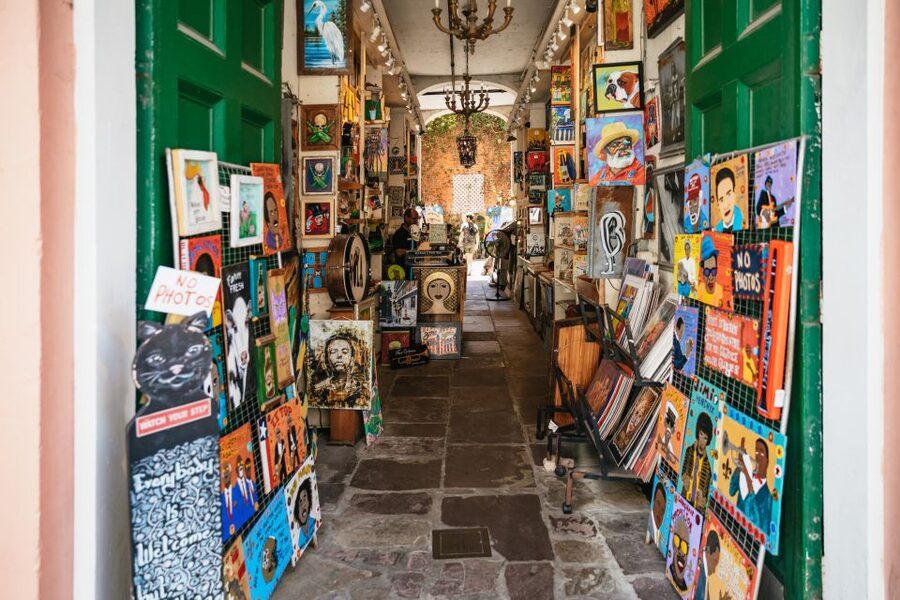
Reviewed · WALKING TOURS
French Quarter Walking and Storytelling Tour
New Orleans makes more sense when you hear its stories on the same streets where they unfolded. This two-hour walk moves from the jazz fountain through the French Quarter to Jackson Square, mixing landmarks with courtyards, old buildings, slavery and colonial history, architecture, music, and the odd character who helped give the neighborhood its edge.
I like the small-group format, which lets guides such as Scott, Tim, Libby, Lesley, Yvonne, and Casey adjust the pace and answer questions. I also like the storytelling focus: you are not just pointed toward St. Louis Cathedral or the Mississippi River, you learn why these places matter. The main drawback is the uneven pavement, combined with New Orleans heat, so comfortable shoes, water, and realistic expectations about walking are important.
Key points at a glance
- Starts at the jazz fountain: Meet at Decatur and Dumaine Streets in the historic French Market district.
- Covers the essential French Quarter sights: See Jackson Square, St. Louis Cathedral, the French Market, the Mississippi River, old courtyards, and historic buildings.
- Small groups make a difference: Guides can respond to questions and shape the walk around your interests.
- Stories go beyond ghost tales: Expect discussion of colonial New Orleans, slavery, architecture, culture, music, and colorful local figures.
- Useful for the first day of a visit: The tour finishes in or near Jackson Square, with recommendations for food, drinks, music, and further exploring.
- Bring water and sturdy shoes: Sidewalks are uneven, and summer conditions can be hot.
Starting beside the jazz fountain

The meeting point is the jazz fountain at the intersection of Decatur and Dumaine Streets, in the French Market district. That puts you in a useful part of the Quarter from the start, close to the river and within easy reach of Jackson Square.
The guide sends an email the night before with a photo, contact details, and directions. That is a small but useful touch. In a busy neighborhood with plenty of street activity, knowing whom to look for saves time and uncertainty.
The exact guide can vary. Scott, Tim, Libby, Lesley, Yvonne, and Casey have all led this walk. The strongest pattern across the tour is a guide who can explain the city in plain language, tell a good story, and stop to answer questions rather than simply reciting a script.
You begin with a short overview of New Orleans. This gives you the basic frame: the French Quarter began as a French colonial outpost in 1718, then developed through changing French, Spanish, African, Caribbean, Creole, and American influences. The point is not to memorize dates. It is to understand why the Quarter feels unlike other historic districts in the United States.
Other walks around New Orleans:
- New Orleans Premier Ghost, Voodoo and Vampire Walking Tour
★ 4.5 · 12,856 reviews - New Orleans Food Walking Tour of the French Quarter with Small-Group Option
★ 5.0 · 6,118 reviews - St. Louis Cemetery No. 1 Official Walking Tour
★ 4.5 · 3,941 reviews
From the French Market to the old Quarter
The French Market is more than a place to browse. It helps explain the Quarter’s long connection to trade, food, public life, and the Mississippi River. Your guide uses the area as a starting point for the larger story of how people, customs, and languages met in New Orleans.
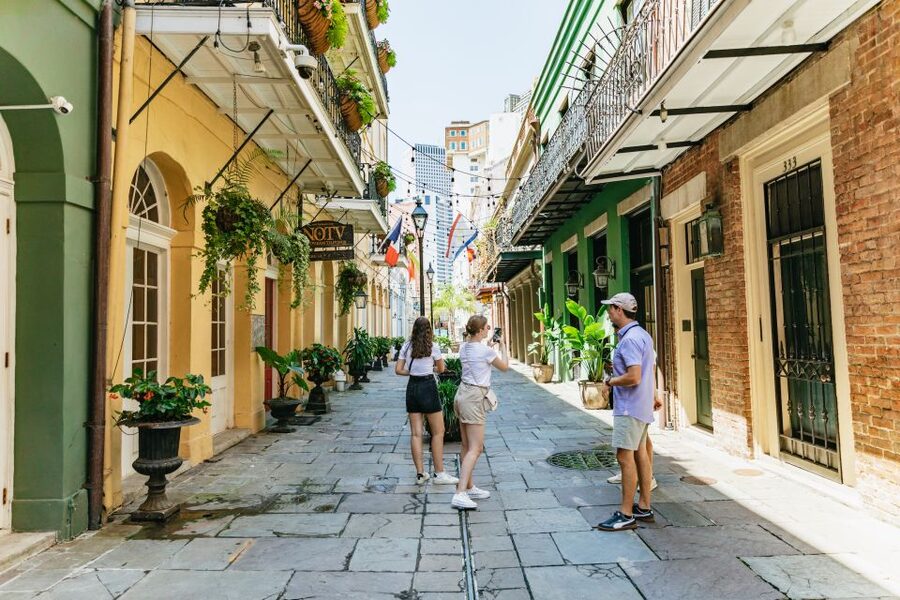
The tour then leads into streets lined with 18th and 19th century buildings. Look up as you walk. Iron balconies, shuttered windows, narrow passages, and inner courtyards help show how the Quarter developed its distinctive look.
Some of the best moments may come away from the biggest landmarks. The guide points out courtyards tucked behind old buildings and a nearly 300-year-old convent. These details reward you for paying attention to doorways and side streets that are easy to pass without a second glance.
I appreciate this part of the route because it gives the Quarter scale. You are not seeing only grand public buildings. You are also seeing the spaces where ordinary daily life took place, often behind the façades that attract most cameras.
The downside is that the route is not a smooth stroll through a museum. French Quarter sidewalks can be cracked, uneven, and awkward underfoot. A sturdy wheelchair is advised for anyone using one, and even people with good mobility should wear shoes with solid support.
Jackson Square and St. Louis Cathedral
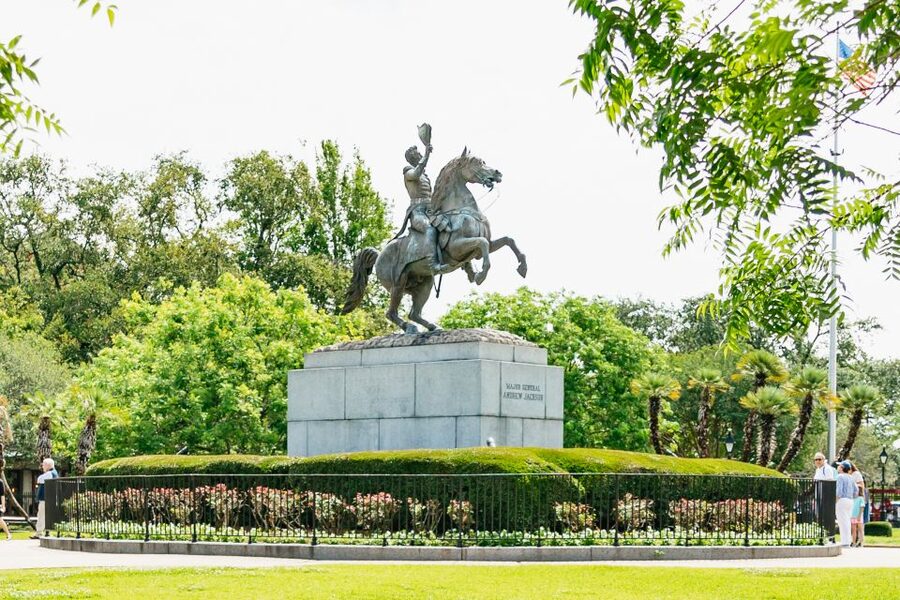
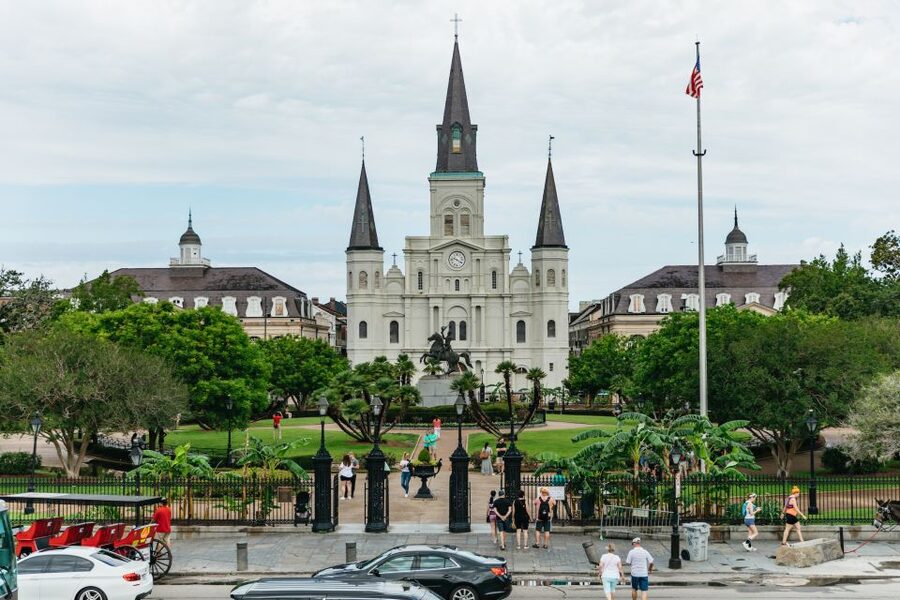
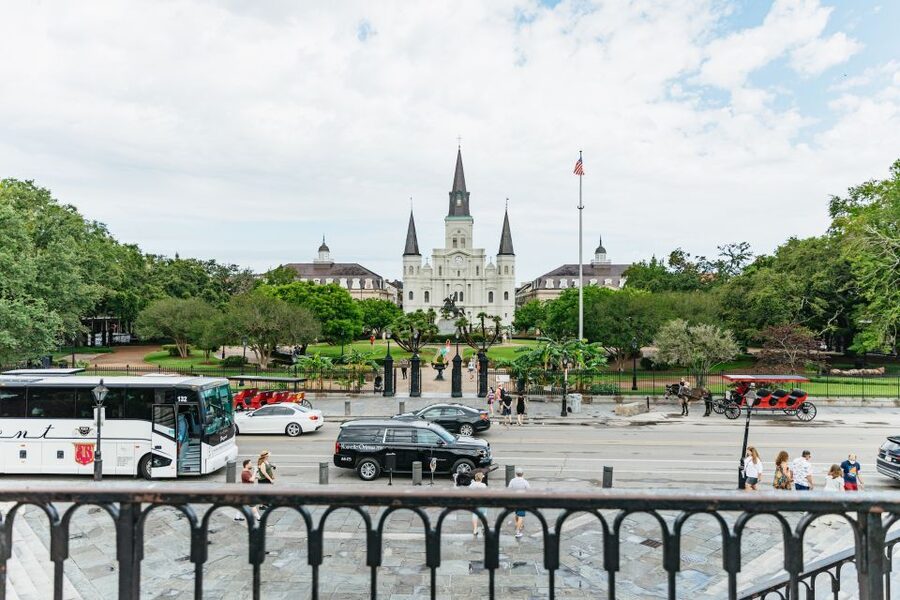
Jackson Square is the visual center of the tour. With the cathedral, historic buildings, open space, and views toward the river, it is one of the best places to understand how New Orleans presents its past in public.
St. Louis Cathedral gives the guide a chance to discuss religion, architecture, and the groups that shaped the city. The nearby buildings and square also help connect the Quarter’s colonial beginnings with its later social and cultural life.
You should expect exterior views rather than a dedicated interior visit. That matters if you are hoping for a church tour or a long stop inside the cathedral. The value here is the setting and the explanation of how the square fits into the Quarter.
The storytelling is what gives this part of the walk its force. Guides speak about triumphant and tawdry figures, local legends, power, money, survival, and the people who made the neighborhood famous. Some stories are funny. Others are uncomfortable. That balance is useful because New Orleans is not only a party town or a backdrop for ghost stories.
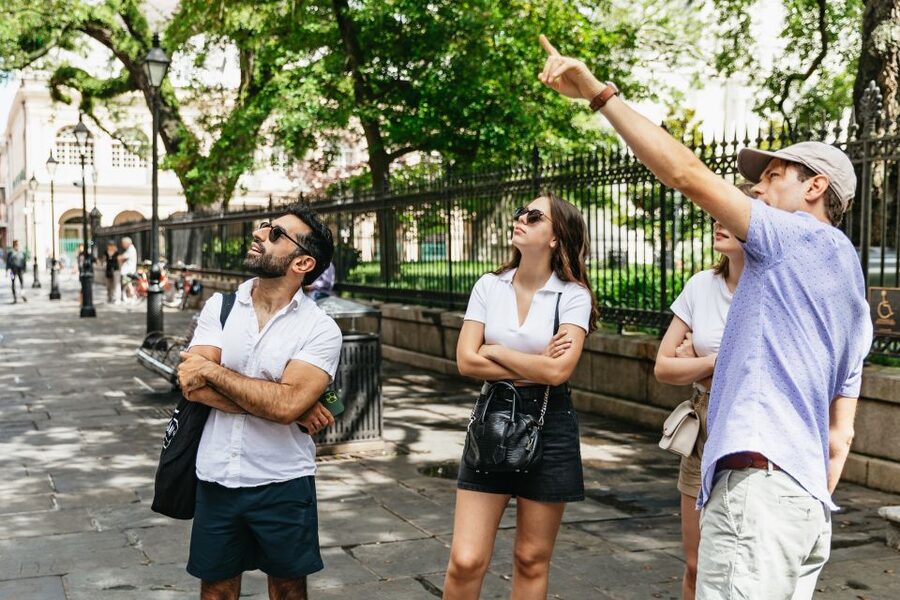
Several guides are praised for making complicated subjects easy to follow. Libby is known for combining humor, energy, and a clear passion for New Orleans. Scott often adjusts the walk to the group’s questions. Tim is described as keeping an easy pace while offering a steady flow of information.
The Mississippi River and the city beyond the Quarter
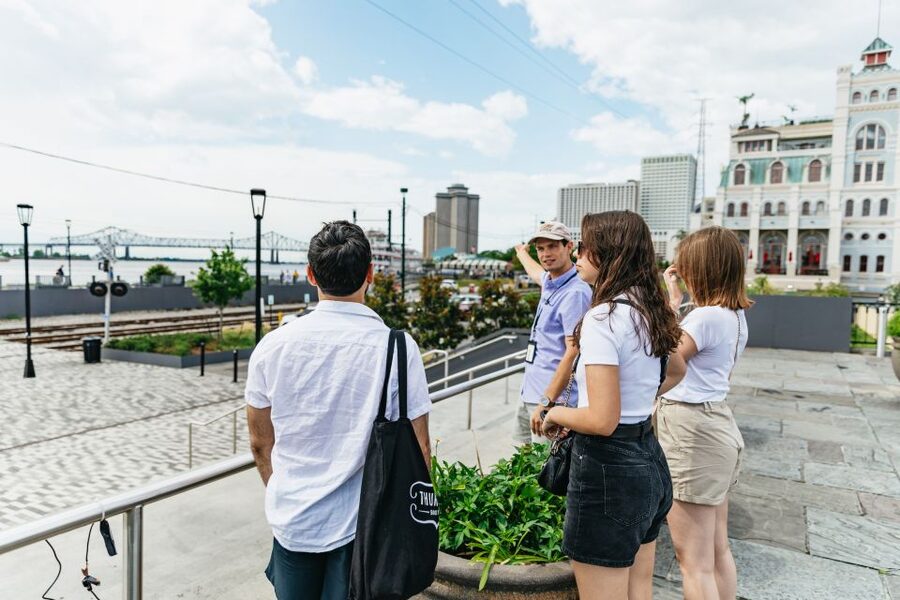
The Mississippi River is not just a scenic endpoint. It explains much of New Orleans’ existence and its long role as a meeting place for commerce, migration, music, food, and conflict.
From the riverfront, your guide can connect the French Quarter to the wider city. This broader view is one of the tour’s better features. You learn about the Quarter as part of New Orleans rather than as an isolated tourist zone.
That context helps make sense of the mix you see on the streets. French colonial beginnings, African and Caribbean influences, Creole culture, American expansion, and the legacy of slavery all form part of the city’s story. The tour does not treat the past as a decorative backdrop.
The riverfront can also be busy and exposed. Depending on the time of day and weather, you may appreciate the open air or wish for more shade. In hot months, bring water and listen for the guide’s pauses in cooler areas. One guide was specifically praised for stopping in the shade during very hot weather.
Same base, a different kind of day out:
- New Orleans Steamboat Natchez Jazz Cruise with Dinner Option
★ 4.0 · 7,533 reviews - Adults-Only New Orleans Ghost, Crime, Voodoo, and Vampire Tour
★ 5.0 · 6,545 reviews - New Orleans Swamp and Bayou Boat Tour with Transportation
★ 5.0 · 5,399 reviews - New Orleans Steamboat Natchez Jazz Cruise
★ 4.5 · 5,334 reviews
Stories that make the architecture matter

A walking tour earns its price when it helps you see things you would otherwise miss. This one aims to do that through stories tied to particular buildings, streets, and courtyards.
You may hear about the social groups that shaped New Orleans, the meaning of local architectural details, and the characters connected to the Quarter. The history includes slavery, which is important. A useful tour should not present the old streets as a charming stage while leaving out the people whose labor and suffering helped build the city.
The guides also connect neighborhood events to the larger city. That wider frame was especially useful for people wanting more than a quick list of famous spots. You may arrive thinking of the French Quarter as a collection of bars, restaurants, balconies, and music clubs. You leave with a better sense of how those layers formed.
Music is part of the atmosphere. You may hear it on the streets as you move between stops, while the guide explains how different ethnic groups and cultural traditions helped shape New Orleans’ sound. The tour does not replace a live music evening, but it can make the music you hear later feel more connected to place.
The storytelling style varies slightly by guide. Scott is often described as especially good at tailoring explanations to personal interests. Libby is praised for a lively delivery and strong historical detail. Lesley brings cultural, archaeological, and geographic information into the walk. Yvonne is noted for connecting the Quarter to the wider story of New Orleans.
Why two hours is the right length
Two hours gives the guide enough time to cover the major sights without turning the walk into an all-day march. Several parts of the Quarter are close together, but the stories take time, especially when the group asks questions.
You should not expect to enter every landmark or inspect every street. The tour is an orientation walk with historical depth, not a complete survey of the neighborhood. That is a strength for most people arriving in New Orleans for the first time.
The pace is generally manageable. Tim has been praised for keeping the walk easy to follow, and small groups make it simpler to pause or ask for clarification. Still, the uneven pavement means the physical effort can feel greater than the distance suggests.
Heat is the main seasonal concern. April through October can be uncomfortable, and summer conditions may limit how long you want to stand in direct sun. Wear light clothing, bring water, and use the stops as chances to rest rather than treating them as wasted time.
Large bags and luggage are not allowed, and pets and smoking are also not permitted. That makes sense on narrow sidewalks, but plan to leave bulky items elsewhere before meeting the group.
Small groups and the value of personal attention
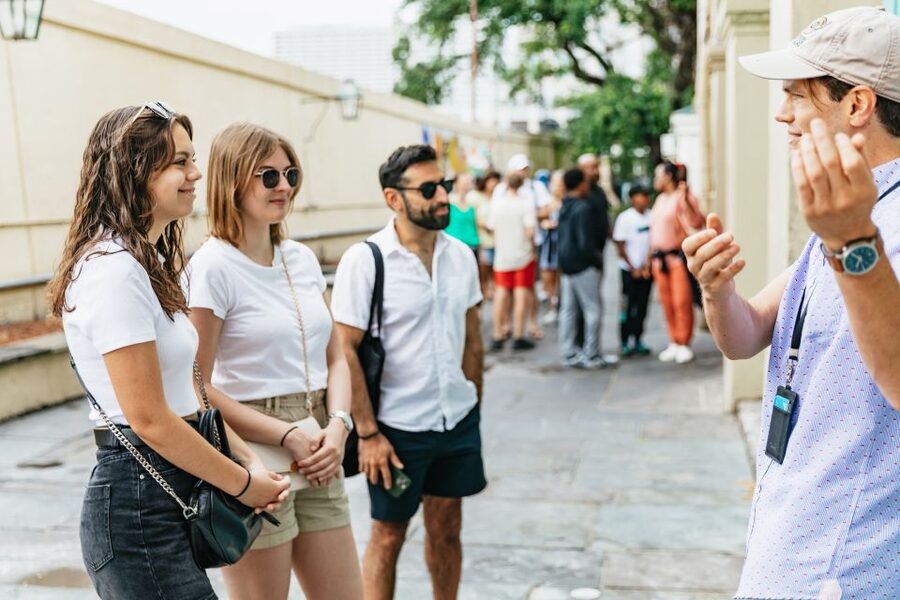
The size of the group can shape the experience more than any individual stop. A small party makes it easier to hear the guide, cross streets together, ask questions, and pause without holding up a crowd.
It also allows some customization. If you want more detail on architecture, slavery, food, music, or the Quarter’s connection to the rest of New Orleans, say so. Guides have shown a clear willingness to adjust the conversation around the group’s interests.
The tours are not always one-on-one. Group size can vary, so you should book this for the small-group design rather than assume you will have a private guide. Even a group of seven can feel personal, while a larger group may offer less room for questions.
This format suits curious first-time visitors, couples, families with older children, and anyone who wants a strong introduction before exploring alone. It is less suited to someone who wants a fast photo walk, a ghost-only tour, or a fully indoor activity.
What the $35 price buys you
At $35 per person, the main purchase is not transportation or admission. You are paying for two hours of local interpretation, route planning, storytelling, and practical advice.
I think the price is fair if you use the tour as the first step in a larger visit. A good guide can help you recognize details for the rest of your stay and point you toward places to eat, drink, hear jazz, or explore next. Those recommendations are especially useful because the walk finishes in or near Jackson Square, right in the middle of the action.
The value is lower if you already know the French Quarter well or prefer to wander without a schedule. You can see the outside of many landmarks for free. The difference is the explanation, the historical context, and the chance to ask a local guide direct questions.
One practical improvement would be to have the recommendations written down. Guides may offer plenty of restaurant, attraction, and music suggestions during the final conversation, but you may not have time to record them all. Keep your phone ready if a recommendation sounds useful.
The tour has a 4.7 rating from 1,251 reviews, which fits the main strengths of the experience: engaging guides, strong local knowledge, good pacing, and small groups. The most consistent praise goes to the guides’ enthusiasm and ability to make history enjoyable without reducing it to empty entertainment.
Who should book this French Quarter walk
You should consider booking if you want:
- A first look at the French Quarter with useful historical context
- A guide who can answer questions instead of simply pointing out buildings
- A balance of famous sights and lesser-known courtyards
- A walk that addresses slavery, architecture, culture, and the people behind the city’s image
- Restaurant, music, and sightseeing suggestions for the rest of your visit
- A small-group experience rather than a large street procession
You may want something else if you need a fully smooth route, dislike outdoor walking in heat, or want extensive interior visits. The sidewalks are a real consideration, and water is essential in warmer weather.
Wheelchair users can join because the activity is listed as wheelchair accessible, but the pavement is difficult. A sturdy wheelchair is specifically advised. If you have mobility concerns, contact the provider before booking so you can discuss the route and conditions.
Cancellation is flexible: you can cancel up to 24 hours before the tour for a full refund. You can also reserve now and pay later, which helps if your New Orleans schedule is still shifting.
Should you book it?
Book this tour if you want the French Quarter to become more than a pretty street scene. The strongest guides, including Scott, Tim, Libby, Lesley, Yvonne, and Casey, bring the neighborhood to life through clear explanations, humor, strong pacing, and stories tied to the places around you.
I would schedule it near the beginning of your stay. You will recognize the streets afterward, understand the landmarks better, and have a useful list of places to continue exploring. Bring water, wear sturdy shoes, and choose it for history and local perspective rather than a simple sightseeing checklist.
FAQ
Where does the French Quarter tour start?
The tour starts at the jazz fountain at the intersection of Decatur and Dumaine Streets in the French Market district of New Orleans.
How long does the walking tour last?
The tour lasts two hours.
What sights are included?
The route includes views of St. Louis Cathedral, Jackson Square, the French Market, the Mississippi River, historic 18th and 19th century buildings, old courtyards, and a nearly 300-year-old convent.
What language is the tour offered in?
The live tour guide speaks English.
Is the tour wheelchair accessible?
The activity is listed as wheelchair accessible, but the French Quarter sidewalks are uneven. A sturdy wheelchair is recommended.
What should I bring?
Bring water, especially from April through October, and wear comfortable walking shoes suitable for uneven sidewalks.
Can I cancel the booking?
You can cancel up to 24 hours in advance for a full refund. Reserve now and pay later is also available.
Just added in New Orleans
- New Orleans: French Quarter, Voodoo and Cultural Experience★ 4.5 · 972 reviews
- From New Orleans: Oak Alley Plantation Tour★ 4.5 · 443 reviews
- New Orleans: Bayou Tour in Jean Lafitte National Park★ 4.8 · 428 reviews
- New Orleans: Whitney Plantation Tour with Transportation★ 4.7 · 619 reviews
- New Orleans: Guided Swamp Cruise by Tour Boat★ 4.7 · 570 reviews
- New Orleans: Voodoo Queen Tour of French Quarter★ 4.7 · 482 reviews
- New Orleans: Swamp Boat Ride & Oak Alley Plantation Tour★ 4.7 · 383 reviews
- New Orleans: Walking Tour Inside St. Louis Cemetery No. 1★ 4.6 · 1,519 reviews
Walking Tours, compared.
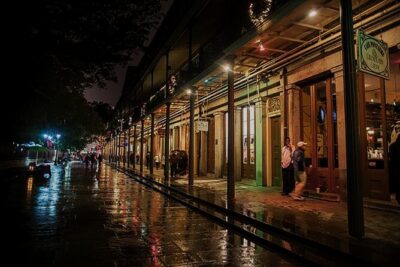
New Orleans Premier Ghost, Voodoo and Vampire Walking Tour
Read our review →
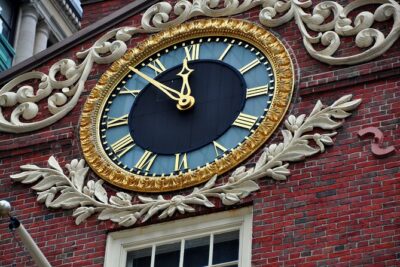
Freedom Trail History Small Group Walking Tour
Read our review →
Historic Charleston Guided Sightseeing Walking Tour
Read our review →
New Orleans Food Walking Tour of the French Quarter with Small-Group Option
Read our review →
St. Louis Cemetery No. 1 Official Walking Tour
Read our review →
Harvard University Student-Guided Walking Tour
Read our review →
Harvard University Campus Guided Walking Tour
Read our review →Browse the lists this tour appears in