
Reviewed · TOURS IN HOUSTON
Space Center Houston Admission Ticket
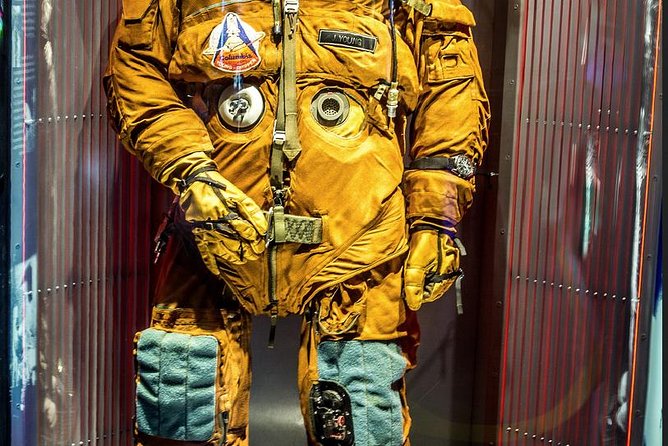
Space Center Houston puts real space hardware, lunar samples, NASA films, and astronaut training stories under one roof. The biggest draw is the chance to connect museum displays with the working Johnson Space Center campus through the NASA Tram, while the Starship Gallery brings actual spacecraft and spaceflight equipment close enough to study.
I like the freedom to spend three hours or a full day here, and I like the strong mix of serious science and hands-on activities for children. The main catch is planning: tram and special tour times can fill early, and the large complex is not always self-explanatory for first-time visitors.
Key points
- World-famous moon collection: See one of the world’s largest public displays of moon rocks and lunar samples.
- NASA Tram included: Ride out toward the Johnson Space Center campus and see areas connected with astronaut training and Mission Control.
- Starship Gallery: Study real spacecraft, equipment, and spaceflight displays rather than only reading about missions.
- Full-day value: Films, talks, interactive exhibits, crafts, and optional simulator rides can easily fill six hours.
- Plan the popular tours first: Go to guest services early for tram schedules and any available Mission Control or astronaut-training tour times.
- Extra costs to expect: Parking costs $10, while food, photos, simulator rides, audio guides, and the Historic Mission Control Tour cost extra.
Start with the tram schedule, not the gift shop
Space Center Houston is a self-guided attraction, but that does not mean you should simply wander in and hope to see everything. On arrival, first find the day’s schedule and visit guest services to ask about tram departures, films, talks, and any tour tickets still available.
The regular NASA Tram is included with admission, but seats and departure times can be limited. The most popular options can fill surprisingly early, sometimes before late morning. If you want the astronaut training area or Mission Control, make that your first task.
The Historic Mission Control Tour is not part of the basic admission package. It can be booked on-site for an extra charge, and availability is limited. That distinction matters because the main ticket gives you plenty to do, but it does not guarantee access to every behind-the-scenes tour.
I would allow at least four hours. Six hours is more realistic if you want the tram, films, exhibits, talks, and a simulator. Families with young children may need a full day, especially if crafts or hands-on activities are offered during the visit.
Other big days out near the USA:
- Merritt Island: Kennedy Space Center Visitor Complex Ticket
★ 4.7 · 5,637 reviews - Kennedy Space Center: Entry Ticket with Explore Bus Tour
★ 4.7 · 4,670 reviews - Houston: Space Center Houston Admission Ticket
★ 4.6 · 3,274 reviews
The NASA Tram connects the museum to working spaceflight
The tram is the experience’s most important link to NASA’s current and past operations. Instead of looking only at displays inside the visitor center, you ride out toward the Johnson Space Center campus and see facilities associated with Mission Control and astronaut training.
The exact route and tour choices depend on the day’s schedule. Some visitors find the campus tour less exciting because much of it involves looking at buildings from outside. I would still prioritize the tram that reaches the rocket display, since that is where you are most likely to see large, genuine space hardware rather than exterior views.
The astronaut training tour can be especially appealing if you want a closer look at how astronauts prepare. Keep your expectations in check, though. This is not a private tour of every training room, and narration quality may vary. Sit where you can hear clearly and check the schedule before committing to a time.
The Historic Mission Control Tour is the stronger choice for space-program history, but it requires separate payment and early planning. If you have one day only, compare its cost and departure time with the free tram options. The best choice depends on whether you care more about historic control rooms or seeing rockets and campus facilities.
Starship Gallery brings the hardware close
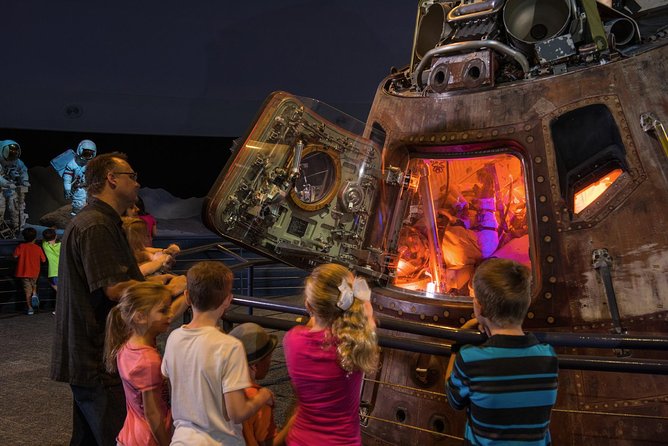
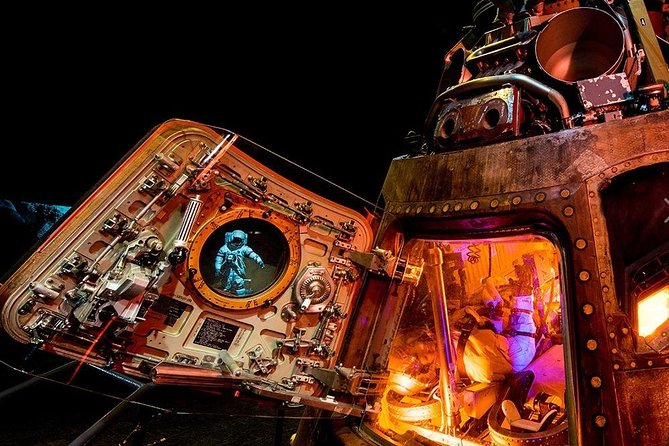
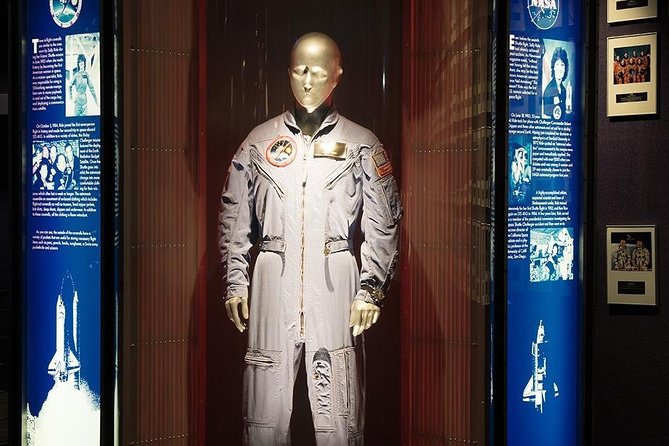
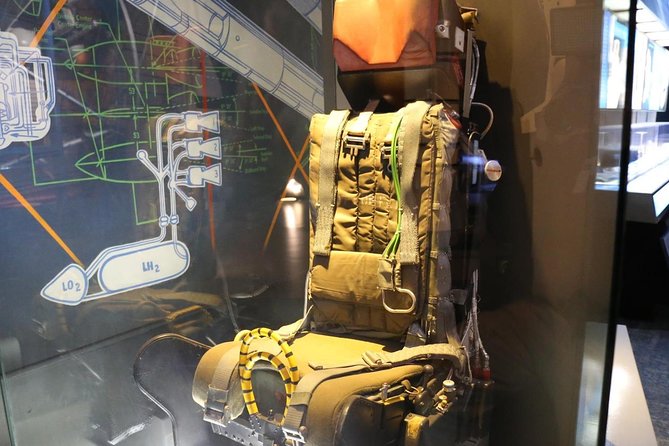
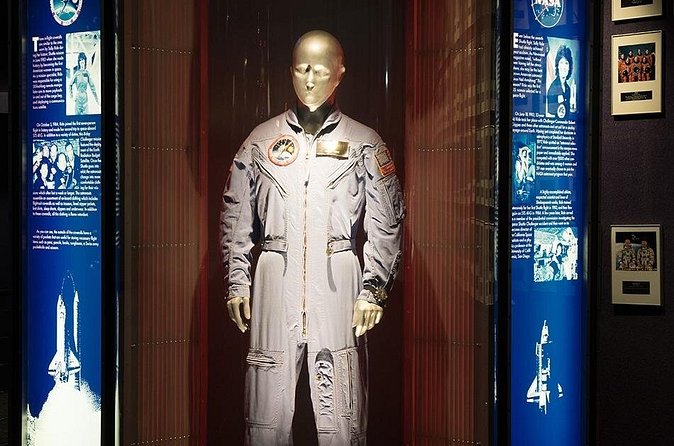
The Starship Gallery is where the visit feels most like a traditional space museum. You can examine spacecraft, equipment, and displays tied to the United States space program instead of viewing only photographs and digital screens.
The gallery also helps explain the scale of spaceflight. A rocket component or capsule that seems modest in a photograph feels very different when you stand beside it. That physical connection is valuable for children, but adults who already know the mission timelines will find plenty to study as well.
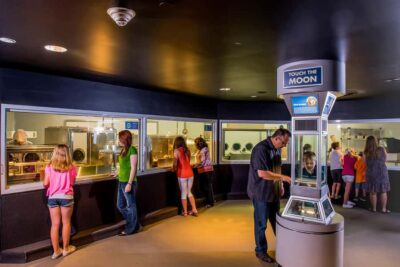
Do not rush through the lunar displays. Space Center Houston has a very large collection of moon rocks and lunar samples available for public viewing. These pieces are small, but they carry more weight than a room full of generic space graphics because they are direct evidence of material brought back from another world.
Some displays and parts of the museum may feel dated. This is not a sleek, newly designed science center at every turn. Its strength lies in the real objects, NASA connection, and breadth of material, not in polished presentation everywhere.
The Mission Briefing Center adds structure to a self-guided day
The Mission Briefing Center gives your visit a more organized feel. It is useful after you have explored a few exhibits because it helps place NASA missions and the work at Johnson Space Center into a larger story.
Films and scheduled presentations are worth fitting into your day. One film featuring Tom Hanks receives especially strong praise, and educational movies give you a welcome break from walking. Check the times as soon as you arrive rather than relying on memory or trying to catch a showing by chance.
The schedule may appear on scrolling screens, so take a quick photo of the times you want. That simple step can save you from repeatedly returning to check what is playing next.
Talks and astronaut appearances, when offered, can be among the day’s best moments. They add a human voice to the hardware and mission statistics. Since these programs change, ask staff what is scheduled on your date.
Other tickets worth buying ahead in the USA:
- NYC: 9/11 Memorial & Museum Timed-Entry Ticket
★ 4.8 · 31,428 reviews - NYC: Edge Observation Deck Admission Ticket
★ 4.6 · 20,918 reviews - NYC: Museum of Modern Art (MoMA) Entry Ticket
★ 4.6 · 12,540 reviews - New York CityPASS®: Save up to 41% at 5 Top Attractions
★ 4.7 · 10,548 reviews
Interactive exhibits work for children and adults
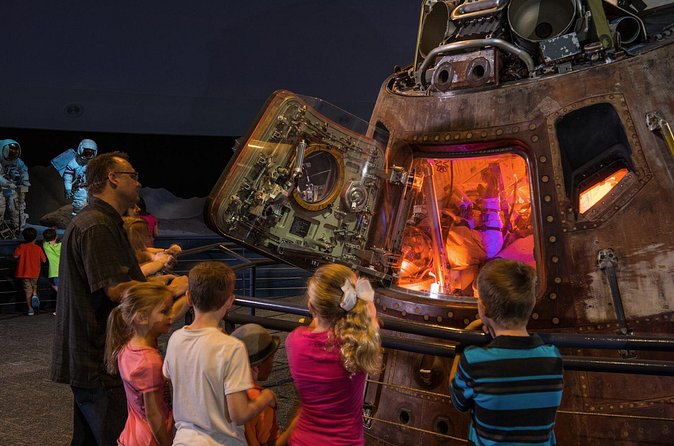
Space Center Houston is not only a display of old spacecraft. Interactive stations, training activities, educational films, and rotating exhibits give children something to do while adults read the technical material.
Young children may enjoy crafts and simple hands-on demonstrations, while older children and teenagers can spend more time with mission planning, astronaut training, and Mars-related material. Adults who like engineering, aeronautics, or NASA history will find enough written information to make the visit worthwhile.
I would not promise that every exhibit will hold every child’s attention. The complex is large, and some sections rely more on reading than on play. Still, the mix is broad enough that families can move between active displays and quieter galleries.
The virtual reality simulator is one optional extra that earns its place for many people. It costs more than admission, but it provides the kind of physical thrill that ordinary exhibit panels cannot. If your group likes rides and simulations, set aside money for it rather than assuming every activity is included.
Plan food, parking, and add-on costs

Admission costs $32.63 per person, which is reasonable if you stay most of the day and use the included tram, films, galleries, and exhibits. It feels expensive if you arrive late, miss the tram, skip the films, and leave after a couple of hours.
Parking costs an additional $10. Food and drinks are also separate, with the on-site Food Lab providing the practical solution for a long visit. The cafeteria can be busy and pricey, but eating on-site saves you from leaving the center and losing time.
You can expect other optional charges for:
- Simulator and virtual reality rides
- The Historic Mission Control Tour
- Audio guides in English or Spanish
- Souvenir photographs
- Food and drinks
- Souvenirs and gifts
Photo packages can be costly, so ask about prices before agreeing to a picture. The gift shop is another place where a quick look can turn into an expensive purchase. I would set a spending limit for children before entering.
Use your day wisely with a simple order
Here is the order I would use:
- Arrive early and collect information. Check the map, film times, talks, and tram departures.
- Reserve limited tours. Ask about astronaut training and Historic Mission Control options before they sell out.
- Take the tram. Choose the route that best matches your interests, giving priority to the rocket display if authentic hardware matters most.
- Watch a film or briefing. Use this as a seated break and a way to organize what you have seen.
- Explore the Starship Gallery and lunar displays. Give yourself time with the spacecraft and moon samples.
- Add interactive activities and a simulator. Decide how much extra you want to spend after seeing the included attractions.
- Eat before the busiest period if possible. The Food Lab is convenient, but a crowded meal period can interrupt your schedule.
This order prevents the most common mistake: spending the first two hours inside the gallery, then discovering that the tram or special tour you wanted is full.
Who will enjoy Space Center Houston most
I would recommend this admission to families, science fans, NASA enthusiasts, and anyone with a strong interest in aeronautics or human spaceflight. It works particularly well for mixed-age groups because children can use interactive stations while adults focus on spacecraft, lunar samples, and mission details.
Couples and solo visitors can also enjoy it, especially if they are willing to read exhibits and stay for films. The self-guided format lets you linger over one subject without being hurried by a group.
This may not be the best choice if you want a tightly guided, polished tour from the moment you arrive. Staff assistance can feel limited, and you may need to work out the map and schedule yourself. If you dislike planning or waiting, the ticket may feel less satisfying.
The campus tram also needs realistic expectations. Parts of the route show buildings from the outside, and not every stop offers a dramatic interior visit. The appeal is the connection to NASA’s real work, not constant spectacle.
Accessibility, language, and ticket rules
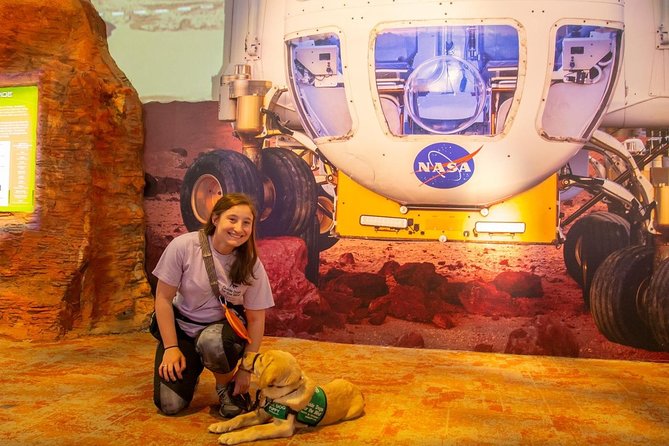
The ticket is mobile, and confirmation is sent within 48 hours, subject to availability. Most people can take part, and service animals are allowed.
An audio guide is available in English and Spanish for an extra fee. Since the visit is self-guided, that option may help if you want more narration than the exhibit panels provide.
The admission is non-refundable and cannot normally be changed. If poor weather forces the center to cancel the experience, you will be offered another date or a full refund. One useful point is that a prepaid ticket may be usable for up to one year if the date needs to change, but confirm the exact terms attached to your booking.
Is this Space Center ticket worth booking?
Book it if you can arrive early, stay at least four hours, and care about real space hardware, NASA missions, or hands-on science. The included exhibits and tram make the $32.63 admission a fair deal for a long day, though parking, food, photos, simulators, and special tours can raise the final cost.
I would book ahead if your Houston schedule is tight, but I would still go straight to guest services when you arrive. If the Historic Mission Control Tour matters most, plan for its separate fee and limited availability. If you mainly want a quick look at rockets, moon rocks, and a few exhibits, half a day may be enough.
FAQ
What does the Space Center Houston admission ticket include?
The ticket includes entry to Space Center Houston, the exhibits and attractions, the NASA Tram, the Mission Briefing Center, and the Starship Gallery.
How long should I spend at Space Center Houston?
The ticket is valid for a day visit, and you should allow at least four hours. A full six-hour visit is useful if you want the tram, films, talks, exhibits, and interactive activities.
Is the Historic Mission Control Tour included?
No. The Historic Mission Control Tour can be booked on-site for an additional cost and may sell out early.
Do I need to reserve a NASA Tram time?
The tram is included, but departure times and seats can be limited. Go to guest services early to check available times and reserve the tours you want.
Are food and parking included?
No. Parking costs an additional $10, and food and drinks can be purchased at the on-site Food Lab.
Is an audio guide available?
Yes. Audio guides are available in English and Spanish for an additional fee.
Just added in the USA
- Road To Hana: Maui Waterfall Hiking Tour in Private Jeep★ 5.0 · 343 reviews
- Road to Hana: Full-Day Scenic Drive with Blacksand & Waterfalls★ 4.5 · 837 reviews
- Original La Jolla Sea Cave Kayak Tour for Two★ 4.5 · 871 reviews
- Maui Nui Luau at the Sheraton Maui Resort & Spa★ 4.5 · 1,622 reviews
- 2 Hour Sailing Cruise on Lake Tahoe★ 5.0 · 886 reviews
- Key West: All-Inclusive Watersports Adventure with Lunch & Beer★ 4.5 · 351 reviews
- La Jolla Sea Caves Kayak Tour For Two (Tandem Kayak)★ 4.5 · 1,205 reviews
- Behind-the-Scenes at Petco Park Tour★ 4.5 · 339 reviews
Tours in Houston, compared.

NASA’s Space Center Admission Plus Houston City Tour
Read our review →
Astroville Tunnel Tour of Downtown Houston (Air-Conditioned)
Read our review →
Houston Museum of Natural Science General Admission
Read our review →
Guided City Tour by an Open-Top Double Decker Bus
Read our review →Browse the lists this tour appears in