
Reviewed · WALKING TOURS
The Full Revolutionary Story Epic Small Group Boston Walking Tour
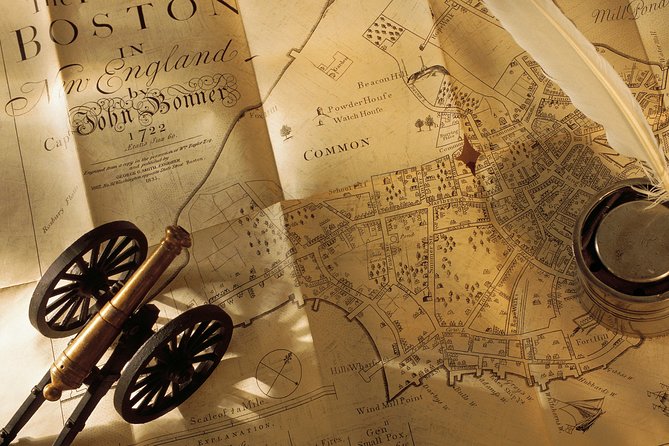
Boston’s Revolution makes more sense when you hear it as a story rather than as a string of old buildings. This three to three-and-a-half-hour walk reshuffles the Freedom Trail into historical order, then adds burying grounds, modern downtown, the North End, and Boston Harbor.
I especially like the way guides such as Tyler, Mike, Chris, and Tom use maps, character cards, Lego soldiers, and other simple props to make political arguments and battles easier to follow. I also like the small group, capped at 15, which gives the guide room to answer questions and keep the presentation personal.
The main drawback is simple: you walk a lot, mostly outdoors, and the tour can run three and a half hours. It is not the best choice if you have mobility limits, dislike standing in cold or rainy weather, or prefer a quick list of sights instead of a full history lesson.
Key points to know before booking
- The Freedom Trail is followed in story order: You do not simply march from one landmark to the next. The route is arranged around the events leading toward revolution.
- Fourteen official landmarks are included: Most are seen from outside, with entry built into Faneuil Hall and Quincy Market.
- The guide is the heart of the experience: Tyler has a master’s degree in American history, while other guides bring teaching and history backgrounds to the walk.
- Props make difficult history clearer: Maps, visual cards, character badges, and Lego soldiers help explain people, places, and battles.
- The tour reaches beyond colonial Boston: You see the Financial District, Rose Kennedy Greenway, North End, and waterfront as parts of the city’s continuing story.
- The finish is useful for the rest of your day: Lewis Wharf is near restaurants, public restrooms, public transportation, parking, and the Aquarium stop.
Why this Boston tour feels different from a standard Freedom Trail walk
The familiar red-brick path is useful, but it can flatten the Revolution into a parade of famous names. This tour takes a different route through the material. It begins with the people who settled Massachusetts Bay, moves through growing political conflict, and then follows the pressure points that led to open war.
That approach matters. You can see the Old State House, Boston Massacre site, Faneuil Hall, and Old South Meeting House on many city walks. Here, the guide explains how each place fits into the chain of events. The result is less about checking off landmarks and more about understanding why Boston became the center of resistance.
The group limit of 15 is another real advantage. A large crowd can make a city walk feel like a moving classroom where the people at the back miss half the talk. With a smaller party, you should have a better chance of hearing the guide and asking questions.
The tone is academic without being stiff. Tyler has used Lego soldiers to show the Battle of Bunker Hill, and guides use maps and character cards to give shape to people who can otherwise blur together. This is particularly helpful for families with older children and teenagers. It is not designed as a children’s comedy tour, but the interactive teaching helps keep young minds involved.
Other walks around Boston:
- Boston: Freedom Trail History Small Group Walking Tour
★ 5.0 · 6,450 reviews - Cambridge: Harvard University Student-Guided Walking Tour
★ 4.6 · 3,931 reviews - Harvard University Campus Guided Walking Tour
★ 4.5 · 3,632 reviews
Starting at City Hall Plaza with Boston in view
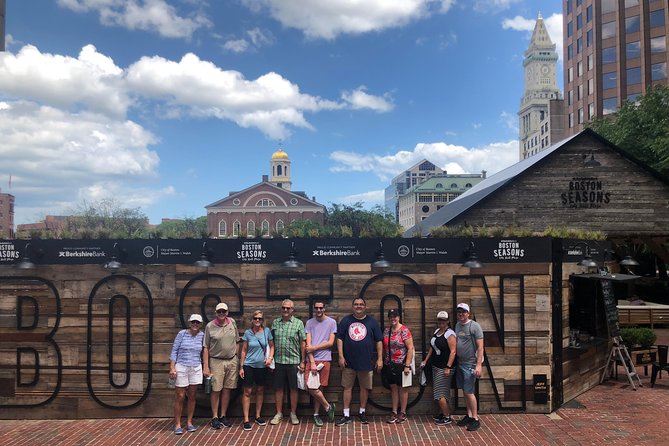
You meet at City Hall Plaza, across from Faneuil Hall and near Five Iron Golf. Look for the guide by the seasonal beer garden and the large BOSTON sign. That sign, with Faneuil Hall behind it, gives you an easy meeting marker and a useful opening photo.
The first stop includes Boston City Hall, famous for its unusual architecture. The building offers a quick reminder that Boston is not only a preserved colonial town. Modern public life, sharp architectural choices, government, business, and old brick streets all sit close together here.
That contrast continues throughout the tour. You are not sealed inside a historic district. You keep moving through a working city, with offices, restaurants, traffic, gardens, and public spaces around the old sites.
King’s Chapel and Boston’s first settlers
At King’s Chapel Burying Ground, the story reaches back before the Revolution. The guide discusses the people who first settled Massachusetts Bay and the unusual religious and political ideas of the Puritans.
This is a smart place to begin the historical argument. The Revolution did not appear out of nowhere in 1775. It grew from older disputes about religion, authority, local control, property, and the rights of English subjects. The burying ground gives the guide a physical setting for that early chapter.
You also pass Boston’s first Anglican church. That detail helps show the tension between the established church and the Puritan society around it. The tour uses the Freedom Trail, but it does not treat the trail as the whole story.
Granary Burying Ground and the people behind the legend
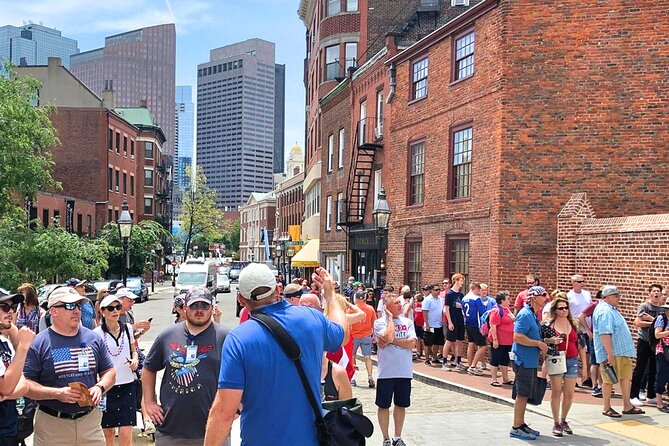
At Granary Burying Ground, you see the graves of Paul Revere, John Hancock, and Samuel Adams. The stop lasts about 15 minutes, giving the guide time to explain who the Sons of Liberty were and how their work went beyond the simplified schoolbook version.
The burial ground is compact and visually striking. It can also be crowded, so listening closely matters. You are standing among names that became symbols, but the useful part is hearing about their choices, alliances, and political methods.
Paul Revere receives special attention later, at his home and statue. That repetition is worthwhile because it separates the real man from the polished legend. He was not only the rider from the famous poem. His trade, relationships, and place in Boston’s political network add more substance to the familiar story.
Same base, a different kind of day out:
- Boston Duck Boat Sightseeing City Tour with Cruise Along Charles River
★ 4.5 · 9,378 reviews - Boston Hop-On Hop-Off Trolley Tour with 13 Stops
★ 4.5 · 5,576 reviews - Boston: City Cruises Whale Watching Cruise
★ 4.5 · 4,710 reviews - Boston Duck Tour: The Original and World-Famous
★ 4.6 · 3,935 reviews
Old City Hall, Franklin, and the machinery of government
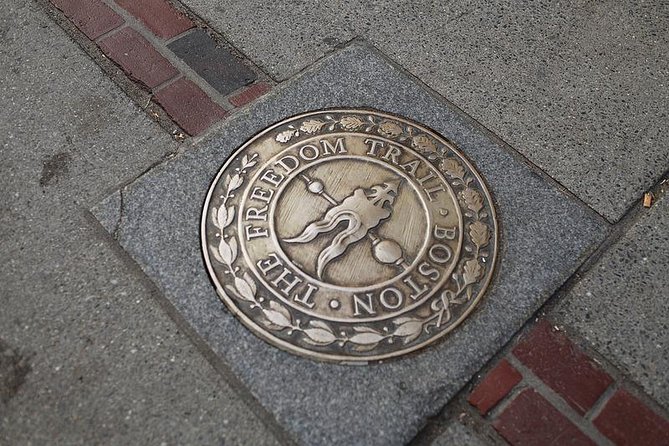
Old City Hall provides a handsome setting for a talk about democracy and the barriers that make democracy difficult. The stop is short, but it connects the Revolution to larger questions about who gets a voice and how political systems handle conflict.
Nearby, the Benjamin Franklin statue marks the site of America’s first public school and the education of one of Boston’s most famous sons. This is a brief stop, yet it widens the tour beyond military events and founding fathers. Education, public debate, print, and civic life all helped shape the city.
You then reach the Old State House, the oldest public building in the country according to the tour description. This was the center of Massachusetts politics, where arguments over British authority and American rights became more than abstract complaints.
The point is not simply that a famous building survived. It is that political power was exercised here. When the guide places later events against this setting, the Revolution feels less like a sudden explosion and more like a long dispute that kept getting harder to contain.
The Boston Massacre and the road to the Tea Party

The Boston Massacre site is one of the strongest teaching stops. Soldiers, townspeople, loyalists, and patriot leaders all had different interests in the rising tension. The guide explains how the confrontation became a political weapon as well as a deadly street event.
That distinction is important. Historical memory often turns complicated conflicts into clean stories with obvious heroes and villains. A good guide helps you see how propaganda, fear, anger, and competing loyalties shaped what happened next.
The route also passes a former publishing house linked with Ralph Waldo Emerson, Henry Wadsworth Longfellow, Nathaniel Hawthorne, and other literary figures. It is a small detail, but a welcome one. Boston’s story includes books and ideas as well as protests and battles.
At Old South Meeting House, the tour reaches the Boston Tea Party. This is where public debate became direct action, and the guide explains why this event marked a point of no easy return. You do not enter museums as part of the basic tour, so anyone wanting the full interior experience of the meeting house will need to return separately.
Faneuil Hall, Quincy Market, and modern downtown
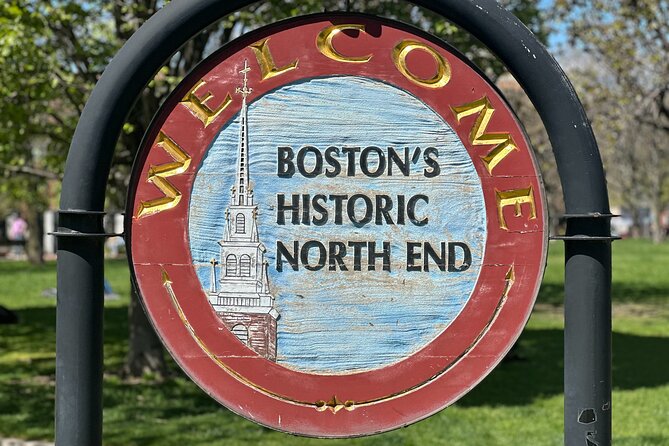
Faneuil Hall is presented as the Cradle of Liberty, a place where protest gathered force. The building’s importance comes from what happened inside and around it, not just from its age or appearance.
A built-in break at Faneuil Hall and Quincy Market gives you a chance to pause before the second half of the walk. This is welcome after several hours of standing and listening. You can also see the tourist side of central Boston. Quincy Market has plenty of food and activity, but prices and quality vary, so treat it as a convenient stop rather than an automatic best meal.
The route then passes Post Office Square and the Financial District. This section is one of the tour’s more useful departures from the standard Freedom Trail. You see how the historic core has been surrounded by education, health care, finance, offices, and modern public spaces.
The Rose Fitzgerald Kennedy Greenway adds a garden-lined break from the brick and stone. It is a good reminder that Boston keeps changing. The tour asks you to notice the present city instead of treating history as something locked behind ropes.
Paul Revere, North Square, and Old North Church
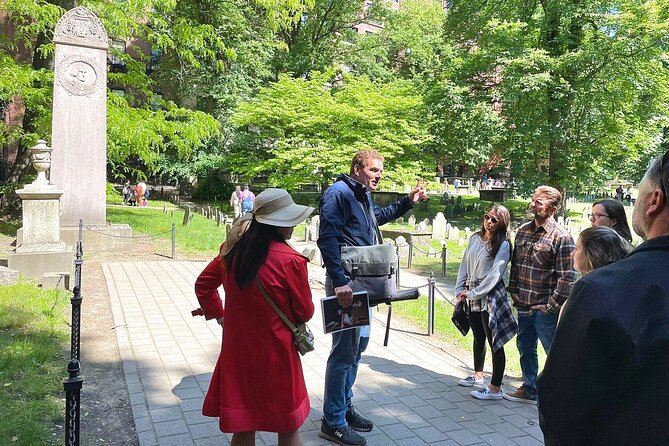
The walk continues into the North End, Boston’s oldest residential neighborhood. At the Paul Revere House, you see the home connected with one of the Revolution’s best-known figures. The building sits in North Square, described as the oldest residential square in America, and the surrounding streets are among the most atmospheric parts of the route.
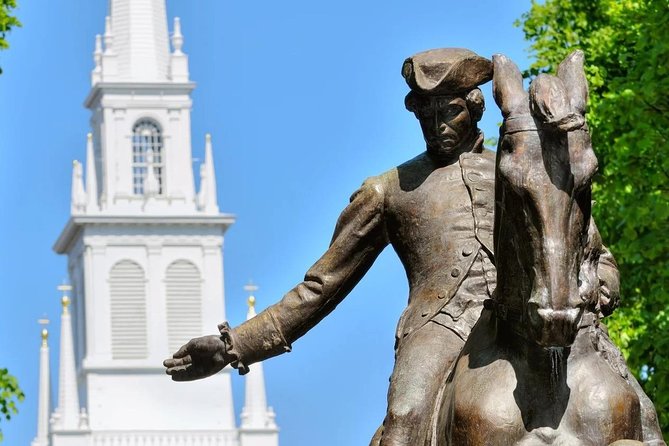
North Square Park and the Paul Revere statue provide more context and a good photo stop. The guide talks about Revere’s famous ride, but the larger value comes from placing him in the neighborhood where people lived, worked, argued, and organized.
At Old North Church, the familiar signal of one lantern by land and two by sea leads into the story of Revere’s midnight ride. The church steeple gives the tale a strong visual anchor. From there, the guide connects the warning to Lexington and Concord and the first major fighting.
You should expect outdoor viewing rather than a full church visit as part of the standard walk. If entering Old North Church is important to you, ask the guide about the best way to return on your own.
Bunker Hill and the final waterfront walk
The tour reaches the second-oldest burial ground in Boston and pauses outside it. From the terrace across the street, you get views toward Charlestown and Boston Harbor. This is another example of the route using a place for both historical meaning and city scenery.
The Battle of Bunker Hill receives a full explanation. The guide recreates the battle with visual aids, which can make troop movements and decisions much easier to picture than a spoken list of dates. It is one of the stops where the teaching style matters most.
You do not cross the harbor to visit USS Constitution on this tour. You can see the world’s oldest commissioned naval vessel from the opposite side, hear about its later history, and receive advice on visiting it separately. That is useful, but it is also a clear boundary: this is not a complete Charlestown or naval-history tour.
The last section follows Boston Harbor and the Harborwalk. You get views from piers, wharfs, and waterfront parks, with ocean air and a change of pace after the crowded historic streets. The guide frames the waterfront as the point where British forces were finally pushed out of Boston.
The walk ends at Lewis Wharf, in the heart of the North End. You are close to Italian food, pizza, seafood, clam chowder, and cannoli, so the ending works well for lunch or an early dinner. Public restrooms, parking, bikes, and transit are nearby, and the Aquarium stop is less than a five-minute walk away.
Price, pace, and practical value
At $55 per person, this is not the cheapest way to see the Freedom Trail. It can still be good value if you want the history explained rather than simply pointed out. You are paying for up to three and a half hours of guiding, a small group, a chronological structure, and teaching tools that make the material easier to retain.
The tour includes 14 official landmarks, though many are viewed from outside. Faneuil Hall and Quincy Market are included as part of the route, while other museum interiors require separate admission. That distinction matters if you are comparing this with a ticketed attraction or a shorter walk.
Wear comfortable walking shoes. The route covers a lot of ground, and one guide described the experience as a long walk that works best for people ready to keep moving. Weather also matters. The tour requires good weather and may be moved or refunded if conditions are poor, but you should still bring layers and rain protection when the forecast is uncertain.
The activity is offered in English, and children must be with an adult. It suits all ages, but it is not a simplified children’s program. Older children and teenagers who enjoy stories, maps, and participation may get the most from it.
Free cancellation is available up to 24 hours before the start time. Service animals are allowed, and the route is near public transportation.
Who should book this walk?
I would choose this tour early in a Boston visit if I wanted a strong framework for the city. The route helps you understand why the key sites matter, and the finish in the North End gives you an easy way to continue exploring.
It is especially well suited to:
- History enthusiasts who want more than dates and names
- Families with school-age children or teenagers
- First-time Boston visitors who want the Freedom Trail plus modern downtown
- Solo visitors who prefer a small guided group
- Anyone who enjoys lively teaching and visual demonstrations
I would think twice if you have trouble walking for several hours, need frequent indoor breaks, or want to enter every historic building. The tour also asks for attention. You are not just stopping for photos. You are listening, moving, and connecting events across several centuries.
Should you book The Full Revolutionary Story Epic Small Group Boston Walking Tour?
Book it if you want Boston’s Revolution explained as a connected story, with the Freedom Trail as the backbone rather than the entire meal. The chronological route, small group, strong guide backgrounds, maps, props, and North End finish give it more substance than a quick landmark loop.
Skip it if you want a short introduction, a fully indoor experience, or a tour focused mainly on photographs. For everyone else, $55 is a fair price for a serious three-hour lesson that also shows you the city as it is today.
FAQ
How long does the tour last?
The tour lasts approximately three to three and a half hours.
Where does the tour begin?
It begins at City Hall Plaza, at 1 City Hall Square, near the large BOSTON sign and Faneuil Hall.
Where does the tour end?
It ends at Lewis Wharf in Boston’s North End, near restaurants, public restrooms, parking, bicycles, public transportation, and the Aquarium stop.
How large is the group?
The tour has a maximum of 15 travelers.
Is transportation included?
No. This is a walking tour, and transportation is not included.
Are museum entrances included?
The route includes entry at Faneuil Hall and Quincy Market. Other museum entry is not included.
Is the tour suitable for children?
The tour is appropriate for all ages, but children must be accompanied by an adult. It is not a children’s version of the history.
What happens if the weather is poor?
The experience requires good weather. If it is canceled because of poor weather, you will be offered another date or a full refund.
Just added in Boston
- Boston’s Freedom Trail: A Revolutionary Walking Tour★ 5.0 · 1,343 reviews
- Delicious Donuts of Boston: A Sweet History Walking Tour★ 5.0 · 1,038 reviews
- Freedom Trail Walking Tour 250★ 4.5 · 1,118 reviews
- Sunset Sailing Cruise on a Tall Ship in Boston Harbor★ 4.5 · 414 reviews
- Boston North End Food Tour of 6+ Tastings, Cannoli, Lobster Roll★ 5.0 · 1,404 reviews
- Boston’s North End Food and History Walking Tour★ 5.0 · 459 reviews
- Narrated Sunset Cruise of Boston Harbor★ 4.0 · 532 reviews
- City Cruises Salem High Speed Ferry to/from Boston★ 4.5 · 727 reviews
Walking Tours, compared.
New Orleans Premier Ghost, Voodoo and Vampire Walking Tour
Read our review →

Freedom Trail History Small Group Walking Tour
Read our review →
Historic Charleston Guided Sightseeing Walking Tour
Read our review →
New Orleans Food Walking Tour of the French Quarter with Small-Group Option
Read our review →
St. Louis Cemetery No. 1 Official Walking Tour
Read our review →
Harvard University Student-Guided Walking Tour
Read our review →
Harvard University Campus Guided Walking Tour
Read our review →Browse the lists this tour appears in