
Reviewed · WALKING TOURS
Downtown Freedom Trail, Beacon Hill & Back Bay Walking Tour
Boston’s past comes alive on this walk from Faneuil Hall to Copley Square, where colonial meeting halls, Revolutionary-era landmarks, gas lamps, brownstones, grand churches, and the Boston Marathon finish line fit into one busy morning. It is a smart way to get your bearings before exploring the city on your own.
I especially like the route’s variety and the local flavor provided by guides such as Alan, Allan, and Chris. You get major sights, but also smaller details such as Beacon Hill’s purple windows, the tiny suspension bridge, the first use of ether, and the story behind the land that became Back Bay. The main drawback is pace: the walk covers a lot, and it does not follow every part of the Freedom Trail.
Key points at a glance
- Colonial Boston to modern Back Bay: Follow the city’s story from the Old State House and Boston Massacre Site to the John Hancock Tower and Copley Square.
- A true point-to-point walk: Start near the Old State House at 10 a.m. and finish near the Boston Marathon finish line.
- Small group format: The maximum group size is 20, with some departures much smaller.
- Local stories beyond the standard trail: Expect architecture, odd facts, neighborhood history, and practical suggestions for food and shopping.
- Free sights, paid guidance: The $65 fee covers the guide and route, not admission to interior attractions.
- Plan for real city walking: Sidewalks, varied surfaces, wind, heat, cold, and crowds can all affect your morning.
From the Old State House into Revolutionary Boston
Meet your guide across from Boston’s Old State House at 10 a.m. The starting point is central and easy to connect with by public transportation, though you should allow a few extra minutes to find the group. One person had trouble spotting the guide, so look for the tour leader rather than simply waiting beside the building.
The opening section spends about 70 minutes around the downtown Freedom Trail. This is the most history-heavy part of the walk, and it gives you a useful framework for understanding Boston’s role in the American Revolution.
You pass Faneuil Hall and Quincy Market, two of the city’s best-known gathering places. Faneuil Hall is closely tied to public debate and political speech, while Quincy Market adds a more commercial layer to the same part of town. The guide’s job here is not just to point at old buildings, but to connect them with the people and arguments that shaped Boston.
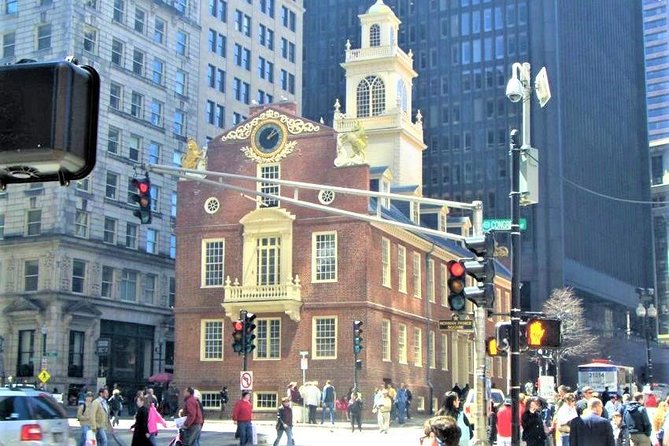
The route continues to the Old State House, where the colonial government once operated. Nearby, the Boston Massacre Site marks one of the flashpoints that helped turn tension with Britain into open rebellion. These places are close together, which makes the walk efficient, but it also means you are often listening near traffic, pedestrians, and city noise.
From there, you pass the Old South Meeting House, the Old Corner Bookstore, Old City Hall, and the site of Boston’s first schoolhouse. King’s Chapel, Tremont Temple, Old Granary Cemetery, Park Street Church, and the New State House add more layers to the route.
You do not enter all these buildings. That matters. The $65 price pays for interpretation and a guided route, not a series of indoor admissions. If you want to tour the interiors of historic buildings, you will need extra time and, in some cases, separate tickets.
The benefit is breadth. In a single morning, you see the concentration of old Boston that would take much longer to organize alone. A good guide can help you notice how the buildings changed as the city grew, rather than treating the Freedom Trail as a string of unrelated stops.
Other walks around Boston:
- Boston: Freedom Trail History Small Group Walking Tour
★ 5.0 · 6,450 reviews - Cambridge: Harvard University Student-Guided Walking Tour
★ 4.6 · 3,931 reviews - Harvard University Campus Guided Walking Tour
★ 4.5 · 3,632 reviews
What the Freedom Trail section does, and does not, cover
The tour follows a substantial downtown portion of the Freedom Trail, but it does not cover the entire trail. This is one of the most important details to understand before booking.
The complete Freedom Trail extends beyond the section between Faneuil Hall and Boston Common. This tour uses that central stretch as a starting point, then turns toward Beacon Hill and Back Bay. That choice gives you more neighborhood variety, but it means you will not see every famous Revolutionary-era site on the full route.
I see this as a sensible trade-off for a first morning in Boston. You get an overview of the city’s colonial core, then move into areas that explain how Boston developed after the Revolution. If your main goal is to check off every Freedom Trail landmark, choose a tour devoted only to the full trail instead.
The guides appear to be one of the tour’s strongest features. Alan and Allan are mentioned often, and Chris also receives praise for making the walk lively. Their style seems conversational rather than rigid. Expect questions, humor, local opinions, and the occasional detour when a subject catches the group’s attention.
That flexibility can work in your favor, especially if you enjoy stories about architecture and everyday Boston life. It can also create a timing problem. One outing finished about 25 minutes late after a late start and extended discussion. If you have a fixed lunch reservation at noon, leave a cushion or plan to eat later.
Beacon Hill and Boston’s old-money streets
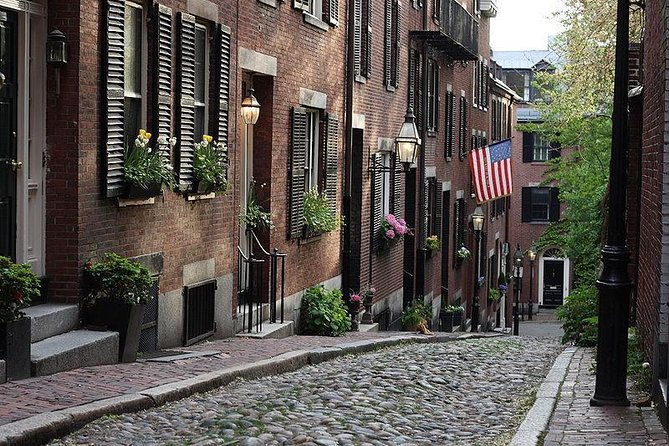
After the downtown portion, the walk passes through Beacon Hill. The stated time here is about 15 minutes, so think of this as an introduction rather than a detailed neighborhood tour.
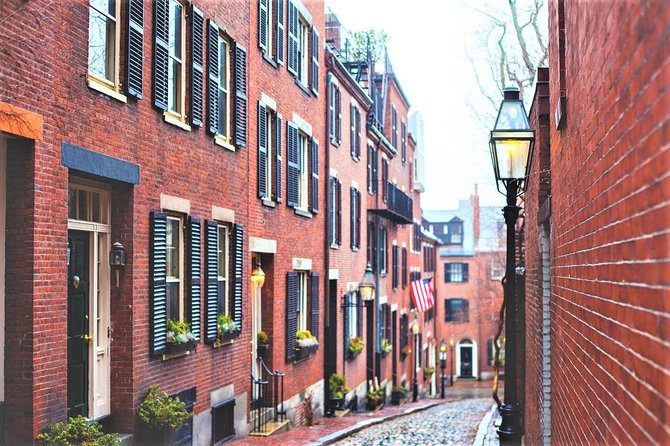
Beacon Hill is known for its Federal-style buildings, gas lamps, narrow streets, and connection with Boston’s old aristocracy. The route also points out less expected details, including purple windows and the Frog Pond area.
This transition is valuable because it changes the feel of the tour. Downtown Boston is crowded with civic buildings, markets, offices, and traffic. Beacon Hill offers a closer look at residential Boston and the city’s social history.
You should not expect a leisurely photo walk through every corner of the neighborhood. The tour keeps moving toward Back Bay, so bring your camera out quickly when the guide points out an architectural detail. The short stop works best as a sampler that helps you decide if you want to return later.
Boston Common and the Public Garden
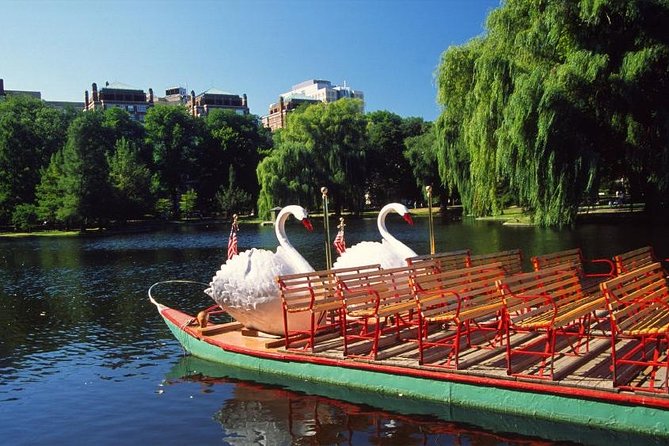
The route then reaches Boston Common and the Boston Public Garden. The listed time is about 10 minutes, which is enough for an overview but not a long pause.
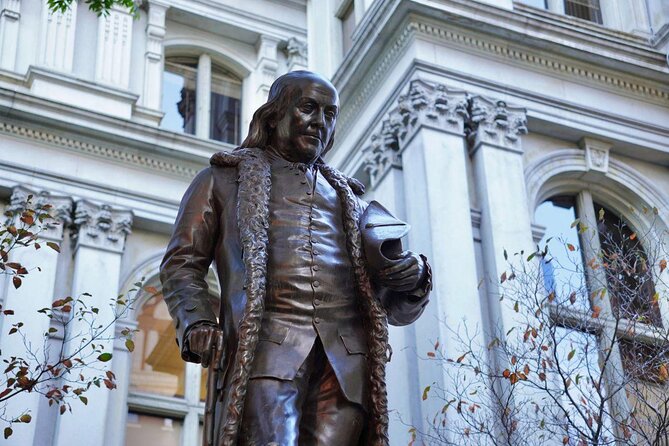
The Public Garden is described as the first botanical garden in the United States. You see the Swan Boat Lagoon and the Make Way for Ducklings statues, two of Boston’s most recognizable public spaces. You also pass the monument marking the first successful use of ether and the location associated with Cheers.
The best part here is the urban planning story. Your guide explains how Boston used landfill and new technology to create Back Bay, described as the largest landfill project in the world. That gives you a way to read the city beneath your feet. The elegant streets and parks west of the Common were not simply part of the original shoreline. They were built as Boston expanded.
This section also offers a short breathing space from the denser downtown streets. Still, do not expect a long stop on a bench or time to ride the Swan Boats. You view the lagoon and boats from the route, but the experience does not include a boat ride.
On a hot day, the guide may pause for water, shade, or a restroom break. On a cold or windy morning, the open garden can feel exposed. Dress for the forecast, not just the calendar.
Same base, a different kind of day out:
- Boston Duck Boat Sightseeing City Tour with Cruise Along Charles River
★ 4.5 · 9,378 reviews - Boston Hop-On Hop-Off Trolley Tour with 13 Stops
★ 4.5 · 5,576 reviews - Boston: City Cruises Whale Watching Cruise
★ 4.5 · 4,710 reviews - Boston Duck Tour: The Original and World-Famous
★ 4.6 · 3,935 reviews
Back Bay’s brownstones and grand avenues
Back Bay receives about 15 minutes, but the scenery continues as you walk. Commonwealth Avenue brings a Paris-inspired design to Boston, while Newbury Street introduces a more polished shopping and restaurant district.
This is where the tour shifts from Revolution-era landmarks to nineteenth-century city planning and residential architecture. You see Victorian brownstones and learn how Back Bay grew out of the filled land discussed earlier.
The short time here is enough to explain the pattern of the neighborhood, but not enough to explore Newbury Street’s shops or restaurants. If you want to browse, save that for after the tour. The point is to understand how the district fits into Boston’s larger story.
The guide can also offer restaurant and shopping suggestions. One particularly useful tip involved a restaurant recommendation that became the highlight of a visitor’s trip. Treat such advice as a starting point, not a guarantee, but local food suggestions can be a valuable bonus when you have not yet learned the city.
Copley Square and the Boston Marathon finish line
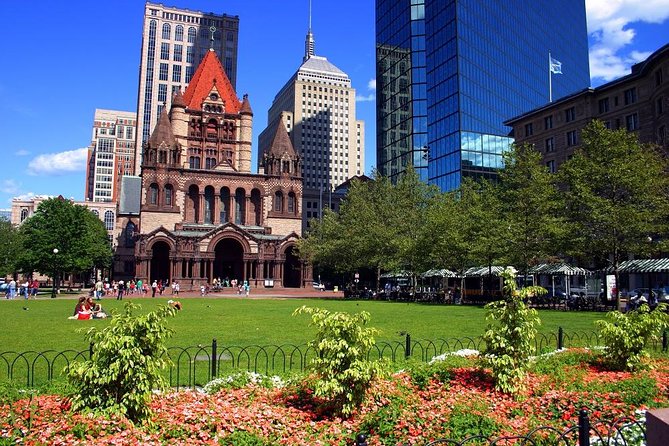
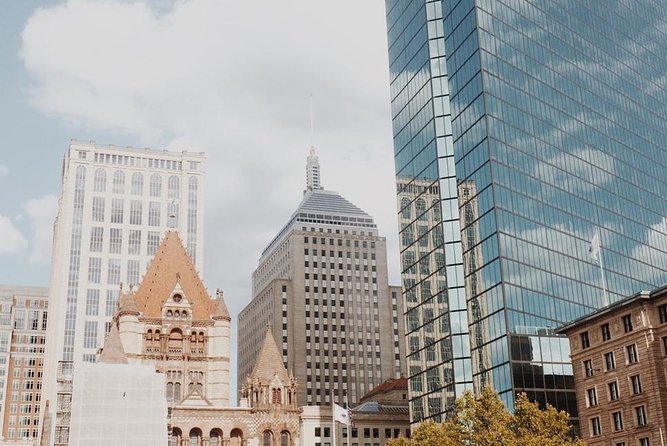
The final 10 minutes bring you into Copley Square, where Boston’s architectural range comes together. You see Trinity Church, the Boston Public Library, the New Old South Church, and the John Hancock Tower.
The contrast is striking. Trinity Church and the library give the square a nineteenth-century grandeur, while the John Hancock Tower reflects the modern city rising behind it. This is a fitting endpoint because the whole route has moved through several versions of Boston, from colonial port to planned Victorian neighborhood to contemporary business center.
The tour ends near the Boston Marathon finish line. You can make the ceremonial crossing yourself, a small but enjoyable moment after a morning on foot. The location is also practical. Copley Square is a good place to continue sightseeing, find lunch, or explore the library and surrounding Back Bay on your own.
The guide may run beyond the advertised two hours, especially if the group asks many questions or starts late. That extra time can be useful if you are enjoying the stories, but it is not ideal if you have a hard appointment. Build in at least a little flexibility.
How much walking should you expect?
The experience lasts about two hours and travels from State Street to Copley Square. No exact distance is given, but the route covers several neighborhoods and includes varied walking surfaces.
You should be comfortable walking continuously through downtown streets, parks, and residential areas. One person specifically noted that the surfaces may be difficult for those with mobility concerns. The route includes city sidewalks and changing terrain, so sturdy shoes are more useful than fashionable ones.
The tour is not presented as a strenuous hike. Still, the combination of distance, weather, crowds, and standing while listening can make it tiring. Wear shoes you already trust, carry water, and avoid scheduling a demanding activity immediately afterward.
The tour accepts most participants, but children must be accompanied by an adult. The group maximum is 20. Smaller groups are possible, and a very small group can make it easier to ask questions and hear the guide.
Several guides use a small microphone or speaker. That helps in noisy streets, although you should still stay close enough to follow the commentary.
Is $65 a fair price?
At $65 per person, this is not the cheapest way to walk Boston. Most of the landmarks are visible from public streets, and you can follow the Freedom Trail’s red line without paying for a guide.
The value comes from the route design and the narration. You are not only seeing the Old State House, Beacon Hill, the Public Garden, Back Bay, and Copley Square. You are also getting the connections between them, including the city’s expansion through landfill, its changing architecture, and the local stories that are easy to miss alone.
I think the price makes the most sense if this is your first visit, your time is limited, or you prefer a human guide to a phone app. It is less appealing if you already know Boston well, want to enter several historic buildings, or prefer to stop often for photos.
The tour is booked an average of 29 days ahead, so popular dates may fill early. Free cancellation is available up to 24 hours before the start time. Cancellations inside that window are not refunded. The conditions also say the experience may be canceled for poor weather or if the minimum number of participants is not met, with a different date or full refund offered.
There is one practical inconsistency in the information: the tour is described as operating in all weather, yet the cancellation terms say it requires good weather. Check the operator’s message before setting out if rain or severe conditions are expected.
Who will enjoy this Boston walk?
I would choose this tour for a first-time Boston visitor who wants a broad introduction without spending a whole day on a single subject. It suits couples, families with older children, solo visitors, and anyone who likes history mixed with architecture and local oddities.
It is also useful early in a trip. The route gives you a map of the city’s main central districts, and the guide may suggest places to eat or shop after the walk. You can then return to the spots that caught your interest.
You may want another plan if you have limited mobility, dislike walking on varied surfaces, or need to finish exactly at noon. You should also choose a full Freedom Trail tour if seeing every Revolutionary-era landmark matters more to you than reaching Back Bay.
Should you book the Downtown Freedom Trail, Beacon Hill and Back Bay walk?
Book it if you want one well-packed morning covering Boston’s colonial center, Beacon Hill, the Public Garden, Back Bay, and Copley Square. The best part is the range: you move from the Boston Massacre Site to Victorian brownstones and finish at the Marathon finish line.
Go in knowing that this is an overview, not an inside tour of historic buildings and not the entire Freedom Trail. Wear good shoes, allow extra time, and dress for wind, heat, or cold. If you value a lively local guide and want the city’s odd details explained along the way, the $65 fee is reasonable. If you prefer a slow, self-guided stroll, you can cover much of the route yourself for less.
FAQ
Where does the tour begin?
It begins at Citizens, 28 State Street, across from Boston’s Old State House in Boston.
What time does the tour start?
The scheduled start time is 10 a.m.
Where does the tour end?
The walk ends in Copley Square, near the Boston Marathon finish line.
How long does the tour last?
It lasts approximately two hours, although it may run longer if the group starts late or spends extra time on questions and discussion.
Does the tour cover the entire Freedom Trail?
No. It covers the downtown section from Faneuil Hall toward Boston Common, then continues through Beacon Hill and Back Bay to Copley Square.
What sights are included?
The route includes Faneuil Hall, Quincy Market, the Old State House, the Boston Massacre Site, Old South Meeting House, King’s Chapel, Boston Common, the Public Garden, Commonwealth Avenue, Newbury Street, Trinity Church, the Boston Public Library, the New Old South Church, the John Hancock Tower, and the Marathon finish line area.
Is admission to the attractions included?
The walking tour includes access to the route and outdoor sights, but no separate interior admission tickets are listed.
How large is the group?
The maximum group size is 20 people.
Can children join the tour?
Yes. Children may participate, but they must be accompanied by an adult.
Does the tour operate in bad weather?
The information says it operates in all weather conditions and advises you to dress appropriately. The cancellation terms also say the experience may be canceled because of poor weather, so check for updates when conditions are uncertain.
What is the cancellation policy?
You can cancel at least 24 hours before the start time for a full refund. Cancellations or changes made less than 24 hours before the start time are not accepted for a refund.
Just added in Boston
- Boston’s Freedom Trail: A Revolutionary Walking Tour★ 5.0 · 1,343 reviews
- Delicious Donuts of Boston: A Sweet History Walking Tour★ 5.0 · 1,038 reviews
- Sunset Sailing Cruise on a Tall Ship in Boston Harbor★ 4.5 · 414 reviews
- Boston North End Food Tour of 6+ Tastings, Cannoli, Lobster Roll★ 5.0 · 1,404 reviews
- Freedom Trail Walking Tour 250★ 4.5 · 1,118 reviews
- Boston’s North End Food and History Walking Tour★ 5.0 · 459 reviews
- Narrated Sunset Cruise of Boston Harbor★ 4.0 · 532 reviews
- City Cruises Salem High Speed Ferry to/from Boston★ 4.5 · 727 reviews
Walking Tours, compared.
New Orleans Premier Ghost, Voodoo and Vampire Walking Tour
Read our review →
Freedom Trail History Small Group Walking Tour
Read our review →
Historic Charleston Guided Sightseeing Walking Tour
Read our review →
New Orleans Food Walking Tour of the French Quarter with Small-Group Option
Read our review →
St. Louis Cemetery No. 1 Official Walking Tour
Read our review →
Harvard University Student-Guided Walking Tour
Read our review →
Harvard University Campus Guided Walking Tour
Read our review →Browse the lists this tour appears in