
Reviewed · TOURS IN BIG ISLAND OF HAWAII
Big Island: Mauna Kea Summit Tour with Free Night Star Photo
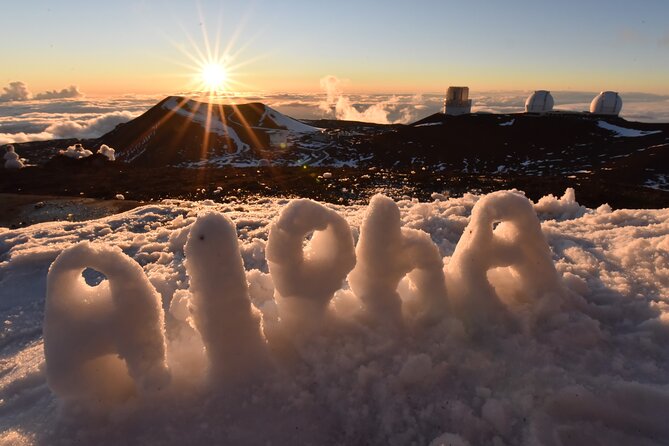
Mauna Kea gives you two great shows in one evening: a sunset above the clouds and a dark sky filled with stars. Hawaiian Eyes Tours takes care of the hard parts, including the drive, warm clothing, dinner, and telescope setup, so you can focus on the view.
I like the included snow parka, ski pants, gloves, and hot drinks, especially since the summit can be bitterly cold and windy. I also like the free DSLR photos, a useful extra when your hands are too cold for a camera and your group wants a proper picture together.
The catch is the long ride, rough sections of road, high altitude, and weather that can spoil either sunset or stargazing. At $280 per person, this is not a casual scenic drive, but the small group, warm gear, guide service, dinner, 4×4 transport, and photos make the price easier to justify.
Key points to know before booking
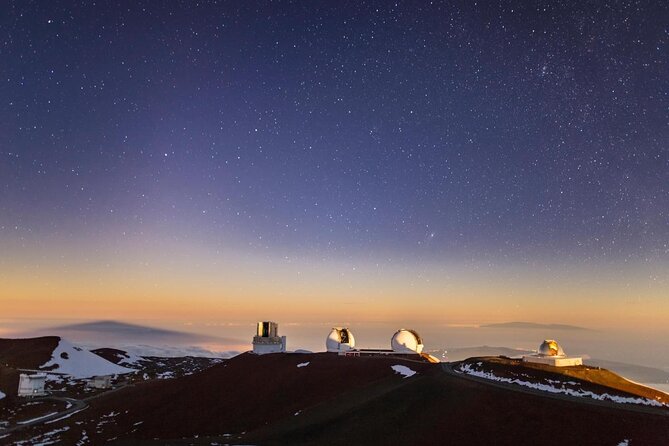
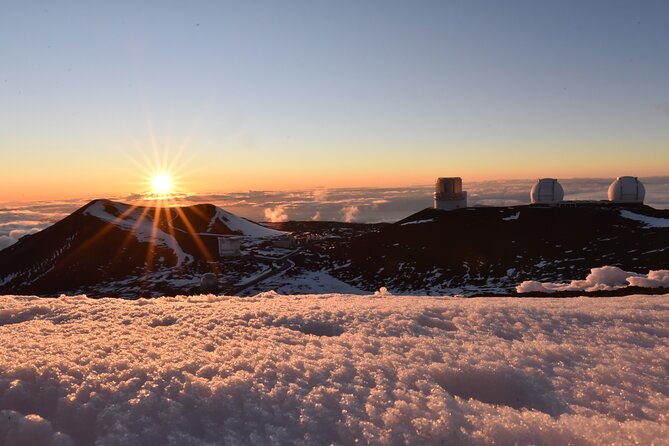
- Sunset at nearly 13,800 feet: Watch the sun drop from Hawaii’s highest point, often above a blanket of clouds.
- Warm clothing is supplied: Snow parkas, ski pants, and gloves are available at the Onizuka Visitor Information Station.
- Dinner is simple but useful: You receive a BLT or vegan sandwich, with hot drinks served during the evening.
- Small groups make a difference: The van holds no more than 12 people, allowing for a more personal guide experience.
- Chris, Wes, and James receive strong praise: The guides are described as friendly, careful, funny, and good at explaining altitude safety.
- Weather controls the experience: Road closures, clouds, wind, rain, and moonlight can shorten or limit the summit and stargazing portions.
Why Mauna Kea is worth the cold
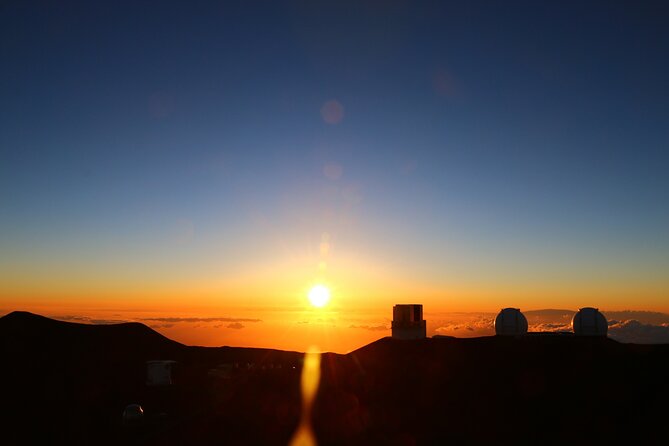
Mauna Kea is not simply a high lookout. At 13,796 feet, it is a serious change from the warm coast of the Big Island. You can begin the afternoon in tropical clothing, then spend the evening in ski gear while watching sunset from the highest point in Hawaii.
That quick change is part of the appeal. The drive takes you through several climate zones, and your guide points out places and events along the way. Guides such as Wes, Chris, and James have been praised for keeping the ride lively with local history, practical advice, and clear instructions about what comes next.
The summit views are the main event. You may see the observatories near the top, broad views across the island, and the sun sinking into a sea of clouds. The exact view depends on weather, but clear conditions can give you one of the Big Island’s most memorable evenings.
After sunset, the tour returns to a lower viewing area near the astronomy complex for stargazing. The altitude is lower there, but the sky remains very dark. Your guide uses a refractor telescope and laser pointer to identify stars, planets, and constellations. Depending on what is visible, you may look at the moon through the telescope or spend time tracing star patterns overhead.
Other trips that run after dark in Big Island of Hawaii:
- Big Island Manta Ray Night Snorkel
★ 5.0 · 5,656 reviews - KONA Manta Ray Night Snorkel – FREE re-ride if no Sightings
★ 5.0 · 2,212 reviews - Manta Ray Night Snorkel at Kona, Big Island
★ 5.0 · 1,758 reviews
Meeting points and the long ride uphill
The tour does not use a single universal pickup point. You meet the van at one of three locations, chosen according to where you are staying:
- Target parking lot in Kona, near the McDonald’s at 74-5453 Makala Boulevard
- Queens’ Marketplace in Waikoloa, at the shuttle stop behind the shopping center, near the large parking area and away from Starbucks
- Gilbert Kahele Recreation Park in Waimea
Pickup times vary by season. The listed windows begin around 2 p.m. at Target, 2:45 p.m. at Queens’ Marketplace, and 3:30 p.m. at Gilbert Kahele Recreation Park. Check the final message sent after confirmation, since the exact meeting time and location can change.
This arrangement is practical if you are staying in Kona, Waikoloa, or Waimea. It is less convenient if you expect a pickup directly at your hotel. The parking lots are free, but you are responsible for your vehicle and belongings while parked.
Once everyone is aboard, expect a substantial drive to the mountain. The ride to Mauna Kea takes about an hour from some parts of the island, and the full experience lasts about eight hours. The return drive begins after the evening stargazing and proceeds back through the pickup areas, usually starting from the Waikoloa side.
That road time is not wasted if you enjoy hearing about the island. It can feel long if you want a quick sunset stop, so plan this as a full afternoon and evening rather than a short attraction.
Acclimatizing at 9,000 feet
The first major stop is the Onizuka Visitor Information Station, also called the Onizuka Astronomy Complex. It sits at about 9,000 feet, or 2,800 meters, and gives your body time to adjust before the van climbs higher.
This stop lasts about an hour. You eat a light dinner, change into cold-weather clothing, and receive instructions for the summit portion. The food is a BLT sandwich unless you request the vegan option by the day before the tour. The vegan sandwich has received especially strong praise, and the BLT is described as a satisfying meal for the road.
You can ask for a snow parka, ski pants, and gloves here. Bring your own layers as well, since provided gear does not replace warm socks, a base layer, or a hat. The summit can be cold and windy even when the coast feels warm. Hot cocoa or another hot drink is a welcome part of the evening, especially after sunset.
The stop is also important for health and safety. Your guide watches for signs of altitude sickness and may adjust the amount of time spent higher up if someone is struggling. The slower pace, rest stop, food, and advice about hydration and movement all help, though they cannot remove the effects of high altitude.
The visitor center has a gift shop, but it does not sell food or drinks. If you want a particular snack or beverage, do not count on buying it there.
Riding the 4×4 van to the summit
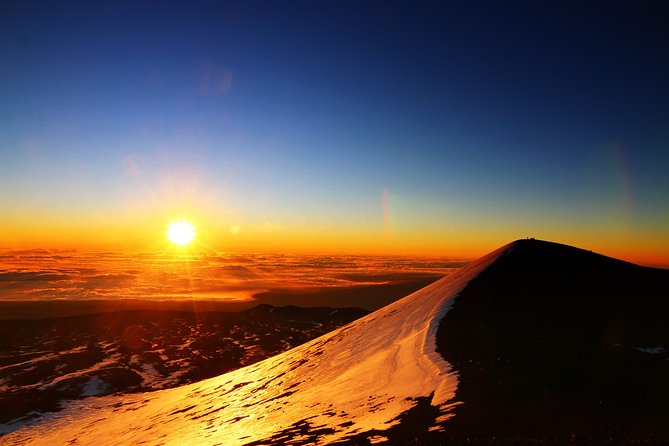
After the acclimatization stop, you continue in a 4×4 passenger van. The road can be bumpy, and the final part is not a smooth coastal highway. A careful driver matters here, and Chris, Wes, and James have each been praised for safe driving and for handling the rough sections well.
The summit portion is kept fairly short. That is not a flaw. At nearly 14,000 feet, the cold and thin air make a brief visit more sensible than lingering for hours. The van arrives in time for sunset, giving you a chance to get out, take in the view, and pose for photographs.
The summit has observatories used for astronomy, and you will see many of the facilities from outside. This is not an observatory tour or a visit inside the research buildings. The reward is the high viewpoint, the changing light, and the unusual feeling of looking across the island from above the clouds.
Because the summit is exposed, follow your guide’s instructions and use the supplied clothing. Guests with respiratory problems such as asthma are advised not to take this tour. The activity also requires a moderate level of physical fitness, and participants must be between 16 and 75 years old. Anyone weighing more than 300 pounds is advised not to participate.
Same base, a different kind of day out:
- Big Island in a Day: Volcanoes Waterfalls Sightseeing and History
★ 5.0 · 6,569 reviews - Big Island: Kona Manta Ray Snorkel Tour in Keauhou Harbor
★ 4.5 · 2,465 reviews - Hilo Shore Excursion: Volcanoes National Park & Black Sand Beach
★ 4.5 · 2,338 reviews - Big Island: Captain Cook Snorkel On A Power Catamaran With Lunch
★ 5.0 · 2,232 reviews
Sunset, cameras, and the free photos
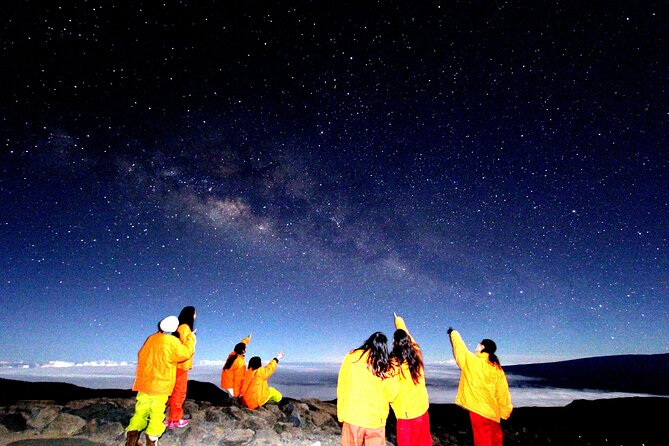
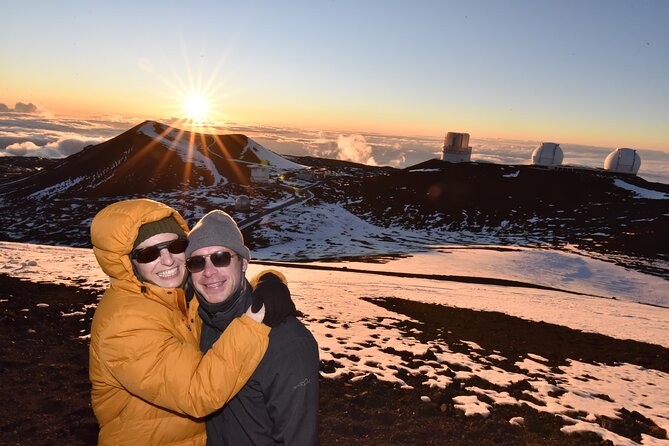
The sunset stop lasts about an hour, though time at the summit may be adjusted for weather or altitude concerns. On a clear evening, the view can include distant ridges, clouds far below, and the sun fading across the Pacific sky.
The guide takes group sunset photos with a DSLR camera. You do not need to bring special equipment or know how to pose. The guides help arrange people and send the images to you at no extra charge.
This is one of the tour’s better extras. Many people carry phones, but phones struggle in wind, darkness, and cold. A proper camera also gives the whole group a chance to appear in the photograph rather than taking turns behind the lens.
The photo promise has limits. Sunset and star photos depend on weather, visibility, and, for night images, the moon phase. If clouds cover the summit or the road closes, the expected photographs may not be possible. Treat them as a valuable bonus, not the main reason to book.
Stargazing with a telescope and laser pointer
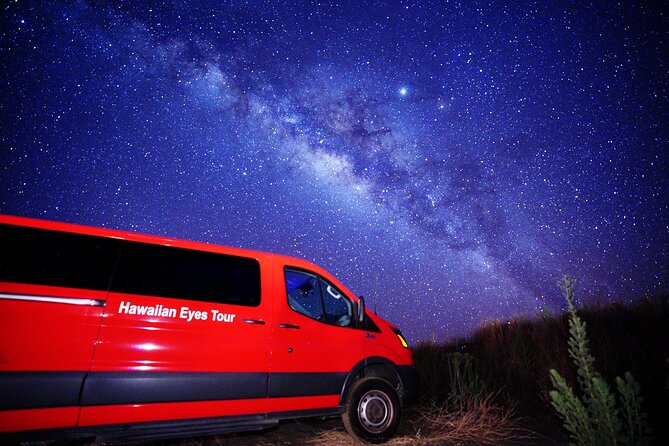
After sunset, the van heads back toward the Onizuka area for about 45 minutes of stargazing. The exact viewing spot can change with the weather, so the tour does not guarantee one fixed location.
Your guide uses a refractor telescope and laser pointer to explain the sky. You may learn to identify constellations, planets, and individual stars, then take turns at the telescope. On one clear evening, looking at the moon through the telescope became a highlight.
The dark sky is the reason to make the climb. Mauna Kea is known for astronomy because the high, dry setting can offer very clear views when conditions cooperate. You do not need prior astronomy knowledge. The guide gives the sky a human scale, pointing out what you are seeing instead of leaving you to stare at a field of unnamed lights.
Stargazing is also the part most affected by the moon. A bright moon can make some stars harder to see, though it can make the moon itself a rewarding telescope subject. If stars are your priority, check the moon phase and weather forecast before choosing your date.
What the guides add to the experience
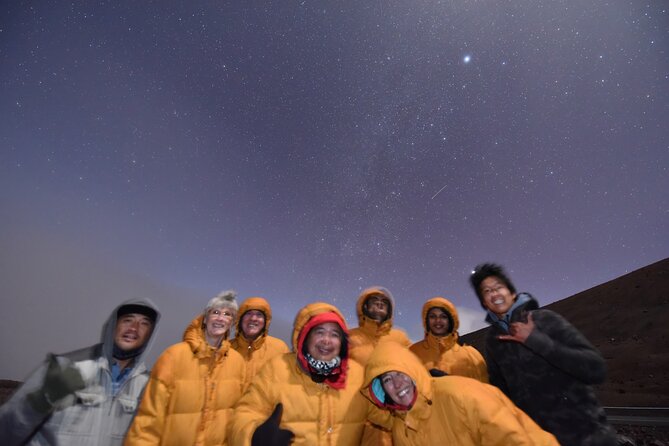
The guide can make or break a mountain tour, and this experience puts a lot of weight on the person driving the van. Chris is often praised for altitude advice, safety, clear explanations, and remembering everyone’s name. Wes is described as funny, prompt, and good at explaining Hawaiian history and the places along the route. James is praised for being informative, thoughtful, and attentive to bathroom and food breaks.
The common thread is practical care. You receive updates if road conditions change, and the guide explains why the group may need to wait, shorten the summit visit, or move the stargazing location. That matters on Mauna Kea, where the weather can change plans quickly.
Guides may speak more than one language. One tour was led by a guide fluent in Japanese, but English is the listed tour language. If you need another language, confirm it before booking.
How the $280 price holds up
At $280 per person, this is one of the pricier Big Island outings, but the cost includes several items that would otherwise add up:
- Approximately eight hours of transportation
- A 4×4 van ride to the summit
- Dinner, either BLT or vegan
- Warm outer clothing and gloves
- Summit access
- Guided stargazing
- Telescope use
- Group sunset and astronomy photos
The small maximum of 12 people helps the price. You are not being moved through the evening in a large coach group, and the guide has more time to answer questions and watch for altitude problems.
The value is strongest if you do not already have a suitable vehicle, winter clothing, camera equipment, or astronomy gear. It is weaker if you mainly want a quick sunset photo and would rather avoid a long drive, cold temperatures, and altitude.
The high rating of 4.8 from 1,449 reviews and the 95 percent recommendation rate suggest that the operation is generally reliable, but no tour can control Mauna Kea’s weather. A poor forecast can turn the evening into a scenic mountain drive with limited views.
Weather, road closures, and smart planning
Book this tour early in your Big Island stay if your schedule allows. Weather can cancel the trip or block access to the summit, and having spare days gives you a better chance to reschedule.
The company offers a different date or a full refund if poor weather cancels the experience. You can also cancel for a full refund up to 24 hours before the start time. Changes or cancellations made inside that 24-hour window are not accepted for a refund.
Road closures are another real possibility. On one outing, rangers closed the road because of conditions, and the guide kept the group informed. A clear explanation and a flexible attitude help, but a road closure can still change the evening’s plan.
Pack warm personal layers, even though outer clothing is included. Wear sturdy shoes, bring water if permitted by the tour instructions, and avoid planning another time-sensitive activity afterward. The drive back can be tiring, and the return schedule depends on the weather and the amount of time spent at each stop.
Who should book this Mauna Kea tour
I would choose this trip if you want a guided, all-in-one introduction to Mauna Kea and do not want to manage a high-altitude drive yourself. It suits couples, solo visitors, families with older teenagers, and anyone who values a small group and useful photography.
It is a good fit for people who enjoy astronomy but are not experts. The telescope and laser pointer give the evening structure, while the sunset provides a strong visual payoff even if you know little about the stars.
I would think twice if you dislike cold, bumpy roads, long drives, or fixed meeting points. The age rules exclude anyone under 16 or over 75, and people with respiratory problems or serious concerns about altitude should seek medical advice before booking. The company does not guarantee sunset, summit access, stargazing, or photos in bad conditions.
Should you book it?
Book it if a sunset above the clouds followed by telescope stargazing sounds worth an entire evening. The warm gear, sandwich, hot drink, small van, careful guides, and free photos make this a well-supported way to reach Mauna Kea.
Skip it if you want guaranteed clear skies, a short excursion, or a warm-weather activity. For the best chance of a memorable night, choose a clear forecast, check the moon phase, bring extra layers, and keep the next morning free. At $280, the tour earns its price when you use all of it: the guide, the summit ride, the dinner, the clothing, the astronomy lesson, and the photographs.
FAQ
How long does the Mauna Kea summit tour last?
The experience lasts approximately eight hours, including transportation from the meeting point, the stop at the Onizuka Visitor Information Station, the summit visit, and stargazing.
Where can I meet the tour?
Meeting points are available at the Target parking lot in Kailua-Kona, Queens’ Marketplace in Waikoloa, and Gilbert Kahele Recreation Park in Waimea. The exact pickup time and location are confirmed after booking.
Is dinner included?
Yes. Dinner is a BLT sandwich or a vegan sandwich. You must request the vegan option by the day before the tour, or the meal will automatically be a BLT.
What warm clothing is provided?
The tour provides a snow parka, ski pants, and gloves. You should still bring personal layers for the cold and wind at the summit.
Are the photos included in the price?
Yes. The guides take DSLR sunset and stargazing photos and provide them at no extra charge when weather and moon conditions allow.
Can children join the tour?
Participants must be at least 16 years old. People older than 75 cannot participate.
What happens if poor weather cancels the tour?
You will be offered a different date or a full refund if the tour is canceled because of poor weather. Sunset and stargazing are not guaranteed when conditions are unfavorable.
Just added in Big Island of Hawaii
- Hilo Shore Excursion: Active Volcano, Lava Tube, Waterfall and Gardens★ 5.0 · 393 reviews
- Volcano Adventure: Hilo Sightseeing w/ Optional Helicopter Tour★ 4.5 · 412 reviews
- Whale Watching On The Big Island★ 5.0 · 573 reviews
- Zodiac Raft Whale Watching Adventure★ 5.0 · 456 reviews
- Kealakekua Bay Snorkeling Tour – 4 hour Kona Zodiac Adventure★ 5.0 · 508 reviews
- Small Group Big Island Twilight Volcano and Stargazing Tour★ 5.0 · 1,619 reviews
- Big Island, Hawaii: Volcanoes National Park Safari★ 4.5 · 545 reviews
- Hawaii Volcanoes, Waterfalls, Beaches & Hilo Highlights Day Tour★ 5.0 · 391 reviews
Tours in Big Island of Hawaii, compared.
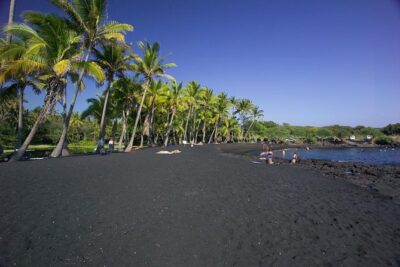
Big Island in a Day: Volcanoes Waterfalls Sightseeing and History
Read our review →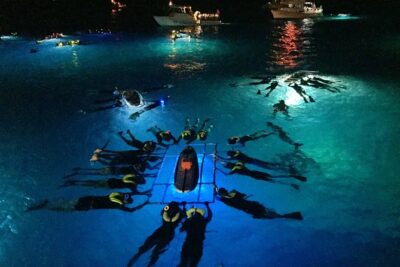
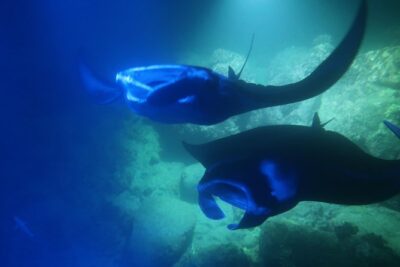
Kona Manta Ray Snorkel Tour in Keauhou Harbor
Read our review →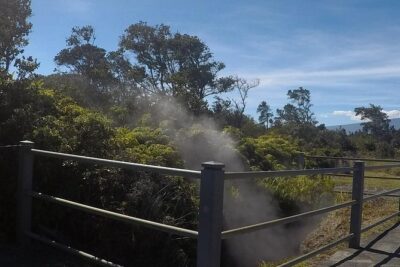
Hilo Shore Excursion: Volcanoes National Park & Black Sand Beach
Read our review →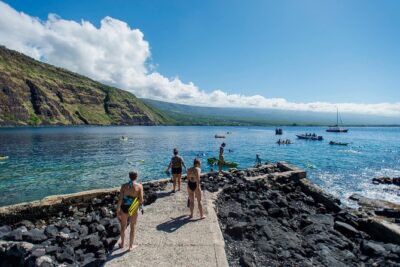
Captain Cook Snorkel On A Power Catamaran With Lunch
Read our review →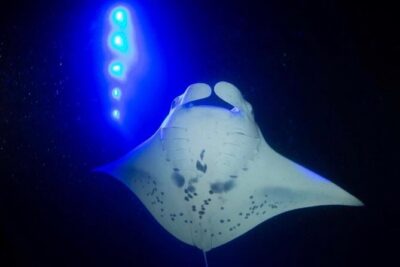
KONA Manta Ray Night Snorkel – FREE re-ride if no Sightings
Read our review →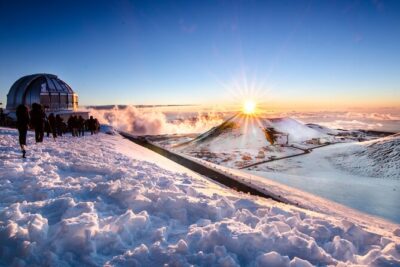
Big Island GOAT Experience: Mauna Kea Summit, Sunset & Stars
Read our review →
Small Group Big Island Twilight Volcano and Stargazing Tour
Read our review →Browse the lists this tour appears in