
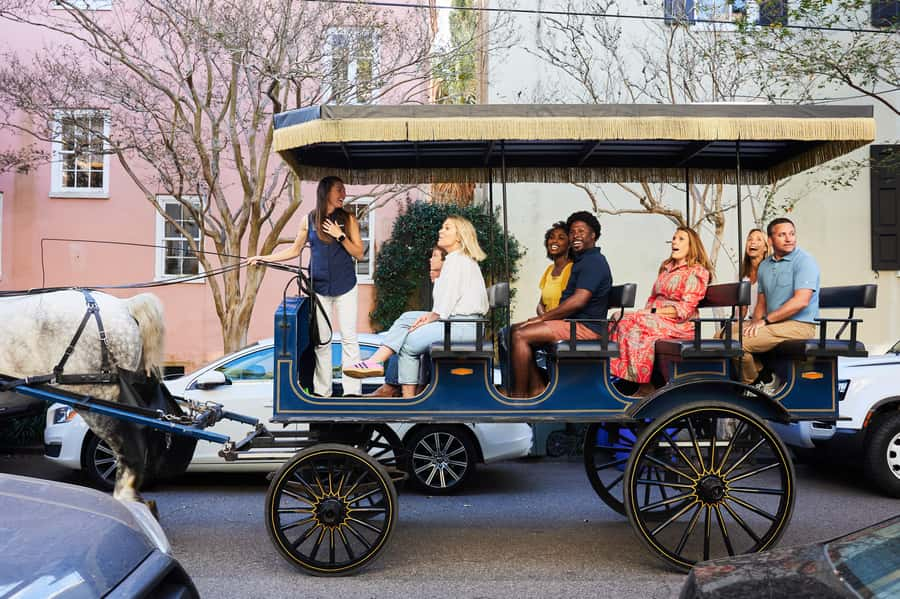
Reviewed · HORSE-DRAWN CARRIAGE RIDES
Charleston: Downtown Horse-Drawn Carriage Tour
Charleston’s old downtown is made for a slow ride. From a horse-drawn carriage, you have time to notice iron gates, shaded gardens, grand porches, church steeples, and streets that can blur past on a walking tour. A licensed guide supplies the stories, turning a pleasant ride into a useful introduction to the city.
I like the unhurried pace, especially for a first look at Charleston. I also like the guides’ mix of facts and humor. Names that come up in strong accounts of the tour include Jeremy, Sims, Scott, Blake, and Van, though your guide will depend on the departure. The main consideration is that routes vary, so you may not pass Rainbow Row, and riders in the back sometimes have trouble hearing without a microphone.
Key points to know before you book
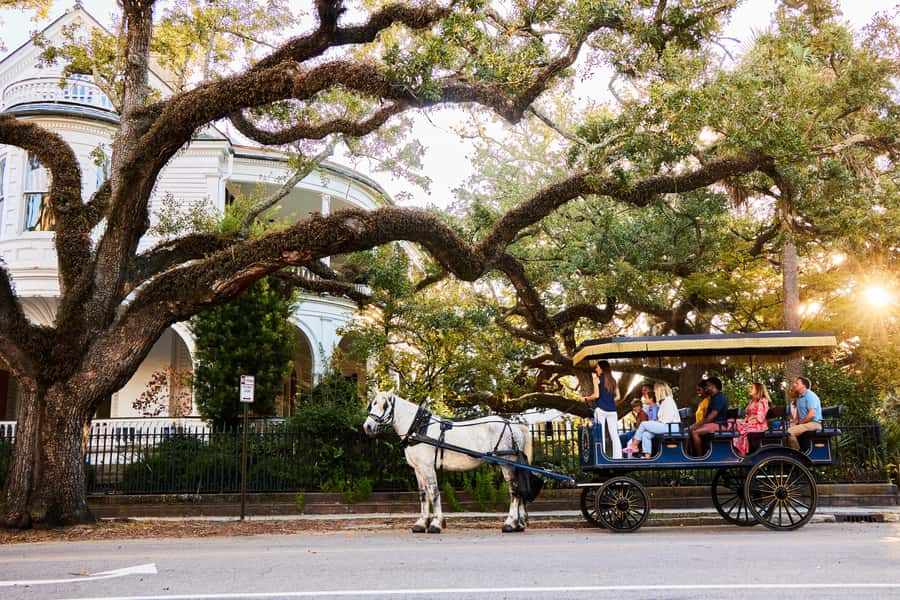
- One hour through downtown: The ride covers Charleston’s historic residential district and returns to the starting point.
- A guide does the heavy lifting: Expect live English commentary about architecture, local traditions, history, and culture.
- The route is not fixed for every carriage: Rainbow Row may not be included, so see it on foot if it is a priority.
- A calm way to get oriented: The slow pace helps you recognize streets and landmarks before exploring on your own.
- Comfort varies by seat and weather: Blankets have been available on cold rides, while water is useful on hot days.
- Easy starting point: Meet at the big red barn at Palmetto Carriage Works, with paid parking at 22 Anson Street.
Starting at the big red barn
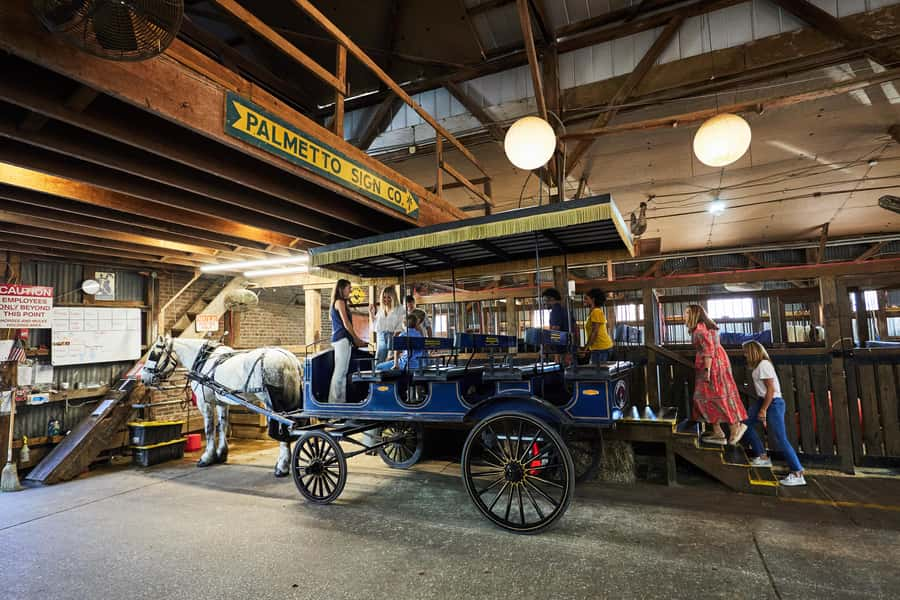
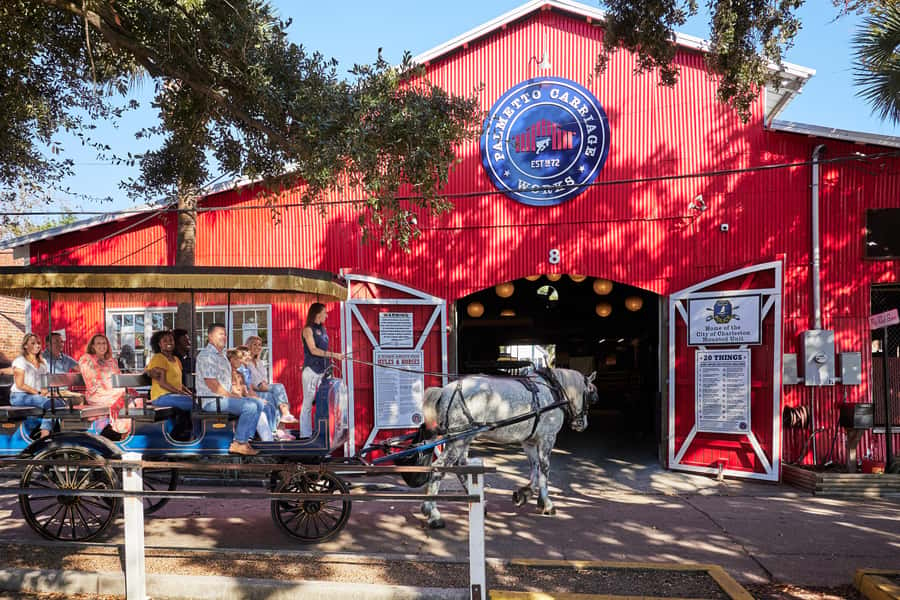
Your tour begins at Palmetto Carriage Works in downtown Charleston. Look for the large red barn, which serves as the meeting point. Paid parking is available at 22 Anson Street, Charleston, South Carolina 29401.
The location is also within walking distance of the cruise terminal. One rider described it as about a 10-minute walk, making the tour practical if you are spending the day in port. Still, allow time to find the barn, check in, and settle before departure.
The staging area is part of the experience. You can see the carriages, horses, and staff before boarding. On a hot day, cold water has been offered while people wait. On a cold ride, blankets have been available. Those small touches matter because an open carriage leaves you exposed to the weather.
The activity is listed as wheelchair accessible. If you need a particular boarding arrangement, confirm the details when booking, since the supplied information does not specify how each carriage is configured.
Other slow ways round Charleston:
- Charleston’s Old South Carriage Historic Horse & Carriage Tour
★ 5.0 · 10,023 reviews - Haunted Evening Horse and Carriage Tour of Charleston
★ 4.5 · 3,678 reviews - Charleston Horse-Drawn Carriage Tour: Explore Historic Charleston
★ 5.0 · 3,561 reviews
A one-hour ride through Charleston’s residential core
Once seated, the carriage moves into downtown Charleston for a guided tour lasting about an hour. You are not simply being taken from one attraction to another. The point is to see how the city fits together: houses beside gardens, churches near parks, and old streets lined with buildings from different periods.
The carriage gives you a lower, slower view than a bus. You can study front gates and doorways as you pass, while the guide explains the styles and stories connected with them. Grand homes are a major part of the route, including antebellum mansions and residences with detailed architectural features.
You may also pass beneath large oak trees draped with Spanish moss. Gardens add color and scent to the ride, while church steeples point to Charleston’s long religious traditions. The tour’s appeal comes from this combination of sights rather than from a single famous stop.
There is no separate walking portion listed in the itinerary. You remain with the carriage during the city tour and return to Palmetto Carriage Works at the end. That makes the ride gentle and accessible for anyone who wants to see a lot without covering the streets on foot.
Stories about houses, churches, and local culture
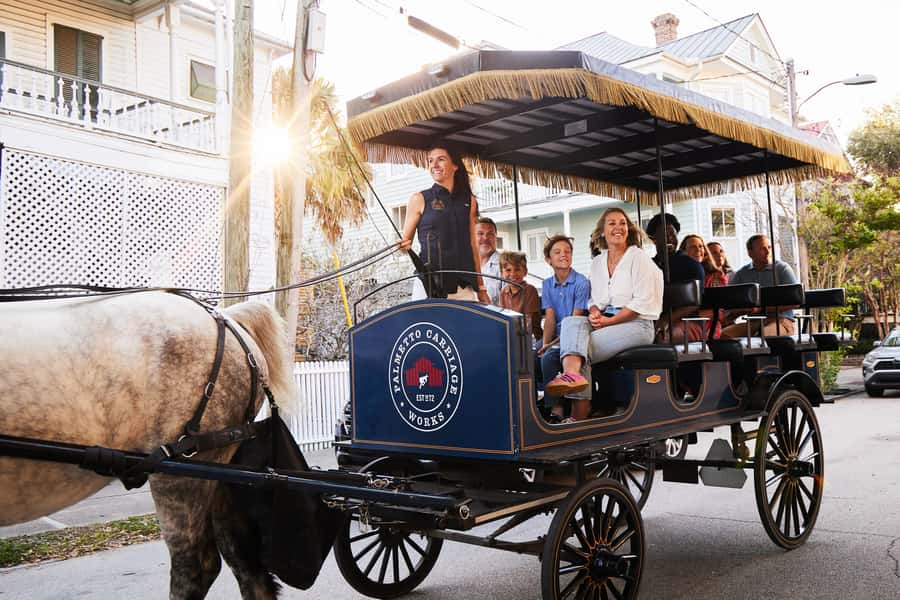
A good carriage tour needs more than attractive buildings. The guide’s explanation is what gives the streets meaning. Here, the commentary covers Charleston’s past and present, along with the cultural details that shaped the city.
Guides such as Jeremy and Sims have been singled out for clear storytelling, humor, and answers to questions. Scott and Blake have also been praised for keeping riders informed during the trip. You may get a guide with a different style, but the format is personal and interactive rather than a recorded narration.
Expect a blend of architectural explanation, historical facts, anecdotes, and jokes. The best guides keep the tone light without making the city feel like a theme park. One strong account described the right amount of humor, which is important on a tour that covers serious subjects alongside pretty streets.
The cultural coverage deserves some thought. Charleston’s identity was shaped by many communities, and one rider wanted more attention to African American contributions to the city’s culture, construction, and development. That is a useful point to keep in mind. The tour can give you a broad introduction, but it may not cover every part of Charleston’s past in equal depth.
If that subject matters especially to you, treat this ride as an overview and seek out additional local history afterward. The guide can answer questions during the carriage ride, so it is worth asking about the topics you most want to understand.
Why the slow carriage pace works
Charleston rewards close looking. A carriage does not rush you past the details, and the ride itself gives your feet a break. I find this especially useful at the start of a visit, when you are still learning the shape of downtown.
You can use the hour to note streets, buildings, parks, and churches you want to revisit. Several people have described the tour as a good way to get oriented early in a stay. That advice makes sense: after the ride, you have a better idea of where to walk and what deserves more time.
The pace also suits families. The tour is described as family-friendly, and the combination of animals, scenery, and stories can hold the attention of children better than a long indoor talk. Adults get the historical context, while younger riders get the novelty of traveling by horse and carriage.
The ride is also relaxing. You are not hurrying from one landmark to the next or trying to read a map while walking. The tradeoff is that one hour is enough for an overview, not a full study of Charleston. You will see many places from the carriage, but you will not stop to examine each one closely.
Other rides on horseback around Charleston:
- Charleston: Historical Downtown Tour by Horse-drawn Carriage
★ 4.8 · 1,009 reviews - Charleston’s Historic Residential Horse and Carriage Tour
★ 4.5 · 668 reviews - Charleston Horse & Carriage Historic Sightseeing Tour
★ 4.5 · 460 reviews - Private Daytime Horse-Drawn Carriage Tour of Charleston
★ 5.0 · 340 reviews
The route can change, and that matters
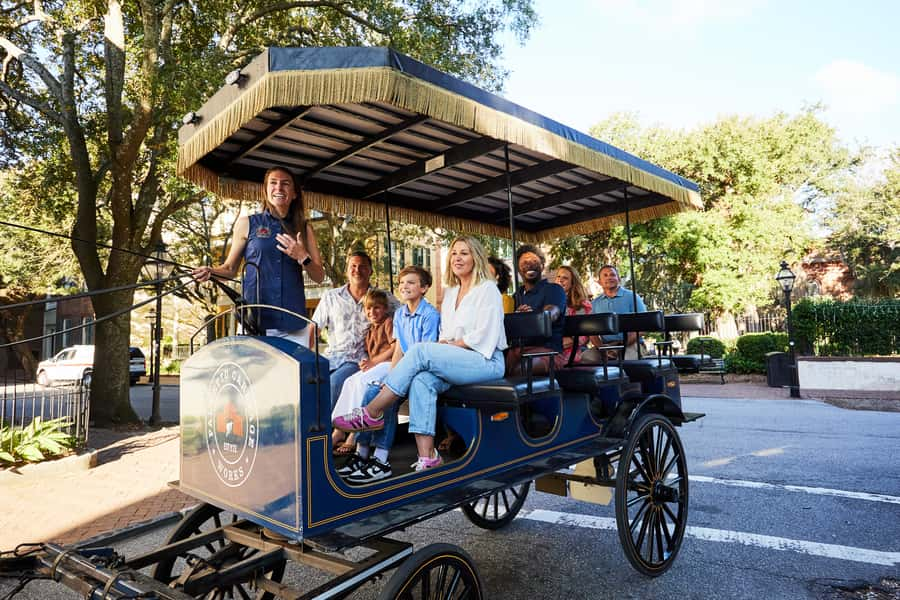
The tour does not promise a single named route through every major sight. Carriage tours in Charleston use assigned routes, so the exact streets can vary. That explains why one ride may pass an area another does not.
Rainbow Row is the clearest example. One rider enjoyed the tour but wished the carriage had gone there. If those colorful historic houses are high on your list, plan to visit them separately rather than assuming they will appear during this ride.
This is not necessarily a weakness. Different routes can show you parts of the residential district that you might otherwise miss. But you should book with the right expectation: this is a general downtown tour, not a guaranteed checklist of Charleston landmarks.
If you have only one day, pair the ride with your own walking route. Use the carriage hour to hear the city explained, then walk to any specific street or building you did not see. That gives you both the broad view and the close-up experience.
What seating and weather are really like
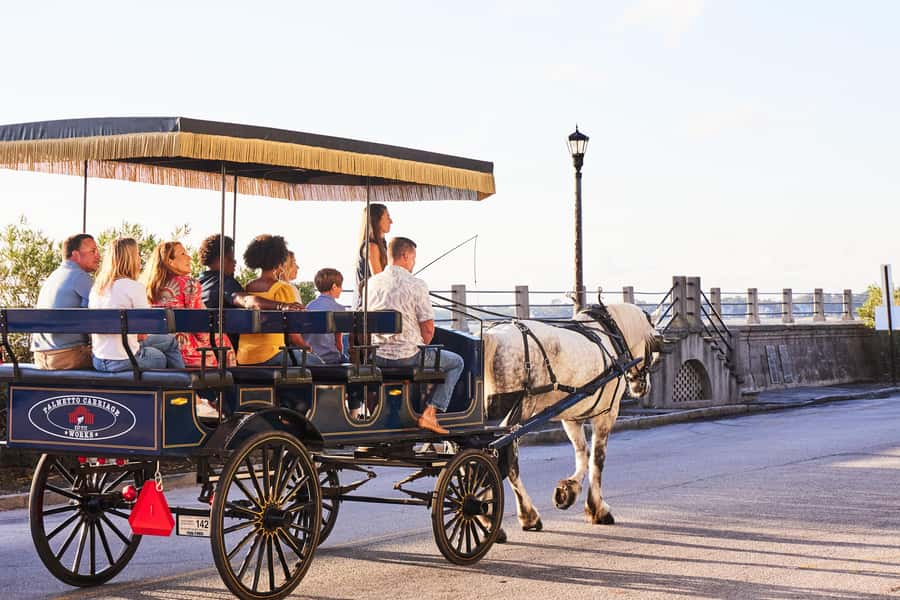
The carriage is open to the surrounding streets, so weather affects comfort. Cold rides can feel brisk, and blankets may be available. In hot weather, bring water with you. Cold water has been offered in the waiting area, but you should not assume the supply will replace a bottle for the full tour.
Your seat also affects how easily you hear. Riders in the last row have sometimes found the guide difficult to hear, while some carriages have microphones. If you have hearing concerns, ask where the speaker is positioned before boarding and choose a seat near the front if possible.
The horses are part of the appeal, and the facilities and animals have been described as well maintained. Staff and drivers have also been praised for their professional approach. You should still remember that a carriage ride is an outdoor activity, not an air-conditioned sightseeing vehicle.
Wear clothing suited to the forecast and keep expectations practical. The experience is most enjoyable when you are ready for sun, chill, or a little city noise.
Guides who make the difference

The guide is the main variable in this tour. The route provides the setting, but the person holding the reins and telling the stories shapes the hour.
Jeremy has been praised for his historical commentary. Sims has been described as personable and well prepared. Scott received strong marks for the tour, while Blake was noted for keeping everyone informed. Van was also praised for making the ride informative and fun.
Those names are useful because they show the range of the guide’s role. You are not only listening to dates and building names. You can expect questions, banter, explanations of Charleston’s architecture, and comments about the city as it is today.
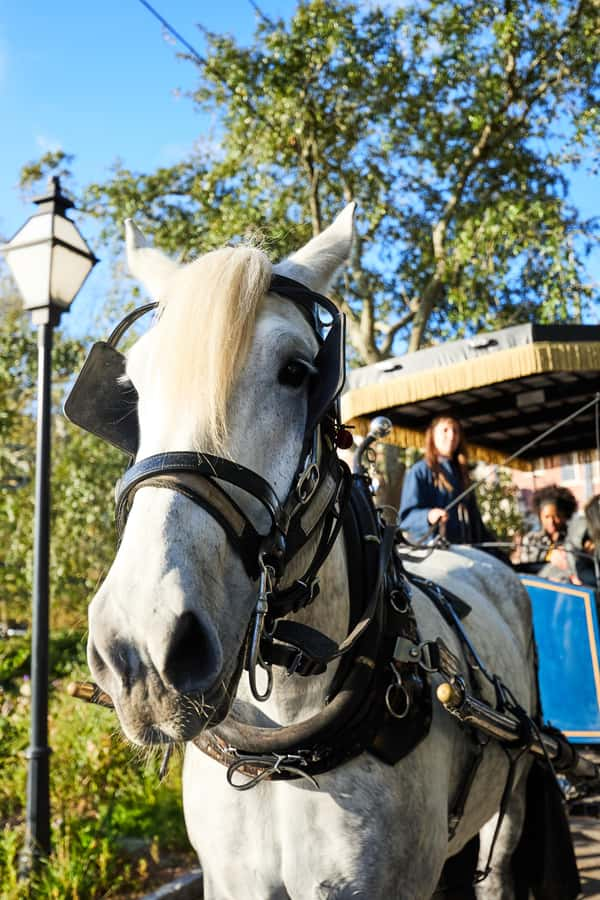
The horse has a role, too. Individual animals have names such as Goober, Melodie, and DiBlazio, and riders often remember them as part of the outing. The staff’s care of the horses is an important part of the experience, especially if animal welfare is a concern for you.
Since guides have different voices and presentation styles, do not expect a word-for-word script. That is a benefit if you enjoy a conversational tour, but it also means the depth of certain subjects can vary.
Is $50 a fair price?
At $50 per person, this is not the cheapest way to see downtown Charleston. The price includes the horse-drawn carriage ride and a live guide for one hour. You are paying for the vehicle, the horse, the driver-guide, and the chance to see the historic district without walking the full route.
The value is strongest for a first visit. If you use the ride to get oriented, learn which streets to revisit, and understand the city’s architectural character, it can save time later. It also works well for a family or small group that wants one shared activity.
The value is weaker if you want detailed access to individual buildings or a guaranteed visit to a particular landmark. The tour stays on the carriage, and the route can change. You may need a separate walking visit to see Rainbow Row or other sights that matter most to you.
I would compare the price with the cost of a one-hour guided activity in a historic city, not with a simple taxi ride. The experience combines transport, scenery, interpretation, and a distinctive old-fashioned way to see Charleston. For many first-time visitors, that combination makes the fee reasonable.
Free cancellation up to 24 hours before the tour and the option to reserve now and pay later add useful flexibility. Those policies matter if your Charleston plans depend on weather, cruise timing, or a changing schedule.
Who should book this carriage tour?
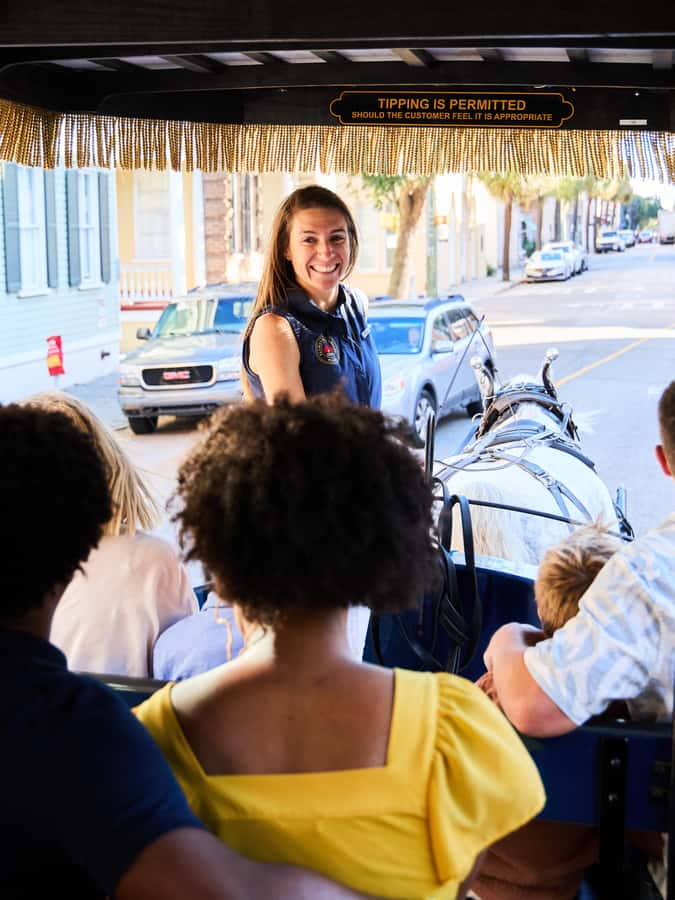
I would recommend it most strongly to first-time visitors, families, cruise passengers, and anyone who wants a gentle introduction before walking around downtown. It is also a good choice if you enjoy architecture but do not want to spend your first hour studying a map.
The ride suits people who like stories as much as sights. You will get more from it if you ask questions and pay attention to the guide’s descriptions rather than treating the carriage as a simple photo opportunity.
It may be less suitable if you want an intensive account of Charleston’s African American history, a guaranteed Rainbow Row visit, or a long stop at each major landmark. The one-hour format gives you breadth, not exhaustive detail.
It is also worth considering your tolerance for weather and sound. An open carriage can be cold or hot, and the guide may be harder to hear from the back. Those are manageable issues, but they are part of the decision.
Should you book it?
Book this tour if you want a pleasant, well-paced introduction to Charleston with a live guide, handsome homes, gardens, churches, parks, and plenty of local stories. I especially like it as an early activity, when the city is still unfamiliar and you want to get your bearings fast.
Go in knowing that your route is not guaranteed and that the commentary may cover some subjects more fully than others. If you can accept that, $50 buys a memorable hour and a useful first look at downtown Charleston. Afterward, continue on foot to the streets and landmarks you most want to see.
FAQ
How long is the Charleston carriage tour?
The guided carriage ride lasts one hour and returns to Palmetto Carriage Works at the end.
Where does the tour start?
Meet by the big red barn at Palmetto Carriage Works in downtown Charleston.
Is parking available?
Paid parking is available at 22 Anson Street, Charleston, South Carolina 29401.
Where does the tour finish?
The activity ends back at the Palmetto Carriage Works meeting point.
Is the tour conducted in English?
Yes. The live tour guide speaks English.
Is the carriage tour wheelchair accessible?
The activity is listed as wheelchair accessible. The provided information does not specify the boarding arrangements for each carriage.
Will the carriage pass Rainbow Row?
Rainbow Row is not guaranteed. The route can vary, so plan a separate visit if you specifically want to see it.
Can I cancel the booking?
You can cancel up to 24 hours in advance for a full refund. You can also reserve now and pay later.
Just added in Charleston
- Charleston Ghosts of Liberty Guided Walking Tour★ 4.5 · 473 reviews
- 2-Hour Guided Kayak Eco Tour in Charleston★ 5.0 · 954 reviews
- Charleston’s Best Highlights: History, Culture & Architecture★ 5.0 · 422 reviews
- Charleston Harbor Sunset Cruise★ 5.0 · 905 reviews
- Savor the Flavors of Charleston Walking Food Tour★ 4.5 · 881 reviews
- Lost Stories of Black Charleston Walking Tour★ 5.0 · 412 reviews
- Undiscovered Charleston: Half Day Food, Wine & History Tour with Cooking Class★ 5.0 · 948 reviews
- Real Hauntings of Charleston! (Small Group Ghost Tour)★ 5.0 · 724 reviews
Horse-Drawn Carriage Rides, compared.
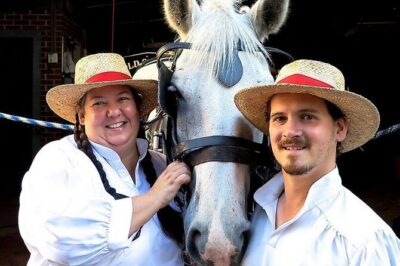
Charleston’s Old South Carriage Historic Horse & Carriage Tour
Read our review →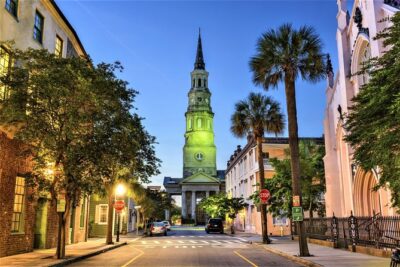
Haunted Evening Horse and Carriage Tour of Charleston
Read our review →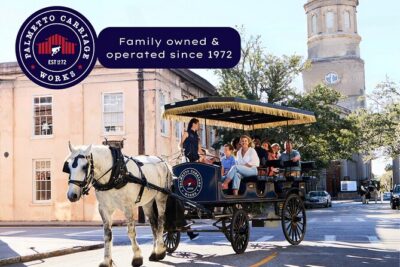
Charleston Horse-Drawn Carriage Tour: Explore Historic Charleston
Read our review →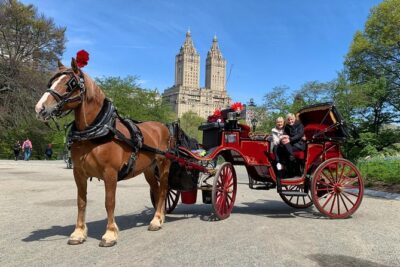
Official NYC Horse Carriage Rides in Central Park since 1979 ™
Read our review →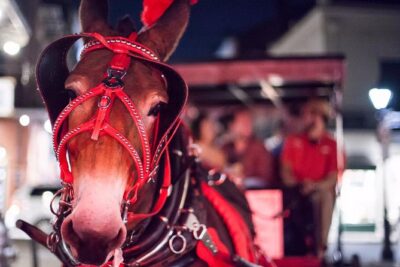
New Orleans Small-Group Haunted History Carriage Tour
Read our review →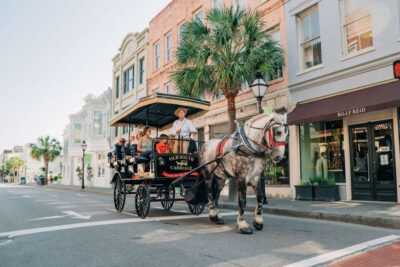
Historical Downtown Tour by Horse-drawn Carriage
Read our review →
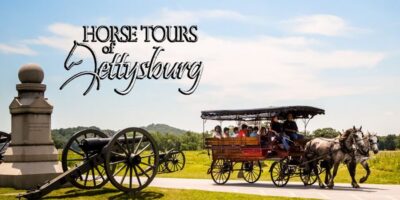
Gettysburg: Horse-Drawn Carriage Battlefield Tour
Read our review →Browse the lists this tour appears in