
Reviewed · WHALE WATCHING
Monterey Bay: Whale Watching Tour
Monterey Bay is one of the rare places where whales feed close to shore, thanks to a deep submarine canyon that brings productive waters near the coast. On this cruise, you leave Old Fisherman’s Wharf, pass Cannery Row, and head into the national marine sanctuary with a real chance of seeing humpbacks, dolphins, sea lions, and sometimes blue whales or orcas.
I like two things especially: the small boat size, which makes it easier to move around for a view, and the guides, including Isaiah, Maddy, and Sophie, who mix solid marine science with humor. The main drawback is the sea itself. It can be cold and choppy, and even a superb whale habitat cannot guarantee a dramatic breach on every trip.
Key points to know before you book
- Whales often feed close to Monterey: The bay’s underwater canyon helps bring marine life within reach of a half-day cruise.
- Season changes the focus: Summer and fall usually target feeding whales, while winter trips follow migrating gray whales toward the southern bay.
- A marine biologist joins you: Guides explain whale behavior, conservation, and the other animals around the boat.
- The boat is not usually crowded: One reported trip had about 25 people, leaving room to change sides and look for wildlife.
- Plan for motion and cold: Bring layers, sun protection, and motion sickness medication if you need it.
- The wildlife list is wide: Humpbacks are common, while blue whales, fin whales, gray whales, orcas, dolphins, otters, and sea lions are possible.
Why Monterey Bay is such a strong whale-watching spot
Many whale-watching trips require a long ride before reaching open feeding grounds. Monterey is different. The bay’s submarine canyon reaches close to shore, creating deep water where whales can feed without the boat traveling far offshore.
That matters to you in two ways. First, more of your 3 to 4 hours can be spent watching animals rather than simply getting to them. Second, the bay supports a wide mix of species. The exact sightings change by season, weather, and luck, but humpback whales are seen frequently, with dolphins and sea lions often adding action between whale sightings.
You might see a whale surface, breathe, and disappear for several minutes. You might also catch feeding behavior, with whales, seabirds, and sea lions working over schools of small fish and krill. Breaching is possible, but it is never promised. The best way to judge this trip is by the quality of the setting and the chance to observe natural behavior, not by expecting a staged show.
The experience has earned a 4.8 rating from about 2,300 ratings, and the most consistent praise goes to the crew’s enthusiasm, wildlife knowledge, and effort to give everyone a good view.
Other boats out to see whales from the USA:
- Juneau Wildlife Whale Watching
★ 5.0 · 7,379 reviews - Juneau Wildlife Whale Watching & Mendenhall Glacier
★ 5.0 · 6,236 reviews - Boston: City Cruises Whale Watching Cruise
★ 4.5 · 4,710 reviews
From Old Fisherman’s Wharf to the open bay
Your meeting point is Discovery Whale Watch at 66 Fisherman’s Wharf. Check in at least 45 minutes before departure, with the Coast Guard waiver completed electronically for every person in your party. Adults complete waivers for children.
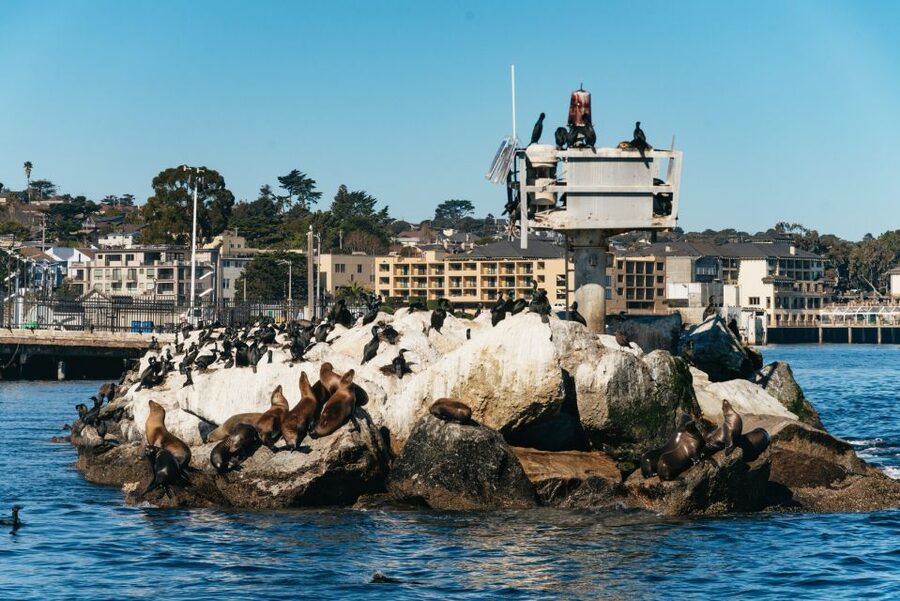
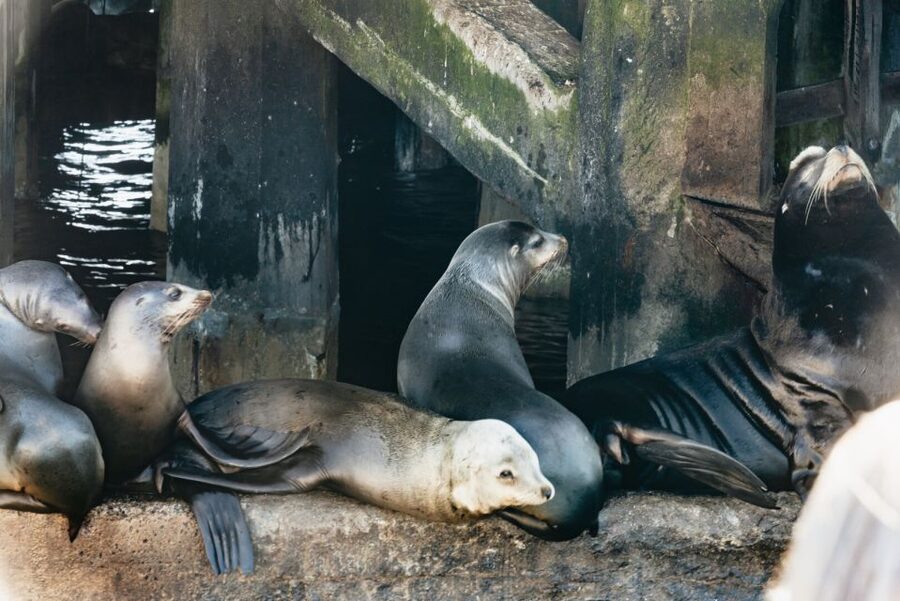
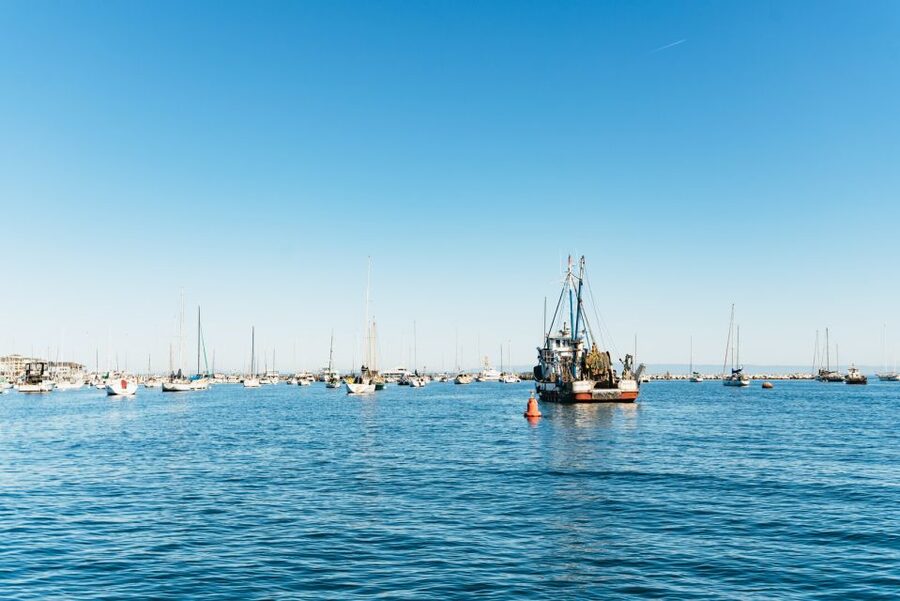
The boat leaves from Old Fisherman’s Wharf, which gives you a pleasant start before the open water. Look toward the harbor for hundreds of California sea lions. They are noisy, active, and easy to spot as you pull away, making them a useful first wildlife sighting while everyone settles in.
You will pass Cannery Row on the way out. This is a quick sightseeing section rather than a formal stop, so keep your camera ready. Once the boat enters Monterey Bay National Marine Sanctuary, the focus shifts from the waterfront to the water around you.
The sanctuary setting is important. This is not a small aquarium-style trip where animals appear on cue. You are watching wildlife in a protected marine area, with the crew searching for natural feeding and migration patterns.
What you may see in summer and fall
Summer and fall are the main feeding season for this cruise. Humpback whales are the star attraction, and they are often seen daily. They gather to feed on small fish and krill, sometimes remaining in an area long enough for the boat to watch them repeatedly.
The strongest reports from this period describe multiple humpbacks, close approaches, and occasional breaching or fin slapping. One trip produced around 15 whales, while another group encountered roughly 30. Those numbers are exciting, but they are not a promise for your departure. Ocean wildlife can change by the hour.
Blue whales are another possibility. They are among the largest animals on earth, and seeing one beside the boat can be a major highlight. Fin whales, gray whales, orcas, and several dolphin species may also appear. One summer outing included a blue whale and calf, puffins, salmon sharks, albatross, and humpbacks, showing how varied the bay can be on a good day.
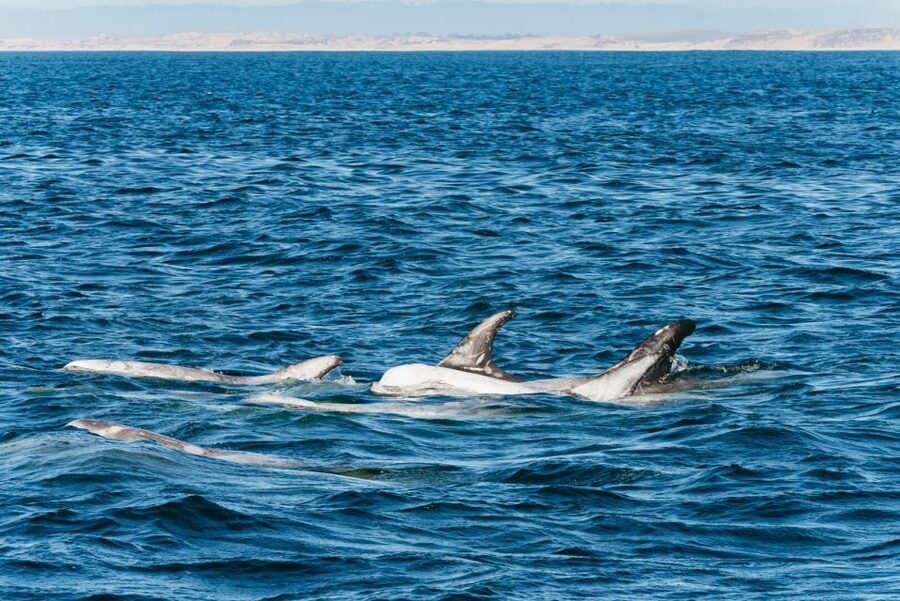
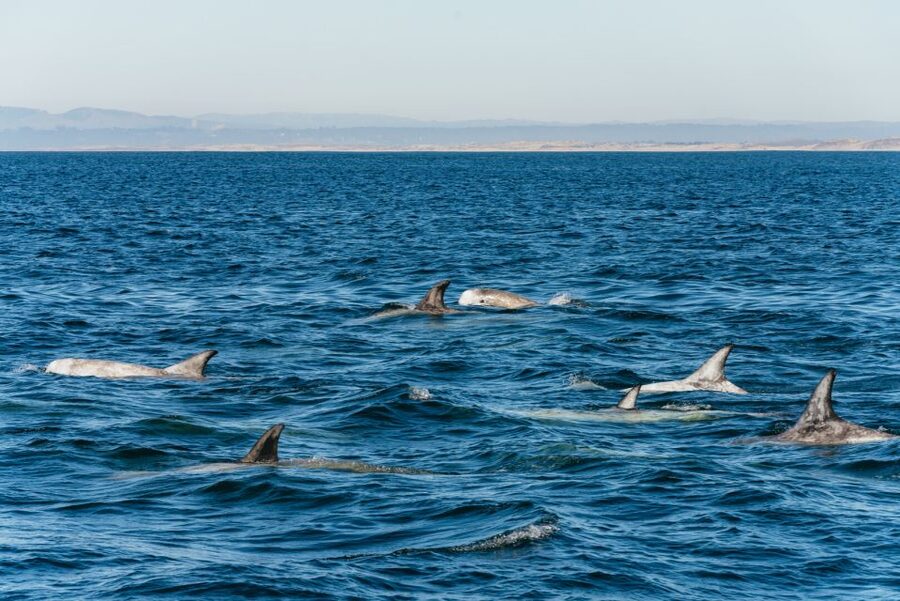
Dolphins often add quick movement to the trip. You might see common dolphins, Risso’s dolphins, or Pacific white-sided dolphins. They may travel in groups or ride the bow, giving you a more active sighting while you wait for the next whale to surface.
Sea lions, seals, and sea otters are also part of the wider picture. A trip that produces fewer whales can still offer a full wildlife experience. One outing included otters, seals, sea lions, several dolphin types, and a distinctive all-white dolphin known as Casper.
What changes in winter
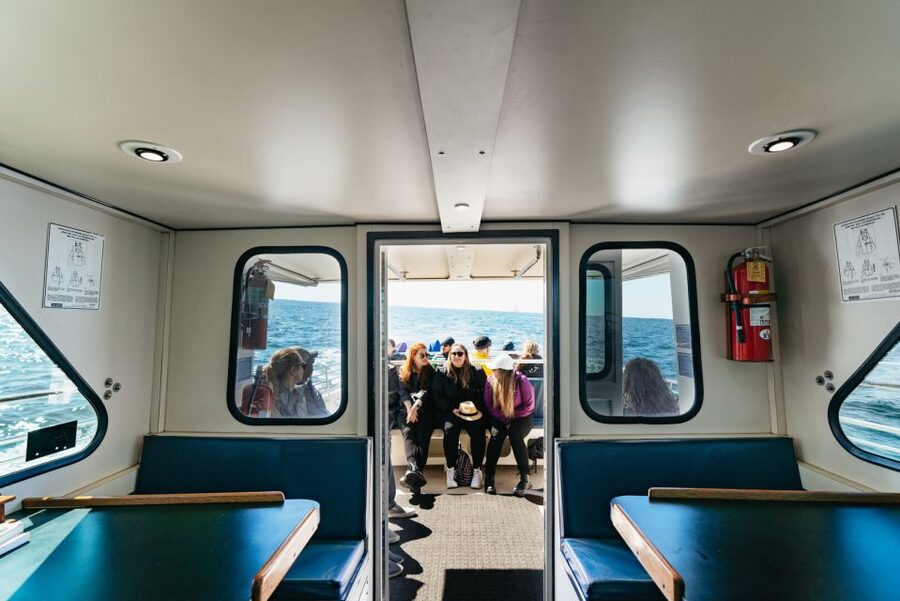
Winter trips shift toward the southern end of Monterey Bay, where the crew looks for migrating whales, including gray whales. This makes winter a different experience rather than simply a weaker version of the summer trip.
Gray whales migrate along the coast, and seeing them during this seasonal movement can be especially rewarding. Winter sightings have included groups of gray whales, humpbacks, dolphins, and sea lions. December can still produce around 10 whales and plenty of dolphins, but conditions and sightings vary.
The winter morning trips usually last about 2.5 to 3 hours. Summer and fall morning departures last around 3.5 to 4 hours, while afternoon trips run about 2.5 to 3 hours throughout the year. Check the exact departure length when booking, since the difference affects how much time you have on the water.
Winter also means colder conditions. You may get sunshine and calm seas, but you should dress for wind and spray. Even on a mild Monterey day, the water can feel much colder than the wharf.
Same base, a different kind of day out:
- NYC: SUMMIT One Vanderbilt Tickets
★ 4.7 · 51,195 reviews - NYC: 9/11 Memorial & Museum Timed-Entry Ticket
★ 4.8 · 31,428 reviews - NYC: Empire State Building Tickets – Observatory & Museum
★ 4.7 · 25,757 reviews - NYC: Empire State Building Observation Deck Tickets
★ 4.7 · 22,072 reviews
The guide makes a real difference
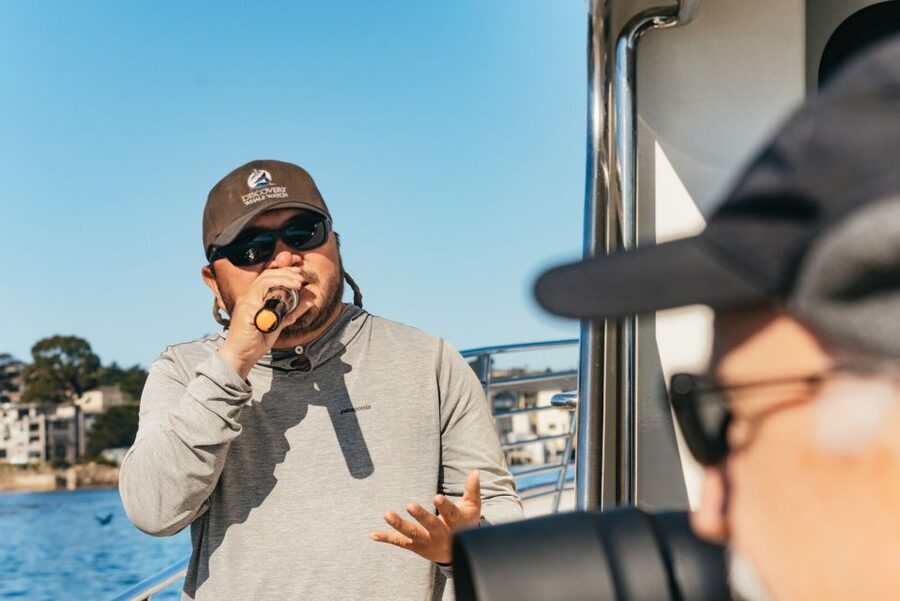
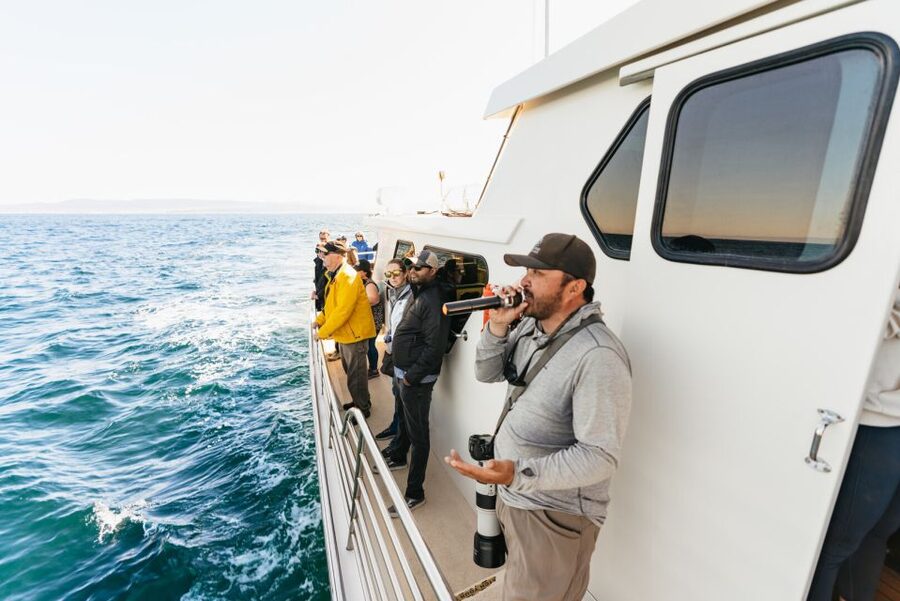
A marine biologist or naturalist joins the cruise and explains what you are seeing. The strongest part of this approach is that the commentary gives meaning to brief sightings. Instead of simply watching a back or fin, you learn about feeding, migration, species behavior, and conservation in the sanctuary.
Isaiah has been praised for clear explanations, humor, and even the occasional sea shanty. Maddy and Sophie have also been singled out for their warmth and enthusiasm, while other trips have included guides named Ryan, Mattie, Matt, and Isiah. The guide team can change, but the role stays the same: help you identify animals and understand the bay.
The crew also works hard to position the boat without turning the encounter into a chase. Captains named Danny and Ben have received praise for getting the boat to whale areas, and deckhand Kenny was noted for keeping the operation smooth on board. That does not remove the uncertainty of wildlife watching, but it helps you make the most of the conditions.
Some guides take photographs during the trip and make them available afterward. This is useful because whales often surface too quickly for an inexperienced photographer. You should still bring your own camera, but do not spend the entire cruise staring through it. A whale’s back is usually easier to appreciate with your eyes than through a small screen.
Boat size, comfort, and motion
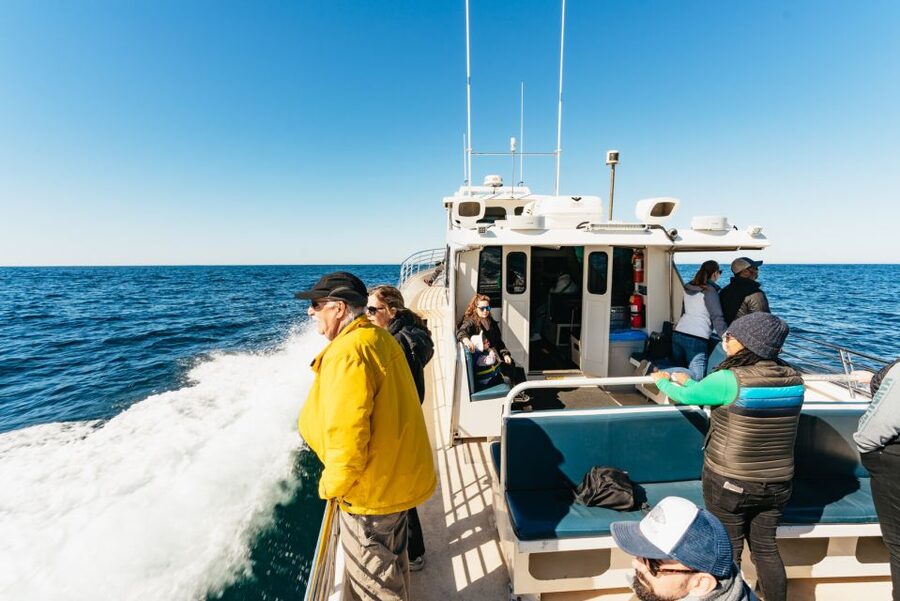
The boat has been described as accommodating about 25 people, which is a useful advantage. A smaller group gives you more room to move between viewing areas and reduces the feeling of competing for one narrow rail.
The boat has restroom facilities, and hot beverages are included. You may bring a small packed lunch and non-alcoholic drinks. Food is not included, although drinks and snacks may be available for purchase. Friendly dogs are permitted on board.
Do not confuse comfortable with still. This is an ocean cruise, and the boat may bounce in choppy water. One passenger became very seasick, though the crew provided help and checked on them. Motion sickness remedies are available for purchase at the office, and you can bring your own medication.
If you are prone to seasickness, take your usual remedy before boarding rather than waiting until you feel ill. Eat lightly, choose a spot with a clear view of the horizon if possible, and keep drinking water. Pregnant women and people with mobility impairments should not book this activity.
What to wear and bring
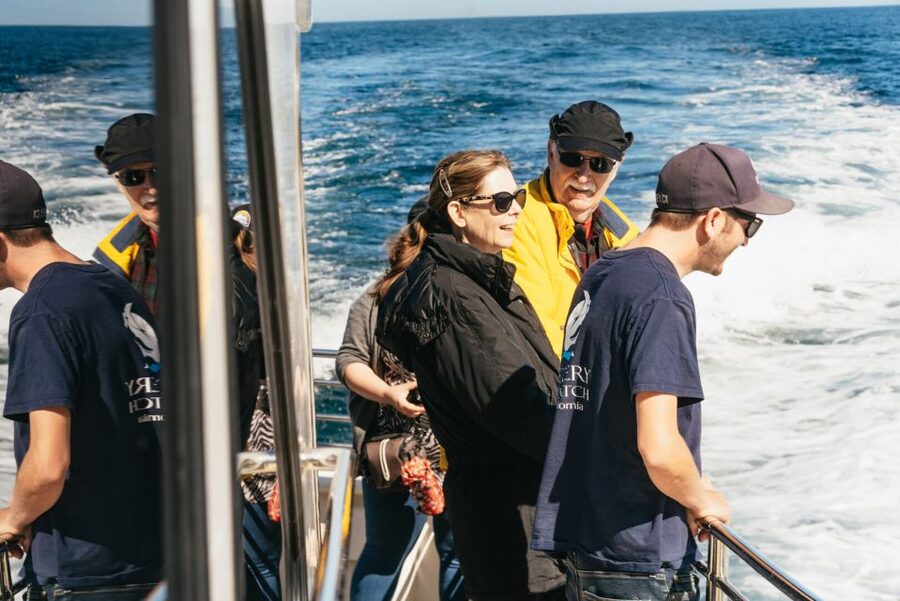
Use layers. The bay can be sunny at the wharf and cold offshore, especially when the boat is moving. Several passengers specifically recommended extra clothing for cloudy or cool days.
Bring:
- Comfortable shoes with good footing
- Sunglasses
- A sun hat
- Sunscreen
- A passport or ID card
- Motion sickness medication if needed
- A small packed lunch and non-alcoholic drink, if wanted
Smoking, alcohol, and drugs are not allowed. You will be outside for much of the trip, so sunscreen still matters on cool days. A brimmed hat can help with glare, but hold on to it in windy conditions.
Parking and getting to the dock
The closest parking is the Monterey Harbor Waterfront lot at 245 Washington Street. Pay before the tour through the ParkMobile app or the pay stations. Failing to pay can result in a $49 ticket, so do not treat parking as an afterthought.
From the lot, walk toward Wharf 1. Pass the pink Harbor House, continue past the yellow Crab House, and look for the blue Discovery Whale Watch building on your right. The walk is short, but the required 45-minute check-in means you should allow time for parking, the walk, and waivers.
If you are already staying near the wharf, walking may be easier than driving. The waterfront area also gives you a useful place to explore before or after the cruise.
Is $75 a fair price?
At $75 per person, this is not a cheap harbor ride. You are paying for three to four hours on the water, a marine biologist, boat operation, hot beverages, and access to one of California’s best whale habitats.
I think the price is fair if you value time on the water and natural history. The smaller boat and active crew add value, especially when they help you move around for views and explain the animals properly. The cost also compares better when you consider that the boat may produce several species in one outing, not only whales.
The value is less certain if you need a guaranteed close encounter or a polished sightseeing cruise. Wildlife is unpredictable, and rough water can make the experience tiring. A few passengers have found the price somewhat steep, even while deciding the trip was worth it.
Book this as a nature experience, not a guaranteed photo opportunity. That mindset gives you a better chance of enjoying the whole bay, including sea lions leaving the harbor, dolphins alongside the boat, seabirds, otters, and the changing character of the sea.
Who will enjoy this cruise most?
This is a strong choice for families with older children, couples, wildlife fans, photographers, and anyone who wants a memorable break from Monterey’s streets and museums. Children aged 9 and 13 enjoyed one outing, and guides have been praised for keeping young passengers interested.
It also suits first-time whale watchers. You do not need prior marine knowledge, and the guide explains what to look for. The crew’s humor helps during quiet stretches when the boat is searching.
You should think twice if you dislike boats, cannot handle cold or motion, or need step-free access. The activity is not suitable for pregnant women or people with mobility impairments, and even a successful outing may include long periods of waiting between sightings.
Practical booking advice
Check the season and departure time before you commit. Summer and fall morning cruises are generally the longest, while winter mornings and afternoon trips are shorter. Morning and afternoon conditions can differ, but the supplied details do not promise that one time is always better.
Leave extra space in your day. Wildlife watching can run longer than planned, especially when whales are active or when the captain needs more time to find animals. One trip returned later than expected after the crew took additional time to locate whales.
The activity offers free cancellation up to 24 hours before departure, and you can reserve now and pay later. That is useful if your California plans are still changing. Still, complete the electronic waiver early and arrive well before departure so check-in does not become a last-minute rush.
Should you book Discovery Whale Watch?
I would book this if seeing whales in the wild is high on your Monterey list. The bay’s canyon, strong seasonal wildlife, small-group feel, and active naturalist commentary give the trip substance beyond a simple boat ride.
Choose summer or fall if feeding humpbacks and a broad mix of wildlife are your priority. Choose winter if migrating gray whales appeal to you and you are prepared for colder conditions. Bring layers, plan for motion, and leave room for the trip to run long.
You should not book expecting a guaranteed breach, blue whale, or orca. But if you can accept the uncertainty, this is a well-priced chance to see remarkable animals in their own environment, with a crew that works hard to make the most of every sighting.
FAQ
Where does the whale-watching cruise depart?
The cruise departs from Discovery Whale Watch at 66 Fisherman’s Wharf in Monterey, California.
How early should I arrive?
Arrive at least 45 minutes before departure. You need time to check in and have the Coast Guard waivers completed for everyone in your party.
How long does the cruise last?
The experience lasts between 3 and 4 hours depending on the option booked. Summer and fall morning tours usually last 3.5 to 4 hours. Winter morning tours and afternoon tours generally last 2.5 to 3 hours.
What whales might I see?
Possible sightings include humpback, blue, fin, gray, and killer whales. Humpback whales are commonly seen, while gray whales are a key target during winter migration trips.
Will I definitely see a whale?
Whales are spotted almost daily in Monterey Bay, but sightings cannot be guaranteed. The crew also looks for dolphins, porpoises, sea lions, seals, otters, and seabirds.
Is a guide included?
Yes. A live English-speaking guide and onboard biologist are included. The guide discusses marine life and conservation in Monterey Bay National Marine Sanctuary.
Is food included?
Food is not included. You may bring a small packed lunch and non-alcoholic beverages. Hot beverages are included, and drinks or snacks may be available for purchase.
Is parking available near the departure point?
Yes. The closest lot is Monterey Harbor Waterfront at 245 Washington Street. Pay through the ParkMobile app or a pay station before walking to the Discovery Whale Watch office.
Can I bring my dog?
Friendly dogs are permitted on board. Smoking, alcohol, and drugs are not allowed.
Just added in the USA
- Key West Reef Snorkel – Morning Mimosas or Afternoon Margaritas★ 4.0 · 620 reviews
- Key West Half-Day Fishing Charter★ 4.5 · 408 reviews
- Key West Haunted Pub Crawl and Ghost Tour with Free T-Shirt★ 4.5 · 549 reviews
- Key West Glass-Bottom Boat Tour with Sunset Option★ 4.0 · 576 reviews
- Key West Ghosts and Gravestones Trolley Tour★ 4.5 · 1,217 reviews
- Key West Dolphin and Snorkel Experience★ 4.5 · 334 reviews
- Key West Afternoon Reef Snorkeling with Open Bar★ 4.5 · 419 reviews
- Key West Ghost and Mysteries Guided Tour★ 4.5 · 1,079 reviews
Whale Watching, compared.
Juneau Wildlife Whale Watching & Mendenhall Glacier
Read our review →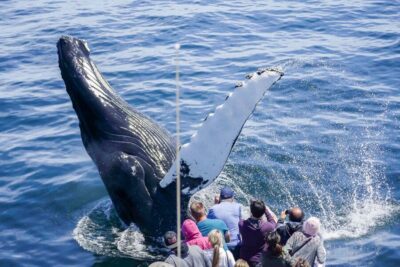
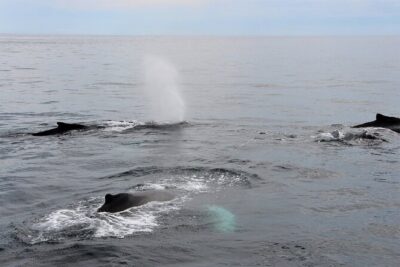
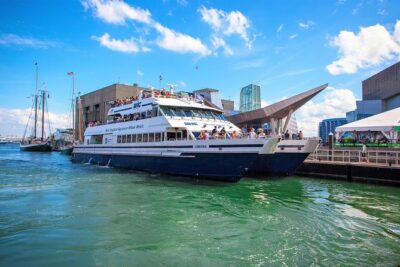
City Cruises Boston Whale Watching Cruise by High-Speed Boat
Read our review →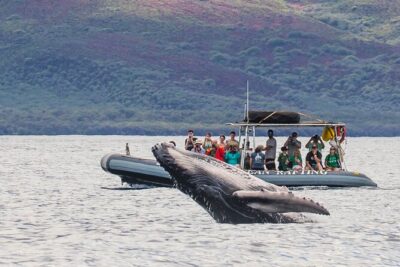
Maui Eco-Raft Tour: Eye-Level Whale or Dolphin Watching – Lahaina
Read our review →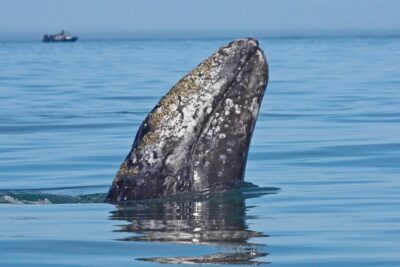
Whale Watching Trips to Stellwagen Bank Marine Sanctuary. Guaranteed sightings!
Read our review →Browse the lists this tour appears in