
Reviewed · CANOES & KAYAKS
Bioluminescence Kayak Tour
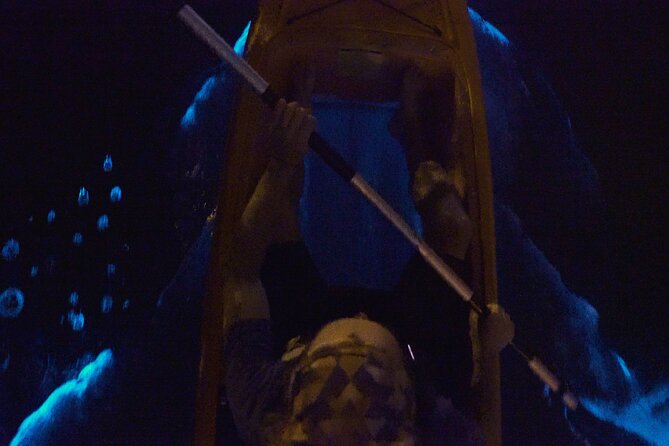
The magic here comes when your paddle stirs the dark water and tiny organisms flash blue-green around the kayak. In winter, you may instead spot clear comb jellies, gentle creatures that do not sting and can sometimes be held in your hands.
I like the mix of simple paddling and real science, especially when guides such as Sean, Aidan, Caleb, or Zoey explain what you are seeing. I also like the chance of meeting dolphins, manatees, and jumping mullet in the Indian River Lagoon. The main catch is that nature controls the show. A winter trip can produce only a few glowing jellies, while light pollution, wind, moonlight, and timing may reduce the effect.
Quick points to know before you book
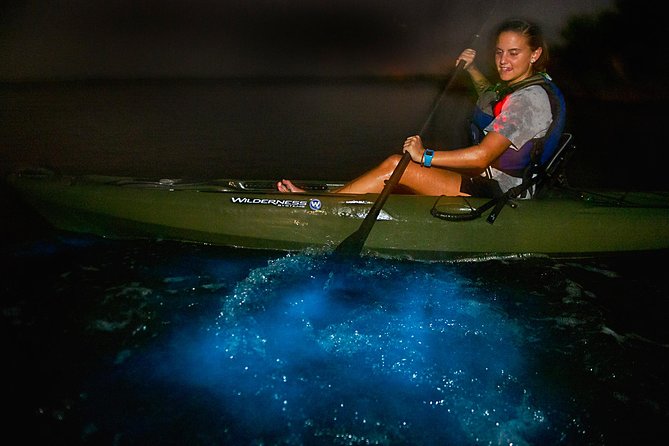
- Two different glow seasons: Dinoflagellates usually peak from May to early November, while comb jellies are more common from late November through April.
- The paddling is gentle but not always effortless: Most people can take part, though wind and choppy water can make the return harder.
- Guides make a real difference: Aidan, Sean, Caleb, Zoey, Jorge, Drew, and others are praised for clear safety help and lively explanations.
- You will probably get wet: Wear water shoes and clothes you do not mind soaking. Bring dry clothes for afterward.
- Wildlife is part of the bonus: Fish, mullet, dolphins, and manatees have appeared during outings, but no animal sighting is promised.
- Cameras rarely capture the glow well: A dry bag and camera can record people, but your eyes will do a better job with the light in the water.
Why the dark water near Cocoa Beach feels so special
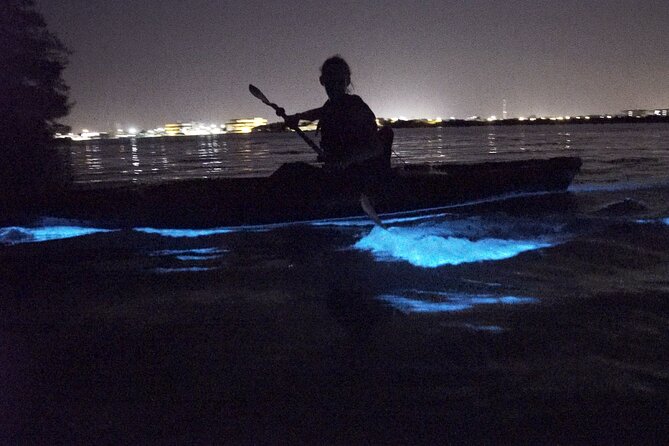
This is not a standard sunset paddle. The kayaks leave from 951 Kiwanis Island Park Road on Merritt Island and head into the protected waters around the Indian River Lagoon and Mosquito Lagoon area. Once the sky darkens, every stroke can disturb the water and reveal tiny flashes of living light.
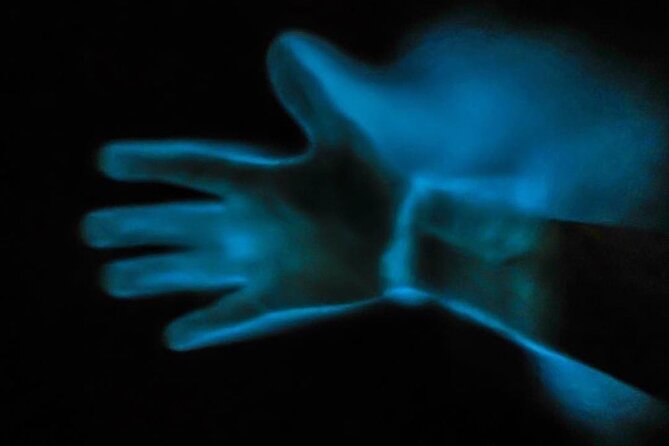
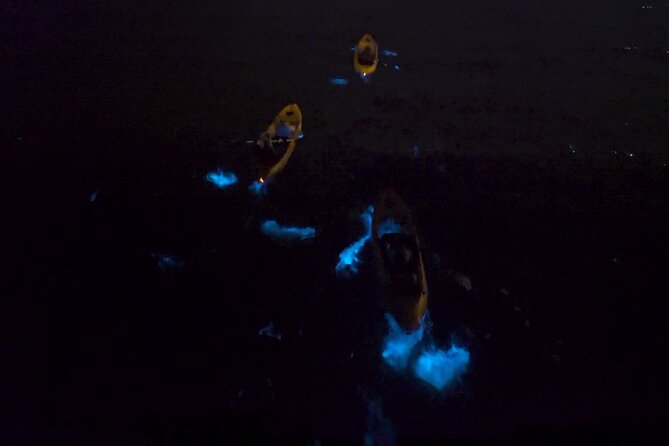
In the warmer months, the glow comes mainly from dinoflagellates. These single-celled organisms can create a cloudy blue-green shimmer rather than a single bright point. Think of the effect as a soft haze around your paddle, hands, or a fish moving beneath the surface.
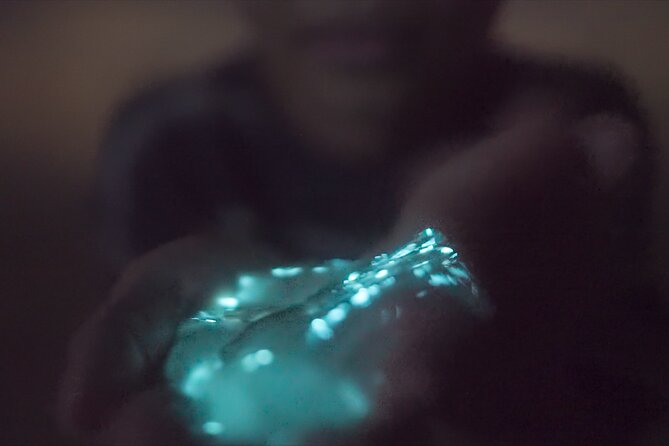
In cooler months, the show changes. Comb jellies are clear, roundish creatures that produce individual points or streaks of light. They are not the stinging jellyfish many people picture, and the tour explains how you may safely hold them when conditions allow.
I like this seasonal change because you are not simply booking the same outing all year. A summer trip aims for broad, cloudy glow. A winter trip is more about finding separate glowing creatures. Neither season guarantees a spectacular display, but each has its own character.
Other paddling trips around the USA:
- Clear Kayak Tour of Shell Key Preserve and Tampa Bay Area
★ 5.0 · 5,800 reviews - Half-Day Emerald Cave Kayak Tour with Optional Hotel Pickup
★ 5.0 · 4,978 reviews - Emerald Cave Kayak Tour: Scenic Paddle with Optional Shuttle
★ 5.0 · 2,858 reviews
The two-hour outing, from shore to open lagoon
You meet at the Kiwanis Island Park location, receive your kayak and paddle, and get a personal flotation device. The guide gives basic instructions before the group moves onto the water. That introduction matters if you have never kayaked before. Aidan, for example, has been praised for giving nervous beginners clear directions before they set off.
The kayaks then move into the dark water in a group. This is not described as a strenuous athletic trip, and several outings have worked well for children and first-time paddlers. Still, you should not mistake easy-going for completely effortless. One unhappy outing involved rougher water, a long paddle, and an inexperienced guide, showing how much wind and leadership can shape the night.
The exact route and wildlife sightings vary. You may see mullet jumping like small flashes across the surface. You might spot a dolphin or manatee near the kayaks. One outing included a large manatee surfacing close enough to surprise the paddlers, while another had dolphins and a huge manatee along with comb jellies.
Those moments are exciting, but they are bonuses. The core experience is the night paddle and the changing water beneath you.
The guide pauses to explain the biology and local ecosystem. Sean has been praised for explaining the science down to the molecular level, while Caleb and others have focused on the habits of the animals and the lagoon. Good guides paddle backward at times so they can keep the group together and point out activity around the kayaks.
The tour ends back at the starting point after roughly two hours. Plan on needing a towel and a change of clothes. Water can splash into the kayak, and some outings have left people soaked.
Summer dinoflagellates or winter comb jellies?
Choosing the right season is the single best way to improve your odds.
May through early November: Warm water brings the best chance of seeing dinoflagellate glow. When conditions line up, the effect can be broad and dramatic, with blue-green light spreading around moving paddles and fish. A September trip produced especially strong glowing water, along with manatees, mullet, and detailed science from the guide.
Late November through April: Cooler water favors comb jellies. You may catch and hold these clear, harmless creatures in a small net or by hand when the guide permits it. Several winter outings found plenty of jellies even when the plankton glow was limited.
Winter has a tradeoff. The air can feel cold on the water, especially once you are wet. One February outing was enjoyable but chilly. Late December and January trips sometimes produced only a few glowing jellies, and one group found the local lights made the glow harder to see.
If your main goal is the biggest blue-green effect, I would choose the warmer season. If you want the unusual experience of holding glowing comb jellies, winter can be the better fit. Ask the operator about current conditions before you go, since the season alone cannot predict the night.
Guides, safety, and the value of a small group
The guide is more than a person leading a line of kayaks. On a dark lagoon, you need someone who can explain the route, watch the group, and adjust to different paddling abilities.
Names praised for clear instruction and care include Aidan, Sean, Caleb, Zoey, Jorge, Drew, Kurt, Lucas, Mathew, and others. Zoey has helped tired paddlers through rougher water, while Aidan made a first-time kayaker feel prepared before launch. Sean kept a family engaged with biology and humor. These details matter because you will spend the evening in darkness, not on a marked sightseeing path.
A personal flotation device is included, along with the kayak, paddle, and guide. Most people can participate, but you should be honest about your comfort in a kayak and your ability to paddle for the length of the trip. The maximum group size is 42 people, which is fairly large for a quiet nature outing. Smaller groups can feel more personal, and off-season departures may sometimes have only a few participants.
Safety also depends on weather. One trip was canceled because of high winds. The cancellation policy allows a full refund if you cancel at least 24 hours before the start time, but changes or cancellations inside that window are not refunded. If the operator cancels, confirm how the refund will be handled rather than assuming a credit is your only choice.
Same base, a different kind of day out:
- NYC: SUMMIT One Vanderbilt Tickets
★ 4.7 · 51,195 reviews - NYC: 9/11 Memorial & Museum Timed-Entry Ticket
★ 4.8 · 31,428 reviews - NYC: Empire State Building Tickets – Observatory & Museum
★ 4.7 · 25,757 reviews - NYC: Empire State Building Observation Deck Tickets
★ 4.7 · 22,072 reviews
Light pollution, moonlight, and the luck factor
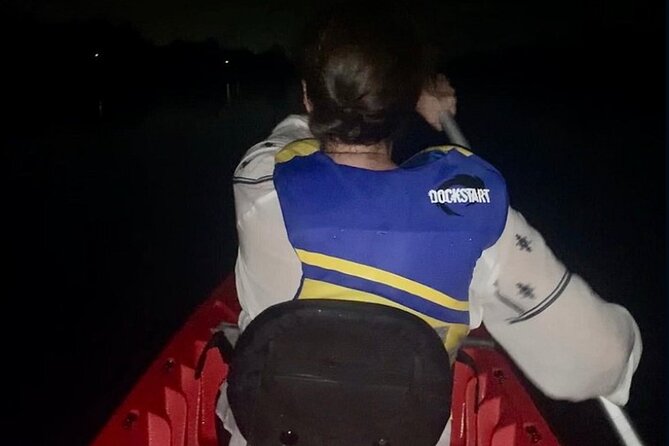
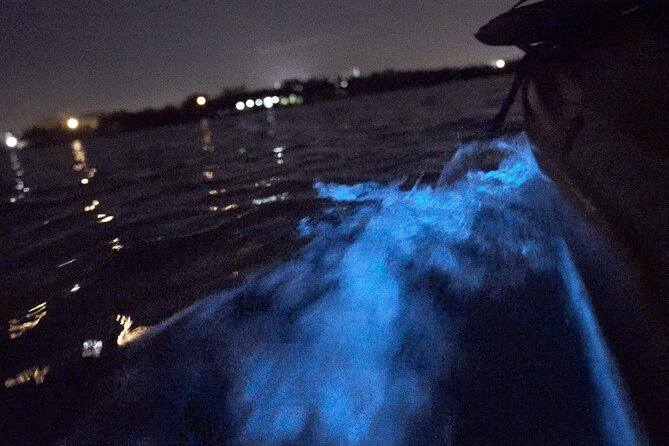
Bioluminescence is not a switch that the guide can turn on. The brightness changes by season, weather, water conditions, and the activity of the organisms. A new moon and clear sky can make the glow and stars easier to notice. A bright moon or nearby artificial lights can wash out the effect.
Departure time may matter, too. One outing at 7:15 p.m. produced little glow, while a later 10:45 p.m. trip had dark skies and a strong display. That does not prove that late trips are always better, but it is worth asking about the available departure times and current water conditions.
You should also keep expectations realistic. On a strong night, the water may look like tiny galaxies around your hands. On a weak night, you may see only a few sparks and still enjoy the quiet paddle. One family found the trip relaxing despite limited glowing life, while another felt the excursion was not worth the cost after a long paddle and only a sprinkle of light.
I see this as a nature outing first and a guaranteed light show second. That mindset protects you from disappointment and lets you appreciate the stars, mangroves, palm trees, fish, and calm water even when the organisms are faint.
What to wear and what to bring
Wear clothes that can get wet. Water shoes, sandals, or Crocs that stay on your feet are practical choices. Do not rely on flip-flops that can slide away in the water.
Leave a towel in the car and pack an extra change of clothes. The guide provides a safety light, though you may bring a flashlight. Bottled water and snacks are sensible for before or after the paddle.
A camera is optional. Regular cameras and phones often struggle to record faint bioluminescence, so do not book this mainly for photographs. A dry bag can protect your phone and wallet, and a camera may still be useful for taking pictures of your group before or after the darkest part.
If you own personal paddling gear, you may bring it. The basic kayak, paddle, and flotation device are included.
Is the tour good for families and beginners?
The gentle paddling makes this a good choice for families, teenagers, couples, and first-time kayakers. A five-year-old handled one outing well, and teenage children have enjoyed the wildlife and glowing water. Guides can help with getting into and out of the kayak, which is useful if you are nervous about balance.
You should still prepare children for darkness, wet clothes, and a few hours on the water. The setting is calm, but a fish may jump suddenly and a manatee can surface close by. That is part of the fun, though it may startle a young child.
This is also a nice option for people who want an unusual evening near Cocoa Beach without committing to a strenuous paddle. It suits curious visitors who enjoy nature, local science, and a little uncertainty.
It is less suitable if you need a guaranteed bright display, dislike getting wet, or have difficulty paddling when wind picks up. A group of 42 could also feel busy if you hoped for a private, quiet outing.
How much value do you get?
The value comes from combining equipment, instruction, safety support, and access to a nighttime setting that is difficult to experience alone. You are not paying only for two hours of kayaking. You are paying for a guide who can identify the organisms, manage the group, and help you make sense of an unusual natural event.
That value is strongest when the glow is bright and the guide is engaged. It is also helped by wildlife sightings, from jumping mullet to dolphins and manatees. The value drops if the water is rough, the light pollution is strong, or seasonal activity is low.
For that reason, I would choose your date carefully rather than treating this as a fixed attraction. Summer gives you the best chance of a wide dinoflagellate glow. Winter gives you the chance to handle comb jellies. Check the moon, forecast, departure time, and current conditions before paying.
Should you book this Cocoa Beach night paddle?
Book it if you want a hands-on nature outing and can accept that the glow varies. The best trips combine dark skies, calm water, active organisms, and a guide who keeps the group safe while explaining what is happening.
For the strongest odds of blue-green water, aim for May through early November. For glowing comb jellies, choose late November through April and bring warm, dry clothes. If your schedule allows, ask about a later departure and current light conditions.
Skip it if your only goal is a guaranteed bright spectacle or if you cannot tolerate getting wet. Otherwise, this is a memorable way to see Merritt Island after sunset, especially when the paddle stirs light beneath your hands and wildlife appears beside the kayak.
FAQ
Where does the bioluminescence kayak tour begin?
The tour begins at 951 Kiwanis Island Park Road, Merritt Island, Florida 32953. The activity ends back at the same meeting point.
How long does the tour last?
The kayak outing lasts about two hours.
What type of bioluminescence can I see?
From May through early November, you may see cloudy blue-green light from dinoflagellates. From late November through April, you may see individual glowing comb jellies.
Can I hold the comb jellies?
During the cooler season, the tour may allow you to catch and hold comb jellies. These creatures do not sting.
Are kayaks and safety equipment included?
Yes. The tour includes a kayak, paddle, and personal flotation device. A professional guide is also included, and a safety light is provided.
What should I wear?
Wear clothes that can get wet and water shoes, sandals, or Crocs that can be worn in the water. Bring a towel for the car and an extra change of clothes.
Can I cancel for a refund?
You can cancel at least 24 hours before the start time for a full refund. Cancellations or changes made less than 24 hours before the start time are not refunded.
Just added in the USA
- Road to Hana: Full-Day Scenic Drive with Blacksand & Waterfalls★ 4.5 · 837 reviews
- Road To Hana: Maui Waterfall Hiking Tour in Private Jeep★ 5.0 · 343 reviews
- Original La Jolla Sea Cave Kayak Tour for Two★ 4.5 · 871 reviews
- Maui Nui Luau at the Sheraton Maui Resort & Spa★ 4.5 · 1,622 reviews
- 2 Hour Sailing Cruise on Lake Tahoe★ 5.0 · 886 reviews
- Key West: All-Inclusive Watersports Adventure with Lunch & Beer★ 4.5 · 351 reviews
- La Jolla Sea Caves Kayak Tour For Two (Tandem Kayak)★ 4.5 · 1,205 reviews
- Behind-the-Scenes at Petco Park Tour★ 4.5 · 339 reviews
Canoes & Kayaks, compared.
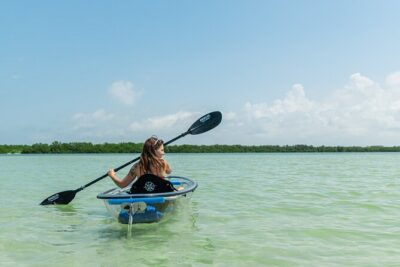
Clear Kayak Tour of Shell Key Preserve and Tampa Bay Area
Read our review →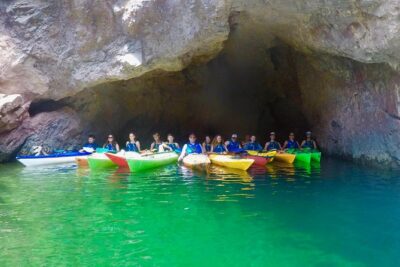
Half-Day Emerald Cave Kayak Tour with Optional Hotel Pickup
Read our review →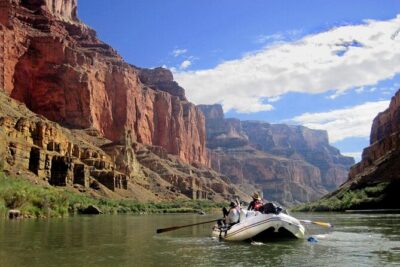
Emerald Cave Kayak Tour: Scenic Paddle with Optional Shuttle
Read our review →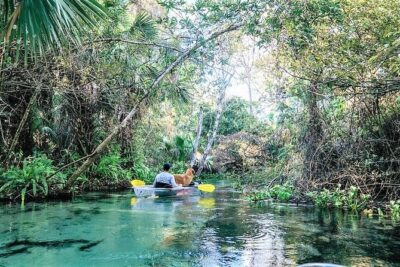
Rock Springs 2-Hour Glass Bottom Guided Kayak Eco Tour
Read our review →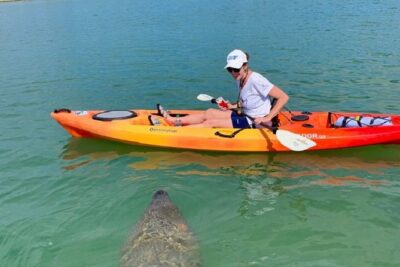
Crystal River Three Sisters Springs and Manatee Clear Kayak Tours
Read our review →Browse the lists this tour appears in