
Reviewed · TROLLEY & HOP-ON HOP-OFF TOURS
Waikiki Trolley Red Line Heroes & Legends Hop-on Hop-off Tour
Honolulu’s story comes into focus on this open-air trolley ride, which links Waikiki’s shoreline with the State Capitol, Chinatown, Punchbowl Crater, and Honolulu Harbor. It is a useful first look at the city, especially if you want history and orientation without arranging several separate rides.
I like the wide range of sights packed into one route, and I like the relaxed narration from drivers such as Sam, Chuck, Chico, Turk, and Big Tony. The main catch is timing: buses may arrive about an hour apart, and crowded trolleys can leave you standing or waiting longer than expected.
Key points to know before you ride
- Fourteen stops connect Waikiki with downtown Honolulu, Chinatown, Punchbowl, and Kakaʻako.
- The narration covers Hawaiian royalty, local culture, World War II, monuments, and modern Honolulu.
- The route is listed at about 1 hour 20 minutes, but traffic or stopovers can make it closer to two hours.
- A hop-on, hop-off ticket sounds flexible, but long gaps between trolleys can limit that flexibility.
- Open-air seating gives you a pleasant city view, though wind, engine noise, and crowded seats can affect how much you hear.
- At $35 per person, it offers fair value for orientation and commentary, but less value if you only need transportation.
A useful first ride through Honolulu
The Red Line is less a simple shuttle than a moving introduction to Honolulu. You begin in Waikiki, pass landmarks tied to surfing and Hawaiian royalty, then head inland through the civic center, Punchbowl, Chinatown, and the harbor district before returning toward Waikiki.
That route matters because Honolulu is not just a beach strip. The city’s older districts, government buildings, memorials, gardens, and harbor are spread out. This trolley lets you see how those pieces fit together in one outing.
The listed ride lasts about 80 minutes without getting off. In real conditions, allow closer to two hours for the full circuit. Traffic, parade closures, boarding delays, and crowded vehicles can all add time. If you hop off, the next trolley may not arrive for about an hour, so this is not a ride to squeeze between two tightly scheduled activities.
The best use is on your first day or during a break from the beach. I would ride once without getting off if I wanted a quick overview, then return to one or two stops later on my own.
Other sightseeing routes around Oahu:
- Waikiki Trolley Hop-On Hop-Off Tour of Honolulu
★ 4.5 · 4,783 reviews - Waikiki Trolley Blue Line Coastline & Local Grindz Hop-on Hop-off
★ 5.0 · 4,159 reviews - Oahu: Waikiki Trolley Hop-on Hop-off All-Line Pass
★ 4.4 · 810 reviews
Waikiki Shopping Plaza to Duke Kahanamoku
The route starts at Waikiki Shopping Plaza, a convenient urban departure point among hotels, restaurants, and shops. This is a practical place to begin, but do not assume every stop will have large, obvious signage. Finding the correct pickup point can be harder at places such as Ala Moana Regional Park.
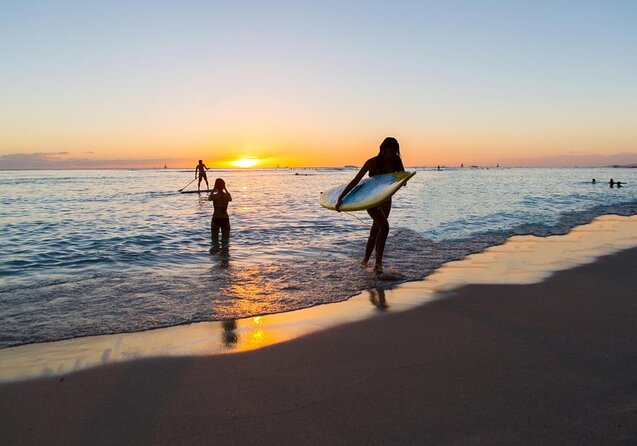
The Duke Paoa Kahanamoku Statue is one of the most fitting early stops. Kahanamoku was an Olympic swimmer and a major figure in the spread of surfing beyond Hawaiʻi. His statue near Waikiki Beach is a natural photo stop and gives the tour a clear sense of place: this is a city shaped by the ocean, not just a resort town beside it.
The Twin Fin Hotel stop keeps you close to Waikiki’s hotel zone. It is useful for boarding and for returning to the beach area, though it is not a major sightseeing stop by itself.
These first stops are best for orientation. You see the concentration of hotels and beach businesses, then begin moving toward the older and more civic parts of Honolulu.
Honolulu Museum of Art and the State Capitol
The Honolulu Museum of Art, or HoMA, gives the route a cultural turn. You can use this stop to visit the museum if its opening schedule fits your day. One practical warning: it is closed on Monday and Tuesday, so check before planning your whole day around getting off here.
Even if you do not enter, the stop helps show that Honolulu’s cultural life reaches well beyond Waikiki. If you are interested in art, this is one of the more useful places to leave the trolley. If you only want a quick city circuit, stay aboard and save the museum for another day.
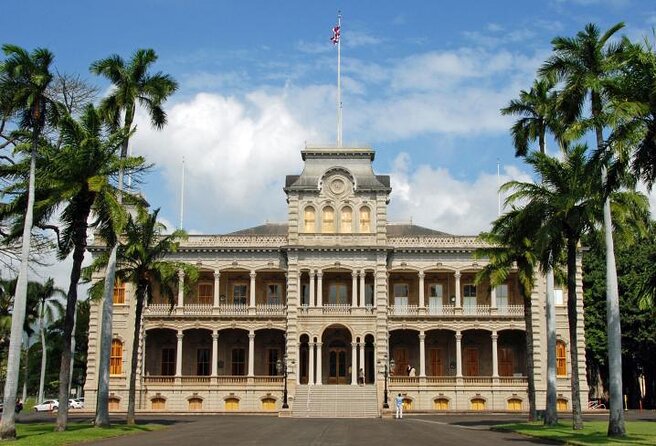
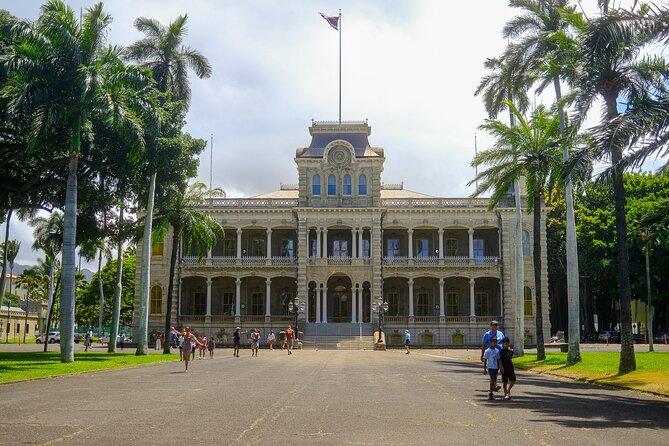
Next comes Hawaiʻi State Capitol, a striking civic building in the center of Honolulu. The surrounding area places you near several important government and historic sites. The commentary can help you understand the connection between modern state government and Hawaiʻi’s earlier monarchy.
This is where the narration matters most. Several drivers, including Chico and Big Tony, have been praised for explaining buildings, monuments, Hawaiian names, and local history in an entertaining way. The quality depends on who is driving, but the live commentary gives the ride more value than a basic sightseeing bus.
Punchbowl Crater and the National Memorial Cemetery
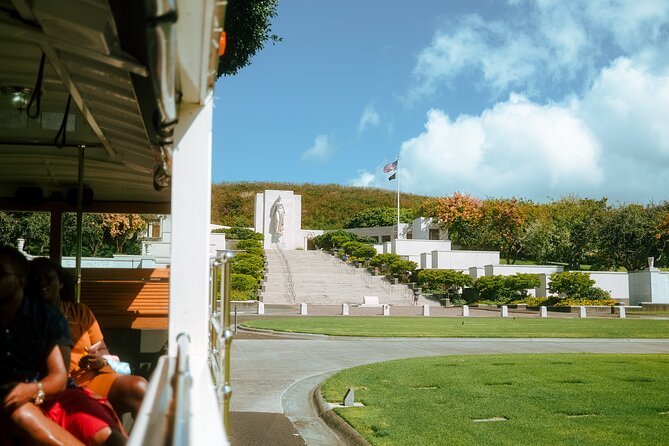
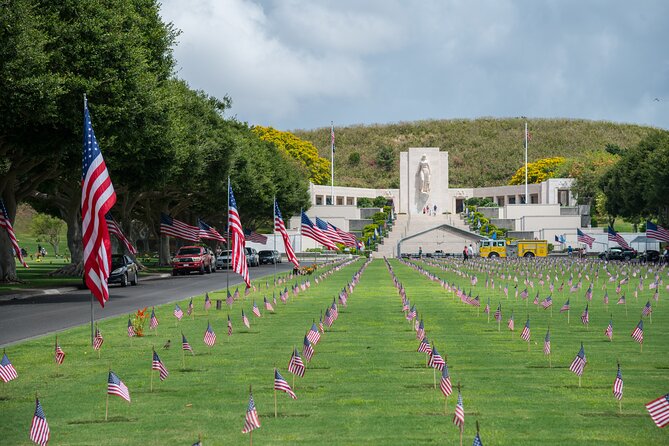
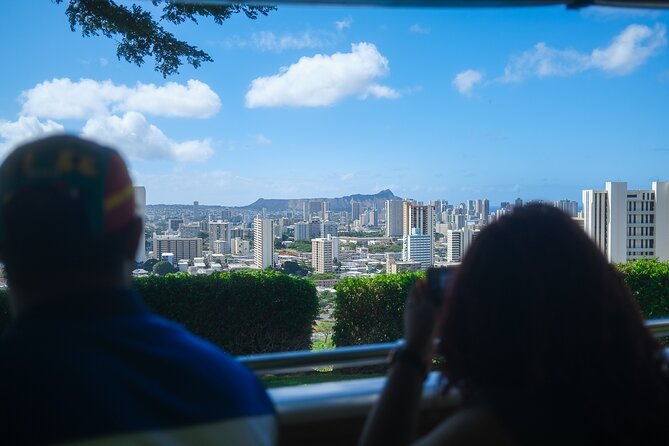
The National Memorial Cemetery of the Pacific sits inside Punchbowl Crater, one of the most memorable sections of the route. The setting is quiet and formal, with memorial grounds and broad views over Honolulu. It offers a sharp change from Waikiki’s hotels and traffic.
I would give this stop extra weight if you care about military history or memorial sites. The route’s discussion of World War II and Hawaiʻi’s role in the Pacific adds context before you arrive. Even from the trolley, this section feels more reflective than the shopping and entertainment districts.
You should also allow enough time here if you plan to get off. The Red Line is not a taxi, and the next vehicle may be roughly an hour away. That long interval can be worthwhile at a stop like Punchbowl, but it is frustrating if you expected frequent service.
A few practical points matter here. The trolley may be open to wind, and commentary can be hard to hear from the rear because of engine noise. Sit toward the front if hearing the narration is important to you.
Same base, a different kind of day out:
- Oahu Grand Circle Island and Haleiwa Tour: 9-Hr Deluxe Experience
★ 5.0 · 17,387 reviews - Oahu: Grand Tour Around Island 16 Locations plus Snorkeling
★ 5.0 · 8,669 reviews - Parasailing Experience in Waikiki, HI
★ 5.0 · 7,692 reviews - Salute to Pearl Harbor Including USS Arizona
★ 4.5 · 7,433 reviews
Foster Botanical Garden and the Izumo Taishakyo Mission
Foster Botanical Garden brings plants and quiet paths into the middle of the city. The stop is a good choice for a slower break after the busier civic center and memorial route. The supplied information does not give a visit length or admission arrangement, so treat the trolley as transportation to the garden rather than a guided garden tour.
The Izumo Taishakyo Mission of Hawaii provides a glimpse of Honolulu’s Japanese religious heritage. Nearby Royal Kitchen adds a food-related stop to this portion of the route. Together, these locations show how much of Honolulu’s character comes from communities that shaped the city over generations.
This section suits you if you prefer local culture and small points of interest to a string of major photo stops. It is less useful if your main goal is to maximize beach time. Again, check the trolley schedule before getting off. A long wait changes a quick stop into a substantial part of your day.
Chinatown and downtown Honolulu
Chinatown is one of the route’s most atmospheric areas, but it deserves a realistic description. It is an older urban district with food, shops, historic buildings, and a rougher feel than Waikiki. Some visitors enjoy stopping for a meal, while others prefer to remain on the trolley after a brief look.
The route also passes downtown Honolulu and Hawaiʻi Theatre. The theatre is a handsome reminder of the city’s older entertainment district, while Chinatown provides a chance to eat something different from the standard hotel-zone fare.
This is one of the best places to hop off if you want lunch or a short walk. It is not the best stop for anyone expecting a polished resort setting. Use normal city awareness, keep your plans simple, and do not leave yourself stranded if you have a dinner reservation elsewhere.
The downtown commentary is often one of the stronger parts of the ride because the driver can point out buildings and explain how Honolulu developed around government, trade, immigration, and the harbor. Sit on the side with the clearest view when you can, but crowded vehicles may make seat choice impossible.
King Kamehameha and Honolulu Harbor
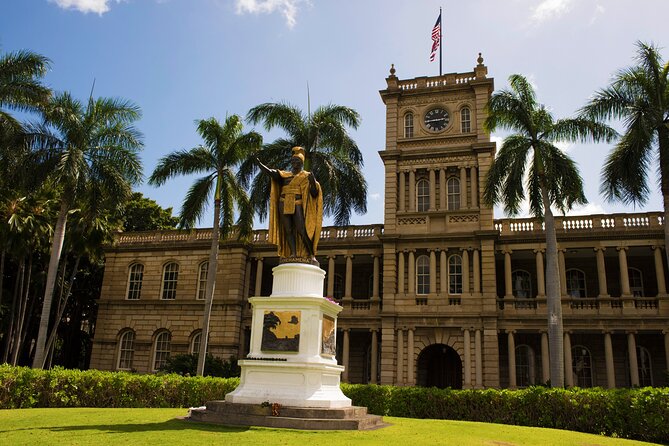
The King Kamehameha Statue is among the route’s most important landmarks. The statue honors Kamehameha I, who united the Hawaiian Islands in the early nineteenth century. It sits near ʻIolani Palace and the State Capitol area, making this another useful stop for understanding Hawaiʻi’s monarchy and political past.
The stop works well as part of a walking visit through the civic center. If you want only a photograph, you may not need to leave the trolley for long. If you want to look around, factor in the long wait for the next Red Line vehicle.
Aloha Tower Marketplace and Honolulu Harbor provide a brief sightseeing break. The harbor helps explain Honolulu’s role as a working port and a point of arrival, not simply a place for beach holidays. The stop can be pleasant for a short pause, though the marketplace may not be the main reason to choose this tour.
The timing here is important. A brief sightseeing break does not mean a guided harbor visit or an extended stop. You are getting a look at the area as part of a city circuit.
SALT at Our Kakaʻako, Ward Centre, and Ala Moana
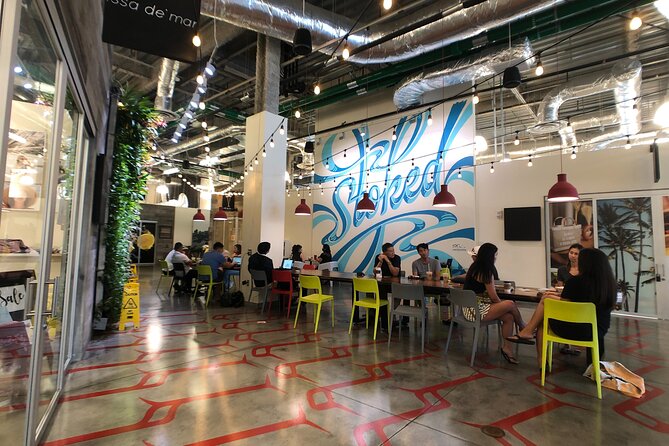
The final part of the route moves through newer commercial districts. SALT at Our Kakaʻako and Ward Centre offer shopping and dining options, with a more modern urban feel than Chinatown or the civic center.
These stops are useful if you are staying outside central Waikiki or want to compare Honolulu’s newer districts with its older neighborhoods. They are not essential for a first-time sightseeing circuit if your day is short.
Ala Moana Regional Park is the last listed stop. It gives you a more open setting near the coast and links the route back toward the Waikiki side of the city. The park stop can be confusing because pickup points are not always obvious. One practical approach is to ask the driver exactly where and when to board before you get off.
Ala Moana can also be busy, and a full trolley may pass by if there are no seats. That is a serious issue for anyone who cannot stand comfortably. If you need a seat, ask about the next departure before leaving the vehicle.
How good is the hop-on, hop-off system?
The idea is excellent. You can ride the entire loop, choose a museum or garden, stop for food in Chinatown, and continue later. In practice, the system works best when you plan for long pauses.
Reports of waits around an hour between buses are important. A late first trolley can make the whole day feel uncertain, and a full bus may pass your stop. One account also described a parade forcing a longer ride and a drop-off away from the intended stop. That sort of disruption is not the norm for every day, but it shows why you should keep your schedule loose.
The Red Line also shares a weakness common to open-air city tours: the views are good, but the sound can be uneven. Wind and engine noise make some commentary hard to catch, especially in the back. The front section is the better choice for hearing the driver.
Do not treat this as a precise public transit service. It is a sightseeing ride first. If you need to reach a hotel or appointment at a set time, use another transport option.
Guides, seating, and comfort
The strongest part of the experience is often the driver. Names attached to especially well-liked tours include Sam, Chuck, Chico, Turk, and Big Tony. Their styles differ, but the praise centers on humor, Hawaiian pronunciation, history, and a friendly willingness to point out details.
That human element is valuable. A trolley driver can explain why a statue matters, identify a government building, or connect a neighborhood to Hawaiian history while you are moving through the city. It turns a simple ride into a useful orientation session.
Comfort is less consistent. Wooden seats, wind, engine sound, and crowding can all affect the ride. Some departures have had standing passengers, and one account described standing for more than an hour. If you are recovering from surgery, have limited stamina, or simply need a guaranteed seat, this is a real concern.
Most people can participate, and service animals are allowed. The route is near public transportation, which gives you a backup if the trolley does not fit your plans. The ticket is mobile, and confirmation is provided when you book.
Is $35 a fair price?
At $35 per person, the fare is reasonable if you use it for city orientation and live commentary. You are covering a long route with Waikiki, downtown, Chinatown, Punchbowl, the harbor, Kakaʻako, and Ala Moana in one outing. Taxis between all those areas would cost more, and a city bus may require more route planning.
The value drops if you only ride from one neighborhood to another. Public buses cost less, and one account specifically preferred the city bus for all-day transportation. The Red Line earns its price through the guide’s narration and the sightseeing route, not speed or frequency.
I would avoid buying it for a tightly packed day. I would consider it on day one, when learning the city’s layout can help you choose where to return. It also works well as a relaxed break between beach activities, especially if you enjoy history but do not want another formal museum visit.
Who should book the Red Line?
Book it if you want a broad first look at Honolulu, enjoy live local commentary, and can accept a flexible schedule. It is especially useful for first-time visitors, families, couples, and anyone who wants to see more than Waikiki without planning every street and bus connection.
It is also a good match for a quiet afternoon. The ride lets you rest while still seeing the State Capitol, Punchbowl, Chinatown, harbor, and other districts.
Think twice if you need frequent buses, guaranteed seating, clear stop signs, or exact arrival times. The Red Line is not the best choice for a person with a fixed appointment, limited standing ability, or little patience for delays.
Should you book it?
I would book this tour for the commentary and the broad city view, not simply as a hop-on bus. Ride it early in your stay, sit near the front, and leave plenty of time in case the loop takes closer to two hours.
For the best experience, choose only one or two stops for a longer visit. Punchbowl, the State Capitol area, HoMA, Foster Botanical Garden, and Chinatown each offer more than a quick photograph, but trying to do them all can turn the day into a series of waits.
At $35, the Red Line is fair value for a narrated Honolulu overview. Just keep your plans loose, confirm each pickup point before getting off, and remember that the word hop-on does not guarantee frequent service.
FAQ
How long does the Red Line tour take?
The listed duration is approximately 1 hour 20 minutes. Traffic, boarding delays, parade closures, and time spent off the trolley can make the experience last closer to two hours.
Where does the tour start?
The itinerary begins at Waikiki Shopping Plaza. Other listed stops include the Duke Paoa Kahanamoku Statue, the Twin Fin Hotel, and several locations across Honolulu.
Can I get off and board again?
Yes. The tour is designed for getting on and off at your leisure. Plan carefully, since the wait between trolleys may be about an hour.
What places does the Red Line visit?
The route includes HoMA, Hawaiʻi State Capitol, the National Memorial Cemetery of the Pacific at Punchbowl Crater, Foster Botanical Garden, Chinatown, the King Kamehameha Statue, Aloha Tower Marketplace, SALT at Our Kakaʻako, Ward Centre, and Ala Moana Regional Park.
Is the tour offered in English?
Yes. The experience is offered in English, with live information from the driver about Hawaiʻi’s history and culture.
Is the trolley suitable for most people?
Most people can participate, and service animals are allowed. Seating and comfort can vary because vehicles may be crowded, and some passengers may need to stand.
What happens if I need to cancel?
The booking is non-refundable and cannot be changed for any reason. A cancellation or amendment does not qualify for a refund.
Just added in Oahu
- Waikiki Starlight Luau on The Great Lawn-Hilton Hawaiian Village★ 3.5 · 374 reviews
- Pearl Harbor Arizona Memorial – Honolulu Tour – Submarine Access★ 3.5 · 767 reviews
- Tribute to Pearl Harbor Arizona Memorial and Honolulu City Tour★ 4.5 · 733 reviews
- Ultimate Pearl Harbor Circle Island★ 5.0 · 404 reviews
- WWII Pearl Harbor Heroes Deluxe Tour★ 4.5 · 621 reviews
- Shared Round-Trip Transfer: Honolulu Airport to Hotel or Cruise Terminal★ 4.0 · 711 reviews
- Shared Arrival Transfer: Honolulu Airport to Hotel or Cruise Terminal★ 3.5 · 609 reviews
- Royal Crown of Oahu – 60 Min Helicopter Tour – Doors Off or On★ 5.0 · 755 reviews
Trolley & Hop-On Hop-Off Tours, compared.
Hop-on Hop-off Sightseeing Tour by Open-top Bus
Read our review →
Boston Hop-On Hop-Off Trolley Tour with 13 Stops
Read our review →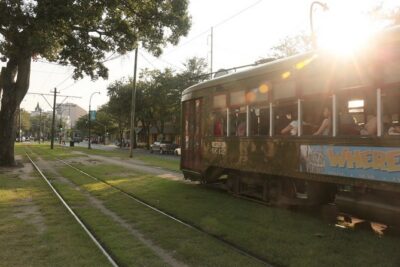
New Orleans City Sightseeing Hop-On Hop-Off Bus Tour
Read our review →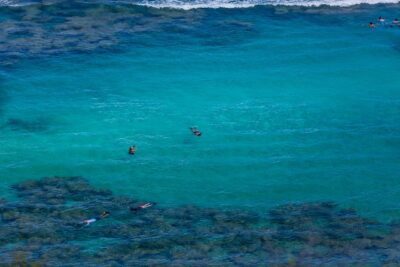
Waikiki Trolley Hop-On Hop-Off Tour of Honolulu
Read our review →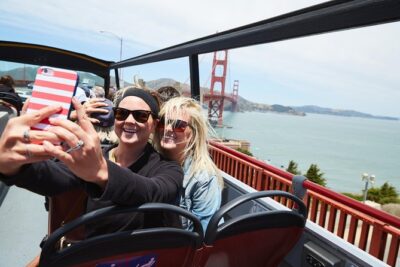
Big Bus SF: Hop-on Hop-off Tour with 17 Stops and Sunset Option
Read our review →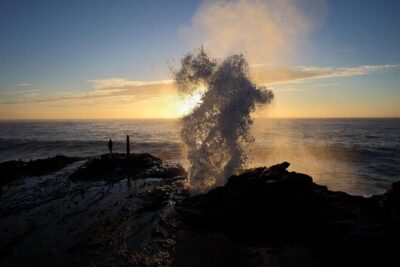
Waikiki Trolley Blue Line Coastline & Local Grindz Hop-on Hop-off
Read our review →Browse the lists this tour appears in