
Reviewed · RAFTING & ZIPLINING
Fins Course Scenic Zipline Tour
The best part of the Fins Course is its setting. You zip across Seven Falls Canyon above steep drops, rock walls, and jagged cliffs, then finish with a 180-foot rappel to the canyon floor. I like the way this combines several activities in one outing, and I like that the course builds in stages rather than throwing you straight onto the biggest line. The drawback is the strict 90 to 250-pound weight limit, which applies to every participant.
I also like the small-group feel. With no more than eight people and two guides, you get steady help with braking, harness checks, and nerves. Guides including Devin, Birdie, Cole, Cita, and Kaley are repeatedly praised for their humor and calm support. Plan for changing weather, a moderate fitness level, and a half day devoted to this one adventure.
Key points to know before booking
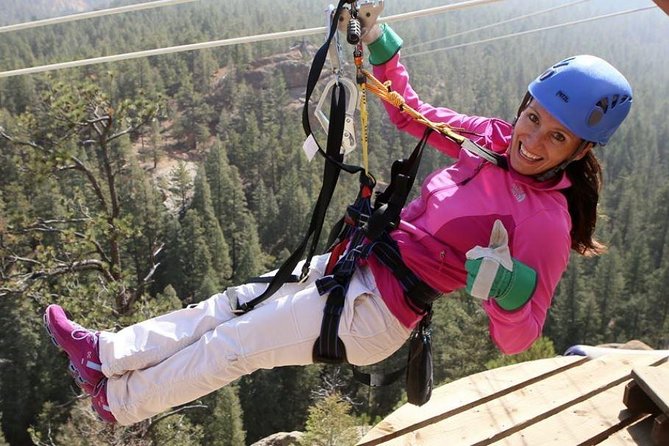
- Five ziplines cross Seven Falls Canyon: The longest stretches to 1,800 feet, with views of rock formations and steep canyon walls.
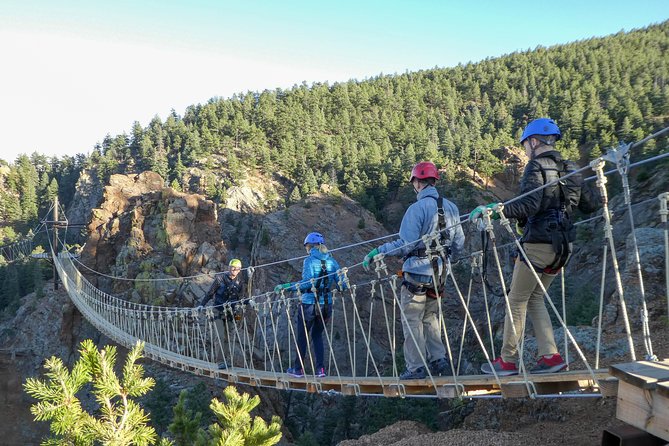
- Two suspension bridges add a different kind of challenge: They break up the ziplining and test your balance above the canyon.
- A controlled 180-foot rappel finishes the course: This is the final major thrill, not a simple walk back to the starting point.
- The course builds from easier to harder: You begin with three more approachable lines before reaching two more demanding ziplines.
- Small groups make a difference: The maximum group size is eight, with professional guides handling equipment and instruction.
- The rules are firm: You must weigh 90 to 250 pounds, wear closed-toed shoes, remain sober, and not be pregnant.
Why the Fins Course feels different from a standard zipline
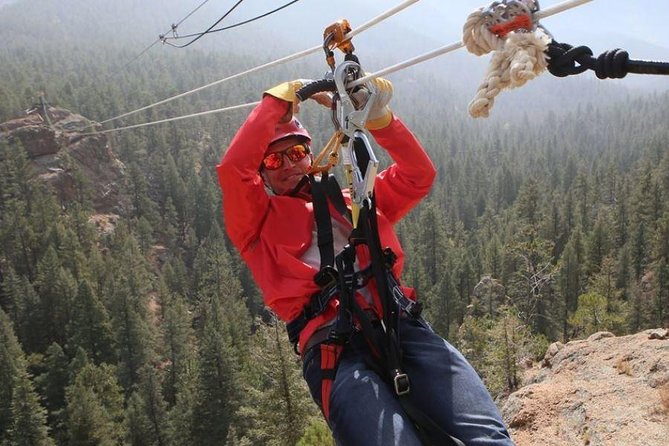
Many zipline outings are mainly about riding from platform to platform. The Fins Course adds two suspension bridges and a controlled rappel, so the activity keeps changing. That variety matters if you want more than a quick series of cable rides.
The setting also does much of the work. You are not simply gliding over a flat patch of woodland. The course runs across Seven Falls Canyon, with steep drops, unusual rock formations, and jagged cliffs around you. You get a bird’s-eye view of Colorado scenery, along with the sound of voices echoing through the canyon.
I think the course is especially appealing if your group has mixed experience. A first-time participant can start on the easier lines, watch how the guides handle each platform, and gain confidence before the bigger rides. Someone who has zip-lined before still gets the extra challenge of bridges and the final rappel.
The experience lasts about three hours, or roughly three hours and 15 minutes depending on the day’s pace. That is long enough to feel like a real outing, but short enough to fit into a busy Colorado Springs schedule.
Other trips with a rope or a river in them near the USA:
- Koloa Zipline in Kauai
★ 5.0 · 6,764 reviews - Oahu’s North Shore: 8-Line Zipline Adventure
★ 5.0 · 3,616 reviews - 7-Line Zipline Experience in Sevierville
★ 5.0 · 2,872 reviews
Starting at The Broadmoor Soaring Adventure
You meet at The Broadmoor Soaring Adventure, at 6 Lake Avenue in Colorado Springs. Arrive 15 minutes before your scheduled time. The tour includes transport by air-conditioned minivan, along with equipment, guides, bottled water, and service charges, so you do not need to arrange separate transport for the activity itself.
The minivan ride takes you toward the course area. One useful point from the experience is that the ride up can feel tense for some people, especially if you are already thinking about heights. If the drive makes you nervous, remember that it is only the approach. The actual course is managed step by step, with guides explaining what to do before each feature.
At the start, staff handle the important safety checks. Participants are weighed discreetly, and the 90 to 250-pound range is strict. This is not a flexible guideline, so check your eligibility before paying for the tour.
You also need closed-toed shoes. Every toe must be in the same compartment, which rules out five-toed shoes. Wear clothing suited to the weather, and bring sunscreen and sunglasses. The course is outdoors, and weather can cause delays or cancellation.
Getting fitted with a harness and carrying your phone
Large backpacks and cameras cannot go onto the course. Ground support staff transport those items and return them to you at the end, where you can use them inside Seven Falls.
Small pouches are available for a wallet, phone, or keys. They attach to your harness, giving you a way to carry a phone without holding it in your hand. That is useful because your hands need to manage the line and your body position.
You should not count on bringing a large camera along. There has also been some confusion around GoPro head straps, so ask about current camera rules before the safety briefing if recording matters to you. The safest plan is to bring only what fits in the provided pouch and enjoy the course without treating it like a filming project.
Bottled water is included, and water is also offered along the way. Still, sunscreen and sunglasses are worth packing. You may appreciate both while waiting on open platforms or walking between sections.
The first three ziplines build your confidence
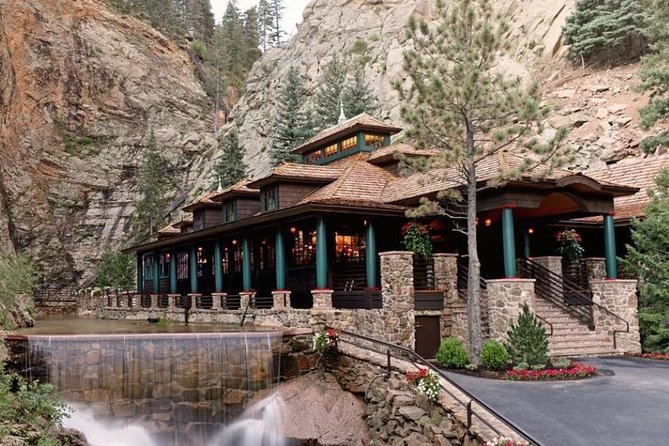
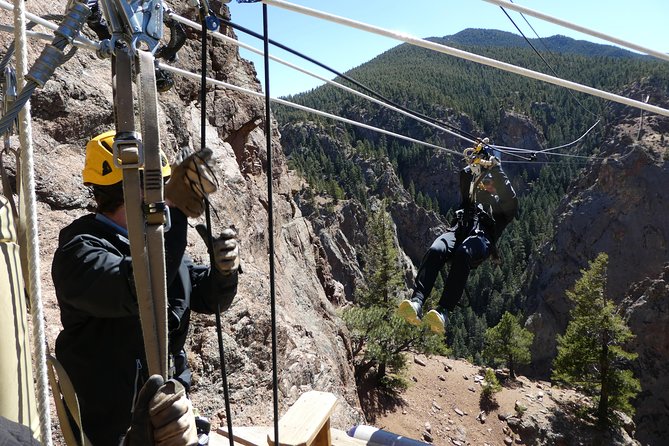
The course progresses from three easier ziplines to two more challenging ones. This is one of its strongest design choices. If you have never zip-lined before, your first few rides give you time to learn the basic body position, braking, and landing routine.
The guides explain how to control your speed and help you understand what happens at each platform. You do not need to arrive with ziplining experience. You do need to listen closely, follow instructions, and be comfortable making a physical effort outdoors.
The exact feel of each line depends on your speed, position, and weather. Some riders focus on the scenery. Others are busy remembering when to brake. Both are normal. The guides keep the group moving and offer encouragement when a participant hesitates.
These first lines also let you judge your own comfort. Heights can feel different once you are clipped in and standing on a platform. A participant who begins anxious may find that the steady progression makes the later features manageable. Still, this is an active adventure, not a passive sightseeing ride.
Same base, a different kind of day out:
- NYC: SUMMIT One Vanderbilt Tickets
★ 4.7 · 51,195 reviews - NYC: 9/11 Memorial & Museum Timed-Entry Ticket
★ 4.8 · 31,428 reviews - NYC: Empire State Building Tickets – Observatory & Museum
★ 4.7 · 25,757 reviews - NYC: Empire State Building Observation Deck Tickets
★ 4.7 · 22,072 reviews
Suspension bridges add balance and nerves
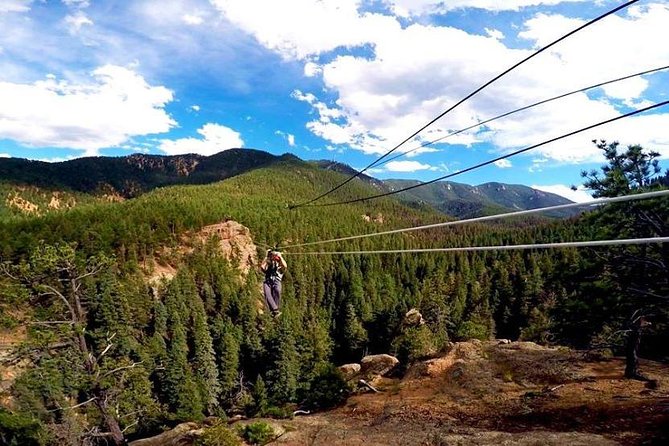
After the first three lines, you cross two custom-built suspension bridges. They provide a change of pace and a different test. Instead of gliding over the canyon, you walk across a swaying structure while looking down and across the rock walls.
The bridges are a good reason to choose this course over a basic zipline package. They add a physical challenge without requiring another piece of specialized equipment. They also create a natural pause between the first and final zipline sections.
If heights make you uneasy, the bridges may be more intimidating than the cables. You have time to move carefully, and the guides remain nearby to explain what to do. Several participants who were not regular thrill seekers completed the full course with guide support, including adults in their 60s and a group ranging in age from 23 to 77.
That does not mean the bridges feel easy for everyone. You should expect some nerves, particularly when the structure moves beneath your feet. Moderate fitness helps, but confidence and attention matter just as much.
The final two ziplines deliver the biggest views
The last two zipline rides are described as the more challenging section. By this point, you have practiced the basic movements and crossed the bridges, so the course has given you a useful warm-up.
This is where the scenery becomes the main event. You pass over steep drops and look down into Seven Falls Canyon. The longest zipline reaches 1,800 feet, or 548 meters, giving you a longer run through the setting than a short introductory cable ride.
The canyon views are a major part of the price. You are paying for the equipment and staff, but also for access to a course built around dramatic Colorado rock scenery. If you want a quiet nature experience, this is not it. You will hear voices, instructions, and likely plenty of excited shouting echoing off the canyon walls.
If you are nervous, focus on the guide’s instructions rather than trying to take in everything at once. Once you are moving steadily, you can look outward and enjoy the view. Keep your phone secured in the pouch, and do not risk a device for a photograph.
The 180-foot rappel is a memorable finish
The course ends with a controlled 180-foot rappel to the canyon floor. This gives the outing a clear finale and makes the experience feel more complete than a series of disconnected rides.
A rappel is different from ziplining. You control your descent with guidance from the staff, moving down rather than across the canyon. The drop may be the moment that tests you most, especially if you have already spent the day getting used to height.
The guides remain central here. Names such as Cole, Coleman, Derek, Jamie, Kaley, and Cita appear often in connection with patient instruction, humor, and safety checks. Guide assignments can change, but the pattern is clear: expect the staff to explain the equipment, help with technique, and encourage you without turning the outing into a competition.
Once you reach the canyon floor, staff return larger belongings by ground support. The activity then ends back at the meeting point. You are not left to arrange your own return transport.
How much value do you get for $288?
At $288 per person, this is an expensive half-day activity. It makes sense only if you want a substantial outdoor attraction rather than a quick zipline ride.
The fee includes the activities, equipment, professional guides, transport by air-conditioned minivan, bottled water, and service charge. There are no listed extra activity fees. The small maximum group size also adds value because the guides can keep track of each participant and offer help when someone is nervous.
The strongest case for the price is the combination of five ziplines, two suspension bridges, and a 180-foot rappel in one canyon setting. Booking separate activities to get that range would take more time and could cost more.
The weaker case is that you may not use every feature equally. Someone who dislikes bridges or rappelling could spend part of the tour anxious rather than entertained. You also pay for a weather-dependent outing, so keep your schedule flexible.
I would consider it good value for a group that wants one memorable Colorado Springs adventure and is comfortable paying for professional equipment and instruction. It is less suitable if you are mainly looking for inexpensive sightseeing.
Who will enjoy this course most?
The Fins Course suits adults, families with eligible children, couples, solo participants, and groups of friends. Kids can participate if they meet the weight requirement and all other safety rules. The experience has included family groups with teenagers as well as older adults.
You should have a moderate level of physical fitness. The course involves walking, using suspension bridges, managing your body on ziplines, and completing a rappel. No special zipline background is required, but you must be willing to follow directions and take part in every section.
This is a good choice for someone who is nervous but curious about heights. The gradual structure and supportive guide style can help. It is not a good choice if you are pregnant or might be pregnant, under the influence of alcohol or another substance, unable to meet the weight range, or unwilling to wear closed-toed shoes.
The maximum of eight people helps keep the outing personal. A small group also tends to make it easier to cheer one another on, especially when someone pauses before a bridge or final line.
Weather, cancellation, and practical planning
Weather can delay or cancel the activity. If poor weather forces cancellation, you are offered a different date or a full refund. You can cancel for a full refund up to 24 hours before the start time. Cancellations or changes made less than 24 hours before the start are not refunded or accepted.
I would avoid placing this tour immediately before an important flight, timed attraction, or dinner reservation. The scheduled duration is about three hours and 15 minutes, but weather and group pace can affect the day.
Wear practical outdoor clothing and closed-toed shoes. Leave large bags and cameras with the support staff rather than trying to bring them onto the course. Bring sunscreen, sunglasses, and a phone only if you are comfortable securing it in the pouch.
Should you book the Fins Course?
Book it if you want a full adventure built around Seven Falls scenery, not just a single zipline. The combination of long cable rides, suspension bridges, and a 180-foot rappel gives you plenty to do, while the progressive course and small groups make the experience approachable for first-timers.
Skip it if the strict weight limit excludes someone in your party, if you want a low-cost activity, or if bridges and rappelling sound more stressful than fun. For eligible participants who want a high-energy Colorado Springs outing, this is one of the better ways to turn canyon scenery into an active memory.
FAQ
Where does the Fins Course tour begin?
It begins at The Broadmoor Soaring Adventure, 6 Lake Avenue, Colorado Springs, Colorado 80906.
How long does the activity last?
The experience lasts approximately three hours and 15 minutes. The activity portion is listed as about three hours, depending on the day’s pace.
How many ziplines are included?
You ride five ziplines. The longest extends up to 1,800 feet, or 548 meters.
Does the course include a rappel?
Yes. The course ends with a controlled 180-foot, or 54-meter, rappel to the canyon floor.
Are suspension bridges part of the tour?
Yes. You cross two custom-built suspension bridges during the course.
What is the required weight range?
Participants must weigh between 90 and 250 pounds, or 41 to 113 kilograms. This is a strict safety requirement, and participants are weighed discreetly before departure.
What should I wear?
You must wear closed-toed shoes. All toes must be in the same compartment, so five-toed shoes are not allowed. Dress for the weather.
Can I bring my phone or camera?
Small wallets, phones, and keys can go in pouches attached to your harness. Large cameras and backpacks cannot go on the course, but ground support staff transport them and return them at the end.
What happens if the weather is poor?
Weather can cause delays or cancellation. If the activity is canceled because of poor weather, you can choose a different date or receive a full refund.
Just added in the USA
- Road to Hana: Full-Day Scenic Drive with Blacksand & Waterfalls★ 4.5 · 837 reviews
- Road To Hana: Maui Waterfall Hiking Tour in Private Jeep★ 5.0 · 343 reviews
- Maui Nui Luau at the Sheraton Maui Resort & Spa★ 4.5 · 1,622 reviews
- 2 Hour Sailing Cruise on Lake Tahoe★ 5.0 · 886 reviews
- Original La Jolla Sea Cave Kayak Tour for Two★ 4.5 · 871 reviews
- Key West: All-Inclusive Watersports Adventure with Lunch & Beer★ 4.5 · 351 reviews
- La Jolla Sea Caves Kayak Tour For Two (Tandem Kayak)★ 4.5 · 1,205 reviews
- Behind-the-Scenes at Petco Park Tour★ 4.5 · 339 reviews
Rafting & Ziplining, compared.
Oahu’s North Shore: 8-Line Zipline Adventure
Read our review →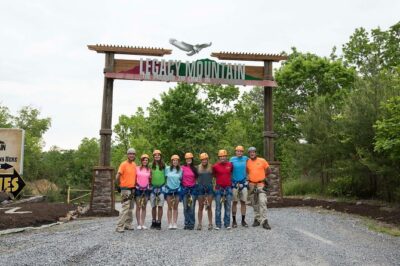
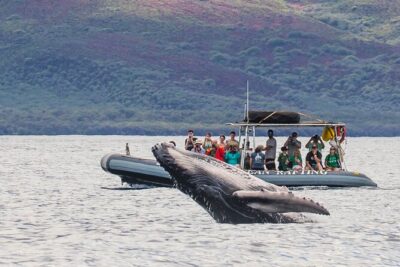
Maui Eco-Raft Tour: Eye-Level Whale or Dolphin Watching – Lahaina
Read our review →
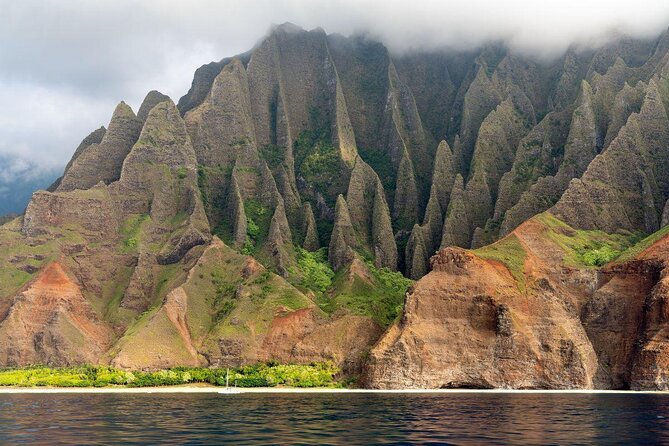
Na Pali Coast Half-Day Raft and Snorkel Adventure
Read our review →
Upper Pigeon River Rafting Trip from Hartford
Read our review →Browse the lists this tour appears in