
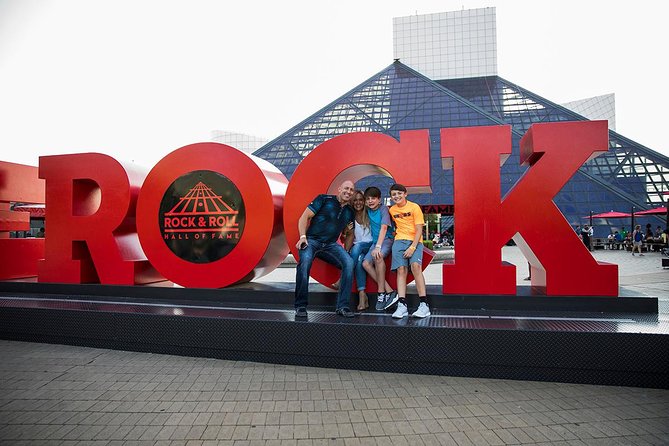
Reviewed · THE USA
Rock and Roll Hall of Fame Admission in Cleveland
The Rock and Roll Hall of Fame is far more than a glass building full of guitars. Inside, you’ll move through several floors of costumes, instruments, films, recordings, and hands-on displays that connect artists to the musicians who shaped them. The induction ceremony presentation gives you a front-row view of more than 30 years of rock’s biggest honors.
I like the freedom to explore without being tied to a guide or tour group. I also like the range: you can spend time with Elvis, The Beatles, Jimi Hendrix, The Rolling Stones, Motown, punk, grunge, hip-hop, and many other sounds in one visit.
The main drawback is time. Two hours will give you a brisk look, but three to four hours is a better target if you want to read the displays, listen to music, and watch the films. Some areas can also be dark and loud, and construction near the building may affect your arrival.
- Six floors of music history: Give yourself at least two to three hours, and longer if you want to take your time.
- Iconic displays: Look for Elvis, The Beatles, The Rolling Stones, Jimi Hendrix, David Bowie, Metallica, Michael Jackson, Guns N’ Roses, the Supremes, and Parliament Funkadelic.
- Interactive exhibits: The Beat Goes On helps you trace the influences behind favorite artists, with hands-on features that can include playing along with musicians.
- Induction ceremony highlights: A concert-style presentation covers more than 30 years of Hall of Fame ceremonies.
- Mobile entry: The electronic ticket is convenient, and the museum’s app has worked without an internet connection for some visitors.
- Plan around events: Browns games and nearby road closures can make parking and access difficult.
Start on the Ground Floor, Then Work Up
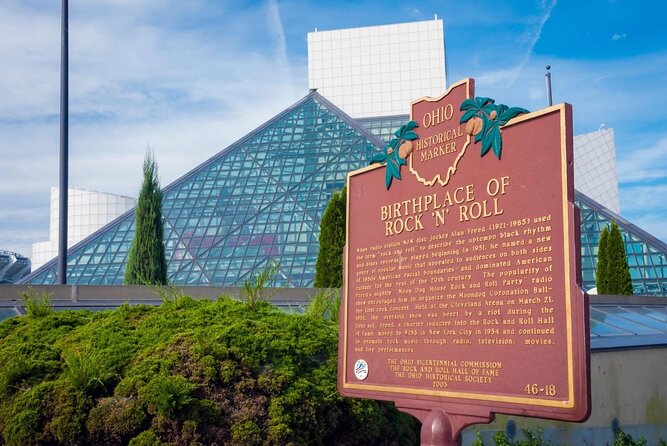
The best advice for this museum is simple: start on the ground floor and work through the building rather than wandering randomly. The Hall of Fame has a large collection, and the displays reward a steady pace.
You’ll encounter a mix of objects, video, music, text, and interactive stations. This is not a quick walk past framed photographs. You’ll need time to stop, listen, read, and decide which artists deserve more of your attention.
The building can feel dark and cavernous. That fits the concert atmosphere, but it also means some displays may not be as easy to read as you expect. If you have only an hour, you’ll need to choose highlights instead of trying to see everything.
For most people, I would allow three hours as a sensible minimum. Four hours gives you room for films and longer exhibit sections. Some music fans could spend six hours here, especially if they read every panel and follow each artist connection.
Roots of Rock and Roll Sets the Tone
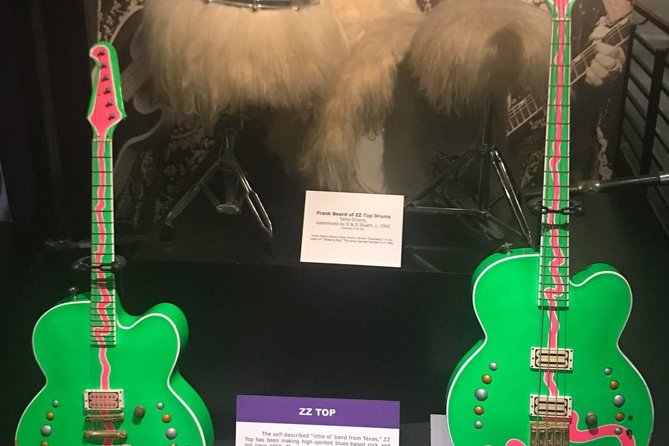
The Roots of Rock and Roll exhibit provides the broadest introduction to the music. It helps place rock in the larger story of American popular music and shows that the sound did not appear from nowhere.
This section is useful if your listening habits are narrow. You may arrive expecting a shrine to guitar bands and find a wider presentation that includes the influences, styles, and cultural forces behind rock and roll.
The Hall of Fame’s purpose is partly to honor famous performers, but it also tries to show connections between them. That makes the museum more rewarding when you follow a thread instead of focusing only on the biggest names.
If you are visiting with family members from different generations, this is a good place to begin. One person may recognize an artist immediately while another finds a new starting point for exploration.
Other tickets worth buying ahead in the USA:
- NYC: 9/11 Memorial & Museum Timed-Entry Ticket
★ 4.8 · 31,428 reviews - NYC: Edge Observation Deck Admission Ticket
★ 4.6 · 20,918 reviews - NYC: Museum of Modern Art (MoMA) Entry Ticket
★ 4.6 · 12,540 reviews
The Beat Goes On Makes the Connections Personal
The Beat Goes On is one of the more useful exhibits for understanding influence. It presents the musicians and sounds that helped shape later artists, giving you a chance to connect favorite bands with their musical roots.
This matters because the Hall of Fame is not only a list of winners. The most interesting question is often who influenced whom. An interactive display can make that connection clearer than a wall of dates and names.
You might find hands-on features that let you play along with a favorite artist. That is a welcome change from displays you can only view behind glass, particularly for children, guitar players, and anyone who likes to learn by doing.
I would spend extra time here if you are visiting with a young music fan. It can turn a famous name into a chain of sounds and ideas that is easier to understand.
Elvis, The Beatles, The Rolling Stones, and Hendrix
The museum gives major space to artists who shaped the direction of popular music. Displays dedicated to Elvis, The Beatles, The Rolling Stones, and Jimi Hendrix provide familiar anchors as you move through the collection.
The appeal is not only seeing a famous name on a wall. You may find clothing, instruments, photographs, and personal objects that make the music feel connected to real people and real performances.
The Beatles and Rolling Stones sections are natural stops for fans of British rock. Hendrix offers a different kind of experience, centered on a performer whose sound and stage presence changed what many people thought a guitar could do.
Elvis provides an early foundation for the story. His presence helps explain why the museum’s collection reaches beyond one narrow definition of rock and roll.
You should not expect every artist to receive a full room of equal size. The collection is arranged across broader themes as well as individual displays, so some names receive more attention than others.
Legends of Rock Brings Together Several Generations
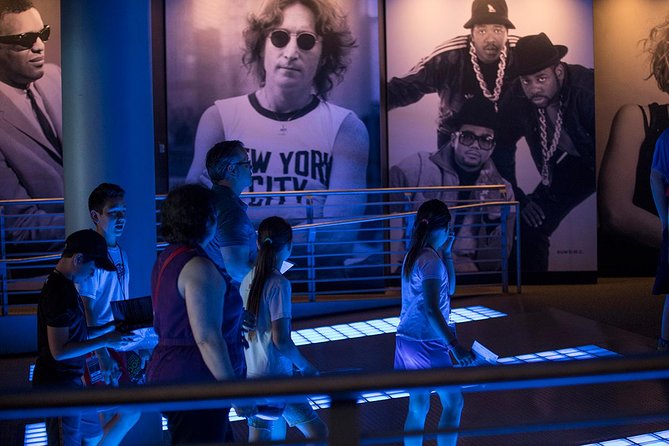
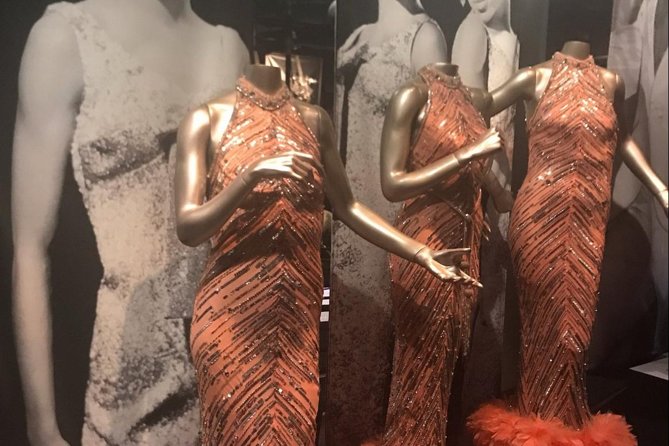
The Legends of Rock area gathers major performers from different eras and styles. You might see material connected with Guns N’ Roses, David Bowie, the Supremes, Metallica, Michael Jackson, Parliament Funkadelic, and many more.
This is one of the strongest sections for a mixed group. One person can look for classic rock, another for pop, another for funk or metal, and everyone can find a familiar entry point.
The range also helps explain why the Hall of Fame can feel larger than expected. It is not devoted only to the sound commonly associated with the phrase rock and roll. Pop, R&B, funk, metal, and other styles appear as part of the larger story of modern music.
Some displays may feel less organized if you want one dedicated area for every artist. If your goal is a carefully ordered biography of one band, you may prefer a documentary or book. If you enjoy making discoveries across different genres, this arrangement works better.
Same base, a different kind of day out:
- NYC: SUMMIT One Vanderbilt Tickets
★ 4.7 · 51,195 reviews - NYC: Empire State Building Tickets – Observatory & Museum
★ 4.7 · 25,757 reviews - NYC: Empire State Building Observation Deck Tickets
★ 4.7 · 22,072 reviews - Grand Canyon West, Hoover Dam Stop and Optional Lunch and Skywalk
★ 5.0 · 19,535 reviews
Cities and Sounds Explains How Places Shape Music
Cities and Sounds focuses on musical styles tied to particular places. Motown, psychedelic music, punk, and grunge are among the featured styles, showing how cities in the United States and abroad developed recognizable musical identities.
This section adds useful context to the costumes and instruments. Music is not created in isolation. The sound of a city, its clubs, record labels, neighborhoods, and local audience can all shape what artists produce.
I like this approach because it keeps the museum from becoming a simple parade of celebrities. You get a sense of musical movements rather than only individual careers.
It is also a good place to slow down. The displays may send you toward artists you already know, but they can also introduce a style you have previously overlooked. If you are short on time, focus on the cities and sounds connected to your own interests.
The Induction Ceremony Presentation Feels Like a Concert Moment
The Hall of Fame presents highlights from more than 30 years of induction ceremonies in an immersive, concert-quality production. It is designed to give you the sensation of being close to the stage rather than simply reading about past ceremonies.
This can be one of the museum’s most memorable areas, but it is also where the sound and lighting deserve attention. Some people have found the music too loud, and flashing lights around the video presentation can be uncomfortable, particularly from the upper rows.
If you are sensitive to loud music or bright flashes, take a moment to assess the room before settling in. The presentation is not essential to understanding the rest of the collection, so you can move on if the sound or lighting is unpleasant.
For many music fans, though, this is the place that turns a museum visit into a show. It gives the institution a sense of ceremony and reminds you that induction is about performance as much as it is about historical recognition.
Rolling Stone and the Wider Music Culture
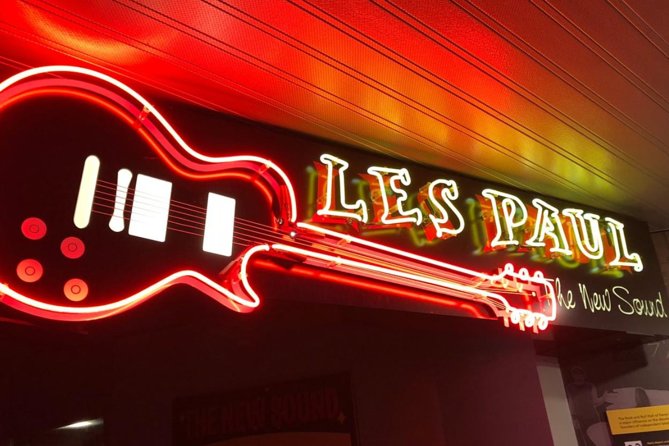
The museum also presents the story of Rolling Stone magazine and its role in covering music, politics, and popular culture over more than 50 years.
This material adds another layer to the visit. Music does not exist only on records or stages. It is also shaped by journalism, photography, criticism, and the way a generation talks about its artists.
The section will appeal most to people interested in the cultural side of music. It may feel less essential if you came mainly to see instruments and clothing, but it helps explain how music became tied to wider debates and changing social attitudes.
The balance between music and culture is one reason you should not plan this as a quick celebrity exhibit. The Hall of Fame asks you to consider the people, places, sounds, and institutions that shaped popular music.
Special Exhibits Can Change the Focus of Your Visit

The museum includes permanent collections along with featured exhibitions. The featured areas can give repeat visitors a reason to return, and they may shift the focus toward a specific artist, event, television program, or musical period.
One visit may put extra attention on an artist such as Bon Jovi, Jimi Hendrix, or Pink Floyd. Another may include a special display connected with Saturday Night Live. The quality and appeal of these sections will depend on your interests and what is on view during your visit.
This changing element is useful, but it also means the exact experience can vary by date. If a current featured exhibit is the main reason you want to go, check its status before booking.
The permanent galleries remain the foundation. You are not buying admission only for a temporary display, so the visit still has value even if a particular featured section does not interest you.
How Much Time Should You Allow?
The stated visit length is about one to four hours, but that range is wide. In practical terms:
- One hour: You can make a quick pass through selected highlights, but you will miss much of the reading and video.
- Two hours: Enough for a focused visit, especially if you choose a few favorite artists in advance.
- Three hours: A good first-visit target for most people.
- Four hours: Better for families, serious music fans, and anyone who wants to watch films and use interactive displays.
- Six hours: Possible if you read closely, listen to recordings, and explore every floor at a relaxed pace.
You should also expect plenty of walking. The collection spreads across six floors, and the experience is built around moving from one gallery to another rather than sitting in one central exhibit.
If your schedule is tight, decide before entering which sections matter most. A fan of British rock might prioritize The Beatles and The Rolling Stones. Someone interested in American popular music might spend more time with Elvis, Motown, funk, or the city-based exhibits.
Price, Tickets, and Practical Planning
Admission costs $39.50 per person. That is not a low-cost museum ticket, but the price becomes more reasonable if you stay for three or four hours and make use of the films and interactive displays.
The ticket includes admission only. Food and drinks are available to purchase, but they are not part of the entry price. You can explore independently, so you are not paying for a guided tour or a fixed group schedule.
A mobile ticket is convenient, and confirmation arrives when you book. The activity is listed with a maximum of 14 participants, but the important point for you is that admission allows independent exploration rather than a required group route.
Book ahead if your Cleveland schedule is fixed. Advance admission helps avoid disappointment, especially if you are visiting during a busy period or have planned the museum around a special exhibit.
The museum’s listed hours vary by season. From January through June, it is open daily from 10 a.m. to 5 p.m., with Thursday hours extending to 9 p.m. July and August bring late hours on Thursday, Friday, and Saturday until 8 p.m. From September through December, Thursday hours again extend to 9 p.m.
Check the operating hours for your date before setting your plans. A late opening or closing time can make the museum easier to fit into a Cleveland day, but you still need enough time to see the collection properly.
Getting There on a Game Day
The Hall of Fame sits close to Cleveland’s football stadium, so major sporting events can affect your visit. Browns games may bring road closures, crowded streets, and expensive or limited parking.
This is not a minor detail if you are driving from outside Cleveland. A game can turn a straightforward museum visit into a frustrating search for access and parking. Check the local event calendar before choosing your time, and leave extra room if a game is scheduled.
Construction near the site has also affected access at times. Conditions can change, so do not assume the usual route and parking arrangement will be available.
If you are staying nearby, an event day may still be manageable, but plan carefully. The museum itself may be open while the roads around it are difficult to use.
Who Will Enjoy This Most?
This experience is a strong fit for music fans who like to read, listen, and make connections between artists. It also works well for families because the collection covers many generations and includes interactive displays.
You do not need to be a dedicated rock fan to find something useful. The exhibits reach into pop, R&B, funk, metal, punk, grunge, psychedelic music, and other styles.
It may be less satisfying if you want a quiet, traditional museum with evenly lit cases and a tightly ordered display for every artist. The galleries can be dark, the music can be loud, and some sections may feel more multimedia-heavy than object-focused.
I would also think twice if you have only a short gap between other plans. One hurried hour can leave you feeling that the museum was too large and disorganized. Give it enough time, and the many layers make more sense.
Should You Book the Rock and Roll Hall of Fame?
Book it if you want a substantial music museum rather than a quick photo stop. The combination of iconic memorabilia, induction ceremony footage, interactive exhibits, and city-based music history gives you plenty to do for three or four hours.
The $39.50 price makes the most sense when you plan to stay several hours. Start on the ground floor, follow the galleries upward, and leave room for the exhibits that catch your attention.
Skip it if loud music, flashing lights, dark galleries, or construction-related access problems would spoil your day. Also skip it if you want a single artist’s story presented in perfect order.
For most music-minded visitors to Cleveland, I would book in advance, check the sports calendar, and protect a half day for the museum. That approach gives you the best chance to enjoy the collection instead of racing through it.
FAQ
How much does admission cost?
Admission costs $39.50 per person.
How long does a visit take?
The experience is listed as approximately one to four hours. Plan on at least two to three hours for a meaningful visit, and longer if you want to explore carefully.
Is the ticket mobile?
Yes. The experience includes a mobile ticket, and confirmation is provided at the time of booking.
Can I explore independently?
Yes. You can skip a tour group and explore the Rock and Roll Hall of Fame at your own pace.
What is included with admission?
The admission ticket is included. Food and drinks are not included, but they are available to purchase.
What are the opening hours?
From January through June, the museum is open daily from 10 a.m. to 5 p.m., with Thursday hours until 9 p.m. In July and August, it is open daily from 10 a.m. to 5 p.m., with Thursday, Friday, and Saturday hours until 8 p.m. From September through December, Thursday hours extend to 9 p.m.
Are children allowed?
Yes. Children must be accompanied by an adult.
Are service animals allowed?
Yes. Service animals are allowed.
Can most people participate?
Yes. Most people can participate in the experience.
What is the cancellation policy?
You can cancel at least 24 hours before the experience start time for a full refund. Cancellations or changes made less than 24 hours before the start time are not refunded or accepted.
Just added in the USA
- Road To Hana: Maui Waterfall Hiking Tour in Private Jeep★ 5.0 · 343 reviews
- Road to Hana: Full-Day Scenic Drive with Blacksand & Waterfalls★ 4.5 · 837 reviews
- Original La Jolla Sea Cave Kayak Tour for Two★ 4.5 · 871 reviews
- Maui Nui Luau at the Sheraton Maui Resort & Spa★ 4.5 · 1,622 reviews
- 2 Hour Sailing Cruise on Lake Tahoe★ 5.0 · 886 reviews
- Key West: All-Inclusive Watersports Adventure with Lunch & Beer★ 4.5 · 351 reviews
- La Jolla Sea Caves Kayak Tour For Two (Tandem Kayak)★ 4.5 · 1,205 reviews
- Behind-the-Scenes at Petco Park Tour★ 4.5 · 339 reviews