
Reviewed · CRUISES & BOAT TOURS
Chicago River: 1.5-Hour Guided Architecture Cruise
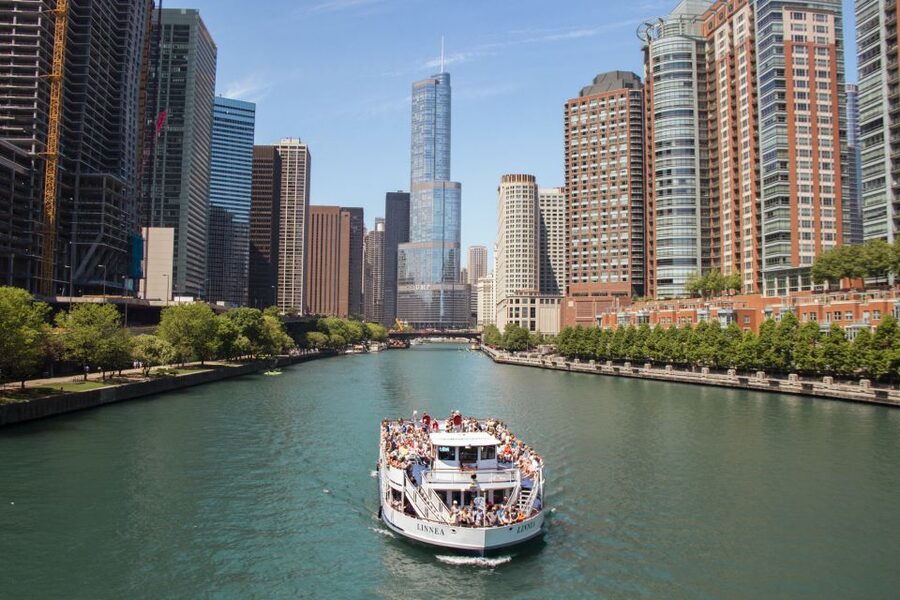
Chicago’s best architecture lesson comes from the water. This 90-minute Wendella cruise carries you from the Michigan Avenue Bridge along the main river and into the north and south branches, putting Chicago’s skyline almost at eye level. You get old stone towers, sleek modern blocks, and plenty of excellent photo angles without walking several miles.
I especially like the full river route, which reaches farther than a short downtown boat ride, and the choice between an open-air deck and a climate-controlled interior. The guides are another strong point. John, Sarah, Alex, Scotty D, Jack, and others bring humor and solid detail to the stories.
The main catch is seating. Deck places are first come, first served, and the front can make it hard to hear the commentary. At $44, this is a good-value introduction to Chicago architecture, but you will get the most from it if you arrive ready to claim a comfortable seat and spend time listening.
Key points to know before boarding
- The route covers three river sections: You travel the main branch, then the north and south branches before returning toward Lake Michigan.
- The guides make the difference: Expect a live English commentary with history, engineering details, jokes, and stories about Chicago’s famous buildings.
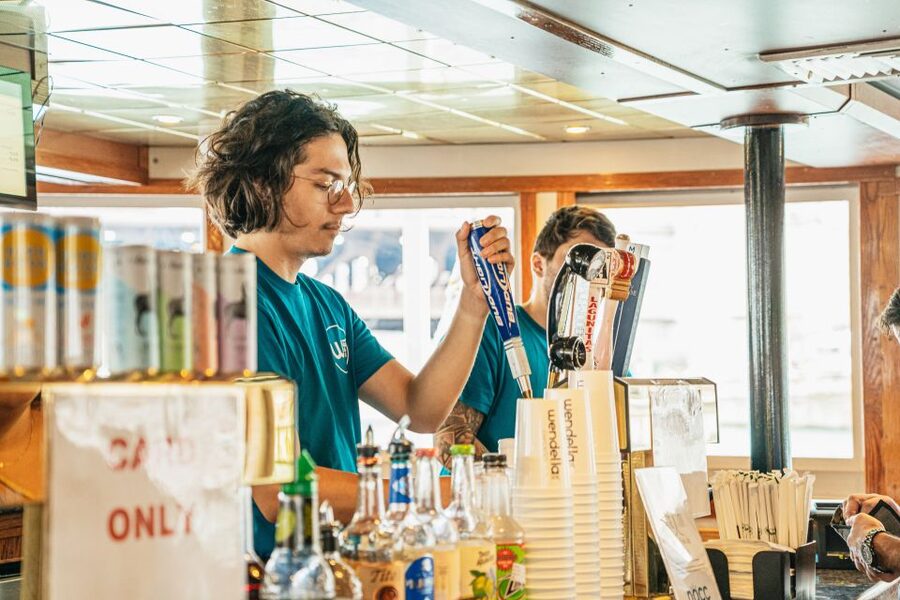
- You can cruise in every season: Open decks offer the best views, while the enclosed interior has climate control, a bar, restrooms, and diaper-changing tables.
- Seats are not reserved: Arrive with enough time to check in, since deck seating is assigned on a first-come basis.
- The bar serves local products: Buy Chicago beer, spirits, snacks, and Garrett Popcorn onboard. You may also bring your own non-alcoholic drinks and food.
- The price is fair for the coverage: At $44, you get 90 minutes on the water, a guide, and access to both outdoor and indoor areas.
Why Chicago’s river is the right classroom
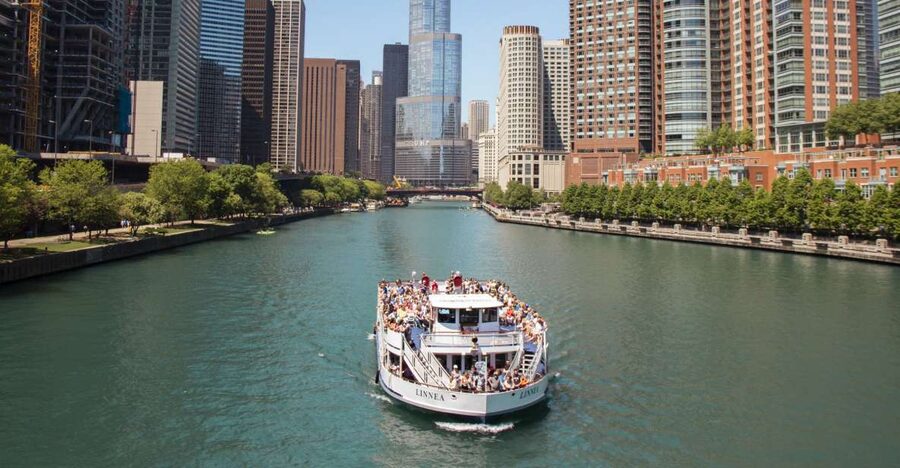
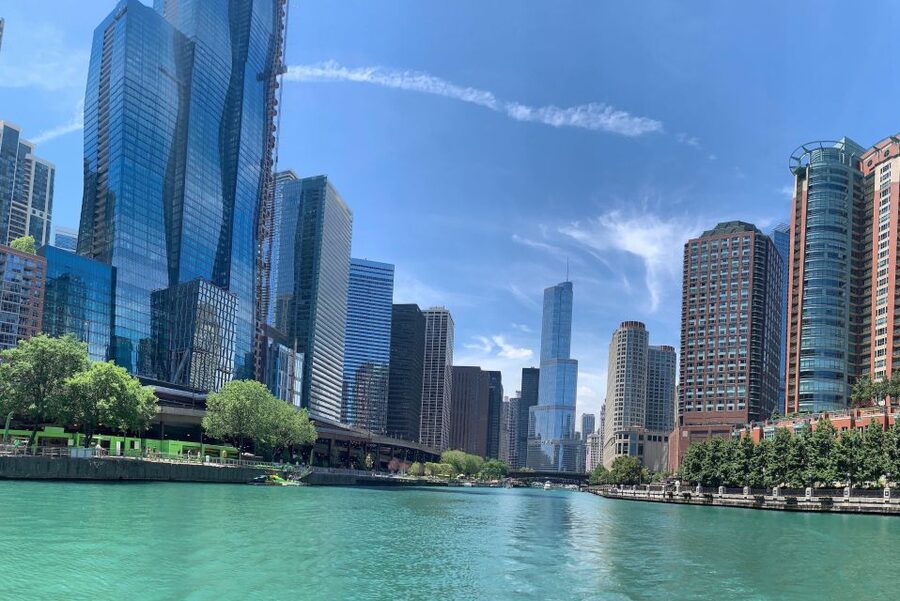
Chicago’s skyline makes more sense from the river than from a sidewalk. Along the street, each building can feel isolated behind traffic, trees, and other towers. From the boat, you see how the buildings line up, how their heights change, and how the river cuts through several eras of city design.
That view also gives you a useful lesson in Chicago’s development. Early skyscrapers sit near art deco landmarks. Mid-century modern towers rise beside newer glass buildings. The result is not a single polished style. It is a timeline you can read from one bend of the river to the next.
This cruise traces its roots to 1935, so it is not a recent sightseeing idea repackaged for visitors. The format has a long connection with Chicago’s riverfront. You still get a modern boat, an onboard cash bar, and climate control, but the central idea remains simple: look up, listen, and let the city explain itself through its buildings.
The live commentary matters. Guides such as Elisa, John, Sarah, Alex, Bobby, Jack, Lucas, and Scotty D have been praised for mixing facts with humor and keeping the talk moving. You should expect a lively presentation rather than a silent ride with a recorded audio track.
A few more things to do in Chicago worth a look
- Chicago: Gangsters and Ghosts Guided Walking Tour
★ 4.7 · 1,697 reviews - Medieval Torture Museum Ticket with Audio Guide and Ghost Hunting
★ 5.0 · 962 reviews - 2-Hour Guided Segway Tour of Chicago
★ 5.0 · 442 reviews
Boarding near the Michigan Avenue Bridge
The meeting point is near 400 North Michigan Avenue, close to the Wrigley Building. You check in with a dock employee, who directs you to the correct boarding area. The listed starting point is the Brainlab Training Center in Chicago, so follow the booking instructions and allow time to find the dock rather than assuming the address is the boat itself.
Pre-purchasing your ticket lets you skip the ticket line and helps secure a place on a popular departure. It does not reserve your preferred seat. Deck seating is first come, first served, so an early arrival is useful if you want an unobstructed view or a particular side of the boat.
The vessel includes an open deck and a climate-controlled interior. You can move between them during the ride, which is especially helpful in cold weather. Several winter departures were praised for giving people a chance to warm up indoors between commentary segments, but you should still dress for the conditions if you plan to spend much time outside.
The boat also has restrooms and diaper-changing tables. Bags may be searched, and pets are not allowed, except for assistance dogs. Weapons, sharp objects, alcohol, and drugs are prohibited. You can bring your own non-alcoholic drinks and food, while alcoholic beverages must come from the onboard cash bar.
From the Wrigley Building to Wolf Point
The cruise begins at the Michigan Avenue Bridge, with the Wrigley Building and Tribune Tower nearby. These buildings introduce two different sides of Chicago architecture.
The Wrigley Building is known for its bright exterior and decorative detail. The Tribune Tower, with its Gothic character, shows how a skyscraper can borrow the visual language of an older European church while still serving a modern newspaper operation. From the water, you get a clean look at both structures and their relationship to the riverfront.
The boat then moves up the main branch toward Wolf Point. This part of the route helps you see the river as a working piece of the city rather than only a postcard view. Tall buildings press close to the water, and each turn changes the angle on the skyline.
Your guide explains how Chicago’s buildings developed over roughly 130 years. The useful part is not just memorizing names. You learn to notice materials, setbacks, decorative choices, and changes in engineering. A good guide will point out why one tower feels heavy and formal while another looks light and almost floating.
The commentary is usually strongest when you keep your eyes moving between the building and the guide. If you sit at the front, you may get an open view ahead, but one passenger specifically found the guide harder to hear from that position. A seat closer to the middle may offer a better balance between photographs and sound.
The north branch and the Merchandise Mart
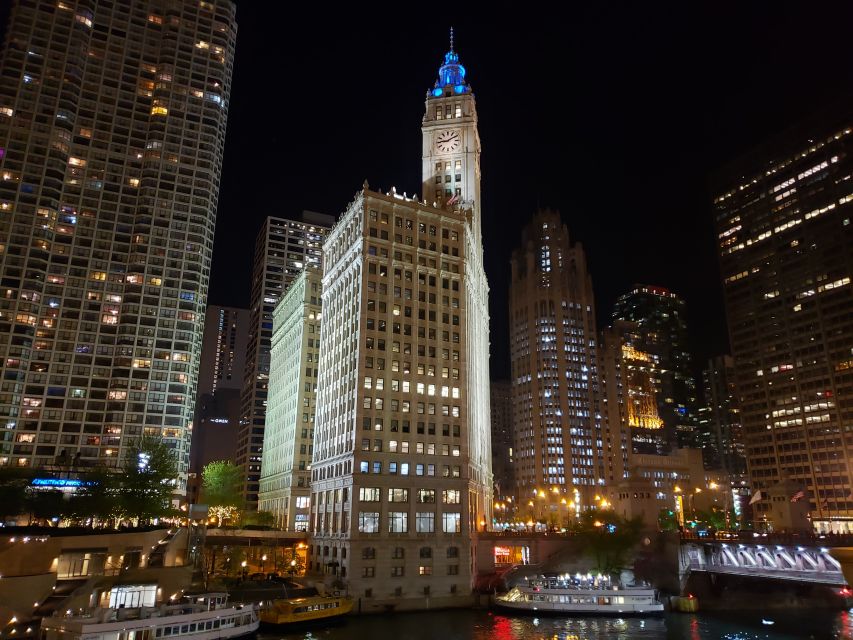
The boat continues along the north branch, where the Merchandise Mart becomes one of the major sights. This enormous art deco building has a scale that is difficult to grasp from the street. From the river, you can see its long frontage and understand how much of the river edge it occupies.
The Merchandise Mart is also a useful example of how Chicago architecture can be imposing without relying on extreme height. Its broad mass contrasts with narrow towers and glassy vertical buildings elsewhere on the route. Your guide may connect its design to the commercial growth of the city and to the way large buildings once organized business under one roof.
This section rewards a wide-angle camera or a phone held horizontally. Large buildings can be hard to fit into one frame when you are close to them. The river gives you distance, but the boat may turn or pass quickly, so listen first and photograph second.
The north branch is one reason this cruise offers more than a short downtown loop. You see the central cluster, then reach a different stretch of the river before returning to the city’s most famous towers. The route feels varied instead of repeating the same few views.
Same base, a different kind of day out:
- Chicago Architecture River Cruise
★ 5.0 · 15,756 reviews - Chicago River 90-Minute Architecture Tour
★ 4.5 · 9,629 reviews - Chicago: Gangsters and Ghosts Walking Tour
★ 5.0 · 7,155 reviews - Chicago Architecture Center River Cruise aboard First Lady
★ 5.0 · 5,536 reviews
Marina City and the modern riverfront
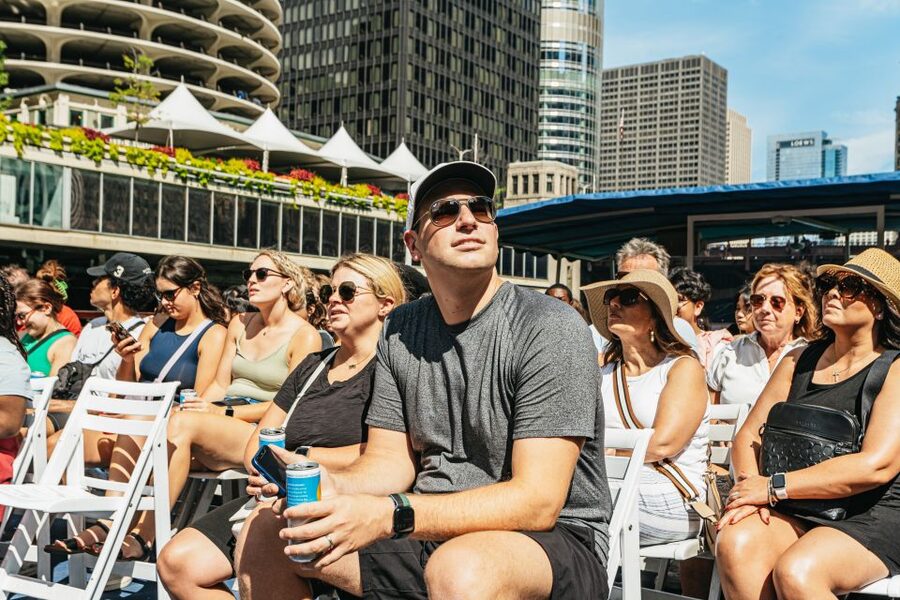
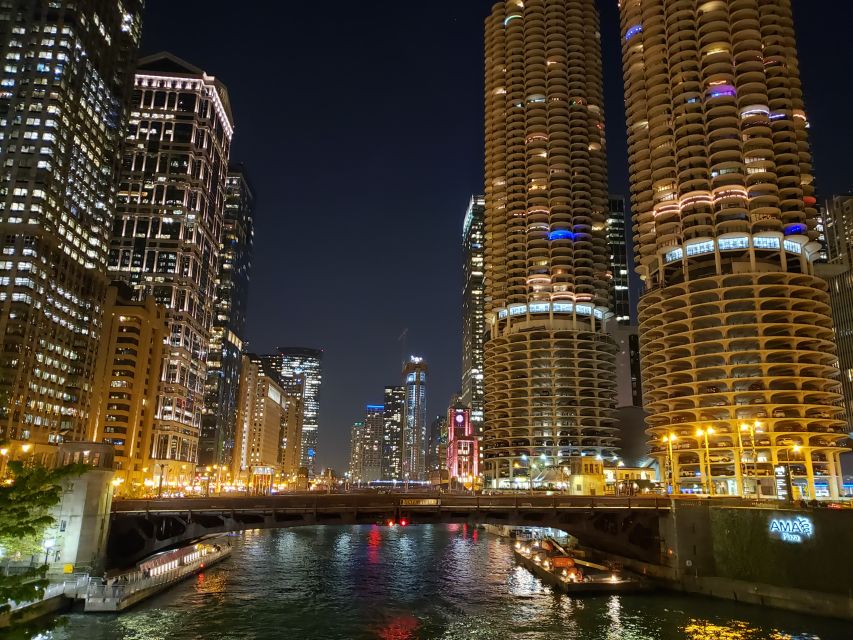
Marina City is among the most recognizable buildings on the route. Its round, stacked forms look unlike the rectangular office towers around it. From the water, the unusual shape is especially clear, and the guide can explain how its design fits into Chicago’s mid-century period.
The towers are a good reminder that architecture is not only about height. Shape, repetition, and the relationship between a building and the river can make a structure memorable. Marina City gives you a strong visual pause after the more traditional lines of the Wrigley Building and Tribune Tower.
The cruise also passes modern buildings such as Aqua, Trump Tower, Nuveen, and Vista Tower. These stops are not formal landings. The boat slows or passes by while the guide points out the design and explains how newer towers respond to the city around them.
Aqua is particularly easy to recognize because of its irregular balconies. Lake Point Tower brings another distinct form to the view, with its rounded profile near the lakefront. Together, these buildings show how recent Chicago construction has experimented with curves, balconies, glass, and mixed uses.
The south branch, Willis Tower, and Chicago power
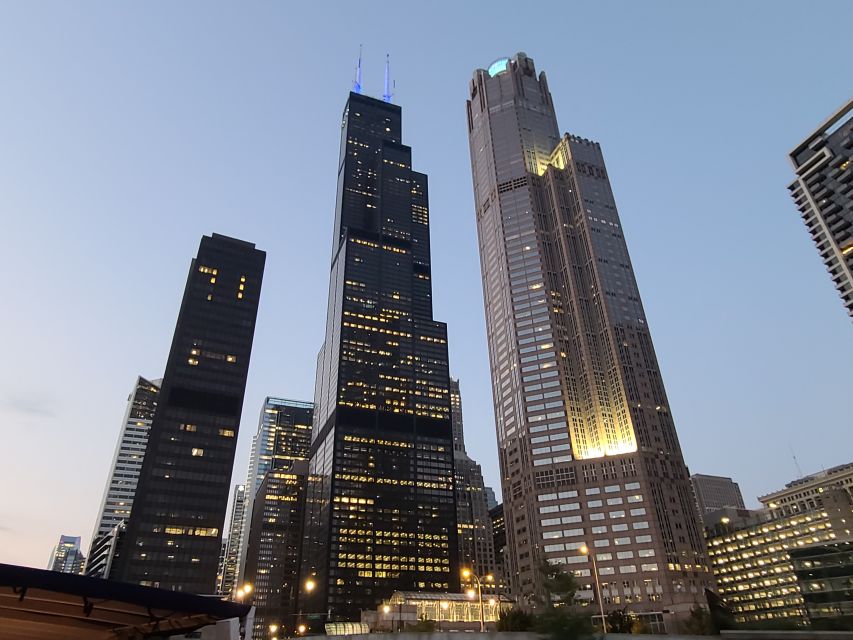
The south branch brings the boat toward Willis Tower, formerly known as the Sears Tower. It was once the tallest building in Chicago, and its height still gives it strong visual authority when seen from the river.
From below, the tower’s bundled form becomes easier to read than it is from many street corners. Your guide may use it to explain how engineers handled height and wind, while also placing the building within Chicago’s long race to build taller. This is one of the moments when the boat’s low position helps you appreciate the city above you.
The Chicago Board of Trade Building adds an older, more formal note. Its design carries the weight of the city’s financial past, and its position makes a useful contrast with Willis Tower. You are not simply looking at tall buildings. You are seeing offices, markets, civic ambitions, and different periods of construction pressed into one route.
The Aon Center provides another clear modernist counterpoint. Its clean vertical form is less ornate than the early skyscrapers near Michigan Avenue. The sequence works well because you can compare decorative stonework, art deco massing, modernist simplicity, and later glass construction within the same 90-minute ride.
The final stretch toward Lake Michigan
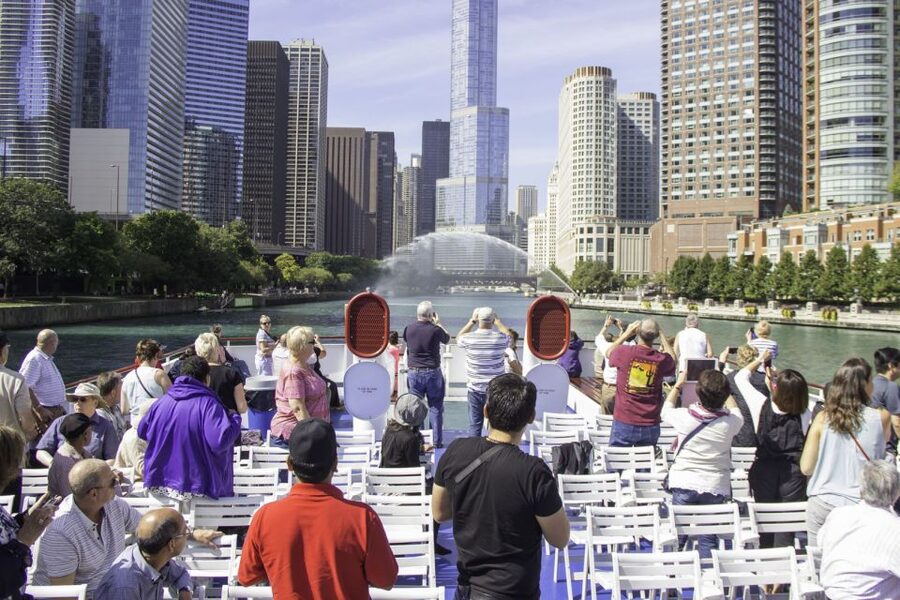
After covering the main, north, and south branches, the boat returns past the Chicago Riverwalk toward Lake Michigan. This final section opens up the view and gives you a different sense of the skyline.
The riverfront buildings now appear as a group rather than as isolated stops. That broad perspective is one of the best reasons to keep your camera ready near the end. A sunset departure can be especially appealing, with the buildings shifting from daytime detail to illuminated outlines. Departures around 6:30 p.m. have been singled out for dusk and night views, though exact light depends on the season and weather.
The front of the boat has a grand staircase that makes a natural photo spot. The stern and bow also provide good places for pictures, although these can be exposed to wind and may be less comfortable in cold weather. If you want to enjoy the commentary, take your photos in short bursts and return to a spot where you can hear the guide.
Food, drinks, and comfort onboard
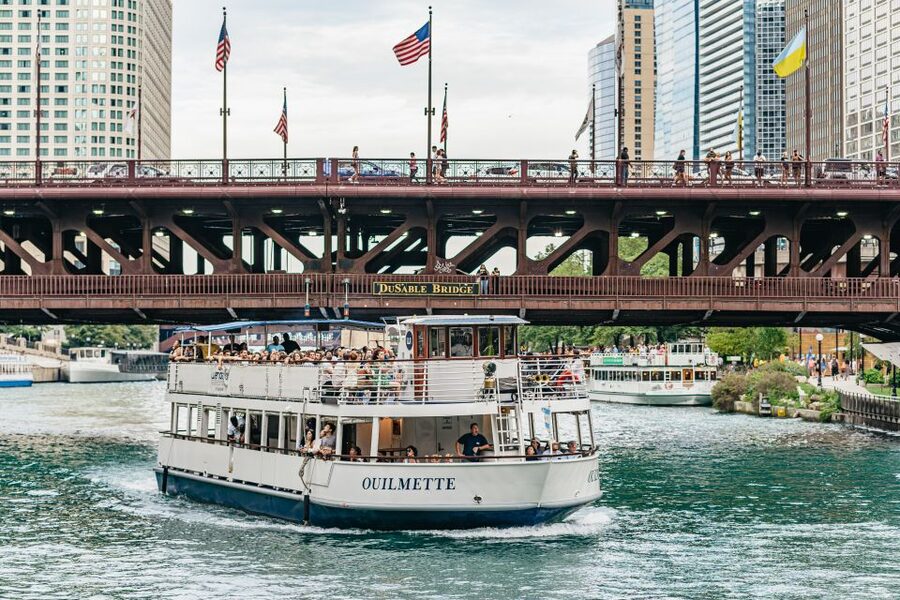
The full-service cash bar adds a pleasant Chicago touch, especially on an evening cruise. You can buy local beer and spirits, along with Garrett Popcorn, a familiar local snack. These purchases are not included in the $44 ticket, so plan on carrying cash if you want to use the bar.
You can bring your own non-alcoholic beverages and food. That gives you a practical way to manage costs, particularly if you are traveling with children or prefer a light snack. Children under three ride free.
The interior is not just a backup for bad weather. It is useful when the wind picks up, when temperatures fall, or when you need a break from the sun. The outdoor deck provides the best open views, but the indoor area lets you stay comfortable without giving up the cruise entirely.
The guide’s voice can be harder to follow at the bow or in crowded areas. For the clearest commentary, sit where you can see the guide and avoid the most exposed front positions if sound matters more than the first photo angle.
Is $44 a good value?
At $44 per person, this is not the cheapest way to see downtown Chicago. A walk along the Riverwalk costs nothing, and you can spot many buildings from bridges and sidewalks. But a self-guided walk will not take you through all three river sections, and it will not give you a continuous explanation of the buildings, engineering, and city history.
The value is strongest if this is your first serious look at Chicago architecture. You get 90 minutes on the water, a live English-speaking guide, access to outdoor and climate-controlled seating, and a route that reaches well beyond the central riverfront.
The ticket also includes the convenience of a reserved place on a popular departure when you pre-book. Food and drinks cost extra, and seating is not reserved, so the price does not buy a private or premium experience. It buys broad coverage and a well-organized introduction.
I would choose this cruise over a shorter boat ride if architecture is high on your list. If you only want skyline photos and do not care about commentary, the price may feel less compelling. The guides are central to the experience, so your value depends on whether you want stories as well as views.
Who will enjoy this cruise most?
You should consider booking if you like city history, design, photography, or guided sightseeing that does not require much walking. It also suits families and mixed-age groups because you can alternate between outdoor views and an indoor cabin, and the route offers plenty to look at without a long day on your feet.
It works well early in a Chicago visit. The guide helps you recognize the buildings you will later see from the streets, bridges, observation decks, and Riverwalk. I also like it as a final activity because the lake-facing return gives you a broad farewell view of downtown.
Architecture fans will appreciate the range from the Wrigley Building and Tribune Tower to Marina City, Willis Tower, Aqua, and Vista Tower. First-time visitors will appreciate the easy-to-follow timeline. Even if you already know Chicago’s skyline, the water-level view can change how familiar buildings look.
You may want to skip it if you dislike group tours, need guaranteed seating, or want a quiet boat ride. The route is popular, the deck fills on a first-come basis, and the guide’s commentary is the heart of the trip. Bring patience, listen closely, and accept that the best seat may not be available when you board.
Should you book the Chicago River architecture cruise?
Yes, I would book it for a first or second visit to Chicago, especially at $44 when you want a guided introduction rather than a simple boat ride. The three-branch route, strong building lineup, funny and informed guides, and year-round indoor seating give it real substance.
Choose an earlier departure for daytime detail or an evening time around sunset for glowing skyline views. Arrive in good time, aim for a seat where you can hear clearly, and bring a layer for the open deck.
If you want the broadest architecture overview in 90 minutes, this is a smart use of your Chicago sightseeing budget. If you only want a quick photo cruise, look for a shorter option. For most visitors, the extra time and commentary are what make this one worth booking.
FAQ
How long is the Chicago River architecture cruise?
The cruise lasts 90 minutes, or one and a half hours.
Which parts of the river does the boat visit?
The route travels along the main branch, the north branch, and the south branch before returning past the Chicago Riverwalk toward Lake Michigan.
Where is the meeting point?
The closest address to most docks is 400 North Michigan Avenue near the Wrigley Building. A dock employee can direct you to the correct boarding area.
Is the tour offered in English?
Yes. The tour includes a live English-speaking guide.
Are outdoor seats available?
Yes. The boat has open-air deck access, as well as a climate-controlled interior deck.
Are seats reserved?
No. Deck seats are chosen on a first-come, first-served basis.
Is food or drink included in the ticket?
No. Beverages and snacks cost extra, but you can buy local beer, spirits, and Garrett Popcorn from the cash bar. You may bring your own non-alcoholic drinks and food.
Are children allowed on the cruise?
Yes. Children under three years old are free.
Can I cancel my booking?
You can cancel up to 24 hours before the activity for a full refund. A reserve-now, pay-later option is also available.
Just added in Chicago
- BYOB Spray Paint and Sip at Studio W.I.P.★ 5.0 · 401 reviews
- Delicious Donuts & City Sights: Chicago’s Original Donut Tour★ 5.0 · 1,389 reviews
- Bikes, Bites & Views: Chicago’s Signature Dishes Bike Tour-Adults★ 5.0 · 732 reviews
- Field Museum of Natural History Admission Tickets★ 4.5 · 489 reviews
- Original Chicago Architecture Interiors Tour: Dazzling Interiors★ 5.0 · 1,489 reviews
- Skip-the-line: Art Institute of Chicago Guided Tour★ 5.0 · 417 reviews
- Chicago Loop District Food Tour with Deep Dish & Beef Sandwich★ 5.0 · 870 reviews
- City Cruises Chicago: Signature Lunch Cruise on Lake Michigan★ 4.0 · 348 reviews
Cruises & Boat Tours, compared.
Boston Duck Boat Sightseeing City Tour with Cruise Along Charles River
Read our review →
Best Niagara Falls US Tour W/Boat Ride, Cave & More Wonders!
Read our review →
Circle Line 2h Harbor Lights Cruise Skip-The-Box-Office
Read our review →
New Orleans Steamboat Natchez Jazz Cruise with Dinner Option
Read our review →
Biscayne Bay Millionaire’s Homes Sightseeing Cruise
Read our review →
Chicago Architecture Center River Cruise aboard First Lady
Read our review →Browse the lists this tour appears in