
Reviewed · CRUISES & BOAT TOURS
Chicago Architecture Center River Cruise aboard First Lady
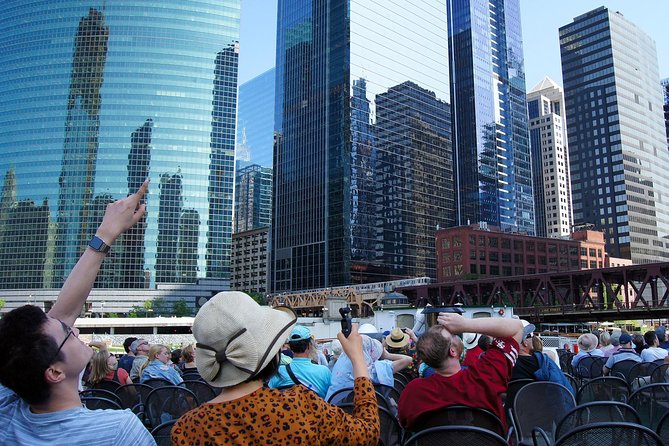
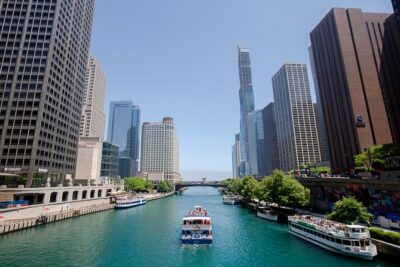
Chicago’s best architecture tour is not on a sidewalk. It is on the river, where the city’s towers rise directly from the water and each bend reveals another chapter of Chicago’s building story. This 90-minute cruise aboard Chicago’s First Lady connects the river, bridges, skyscrapers, and city planning in a way that is hard to match from street level.
I like the Chicago Architecture Center docents, who explain not just what a building is, but why it looks the way it does and how it fits its neighbors. I also like the practical format: several departure times, an enclosed lower salon, an open-air upper deck, restrooms, and a full bar.
The main consideration is seating. All seats are general admission, so you board in first-come, first-served order. The dock also requires stairs, with no elevator access, and the cruise operates in all weather. Arrive early and dress for wind and shade.
Key points to know before you board
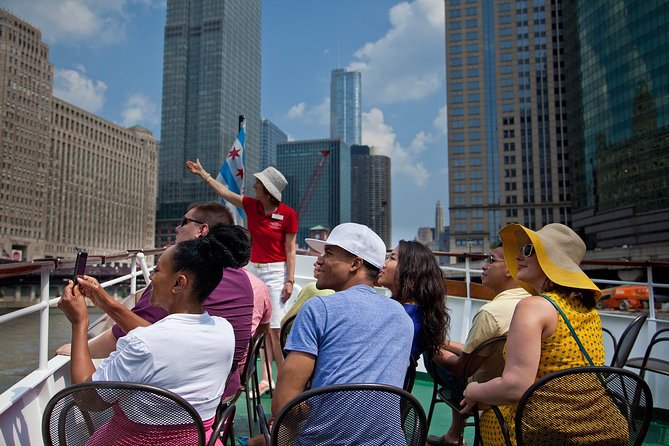
- The river is the real viewing platform: You get broad, close views of Chicago’s towers without traffic, parked cars, or street-level obstructions.
- The guides make the difference: Docents such as Cynthia, Laura, Amy, Mark, Nick, and Russell have been praised for clear, lively explanations of architecture and city history.
- The route packs in major landmarks: Expect views of Marina City, Willis Tower, Navy Pier, 150 North Riverside, the Tribune Freedom Center, and several Modernist buildings.
- The lower salon saves the day: Large windows and climate control make the cruise workable in rain, cold, or strong sun.
- The timing is useful: At about 90 minutes, it gives you a strong Chicago orientation without consuming half your day.
- Plan for a firm booking: Tickets cost $57 per person and cannot be refunded, transferred, or changed after purchase.
Why the Chicago River is the right place to learn Chicago
The river is more than a scenic strip through downtown. It helped shape Chicago’s business, industry, shipping, bridges, and later waterfront renewal. From the boat, you can see how closely the city grew around this narrow waterway.
That setting gives the tour its main advantage. On land, a skyscraper can look like an isolated wall of glass or stone. From the river, you can compare several buildings at once. Your guide can point out how a tower responds to an older neighbor, how a structure uses its narrow site, or how a building’s shape helps it deal with height, wind, and limited ground space.
The boat moves slowly enough for photographs and explanations, yet the tour covers a large part of central Chicago. It is a smart first-day activity because you begin to recognize the city’s major buildings. Later, when you walk along Wacker Drive, Michigan Avenue, or the Riverwalk, the skyline already has some meaning.
The guide is the heart of the experience. The docents are volunteers from the Chicago Architecture Center, and the strongest commentary goes beyond dates and architect names. Cynthia has been singled out for an engaging presentation, while Laura was praised for connecting architecture, engineering, and Chicago history. Guides including Amy, Mark, Nick, and Russell have also been described as lively and easy to follow.
The exact guide and vessel can change. That is worth keeping in mind, but the format gives the commentary a strong foundation.
Other trips people book in Chicago:
- Chicago Architecture River Cruise
★ 5.0 · 15,756 reviews - Chicago River 90-Minute Architecture Tour
★ 4.5 · 9,629 reviews - Chicago River: 1.5-Hour Guided Architecture Cruise
★ 4.8 · 8,046 reviews
Getting to the First Lady dock
The departure point is at 112 East Wacker Drive, along the Chicago Riverwalk. The Riverwalk entrance is at street level near the northeast corner of Michigan Avenue and Wacker Drive, about three blocks north of Millennium Park and close to the Magnificent Mile.
Give yourself at least 30 minutes before departure. That buffer matters because you need time to find the Riverwalk entrance, check in, and board. Allow extra time during summer, when the downtown river area can be crowded.
The nearest listed parking facility is the LAZ garage at 111 East Wacker Drive. It is directly across from the stairs leading to the dock and next to the Chicago Architecture Center, but parking carries a separate fee. Public transportation is also nearby.
One practical warning: there is no elevator access to the boat dock. If stairs are difficult for you, check the access situation before booking. Service animals are allowed, but pets are not. Luggage cannot be brought onboard, and there is no dockside storage, so leave suitcases at your hotel.
Boarding, seating, and choosing your best view
Seating is general admission, even if a ticket displays a seat number. Those numbers do not assign a place. Boarding is first come, first served, so arriving early gives you more choice.
The upper deck is open to the weather and gives you the clearest view upward. That matters in a city where many details are high above street level. Sunglasses, a cap, or a visor can help when the sun reflects off glass towers and makes it hard to look up.
The lower level is enclosed and climate controlled. Large windows still let you see the buildings, so this is not a bad fallback in rain or cold. It can also be the more comfortable choice when the river is shaded. Several people have appreciated the heated area during chilly weather.
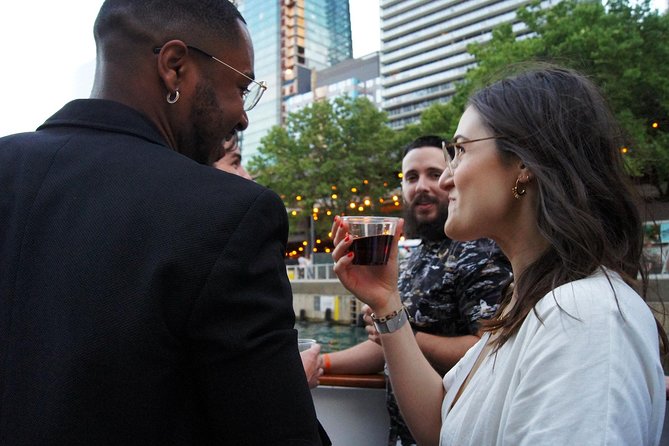
The boat includes a restroom and a full bar. Drinks and light snacks cost extra, and the restroom closes 15 minutes before the tour ends. You can bring a stroller, but children must be removed during boarding, and the stroller will be folded and stored in the salon.
The boat can carry up to 250 people. That is a sizable group, though the spacious layout and two-level design help keep it from feeling cramped. The atmosphere is more like a guided sightseeing program than a quiet private cruise.
The Chicago River, bridges, and the first skyline views
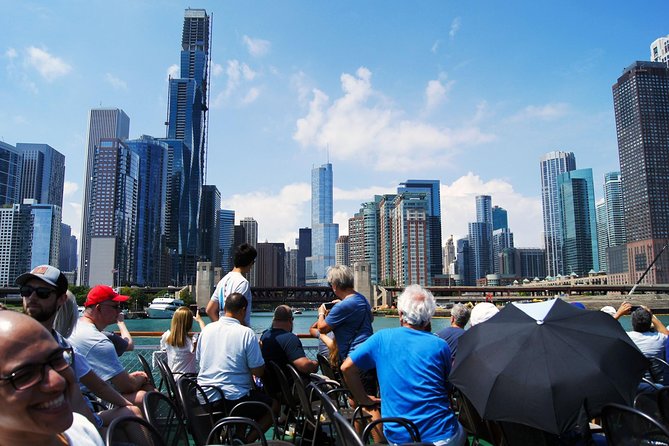
Once underway, the commentary sets the river in context. Chicago’s waterway has passed through periods of industry, transportation, shipping, cleanup, and recreation. The changing riverfront mirrors the city’s own shift from working center to mixed-use downtown district.
The river also gives you an unusual look at the bridges. From the water, their machinery and crossing points are easier to understand. The guide can show how streets, rail lines, offices, and the river all fit into a tight downtown grid.
This opening section is especially useful if you have just arrived in Chicago. It gives you a map in your head before you spend time walking. The cruise does not reach every corner of the city, and one person found the route shorter than expected in terms of distance. Still, the point is not to cover miles. The value comes from the number of important buildings packed along the route.
Same base, a different kind of day out:
- Chicago: Gangsters and Ghosts Walking Tour
★ 5.0 · 7,155 reviews - Chicago: Willis Tower Skydeck and The Ledge Ticket
★ 4.6 · 4,350 reviews - Chicago: Architecture River Cruise Skip-the-Ticket Line
★ 4.8 · 4,325 reviews - Chicago Crime and Mob Bus Tour
★ 4.5 · 3,186 reviews
Navy Pier and Chicago’s habit of reusing old places
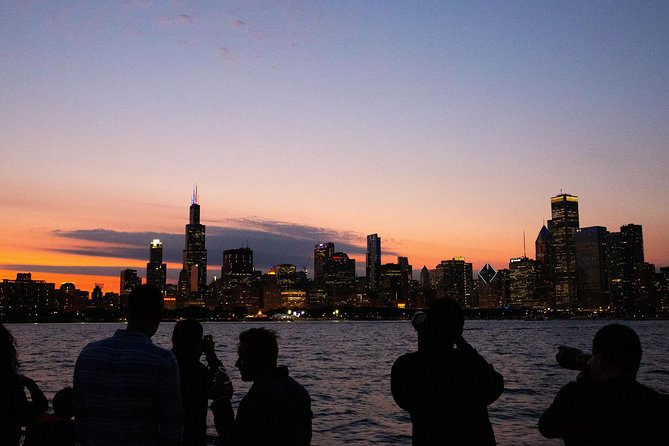
Navy Pier appears as a major example of adaptive reuse. It has served at different times as a naval facility, university campus, shipping center, and entertainment destination.
From the river, you see Navy Pier as part of the wider waterfront system rather than simply as a place for rides and restaurants. That context is useful if you plan to visit it later. The cruise helps explain why the pier matters to Chicago’s story, even if your main interest is architecture.
The boat does not give you a long visit at Navy Pier. Think of this section as a visual introduction, not a substitute for walking the pier itself.
Marina City, the twin towers that changed the riverfront
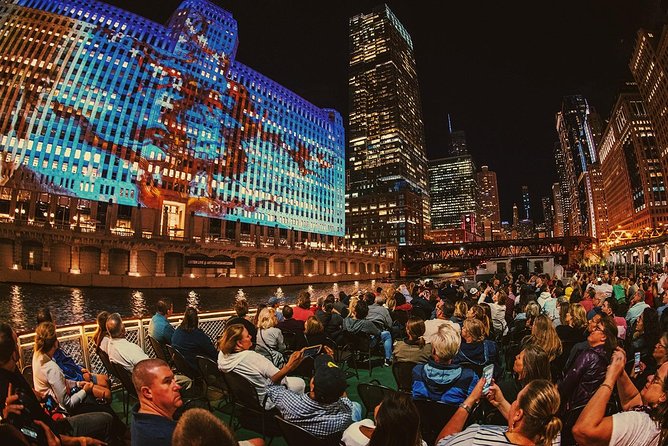
Marina City is one of the most memorable sights on the route. Bertrand Goldberg designed the rounded twin towers as an urban experiment meant to draw middle-class Chicago residents back from the suburbs.
Their unusual shape is easy to appreciate from the river. Instead of a conventional rectangular tower, the buildings rise like concrete cylinders with curved balconies. The form gave the development a distinct identity and helped it function as a complete urban project rather than just another office block.
This is a good example of why the docent commentary matters. Without context, Marina City is simply a striking pair of towers. With the background, you understand the buildings as part of a postwar effort to make downtown living appealing again.
Trump Tower and the idea of architectural conversation
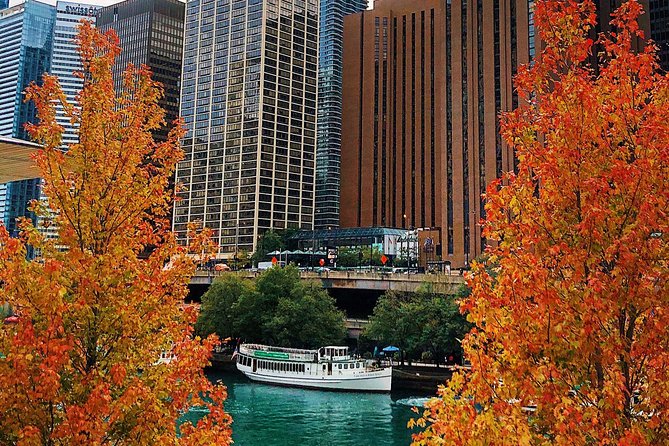
The Trump International Hotel & Tower offers another chance to look at how a new building responds to its setting. The guide’s point is not limited to its glass and steel exterior. The building also reflects the river and its surrounding structures.
That idea of buildings in conversation is one of the tour’s most useful themes. Chicago’s skyline is not a single-period display. It includes early commercial towers, Art Deco forms, Modernist slabs, postwar experiments, and recent high-rises. Seeing them together makes the city feel less like a collection of isolated landmarks and more like an ongoing argument about how a city should grow.
Mies van der Rohe and the power of restraint
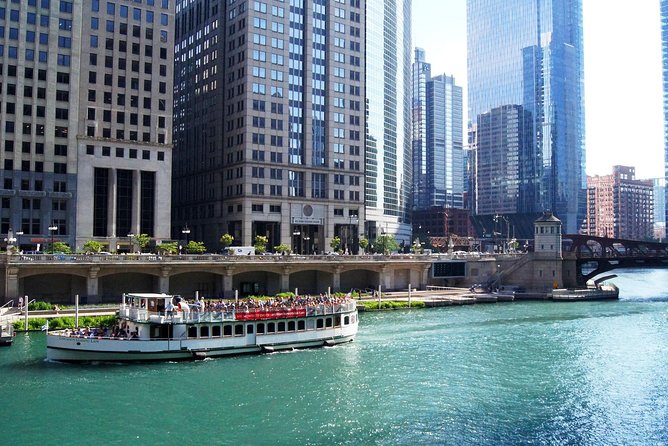
One of the last American projects designed by Ludwig Mies van der Rohe occupies a prominent position beside the river. Mies is associated with clean lines, disciplined proportions, and a stripped-down Modernist approach.
From the boat, the building’s relationship to the river becomes part of the lesson. Its effect comes less from decoration than from shape, structure, and placement. This is a useful counterpoint to Marina City’s rounded concrete balconies and to the more expressive forms elsewhere on the route.
If you like architecture but do not know the terminology, do not worry. The docent explains what to look for in ordinary language. That makes the cruise accessible to families and first-time architecture fans, not just specialists.
150 North Riverside and the engineering showpiece
150 North Riverside is one of the route’s most dramatic modern buildings. Its narrow lower structure and broad upper form make it appear to balance above the riverfront.
The building gives the guide a chance to explain engineering as well as design. Chicago architecture has always involved practical problems: limited land, heavy structures, strong wind, traffic, and the need to put more usable space into tight sites. Here, the engineering is part of the visual spectacle.
You can also view the Boeing International Headquarters at 100 North Riverside Plaza. It adds another layer to the riverfront’s mixture of offices, corporate buildings, and newer construction.
Willis Tower and the scale of downtown Chicago
Willis Tower, formerly known as the Sears Tower, held the title of the world’s tallest building for nearly 25 years. From the river, its height is easier to grasp because you can see the tower rising above a long procession of neighboring buildings.
The guide places the tower within Chicago’s contest to build taller and more efficiently. That context makes the familiar landmark more interesting than a simple photo stop. You are not only looking at a famous tower. You are seeing a major moment in the history of skyscraper design.
The river view also helps you understand why downtown Chicago can feel so vertical. The buildings are packed close together, but the water opens a clear corridor through the middle of them.
The old Marshall Field warehouse and the Mercantile Exchange
The former Marshall Field’s wholesale warehouse shows that Chicago’s architecture is not only about elegant towers. When completed in 1930, it was the world’s largest building and served as a place where retailers could buy stock.
Its huge scale reflects Chicago’s role as a Midwest distribution center. The building’s purpose was practical, commercial, and closely tied to the movement of goods. That makes it a useful contrast with residential Marina City and corporate towers.
The cruise also provides a view of the Chicago Mercantile Exchange Building at 20 South Wacker Drive. Along with the Chicago Tribune Freedom Center, it rounds out the tour’s picture of the city as a place built around publishing, trade, business, shipping, and finance.
Is $57 a fair price for 90 minutes?
At $57 per person, this is not the cheapest way to see Chicago from the water. The price makes more sense if you value the docent commentary and want a focused introduction to architecture, rather than simply a boat ride with skyline views.
You are paying for a 90-minute cruise, live commentary, a local Architecture Center docent, an indoor option, and a route packed with major buildings. Comparable sightseeing cruises may give you similar views, but the architectural explanations are the reason to choose this one.
The value is strongest at the beginning of your Chicago stay. The tour helps you understand what you are seeing for the rest of your visit. It is also a good use of time during a short trip, since it covers a broad section of downtown without requiring a long walk.
The value is weaker if you dislike guided commentary, want a private boat, or expect a long-distance cruise. It is also a firm financial commitment because the ticket cannot be refunded, transferred, or changed for another departure.
Who should book this cruise?
I would choose this for first-time Chicago visitors, architecture fans, families with older children, and anyone who wants a useful orientation before exploring downtown on foot. Children must have an adult with them, and the experience is not recommended for children younger than 12.
The cruise also suits people who want a weather backup. You may sit outside in good conditions, then move to the climate-controlled salon if rain or cold arrives. Since the boats sail in all weather, you should still dress sensibly and bring a layer.
It is less suitable for anyone with mobility concerns related to stairs at the dock, anyone carrying luggage, or anyone who wants assigned seating. If you need the best open-air position, arrive early and accept that the upper deck may be sunny, windy, or shaded depending on the weather.
Final call: book it early in your Chicago visit
Book the Chicago Architecture Center River Cruise aboard First Lady if you want Chicago’s buildings explained as part of a larger city story. The river views are excellent, but the strongest feature is the docent who connects the buildings to migration, industry, engineering, business, and urban planning.
Choose a daytime sailing for clear building details and photographs, or an evening departure if you prefer the changing light over the river. Arrive 30 minutes early, bring sunglasses and a warm layer, leave luggage at your hotel, and remember that seating is first come, first served.
For $57, this is a worthwhile introduction to Chicago, especially at the start of a short visit. It will not replace walking the neighborhoods or visiting the Architecture Center, but it gives you a framework that makes those later experiences more rewarding. The Architecture Center is directly across Wacker Drive from the dock, and your cruise ticket provides discounted $5 admission if you want to continue the subject on land.
FAQ
Where does the Chicago Architecture Center River Cruise depart?
The cruise departs from the Chicago Riverwalk at 112 East Wacker Drive. The entrance is near the northeast corner of Michigan Avenue and Wacker Drive, close to the Magnificent Mile and about three blocks north of Millennium Park.
How early should I arrive?
Arrive 30 minutes before departure. Allow extra time during summer, when the area can be busy and the boarding process may take longer.
Is seating assigned?
No. Seating is general admission and boarding is first come, first served. Any seat numbers printed on tickets are not valid assignments.
What happens if it rains or gets cold?
The cruise operates in all weather. The upper deck is open-air, while the lower salon is enclosed and climate controlled with large windows. Dress appropriately and bring protection from sun, wind, or cold.
Can I bring luggage, pets, or a stroller?
Luggage cannot be brought onboard, and there is no dockside storage. Pets are not allowed, but service animals are permitted. Strollers may be brought onboard, with children removed during boarding; the stroller will be folded and stored in the salon.
Can I buy food or drinks on the boat?
Yes. A full bar is available, and drinks and light snacks can be purchased onboard. Restrooms are also available, though they close 15 minutes before the tour ends.
Just added in Chicago
- BYOB Spray Paint and Sip at Studio W.I.P.★ 5.0 · 401 reviews
- Delicious Donuts & City Sights: Chicago’s Original Donut Tour★ 5.0 · 1,389 reviews
- Bikes, Bites & Views: Chicago’s Signature Dishes Bike Tour-Adults★ 5.0 · 732 reviews
- Field Museum of Natural History Admission Tickets★ 4.5 · 489 reviews
- Original Chicago Architecture Interiors Tour: Dazzling Interiors★ 5.0 · 1,489 reviews
- Skip-the-line: Art Institute of Chicago Guided Tour★ 5.0 · 417 reviews
- Chicago Loop District Food Tour with Deep Dish & Beef Sandwich★ 5.0 · 870 reviews
- City Cruises Chicago: Signature Lunch Cruise on Lake Michigan★ 4.0 · 348 reviews
Cruises & Boat Tours, compared.
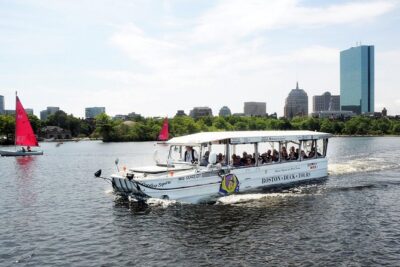
Boston Duck Boat Sightseeing City Tour with Cruise Along Charles River
Read our review →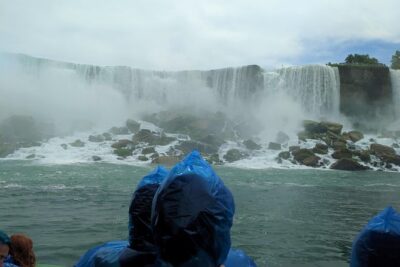
Best Niagara Falls US Tour W/Boat Ride, Cave & More Wonders!
Read our review →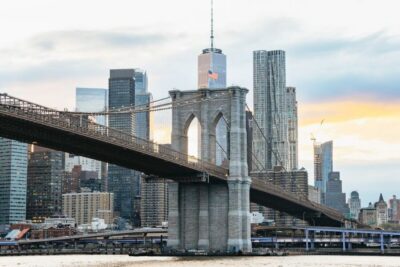
Circle Line 2h Harbor Lights Cruise Skip-The-Box-Office
Read our review →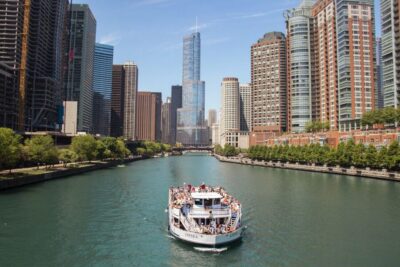
Chicago River: 1.5-Hour Guided Architecture Cruise
Read our review →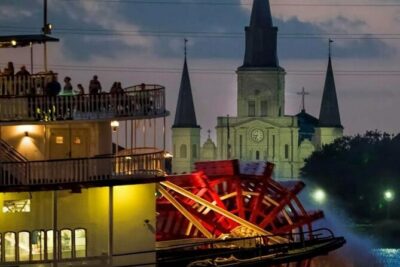
New Orleans Steamboat Natchez Jazz Cruise with Dinner Option
Read our review →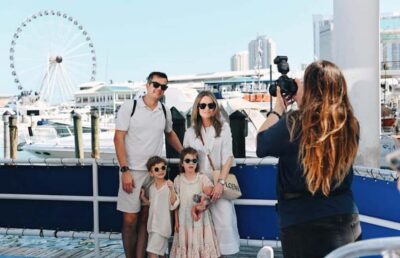
Biscayne Bay Millionaire’s Homes Sightseeing Cruise
Read our review →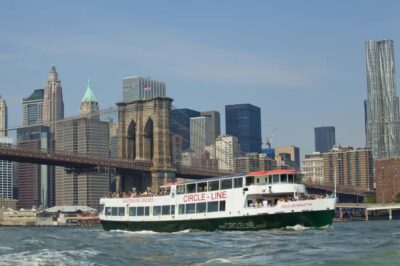
Browse the lists this tour appears in